LINDA HOFFMAN
The Sermon of the Blue Heron
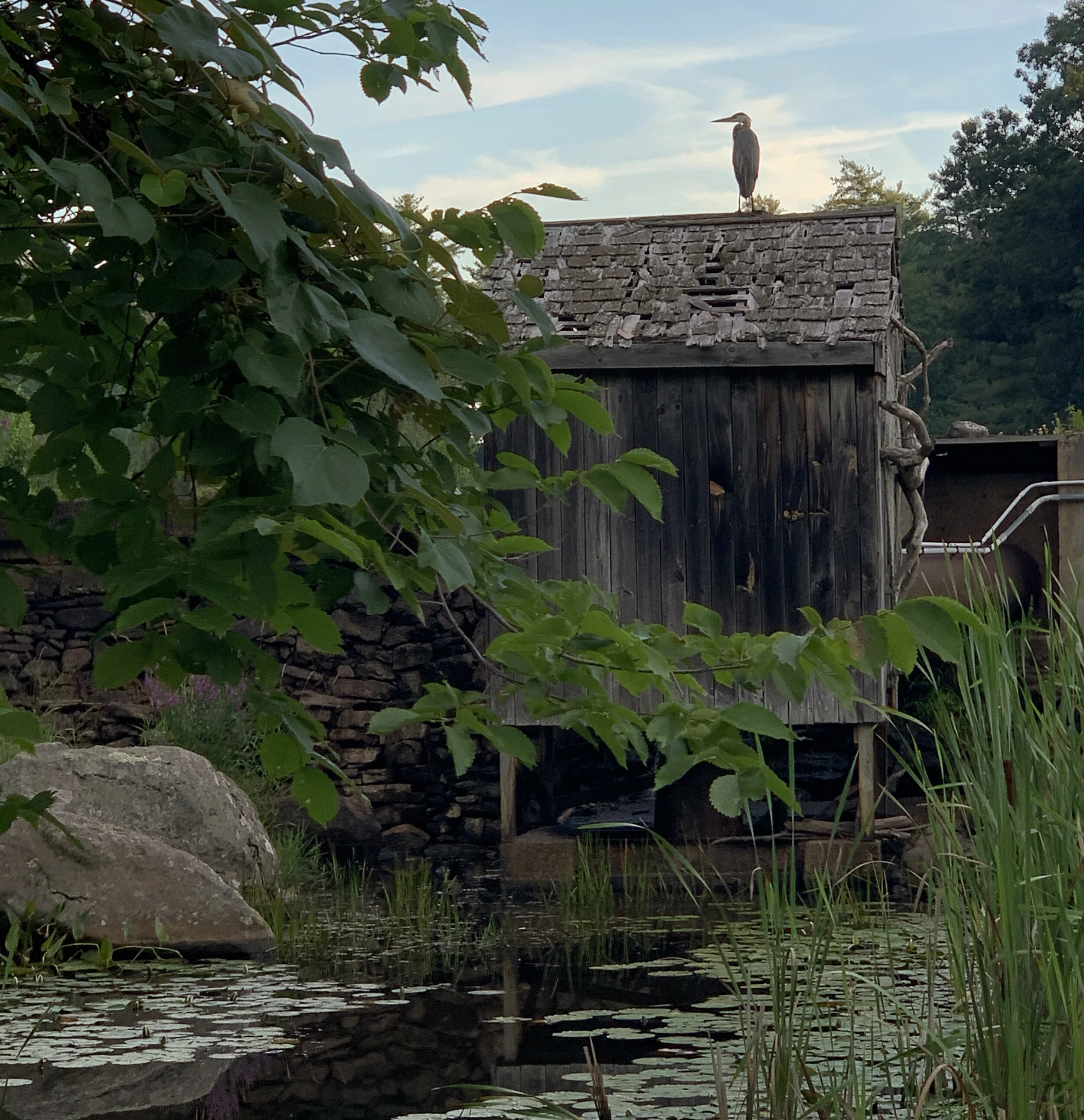
I walked out of the house early yesterday morning and saw a blue heron preaching from the roof peak of the little hut at the waterfall next to the dam. I feigned disinterest and sauntered quietly down the hill towards a new garden bed, hoping the heron wouldn’t fly away. It turned its head 180 degrees, but didn’t fly off.
This garden was planted last week, watered well, but not since—and we’ve had no rain. We’ve had no rain all summer, not a full day of soaking down wetness, not since too much rain in early May when we lost half our apple crop from poor pollination. We water the crop plants and the fruit trees and a few gardens pumping water from the pond, but much else is dry, parched, and crunches underfoot.
We’re lost without water, like we’re lost without a road map. Plants genetically receive all kinds of direction. Grow towards the sun, make your leaves larger because you are in the shade and need more photosynthesis, switch to ‘dry’ mode and pull in so that you can survive this drought. I think about where my inner direction comes from, how can I be sure I am hearing it. Sometimes my deepest yearnings feel like quicksand, holding me in inactivity without a guiding star. I was relieved to see the garden was alive, the transplants had survived the hot week.
I walked back up the hill and over to my studio. A few minutes later, I was upstairs at my desk with my morning tea when the heron flew by and landed near the pond. I thought it might be preaching to turtles, water snakes, maybe even the water lilies opening from their tightly closed night to better hear the heron’s wisdom. Herons know water; for they are fishermen and spend long hours watching water.
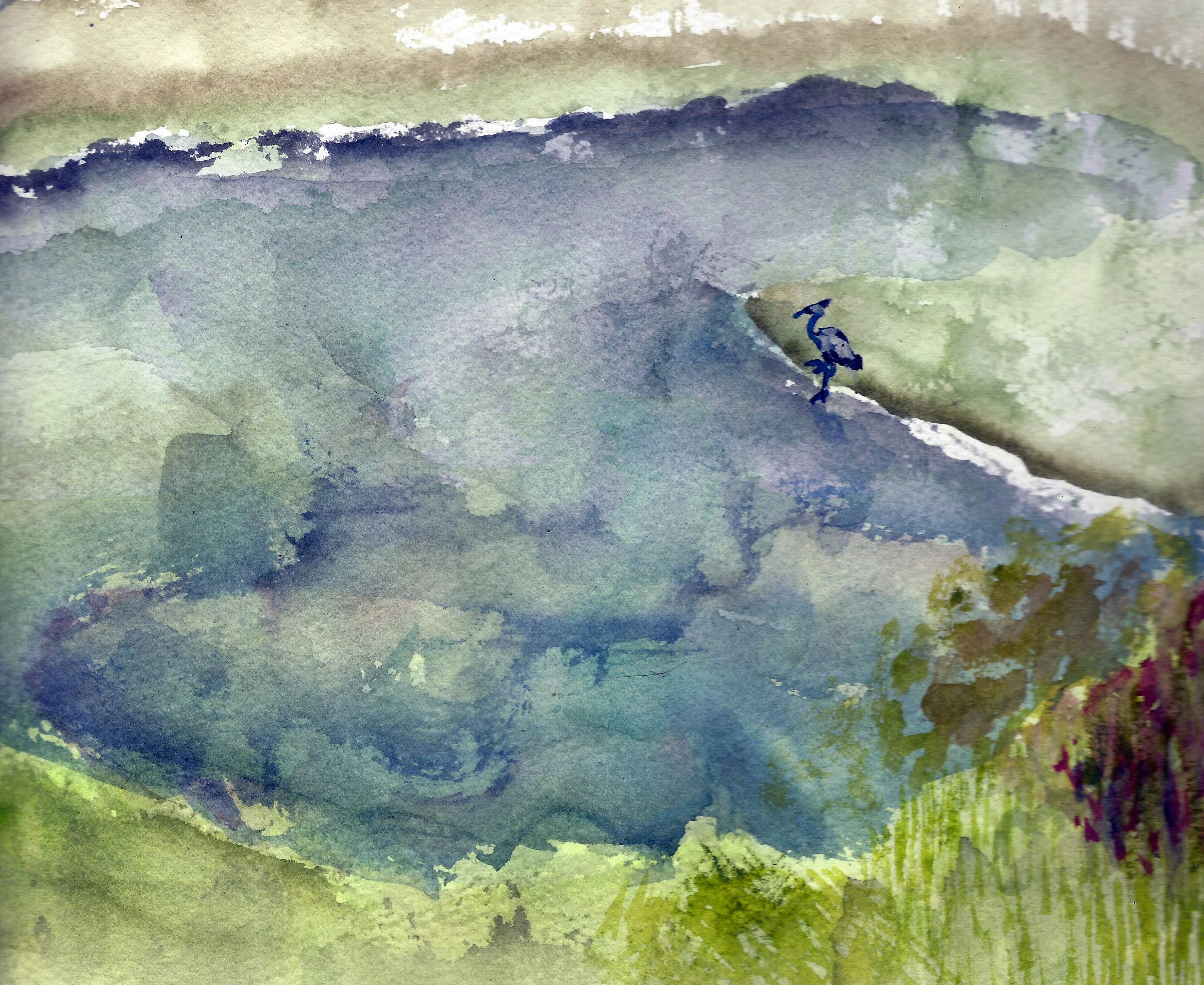
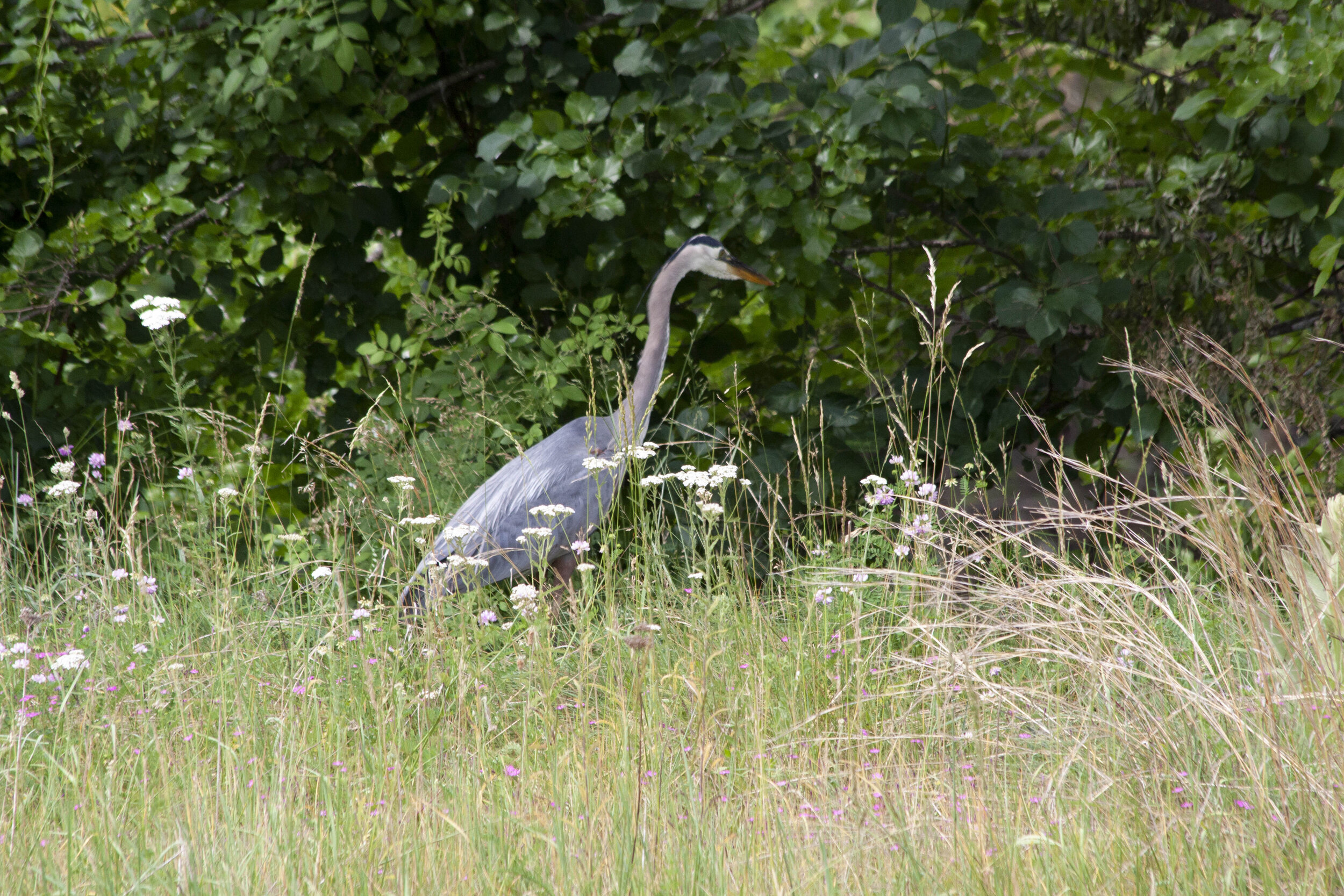
The heron, however, surely didn’t know it was standing halfway between the summer solstice and the fall equinox, on the pagan holiday, Lughnasad. This holiday is celebrated on the first of August and marks the beginning of the wheat harvest and the sun’s slow descent towards winter. For us at the farm, early August is when we harvest the first tree fruits, peaches, plums, and early season apples. It’s also the last time to get seeds into the ground for late fall crops. In the midst of a global pandemic, while areas of the world suffer extreme drought and other places experience massive and destructive floods, the heron stands at the boundary of earth and water with equipoise, catching its food, a guardian of the old ways.
As we shift to this new season, maybe it’s a time for us to reassess our ways. Make some choices of what we are carrying into the next phase. Spring flowers are a distant memory, while yarrow is in bloom, Queen Anne’s lace is at its peak, and goldenrod is opening to yellow. The night insects have begun their incantations. What to take with us and what to let go?
What do you want to put energy into? Energy flows where intention goes. What’s driving you? What brings you joy? We can’t do it all, not in one season. But we can be part of it all.
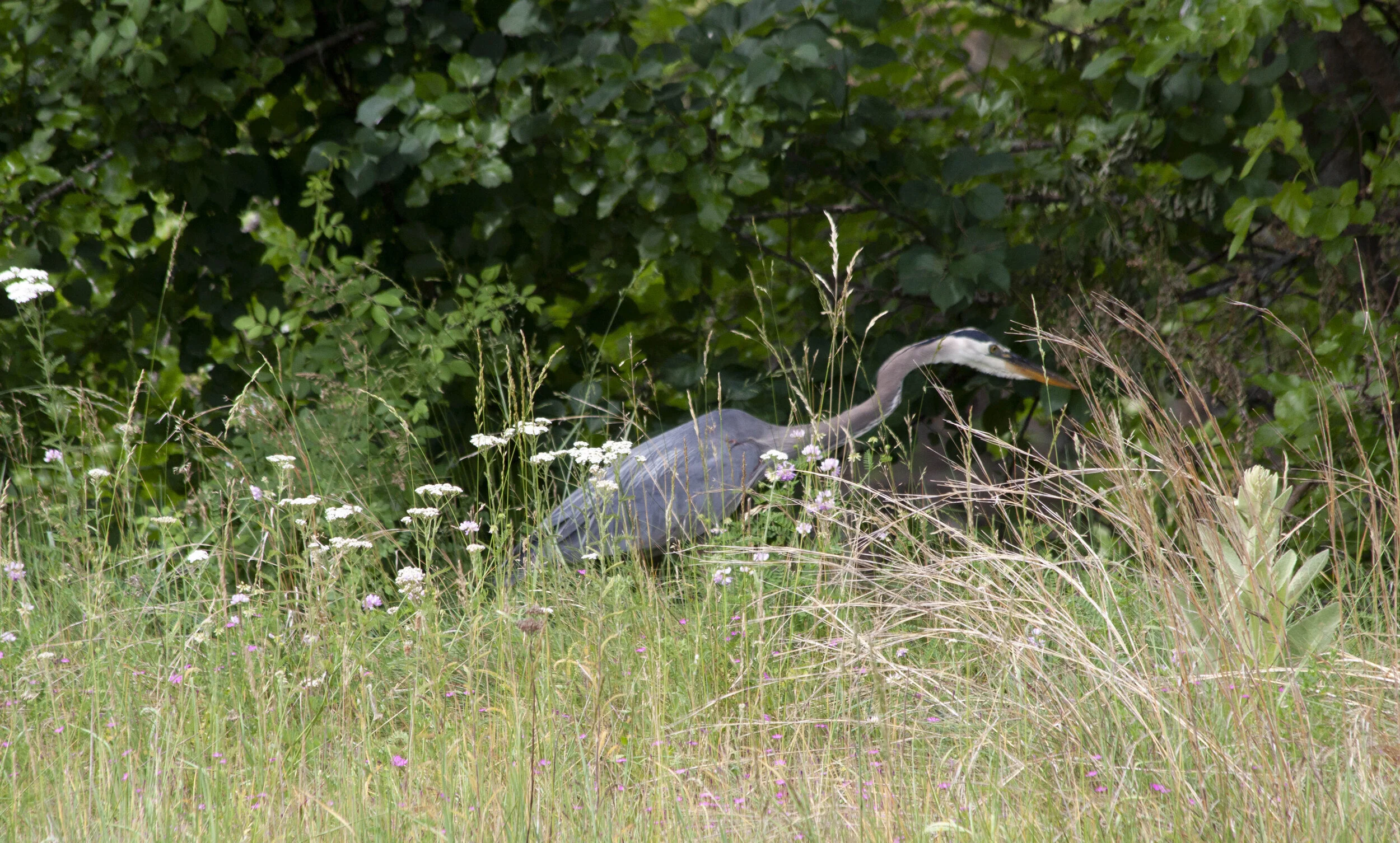
At the farm we now have fewer bluebirds, the orioles have migrated, and only one pair of barn swallows are still sitting on eggs. But the heron remains—majestic, otherworldly, its squawks coming from deep in the earth, a wisdom that calls out, “Take heed. What are you doing with this one precious life?”
Catalpa: The Hugging Tree
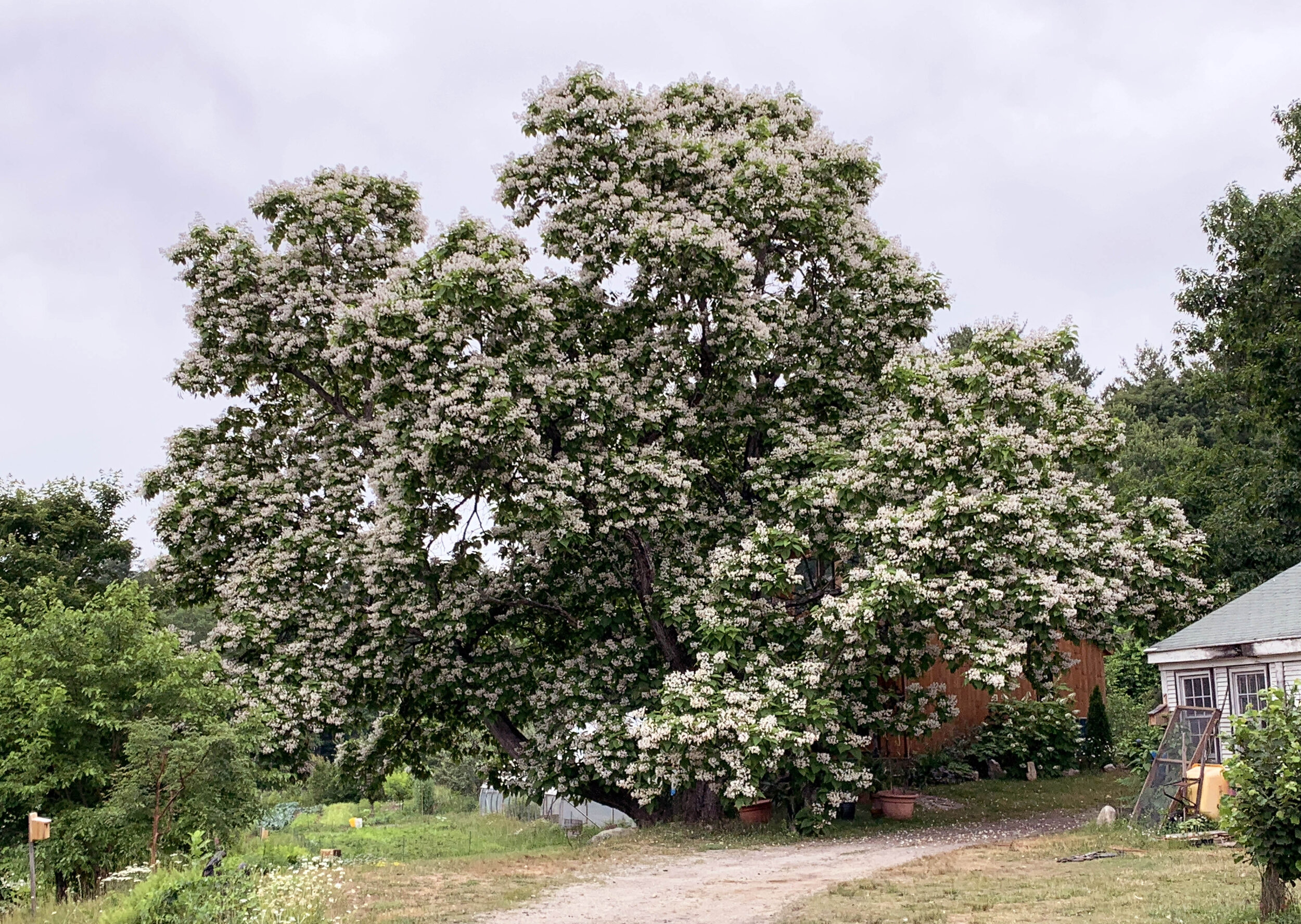
Catalpa Tree in Bloom, June 27, 2020
In full white flowering, a trillion frilly night moths perch on stems, sending out sweet scents of rose and bergamot. These clutches of flowers, each the size of a newborn child, balance at the end of every leaf cluster. The leaves, heart-shaped and lime green, lay open to the sky, each one positioned for the best photosynthesis. Catalpas reach peak bloom near the summer solstice, late for most trees in our climate. Summer is too hot for delicate blossoms.
Everything about this tree is large, embracing, and opulent. The wood, uprising from the ground, a trio of trunks, holds so much weight its steep ascent is inconceivable. It must be in the third octave of its life. Such a magnum opus. The tree dwarfs the building behind, my studio.
From the studio loft window I have watched a pair of swallows sit together, then fly off, soaring, and mating. Their brood began life in the bird box a few paces away. Red-winged blackbirds often sit on a branch and squawk, while nuthatches pace up and down the trunk. These tiny birds peck at bugs in the bark, quietly though, not like the red-hatted pileated woodpecker’s incessant jackhammering.
A few years back we had a tree company put two cables into the tree, worried about losing one of the trunks in a storm. This trinity of trunks now supports each other. One large branch broke two years ago. The branch dove to the ground and shattered, the wound along it—an accordion of frayed wood. But I wanted to leave it, not remove it, to see if it would heal. Now, buttressed by earth, new branches grow, flower, and bear fruit.
The tree grows twenty yards from the pond. I imagine it drinks heartily with every meal. Big tankards of H2O. Its size is quite out of scale for our small farm, but the Catalpa’s nature is to keep growing—water the source of its ecstasy.
The Catalpa makes its own shade, its own ecosystem, its own refuge. But now the bloom is over. The flowers are faded and brown, the scent has turned musky. It’s been such a presence in my life for the last ten days, I took my meditation cushion outside to sit near its trunk. That’s when I started using the pronoun “she” and “her” when I referred to the Catalpa. Her branches, her blossoms. She became more than tree to me. She became protector and guide.
While writing about her, I remembered that in my dream last night. I met an Indian woman, dressed in a drab brown and gray sari, with drab-colored brown and gray hair in a bun, and I knew it was Amaa, the hugging saint. I’ve never met her, but I’ve heard friends tell of their experiences, the process of waiting in a long line sometimes for hours, for the few seconds or minute it takes to receive her hug-blessing. In my meeting with Amaa, she cupped my shoulders with her hands, and then bowed my head so we lost eye contact but our foreheads joined. We were sisters, or mother and daughter, or some connected ancestor. She said, “Baruch Shalom” three times. Baruch is the beginning word of many Jewish prayers and means blessed. Shalom means peace.
The Catalpa tree became Amaa, became the carrier of this message of peace, strength, and resiliency. She communicated that we have untapped powers within us we are not aware of. The passing away of the blossoms became the rising of another voice, a steadfast and calming voice, reaching out to meet us. Inviting us into her embrace, always with open arms, the hugging tree, offering refuge.

Catalpa Tree, July 4, 2020
The Birth of Fruit
May we spread the seeds of true justice across our nation.
May we water them with our grief, and tend them with great love.
Spring’s robe swishes as she walks through the rows of apple trees, the small fruit now covered with white clay to protect it from the egg-laying stings of the plum curculio beetle.

On the high-bush blueberries, the white bell-like corollas dry, then fall, exposing small green fruit.

The mulberries pop out from smooth branches like furry caterpillars,

and the husks of the peaches fall to the ground revealing first fuzz.

Fruits are ovaries, designed to protect the all important seeds. Peppers, tomatoes, as well as squash are technically fruits, but we think of them as vegetables. Asparagus aren’t fruits, but because they are a perennial crop, we give them two long rows in the berry patch. The stalks shoot up overnight.

Rhubarb is technically a vegetable, but it’s most often cooked in pies or with sugar to sweeten its tart taste, and therefore, is often thought to be a fruit. Our favorite recipe for rhubarb is stewed with strawberries and a bit of honey or maple syrup.

Not far away, the blackberry buds entice as if there weren’t hiding sharp thorns.

Blackberries ripen well before the red raspberries whose canes are mowed to the ground in early spring. Fall raspberries grow four to five feet high, bud, flower, and bear fruit all in one season.

Seedless table grapes are a new crop for the farm, the vines are only beginning their long climb to maturity.

Finally, spring embraces summer, and the strawberry ripening begins.

Photos: Linda Hoffman and Ariel Matisse
Stinging Nettles: Gifts from the Great Mother

LH, photo: Ariel Matisse
Squatting in a patch of stinging nettles with my foraging basket, and rubber gloves, I was snipping young stalks to sauté for dinner. Some people react with alarm when I mention eating stinging nettles, but the truth is nettles are beloved by wild foragers and herbalists. Mother Earth offers this gift packed with vitamins, minerals, and protein. Richio Cech in his book, Making Plant Medicine, summarizes the uses of nettles: “Practical Uses: Legion.” The Greeks and Romans cultivated fields of nettles more than any other crop.
Nettles sting because they have hairs on the stems and undersides of leaves that break off when touched, exposing the tiniest sharp needles that pierce the skin and inject a toxin that causes a burning rash. Fierce protection! For nettles are so nutritious, animals would devour them before they grew large enough to flower and bear seeds, the driving force in a plant’s life.
An old adage says, “When in doubt, use nettles!” Their beneficial uses include: a natural detoxifier, an anti-inflammatory, a treatment for gout, anemia, joint pain, diabetes, hay fever, urinary tract issues, and prostate issues. Flogging with stinging nettles for arthritis, joint pain, and to increase blood circulation is the one recommendation I am nervous about trying. But when I am without energy and need a dose of friendliness, I reach for the jar of dry nettles and make a cup of tea. It’s magical how this plant restores my balance.
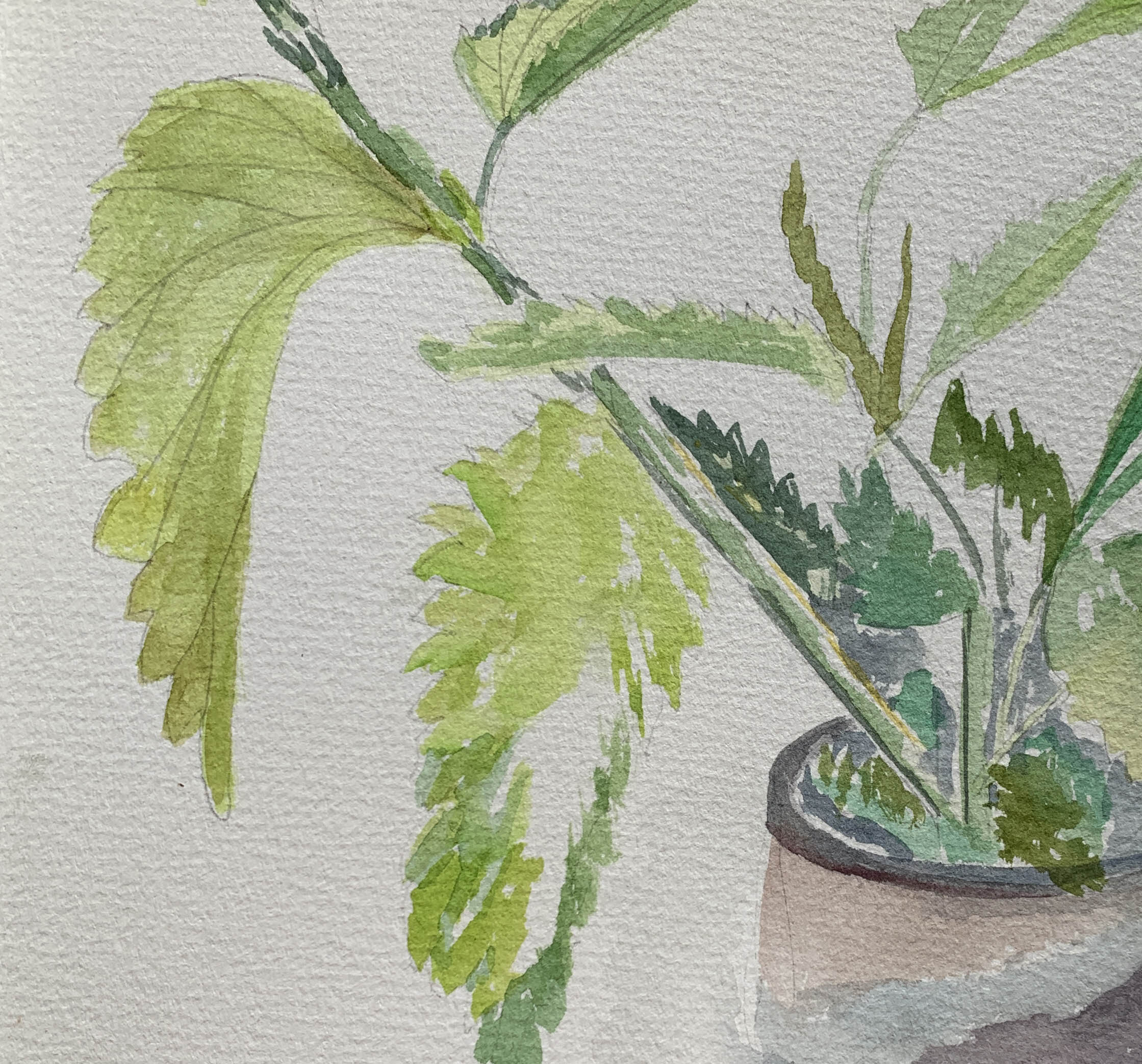
Arrangement with Nettles, watercolor, LH 2020
And, of course, what’s good for me is good for the orchard. Part of being a good orchardist is learning how to take care of the trees with kindness. In late spring, when I want to boost the trees’ immune systems and help provide an extra boost of minerals, I turn towards nettles. When the plants are about eighteen inches tall, I cut a wheelbarrow-full, enough to fill a 50-gallon barrel. Then I add water and let the nettles sit for a few days. Sometimes, I add comfrey leaves for added minerals, horsetail for its silica, and garlicscapes, if I feel the trees need insect protection. After a few hot days, I drain out the liquid and fill my 300-gallon sprayer. The gooey remains of the nettle plants go onto the compost pile, and I set out for my tractor tour of the orchard pulling the airblast sprayer with its peacock’s tail of spray fanning out to touch every leaf.
Nettles reduce heavy metals in soils, in fact I remember hearing that if you plant a rusty agricultural tool, it will attract nettles to grow there. Mostly I find nettles pop up where they choose. At the farm, they don’t seem to care whether it’s a dry berm in full sun, against the peeling paint of the old chicken coop, or in the dappled light of the streambed. When Nettles have finished what they came to do, they pack up and move on. Wild plants are like that.
Now is the season to gather and cook young nettles (they will regrow for fall harvesting.) Try steaming them and adding a little lemon juice and olive oil, and some parmesan or other favorite cheese. Or sauté them with onions or shallots, add some garlic powder, and a bit of cream. For nettle pesto, most people suggest you boil the nettles and dry them with a towel. Then fill your food processor with the nettles, walnuts, pecans or other nut, lemon juice, salt, a couple of peeled garlic cloves, and some hard cheese like asiago or parmesan. Once it becomes the consistency of a paste dribble in olive oil till it is smooth and the consistency you’d like. If you make a lot, freeze some for the middle of next winter to serve over fresh linguine and bring spring back into your life. Don’t be alarmed: nettle pesto is iridescent green.
In midsummer, I cut some of the tall nettles, tie them bundles, and hang them in my studio. Once they are dry, I take a cardboard box or large paper bag, and with gloves on, run my hands along the stem to remove the leaves. The dry leaves can be stored whole, but I put them all through the food processor and store them in a couple of gallon jars. We sell small packs of dried nettles at the farm stand along with bags of freshly picked.
Out of the soil of friendliness grows the beautiful bloom of compassion,
Watered by the tears of joy,
Sheltered beneath the cool shade of the tree of equanimity.
—Longchenpa, 14th century Tibetan Buddhist teacher
Nettles are a curious teacher. They sting! But when we appreciate them, we receive nothing but gifts.
Happy Mother’s Day!

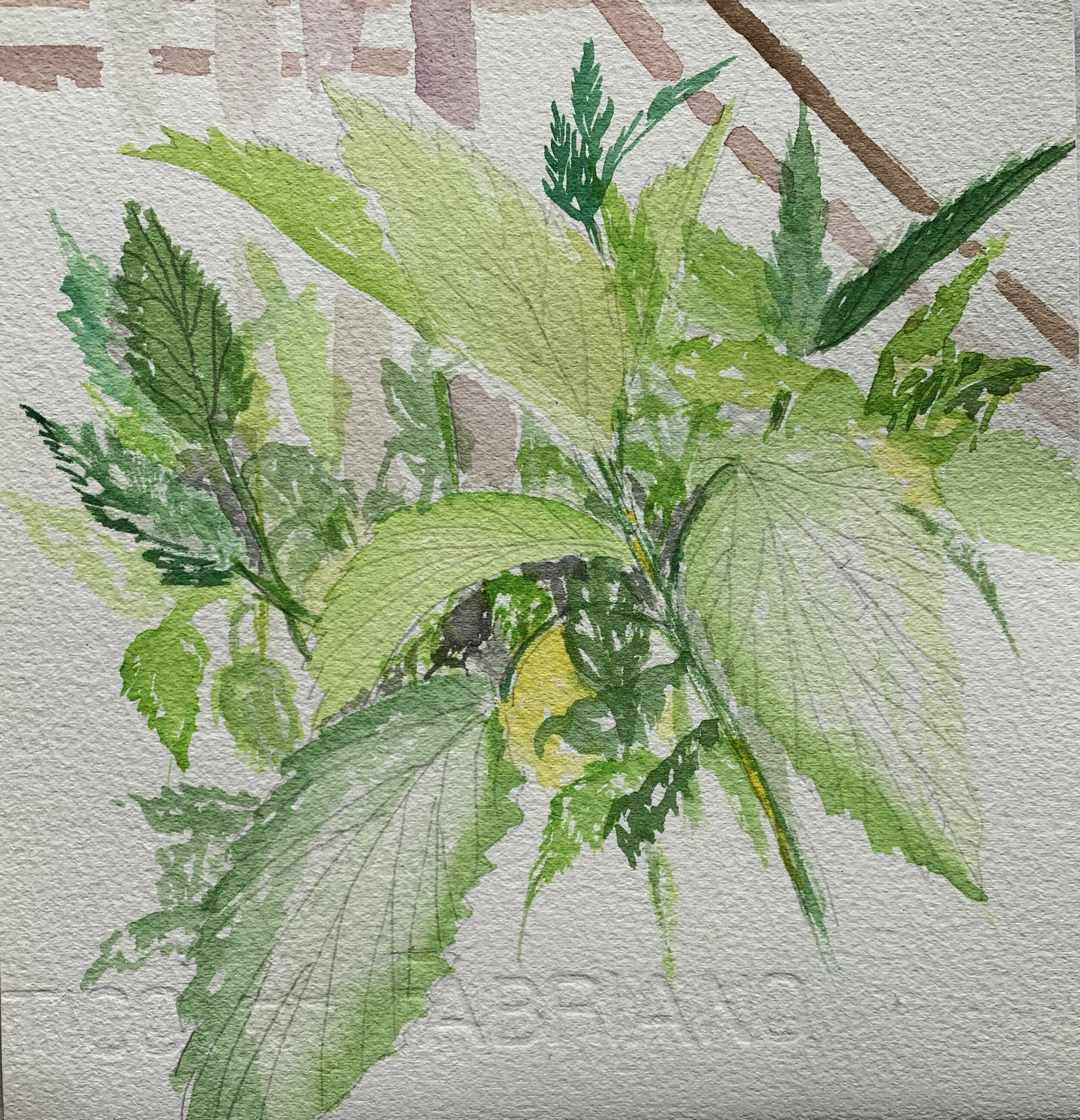
Nettle Bouquet, watercolor and pencil, LH 2020
Search Blog
-
2025
- May 9, 2025 A View from the Tractor Seat
- Apr 11, 2025 Dig
-
2024
- Jan 7, 2024 Winter Wassail
-
2022
- Dec 11, 2022 Keeping Time
- Jun 17, 2022 This Apple-Shaped Earth
- Jan 23, 2022 What is a Jizo?
- Jan 16, 2022 An Invite and Housekeeping Update
- Jan 1, 2022 The Year of the Frog: What Orchardists Do While Apple Trees are Chilling
-
2021
- Oct 24, 2021 Figs
- Oct 3, 2021 The Artist and the Orchard: A Memoir
- Aug 8, 2021 Red-Fleshed Apples
- Jul 25, 2021 When We Were Trees
- Jun 27, 2021 Castor Beans—Who Knew?
- Jun 13, 2021 Spring Training at a Zen Monastery
- May 4, 2021 Our Trees are in Bloom
- Apr 18, 2021 Hooray!
- Jan 24, 2021 Wassailing, virtually!
- Jan 1, 2021 Sitting
-
2020
- Dec 21, 2020 Darkness to Light
- Nov 28, 2020 One Heart
- Sep 18, 2020 Juggling Flowers, Fruit, and Vegetables
- Aug 23, 2020 Refuge
- Aug 9, 2020 Bags of Fertilizer
- Aug 2, 2020 The Sermon of the Blue Heron
- Jul 26, 2020 What's the Buzz?
- Jul 19, 2020 Farm Moments
- Jul 12, 2020 Lost Wax
- Jul 5, 2020 Catalpa: The Hugging Tree
- Jun 28, 2020 Pedaling Peace
- Jun 21, 2020 See Change
- Jun 14, 2020 Lalla Unveiled
- Jun 7, 2020 Pond Alchemy
- May 31, 2020 The Birth of Fruit
- May 24, 2020 An Artist in the Orchard
- May 17, 2020 Walking the Land: Returning Home
- May 10, 2020 Stinging Nettles: Gifts from the Great Mother
- May 3, 2020 The Mystery of Swallow
- Apr 26, 2020 Aerial Bruststrokes
- Apr 19, 2020 Simple Pleasures
- Apr 12, 2020 Weeds and Other Gifts
- Apr 5, 2020 Remembering the Seeds
- Mar 29, 2020 Blow on the Embers
- Mar 22, 2020 Ripples
-
2019
- Nov 16, 2019 Tibet Impressions
- Nov 9, 2019 Forest Tales
- Oct 13, 2019 The Gift
- Aug 4, 2019 The Season is Apples, Berries, and Grandfather Fire
- Jun 8, 2019 Pointers for a Writing Life
- May 12, 2019 Mothers of the Earth
- Apr 6, 2019 The Apple-Shaped Earth
- Mar 23, 2019 You Don’t Know What You Have Till It’s Gone
- Feb 23, 2019 Generations
- Feb 9, 2019 What Are We Doing to the Earth, John Chapman?
-
2018
- Dec 31, 2018 Long Shadows
- Oct 6, 2018 A Pilgrimage to India
- Aug 18, 2018 Scrap Wrenn
- Aug 11, 2018 Off-the-Wall Comments from an Ignorant Farmer
- Jul 28, 2018 Creative Connect
- Jul 14, 2018 How is the Orchard?
- Jun 30, 2018 Which Way?
- Jun 16, 2018 Geese, Herons, Beavers, and the Baby Steps of a Lapsed Blogger
- Feb 24, 2018 Mama's Coupons — Good Forever
- Jan 27, 2018 January Ice
- Jan 13, 2018 The Muse
-
2017
- Dec 30, 2017 A Dream for the New Year
- Dec 23, 2017 A New Year for Apples
- Dec 16, 2017 Intuition
- Nov 22, 2017 Thanksgiving OM
- Nov 4, 2017 East Fork Pottery
- Oct 28, 2017 Putting Down New Roots
- Oct 21, 2017 A is for Art
- Oct 14, 2017 Eve domesticus
- Oct 7, 2017 A String Workshop
- Sep 30, 2017 After Applepicking
- Sep 23, 2017 Two Bad Women and One Good Apple
- Sep 16, 2017 Plein Air Poetry
- Sep 9, 2017 Cutting Off a Leg
- Sep 2, 2017 The Changing Landscape
- Aug 26, 2017 All About Art
- Aug 19, 2017 My First Visit to the Farm
- Aug 12, 2017 The First Food
- Aug 5, 2017 A Teapot, a Woman, and maybe a Boat
- Jul 29, 2017 A Raspberry Dilemma
- Jul 22, 2017 Consider the Miracle
- Jul 15, 2017 Meeting Ekphrasis
- Jul 8, 2017 Ripening Fruit
- Jul 1, 2017 The Voice of The Caterpillar
- Jun 24, 2017 Goumi — An Unusual Fructus
- Jun 17, 2017 Concord, an American Bloomsbury
- Jun 10, 2017 The World Is Bonkers — Shall I Laugh or Cry?
- Jun 3, 2017 Bonkers, a Revolutionary Apple
- May 27, 2017 Guardians of the Swamp
- May 20, 2017 There are Mushrooms and There are Morels
- May 13, 2017 "What's in a Name?"
- May 6, 2017 Bloom Follows Pink: Orchard Pollination
- Apr 29, 2017 The Orchard Is at Pink
- Apr 22, 2017 Natural Farming — Part 2 (continuation from last Sunday's blog)
- Apr 15, 2017 Natural Farming — Part 1
- Apr 8, 2017 Boats, Figures, and Catching Fish
- Apr 1, 2017 A Man with a Mission: The Nuts and Bolts of Bronze Casting
- Mar 25, 2017 A Chalice of Spirit, Art, and Nature
- Mar 18, 2017 Hanami — Blossom Viewing
- Mar 11, 2017 Soil Redemption Song
- Mar 4, 2017 Food is Primary Care
- Feb 25, 2017 Pomme de Terre
- Feb 18, 2017 Organic Certification
- Feb 11, 2017 Tantalizing Fruit
- Feb 4, 2017 The Myths of History
- Jan 28, 2017 The Orchard in Winter
- Jan 21, 2017 The Hi-Line
- Jan 14, 2017 Artistic, Botanical, and Social Diversity
- Jan 7, 2017 Where is Eden?
-
2016
- Dec 31, 2016 The Creative Heart
- Dec 24, 2016 A Christmas Tale
- Dec 17, 2016 Who are the Crones?
- Dec 10, 2016 The Olympic Bell (Part Two)
- Dec 3, 2016 Overheard in the Apple Orchard in Early December
- Nov 26, 2016 The Lessons of a Tortoise
- Nov 19, 2016 In the Studio
- Nov 12, 2016 Even in Darkness
- Nov 5, 2016 Southern Apples, an Elephant, Monkey, Rabbit, and Bird, Two Mango Trees and a Birthday
- Oct 29, 2016 The Tools of Art
- Oct 22, 2016 Labyrinths
- Oct 15, 2016 Repairing the Broken
- Oct 8, 2016 When You Are No More
- Oct 1, 2016 Creation Rain
- Sep 24, 2016 Breaking the Glass
- Sep 17, 2016 String Art
- Sep 10, 2016 Poetry and Photosynthesis: It's all in the Leaves
- Sep 3, 2016 In the Plenty of Time
- Aug 27, 2016 Witch Doctors
- Aug 20, 2016 Listen Coyote
- Aug 13, 2016 Milkweed in the Orchard
- Aug 6, 2016 Some People See a Turtle
- Jul 30, 2016 Arborshaping
- Jul 23, 2016 Joseph Wheelwright: Sculptor of Stones and Trees
- Jul 16, 2016 Asian Pears
- Jul 9, 2016 Gold Leaf, Grief, and the Creative Process
- Jul 2, 2016 The Olympic Bell (Part One)
- Jun 25, 2016 Around the Mulberry Bush
- Jun 18, 2016 Avoiding Apples
- Jun 11, 2016 Fructus
- Jun 4, 2016 Astonishing Apples
- May 28, 2016 Scare the Caterpillars
- May 21, 2016 Join the Club!
- May 14, 2016 The Graft
- May 7, 2016 Rooster, Rhubarb, Rue
- Apr 30, 2016 What do Dolphins and Nettles Have in Common?
- Apr 23, 2016 Art Prunings
- Apr 16, 2016 A Few of the First Arrivals
- Apr 9, 2016 Taste the Spirit of Sustainable Agriculture
- Apr 2, 2016 First Orchard Spray - March 22-24, 2016
- Mar 26, 2016 Hawkeye Apple
- Mar 19, 2016 Desiring the Almata Apple
- Mar 12, 2016 Ugly Fruit
- Mar 5, 2016 Winter Tracks
- Feb 27, 2016 Splash
- Feb 20, 2016 Pruning
- Feb 13, 2016 Orchard Ruminants
- Feb 6, 2016 A Gathering of Seeds
- Jan 30, 2016 Orchard Dragons
- Jan 23, 2016 Tree Rings
- Jan 17, 2016 The Fallen Tree
- Jan 7, 2016 Wassailing the Apple Trees
- Jan 1, 2016 The New Year