LINDA HOFFMAN

A View from the Tractor Seat

All Photos: ©Ellen Harasimowicz
Flower buds are opening on the orchard trees. A few days ago, I put my first organic spray on the blossoms to support them and help manage fireblight, a bacterial infection that can spread like wildfire throughout an orchard during pollination. I’m focused on what I can do to control fireblight because this year I did not spray the legendary dormant spray of copper on our fruit trees. Even though copper is an approved organic material, it can be toxic to earth worms and other microorganisms, especially as it accumulates in the soil. Farmers and orchardists assess this buildup by taking soil samples, and our copper level is right where I want it to be, so I’ve removed it from my spray regime this year.
Since I first started bringing the orchard back to life at Old Frog Pond Farm in 2001, I’ve been reading The Natural Way of Farming by Masanobu Fukuoka (1913–2008.) He has been an inspiration. A revolutionary farmer, Fukuoka’s book, One Straw Revolution, became the ‘carry-in-your-back-pocket’ bible for a generation of farmers who wanted to move away from corporate farming directives of multi-national companies that entered the pesticide industry after World War II. Fukuoka’s tenets include no chemical pesticides or chemical fertilizers; only attentive care to discover natural solutions.
Back then, the options for organic products were limited. Today, many more natural and organically certified materials are available. Regalia is one of my favorites, a bio-fungicide, with the primary ingredient being an extract derived from the despised giant knotweed. This vigorous plant grows anywhere, is hellish to eradicate, can destroy walls and driveways. I’ve read that, if you have knotweed growing on your property in England, you can’t get insurance. But I know from experience, it is helpful for treating Lyme disease caused by tick bites as well as being an all-around good spray for the orchard. It is called a bio-protectant. Regalia stimulates plant defense mechanisms against both fungal and bacterial diseases — exactly what I aspire to do as an orchardist — encourage the trees to use their own defenses.
A few days ago, I filled my 300-gallon spray tank with Regalia, fish, seaweed and two micronutrients, boron and manganese. Isa, our farm manager, helped me load the tank. Then I put the tractor into low gear, set the rpm’s to 1700, and set off at a turtle’s pace — 1 ½ mph pulling the spray tank behind.
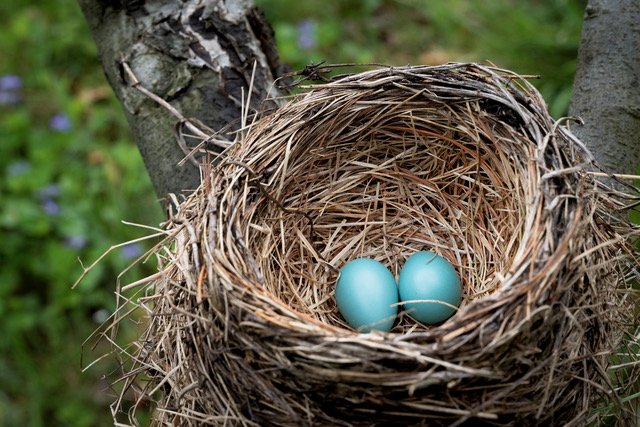
With the loud noise of the tractor dulled by headphones, I crawl along between two rows of apple trees. My eyes are wide open, observing the buds, blossoms, and insects. It is refreshing to see into the trees as if I were seven feet tall, not my actual five-foot height. At the end of every row, I turn off the sprayer’s nozzles, and make a tight turn into the next row before I turn them on again. I stop a few times to check the liquid levels, and once, to admire a robin’s nest where I find two perfect blue eggs.
In Overheard in the Orchard, a collaborative book with my text and Ellen Harasimowicz’s photographs set for release in early summer — a Golden Delicious tree converses (preceded with ellipses) with an orchardist (in quotes).
. . . Apple trees originated in the foothills of a heavenly mountain range, the tallest peaks always cloud-covered. Foxes, snow leopards, wolves, and mountain sheep roamed freely. In the fall these animals feasted on our apples.
“My ancestors grew fruit trees. They felt the presence of the divine when they gathered in apple orchards. They called apple orchards shekinah. It means dwelling. They considered the orchard to be the dwelling place of the creative force of the universe.”
. . . I tell her, “Your ancestors understood an orchard is sacred, a place to gather, a place to taste truth.”
The earth is sacred. I am grateful that I don’t have to harm the orchard creatures in order to care for the apple trees. If I would have had to spray chemical pesticides, I would never have decided to bring back this abandoned orchard. And I would never have learned all I have from these wise trees — lessons on how trees care for each other and how we can do more to care for the earth and all its creatures.
Happy Mother’s Day!
Dig
A lower branch…
Mistakenly damaged with a spade–
A wild plum tree in bloom.—Takai Kito
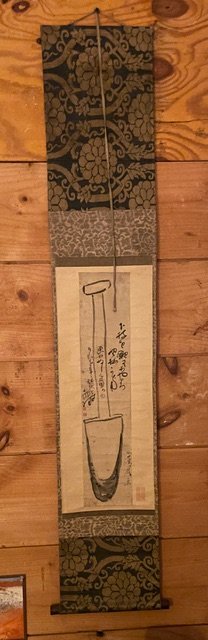
Spring is definitely here, and it is time to disappear the snow shovel, and grab the garden spade. The spade on this Japanese scroll was painted by Takai Kito (1741-1789), disciple of the great haiku master, Yosa Buson (1716-1783). The shovel is strong, compact, and simple; it appears to have a wooden handle, and the bottom is caked with soil. It is likely well-used, and easy to carry.
However, I am curious about this mistakenly damaged branch referred to in the poem. Did the poet dig up a wild plum from the mountainside to bring back to his garden? I’ve mistakenly broken small branches when transplanting a sapling from once place to another. Yet, no matter — the poet writes, the wild plum tree continues to bloom.
How wonderful! Plum trees in Japan are one of the first signs of spring, often the first blossoms in a garden. Like the old shovel, plum blossoms are hardy and strong. White-petaled blossoms open even among swirling snowflakes. Winter meeting spring.
We need to be resilient. We live in a world of great suffering. Many of us are suffering. But like the poet writes, even with a broken branch, the plum tree grows and blossoms. We, too, can blossom. We can find something to be grateful for — bird calls, snowdrops, daffodils, a recollection of a kindness received, the intention of a gift to offer.
Takai Kito not only painted the spade, but wrote the poem. However it was his teacher, Buson, who brushed the inscription as well as the poem around the handle of the spade, a clear sign of affection for his student. Let us show signs of affection for those around us. Be resilient, and strong, like this simple garden spade doing its work, digging deeply into hard-packed soil. And be resolute, like the hardy plum blossoming in the snow.
The poet, Buson, nearing his death, gathered his disciples around his bed, recited his last haiku poem, and died in his sleep.
Amid white
plum blossoms, dawn
breaking now—Yosa Buson

Apple Blossoms at Old Frog Pond Farm
Search Blog
-
2025
- May 9, 2025 A View from the Tractor Seat
- Apr 11, 2025 Dig
-
2024
- Jan 7, 2024 Winter Wassail
-
2022
- Dec 11, 2022 Keeping Time
- Jun 17, 2022 This Apple-Shaped Earth
- Jan 23, 2022 What is a Jizo?
- Jan 16, 2022 An Invite and Housekeeping Update
- Jan 1, 2022 The Year of the Frog: What Orchardists Do While Apple Trees are Chilling
-
2021
- Oct 24, 2021 Figs
- Oct 3, 2021 The Artist and the Orchard: A Memoir
- Aug 8, 2021 Red-Fleshed Apples
- Jul 25, 2021 When We Were Trees
- Jun 27, 2021 Castor Beans—Who Knew?
- Jun 13, 2021 Spring Training at a Zen Monastery
- May 4, 2021 Our Trees are in Bloom
- Apr 18, 2021 Hooray!
- Jan 24, 2021 Wassailing, virtually!
- Jan 1, 2021 Sitting
-
2020
- Dec 21, 2020 Darkness to Light
- Nov 28, 2020 One Heart
- Sep 18, 2020 Juggling Flowers, Fruit, and Vegetables
- Aug 23, 2020 Refuge
- Aug 9, 2020 Bags of Fertilizer
- Aug 2, 2020 The Sermon of the Blue Heron
- Jul 26, 2020 What's the Buzz?
- Jul 19, 2020 Farm Moments
- Jul 12, 2020 Lost Wax
- Jul 5, 2020 Catalpa: The Hugging Tree
- Jun 28, 2020 Pedaling Peace
- Jun 21, 2020 See Change
- Jun 14, 2020 Lalla Unveiled
- Jun 7, 2020 Pond Alchemy
- May 31, 2020 The Birth of Fruit
- May 24, 2020 An Artist in the Orchard
- May 17, 2020 Walking the Land: Returning Home
- May 10, 2020 Stinging Nettles: Gifts from the Great Mother
- May 3, 2020 The Mystery of Swallow
- Apr 26, 2020 Aerial Bruststrokes
- Apr 19, 2020 Simple Pleasures
- Apr 12, 2020 Weeds and Other Gifts
- Apr 5, 2020 Remembering the Seeds
- Mar 29, 2020 Blow on the Embers
- Mar 22, 2020 Ripples
-
2019
- Nov 16, 2019 Tibet Impressions
- Nov 9, 2019 Forest Tales
- Oct 13, 2019 The Gift
- Aug 4, 2019 The Season is Apples, Berries, and Grandfather Fire
- Jun 8, 2019 Pointers for a Writing Life
- May 12, 2019 Mothers of the Earth
- Apr 6, 2019 The Apple-Shaped Earth
- Mar 23, 2019 You Don’t Know What You Have Till It’s Gone
- Feb 23, 2019 Generations
- Feb 9, 2019 What Are We Doing to the Earth, John Chapman?
-
2018
- Dec 31, 2018 Long Shadows
- Oct 6, 2018 A Pilgrimage to India
- Aug 18, 2018 Scrap Wrenn
- Aug 11, 2018 Off-the-Wall Comments from an Ignorant Farmer
- Jul 28, 2018 Creative Connect
- Jul 14, 2018 How is the Orchard?
- Jun 30, 2018 Which Way?
- Jun 16, 2018 Geese, Herons, Beavers, and the Baby Steps of a Lapsed Blogger
- Feb 24, 2018 Mama's Coupons — Good Forever
- Jan 27, 2018 January Ice
- Jan 13, 2018 The Muse
-
2017
- Dec 30, 2017 A Dream for the New Year
- Dec 23, 2017 A New Year for Apples
- Dec 16, 2017 Intuition
- Nov 22, 2017 Thanksgiving OM
- Nov 4, 2017 East Fork Pottery
- Oct 28, 2017 Putting Down New Roots
- Oct 21, 2017 A is for Art
- Oct 14, 2017 Eve domesticus
- Oct 7, 2017 A String Workshop
- Sep 30, 2017 After Applepicking
- Sep 23, 2017 Two Bad Women and One Good Apple
- Sep 16, 2017 Plein Air Poetry
- Sep 9, 2017 Cutting Off a Leg
- Sep 2, 2017 The Changing Landscape
- Aug 26, 2017 All About Art
- Aug 19, 2017 My First Visit to the Farm
- Aug 12, 2017 The First Food
- Aug 5, 2017 A Teapot, a Woman, and maybe a Boat
- Jul 29, 2017 A Raspberry Dilemma
- Jul 22, 2017 Consider the Miracle
- Jul 15, 2017 Meeting Ekphrasis
- Jul 8, 2017 Ripening Fruit
- Jul 1, 2017 The Voice of The Caterpillar
- Jun 24, 2017 Goumi — An Unusual Fructus
- Jun 17, 2017 Concord, an American Bloomsbury
- Jun 10, 2017 The World Is Bonkers — Shall I Laugh or Cry?
- Jun 3, 2017 Bonkers, a Revolutionary Apple
- May 27, 2017 Guardians of the Swamp
- May 20, 2017 There are Mushrooms and There are Morels
- May 13, 2017 "What's in a Name?"
- May 6, 2017 Bloom Follows Pink: Orchard Pollination
- Apr 29, 2017 The Orchard Is at Pink
- Apr 22, 2017 Natural Farming — Part 2 (continuation from last Sunday's blog)
- Apr 15, 2017 Natural Farming — Part 1
- Apr 8, 2017 Boats, Figures, and Catching Fish
- Apr 1, 2017 A Man with a Mission: The Nuts and Bolts of Bronze Casting
- Mar 25, 2017 A Chalice of Spirit, Art, and Nature
- Mar 18, 2017 Hanami — Blossom Viewing
- Mar 11, 2017 Soil Redemption Song
- Mar 4, 2017 Food is Primary Care
- Feb 25, 2017 Pomme de Terre
- Feb 18, 2017 Organic Certification
- Feb 11, 2017 Tantalizing Fruit
- Feb 4, 2017 The Myths of History
- Jan 28, 2017 The Orchard in Winter
- Jan 21, 2017 The Hi-Line
- Jan 14, 2017 Artistic, Botanical, and Social Diversity
- Jan 7, 2017 Where is Eden?
-
2016
- Dec 31, 2016 The Creative Heart
- Dec 24, 2016 A Christmas Tale
- Dec 17, 2016 Who are the Crones?
- Dec 10, 2016 The Olympic Bell (Part Two)
- Dec 3, 2016 Overheard in the Apple Orchard in Early December
- Nov 26, 2016 The Lessons of a Tortoise
- Nov 19, 2016 In the Studio
- Nov 12, 2016 Even in Darkness
- Nov 5, 2016 Southern Apples, an Elephant, Monkey, Rabbit, and Bird, Two Mango Trees and a Birthday
- Oct 29, 2016 The Tools of Art
- Oct 22, 2016 Labyrinths
- Oct 15, 2016 Repairing the Broken
- Oct 8, 2016 When You Are No More
- Oct 1, 2016 Creation Rain
- Sep 24, 2016 Breaking the Glass
- Sep 17, 2016 String Art
- Sep 10, 2016 Poetry and Photosynthesis: It's all in the Leaves
- Sep 3, 2016 In the Plenty of Time
- Aug 27, 2016 Witch Doctors
- Aug 20, 2016 Listen Coyote
- Aug 13, 2016 Milkweed in the Orchard
- Aug 6, 2016 Some People See a Turtle
- Jul 30, 2016 Arborshaping
- Jul 23, 2016 Joseph Wheelwright: Sculptor of Stones and Trees
- Jul 16, 2016 Asian Pears
- Jul 9, 2016 Gold Leaf, Grief, and the Creative Process
- Jul 2, 2016 The Olympic Bell (Part One)
- Jun 25, 2016 Around the Mulberry Bush
- Jun 18, 2016 Avoiding Apples
- Jun 11, 2016 Fructus
- Jun 4, 2016 Astonishing Apples
- May 28, 2016 Scare the Caterpillars
- May 21, 2016 Join the Club!
- May 14, 2016 The Graft
- May 7, 2016 Rooster, Rhubarb, Rue
- Apr 30, 2016 What do Dolphins and Nettles Have in Common?
- Apr 23, 2016 Art Prunings
- Apr 16, 2016 A Few of the First Arrivals
- Apr 9, 2016 Taste the Spirit of Sustainable Agriculture
- Apr 2, 2016 First Orchard Spray - March 22-24, 2016
- Mar 26, 2016 Hawkeye Apple
- Mar 19, 2016 Desiring the Almata Apple
- Mar 12, 2016 Ugly Fruit
- Mar 5, 2016 Winter Tracks
- Feb 27, 2016 Splash
- Feb 20, 2016 Pruning
- Feb 13, 2016 Orchard Ruminants
- Feb 6, 2016 A Gathering of Seeds
- Jan 30, 2016 Orchard Dragons
- Jan 23, 2016 Tree Rings
- Jan 17, 2016 The Fallen Tree
- Jan 7, 2016 Wassailing the Apple Trees
- Jan 1, 2016 The New Year