LINDA HOFFMAN
Join the Club!
While I dream of wild apples and of someday visiting the forests near Almaty, Kazakhstan, the birthplace of our domestic apple, the commercial apple world is moving in the opposite direction. ‘Club’ apples represent its most recent advance. These apples are grown by a select group of exclusively licensed growers. The SweeTango is one of the first club apples. A few years ago, a limited number of orchardists bought shares to be part of the ‘club’ who can grow this apple. They call themselves The Next Big Thing cooperative.
I found this shocking and emailed my apple friend, Frank Carlson, one of the owners of Carlson Orchards in Harvard. He graciously said to come on over. Frank told me that he hadn’t bought into the SweetTango Club, but when he saw the next offer of a club apple, the Evercrisp, he joined. Last spring, they received their first shipment of Evercrisp trees, a cross between the ever-popular Honeycrisp and the Fuji apple. Carlson Orchards will be the only orchard in our area that has this apple, and they will pay a yearly fee determined by their harvest. It will be illegal for me to take a piece of scion wood from one of Frank’s trees and graft my own Evercrisp apple.

Grafting the 17th century French apple, Caville Blanc d'Hiver at Old Frog Pond Farm.
The trading of scion wood among apple aficionados is quite common. Earlier this year, I received an email from someone desperately seeking the Lyscom apple for his orchard of heirloom Massachusetts apples. When I responded that I had some to share, Russ Caney was so excited he drove up from the South Shore that afternoon. He said that he had contacted small nurseries all over the country. He brought me a few rare varieties, including Caney Fork Limbertwig, his namesake apple, which originates in the Caney Fork area of the Cumberland Mountains in Kentucky. This apple belongs to the Limbertwigs, trees that all have a weeping shape; I had never heard of these apples.
In Harvard, there is a small community of backyard apple growers loosely organized by Libby Levison. After our grafting workshop, she passed on some of the leftover scion wood to a mutual friend and apple grower, Brian Noble. He sent me this note in reply.
Linda,
Thanks so much for the scions you sent via Libby. That was very nice of you to share such unique stock. I thought I was being "authentic" with my Roxbury Russet. Now I'm in the big leagues. I had time to graft them today. I hope they take. I don't have the magic touch that Libby does.
Brian
I appreciate this apple camaraderie. However, the SweeTango, EverCrisp, and other club apples remain illegal to share. There is, of course, an economic reason behind the club phenomenon. There’s money that goes into the research and development of a new apple variety, and the developers want to profit. I certainly don’t understand the intricacies of apple economics, but I resent the restricted ownership of our food and plants. Theophrastus, a philosopher and student of Aristotle, wrote a treatise on propagation using scion wood ca. 300 BC. Sadly, the history of apples has now changed, and we can no longer freely exchange some new apple varieties.
On a more cheerful note . . . The apple scions I mentioned in last week’s post, The Graft, are putting out their first leaves!

And, now, Libby, Brian, and I all have Russ Caney Limbertwigs growing in Harvard. It is good to be part of this complex, conflicted, and passionate apple world.
The Graft
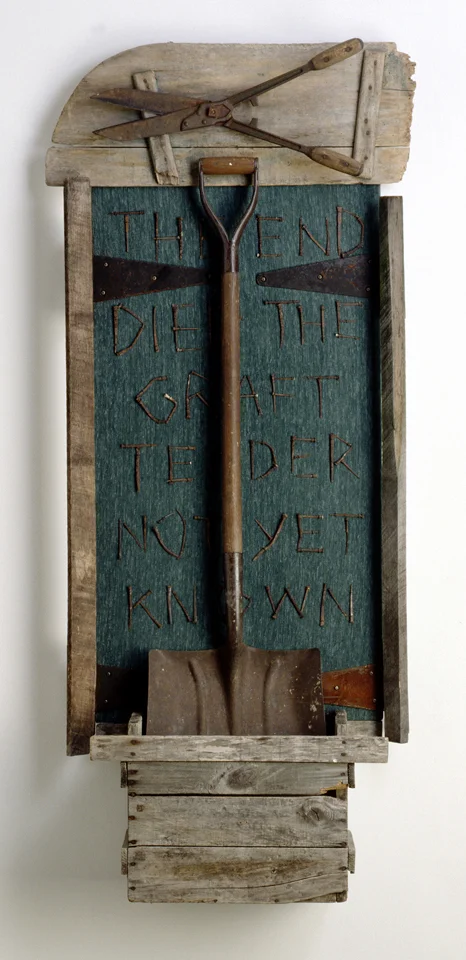
Last week we had a grafting workshop at the farm. Grafting is an old art form but it can also happen naturally. When two different trees grow close enough together so that their branches touch, eventually the bark will rub off, and their cambium layers will join. They will begin to feed each other and can also share traits. For example, if I wanted to grow a pinyon pine in New England where the climate is too cold for the pinyon root, I could plant a white pine and a pinyon pine side by side. Once they were both growing, I would bend their branches so they crossed over, and encourage their union by shaving some of the bark off of each branch where they touched. After they became joined like Siamese twins, I would cut off the roots of the pinyon pine, and saw off the top of the white pine. My new tree would have white pine roots, which are well adapted to our climate feeding the pinyon pine. I could then harvest delicious pine nuts in New England (unless the squirrels got to them first).
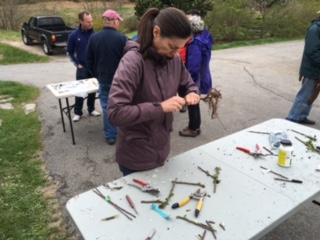
When I moved to the farm I didn’t understand the meaning of the word graft, nor did I know that all apple trees were grafted trees. Our workshop introduced the participants to the two most common types of grafts used on apple trees — the bark graft used to change the variety of an existing tree, and the whip and tongue graft used to graft onto one-year-old rootstock. Each person went home with one or two young apple trees chosen from the twenty-five varieties I had on hand for them to graft. (We’ll be offering this workshop again!)
What I didn’t tell the people taking the workshop was that during the first year after my move to the farm, I made a sculpture titled, The Graft. It was a challenging time. My marriage of twenty years had ended and I didn’t know the first thing about being an orchardist. The orchard of abandoned trees felt like a dying landscape. Almost a hundred of the three hundred trees were dead and needed to be removed. I wrote this poem on the sculpture using rusty nails to form the letters: “The end died — the graft tender — not yet known.”
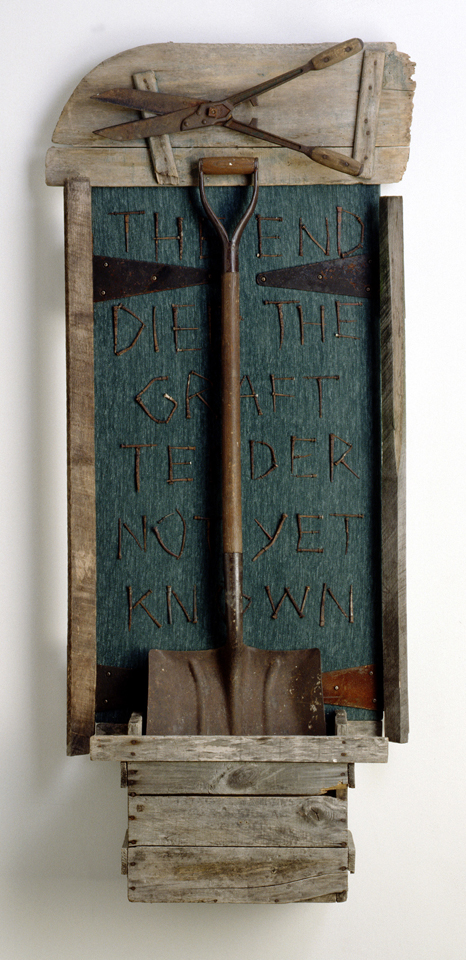
The Graft by Linda Hoffman
I didn’t really know what the word graft meant, but I must have unconsciously known that it was related to apples and that it expressed something that was tenuous. For when we graft, we never know if the graft will take. The young trees I grafted last week are sitting on the porch away from direct sun, and I check them daily to see if they have begun to push out new leaves above the graft union. That’s the sign of accomplishment — a few tender green leaves.

Grafted Apple Rootstocks
As far as the sculpture goes, I still feel tenderly about it. As far as my life, I feel like I can say that, after fifteen years, the graft took. Indeed, it has been an amazing journey of loss and rebirth. As for these new trees, I will let you know how they do in a future post.
Postscript: When I looked for a photograph of The Graft in folders of sculpture from the early years on the farm I couldn’t find it. I was all set to take a new one, when with my daughter's help, we found it in the folder of photographs of my sculpture from 1999 — two years before I moved to the farm. How could that be? I wondered. We checked the meta-data on the image and it was indeed 1999. I decided to leave this post as written demonstrating the prophetic connection between my art and life. It certainly suggests that art can enable us to bypass the rational mind and reveal a hidden truth.
Rooster, Rhubarb, Rue
I once had a problem with an ugly rooster. He was not proud and tough, but hen-pecked and feather bedraggled. One day he flew the coop and came to roost in the lower barn under my studio. I supplied him with his own food dispenser and water and he seemed happy enough. Day by day, his appearance improved. Around his neck he grew a lush white feather cape and from his tail, long green and blue feathers sprouted. He became so handsome a friend named him the Lone Ranger.
Our relationship developed and the Lone Ranger would come up and visit my studio whenever he heard me arrive. It was summer and I would always throw open the large garage door, so he had easy access. Strutting around among the sculptures, he seemed quite at home, though he never stayed too long. Only long enough to say hello, and check out anything new; and then he was on his way. I loved the sight of him with his white cape and appreciated the liveliness in his step.

The Lone Ranger
He must have missed henhouse life, though, because after his studio visit he would walk over to the chicken fence and peer in. I had, at the time, about thirty hens and two other roosters. He seemed especially conversant with the smallest rooster, a wiry white-and-black one. One day, thinking he really wanted to return to the flock, I opened the gate to give him the choice and I returned to the studio. After a few minutes, bedlam arose.
Those two roosters were at it. Lifting their spurs, each tried to pierce the abdomen of his opponent. They pecked at each other’s necks with their sharp beaks. I knew about the legendary cockfights in Bali, but I’d never seen one. Such brutality! To ward off more bloodshed, I wedged a shovel between them. It worked. The wiry black-and-white rooster retreated and I drove the Lone Ranger back outside the gate. So ended the Lone Ranger’s visitation rights. These two foes continued to do battle through the chicken wire fence, pacing back and forth like soldiers on opposite sides of a wall. But they could do no harm. It’s not only humans who have a propensity to make war.
As for the rhubarb, the plants grow at the end of one of the raspberry rows. A little like the ratio of roosters to hens — there are very few rhubarb plants compared to the number of raspberry plants. But the rhubarb always makes its presence known with a powerful surge, as it lifts the soil, the balled-up leaf stalk rises, and its umbrella-sized leaves unfurl, not unlike the Lone Ranger developing ornate feathers.
Like the rooster, there’s a ferocity about this plant not only the way it grows, but also in the way the name sounds. Try saying the word, rhu-barb, out loud. Directors in the Elizabethan theater apparently instructed actors in angry crowd scenes to repeat, “rhubarb, rhubarb, rhubarb” over and over — rhubarbers they were called. The sound of a furious mob filled the theater. My roosters did a lot of rhubarbing around the henhouse.

Rhubarb with a little horseradish and raspberries in the background.
Rhubarb is one of the earliest perennial plants we harvest. The name rhubarb comes from the early Greeks, who must have encountered it and thought it quite the barbarian, because they named it Rha (Greek for Volga, River in Siberia where they first encountered it) and barbarum (barbarian), for foreigner. We are so quick to judge the unfamiliar to be barbarous.
A few months after the cock fight, the Lone Ranger was gone. I found his rooster feathers scattered in the barn, most likely rooed by a coyote or a fisher, that snarly creature of the weasel family. (Rooed, I learned, is the verb for removing the fleece from sheep by hand-plucking the wool.)
The name rooster comes from his habit of roosting, or sitting on a fence post guarding his hens. The Puritans apparently preferred the word rooster to the more common word, cock, taken from the sound of the rooster at daybreak, ‘cock-a- doodle-doo.’ Though the roo in Rooster sounds like rue, the word first used in the 12th century to mean regret, it shares only its sound.
I rue the Lone Ranger’s passing.
Now try saying, Rooster, Rhubarb, Rue three times quickly . . .
What do Dolphins and Nettles Have in Common?
A reporter was asked to write a story about the intelligence of dolphins, but he had no interest in writing it, and was in fact, resentful of his editor. He reluctantly went to the research lab to talk with the scientists and accompanied them on their morning ritual of greeting the dolphins through the glass of a big aquarium. He asked questions and took down the scientists’ answers, but then he just leaned against the glass and smoked a few cigarettes, while the scientists finished up.
The other dolphins swam away, but a six-week-old youngster stayed behind staring at the man. The little fellow seemed to be interested in this guy leaning against the glass smoking cigarettes. The reporter got so irritated by the inquisitive dolphin; he turned to him, took a large puff on his cigarette, and blew the smoke at the dolphin. It worked. Off the dolphin swam.
Then a few moments later, the little one was back. He swam up to the glass, waited until the man saw him, and blew a puff at him. Of course, he didn’t have smoke, so what had he done? The baby dolphin had gone and sucked in a mouthful of his mother’s milk, swam back holding the milk in his mouth, and when the man turned towards him, the dolphin puffed back at him.
The reporter’s experience with this dolphin changed his notion of animal intelligence and communication; perhaps, his way of relating to the world.
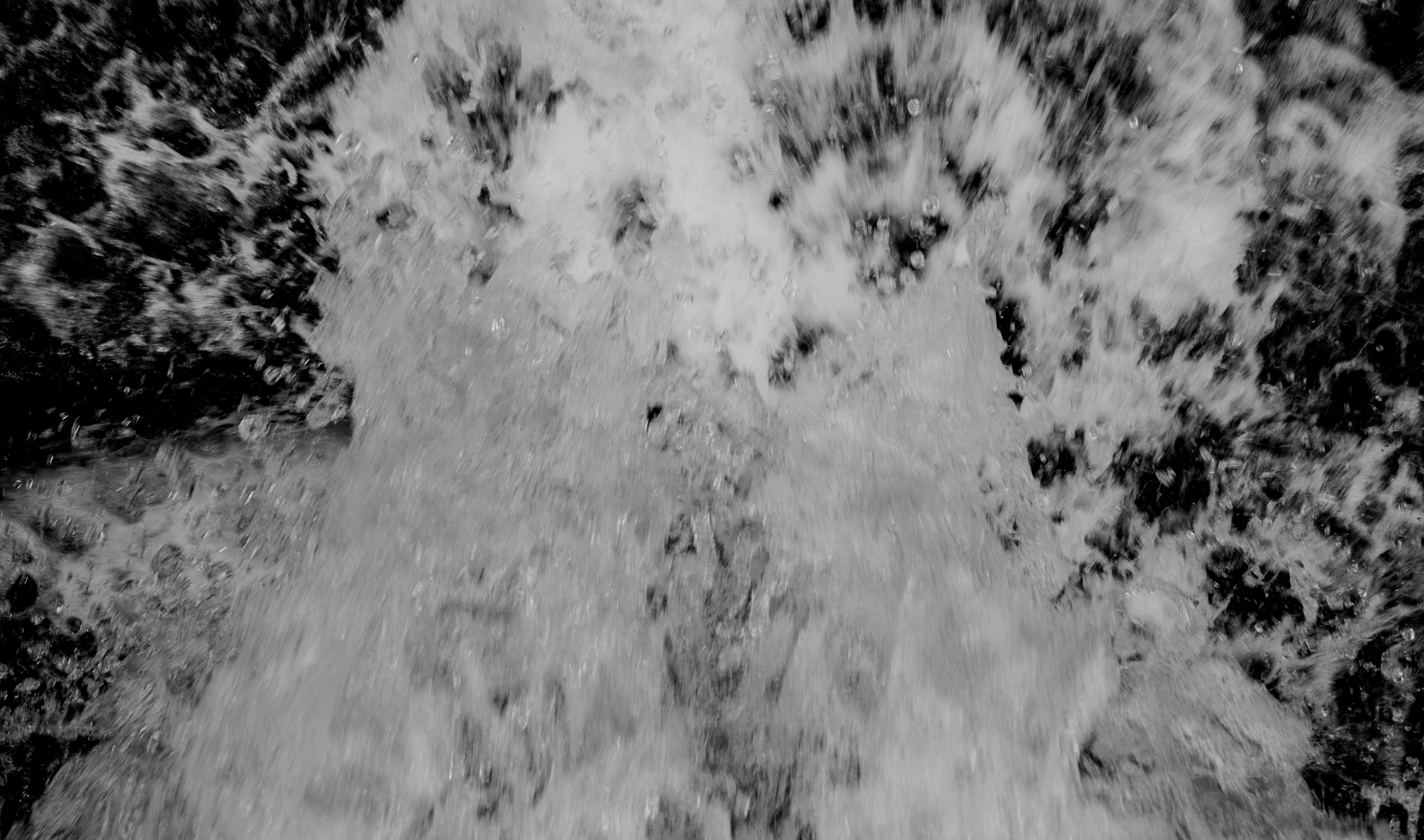
Water at Old Frog Pond Farm
I feel similarly about the intelligence of plants on the farm. Plants can speak, if we can only hear them. Nettles are the ones that call to me the loudest. Growing abundantly in two areas on the farm, they seem to be saying, “Use us. We’re your allies!”
During WWII, the English drank nettle tea when there was little else available. The Tibetans, when they were escaping the Chinese invasion of their country, likewise ate nettles. Stinging nettles provide protein, as well as minerals like iodine, magnesium, potassium, phosphorous, silica and sulfur, and they stimulate the immune system.
Occasionally I will make a nettle pesto, and I always dry some so that we can have nettle tea to drink all winter. But I also know that there are great benefits of nettles applied in the orchard as nettle tea. However, I don’t always get to spray this beneficial tea as early or as often as I like. Last year, I made a batch of nettles but let it steep for too long. The smell was so hideous I dumped it out and never did spray nettle tea all season.

Nettles growing (left) and raspberry rows (right)
A few days ago, while working in the raspberries I looked over at the nettle patch. It seemed uncanny that there should be so many growing. They called to me. I finished what I was doing, grabbed green rubber gloves so I wouldn’t get stung, scissors and a five gallon bucket, and filled it with a couple of pounds of the young nettle stalks. Then I added a couple of gallons of water. As I was cutting the nettles I thought, these young tender plants will be the perfect spray for the first green leaves on the apple trees. Later, when the leaves are hardier, I will use the more mature leaves. Nature works that way. While the plants didn’t puff milk at me like the young dolphin, they did let me know that they are there to be used.
The Persian mystic poet, Hafiz, felt similarly about trees.
An apple tree was concerned
about a late frost and losing its gifts
that would help feed a poor family close by.
Can't the clouds be generous with what falls from them?
Can't the sun ration itself with precision?
They can speak, trees,
they can say the sweetest things
but it takes special ears to hear them,
ears that have listened to people
with great care.
The nettles are steeping on the back porch. I occasionally think about that young dolphin and smile. The apple trees will soon blossom.
Search Blog
-
2025
- May 9, 2025 A View from the Tractor Seat
- Apr 11, 2025 Dig
-
2024
- Jan 7, 2024 Winter Wassail
-
2022
- Dec 11, 2022 Keeping Time
- Jun 17, 2022 This Apple-Shaped Earth
- Jan 23, 2022 What is a Jizo?
- Jan 16, 2022 An Invite and Housekeeping Update
- Jan 1, 2022 The Year of the Frog: What Orchardists Do While Apple Trees are Chilling
-
2021
- Oct 24, 2021 Figs
- Oct 3, 2021 The Artist and the Orchard: A Memoir
- Aug 8, 2021 Red-Fleshed Apples
- Jul 25, 2021 When We Were Trees
- Jun 27, 2021 Castor Beans—Who Knew?
- Jun 13, 2021 Spring Training at a Zen Monastery
- May 4, 2021 Our Trees are in Bloom
- Apr 18, 2021 Hooray!
- Jan 24, 2021 Wassailing, virtually!
- Jan 1, 2021 Sitting
-
2020
- Dec 21, 2020 Darkness to Light
- Nov 28, 2020 One Heart
- Sep 18, 2020 Juggling Flowers, Fruit, and Vegetables
- Aug 23, 2020 Refuge
- Aug 9, 2020 Bags of Fertilizer
- Aug 2, 2020 The Sermon of the Blue Heron
- Jul 26, 2020 What's the Buzz?
- Jul 19, 2020 Farm Moments
- Jul 12, 2020 Lost Wax
- Jul 5, 2020 Catalpa: The Hugging Tree
- Jun 28, 2020 Pedaling Peace
- Jun 21, 2020 See Change
- Jun 14, 2020 Lalla Unveiled
- Jun 7, 2020 Pond Alchemy
- May 31, 2020 The Birth of Fruit
- May 24, 2020 An Artist in the Orchard
- May 17, 2020 Walking the Land: Returning Home
- May 10, 2020 Stinging Nettles: Gifts from the Great Mother
- May 3, 2020 The Mystery of Swallow
- Apr 26, 2020 Aerial Bruststrokes
- Apr 19, 2020 Simple Pleasures
- Apr 12, 2020 Weeds and Other Gifts
- Apr 5, 2020 Remembering the Seeds
- Mar 29, 2020 Blow on the Embers
- Mar 22, 2020 Ripples
-
2019
- Nov 16, 2019 Tibet Impressions
- Nov 9, 2019 Forest Tales
- Oct 13, 2019 The Gift
- Aug 4, 2019 The Season is Apples, Berries, and Grandfather Fire
- Jun 8, 2019 Pointers for a Writing Life
- May 12, 2019 Mothers of the Earth
- Apr 6, 2019 The Apple-Shaped Earth
- Mar 23, 2019 You Don’t Know What You Have Till It’s Gone
- Feb 23, 2019 Generations
- Feb 9, 2019 What Are We Doing to the Earth, John Chapman?
-
2018
- Dec 31, 2018 Long Shadows
- Oct 6, 2018 A Pilgrimage to India
- Aug 18, 2018 Scrap Wrenn
- Aug 11, 2018 Off-the-Wall Comments from an Ignorant Farmer
- Jul 28, 2018 Creative Connect
- Jul 14, 2018 How is the Orchard?
- Jun 30, 2018 Which Way?
- Jun 16, 2018 Geese, Herons, Beavers, and the Baby Steps of a Lapsed Blogger
- Feb 24, 2018 Mama's Coupons — Good Forever
- Jan 27, 2018 January Ice
- Jan 13, 2018 The Muse
-
2017
- Dec 30, 2017 A Dream for the New Year
- Dec 23, 2017 A New Year for Apples
- Dec 16, 2017 Intuition
- Nov 22, 2017 Thanksgiving OM
- Nov 4, 2017 East Fork Pottery
- Oct 28, 2017 Putting Down New Roots
- Oct 21, 2017 A is for Art
- Oct 14, 2017 Eve domesticus
- Oct 7, 2017 A String Workshop
- Sep 30, 2017 After Applepicking
- Sep 23, 2017 Two Bad Women and One Good Apple
- Sep 16, 2017 Plein Air Poetry
- Sep 9, 2017 Cutting Off a Leg
- Sep 2, 2017 The Changing Landscape
- Aug 26, 2017 All About Art
- Aug 19, 2017 My First Visit to the Farm
- Aug 12, 2017 The First Food
- Aug 5, 2017 A Teapot, a Woman, and maybe a Boat
- Jul 29, 2017 A Raspberry Dilemma
- Jul 22, 2017 Consider the Miracle
- Jul 15, 2017 Meeting Ekphrasis
- Jul 8, 2017 Ripening Fruit
- Jul 1, 2017 The Voice of The Caterpillar
- Jun 24, 2017 Goumi — An Unusual Fructus
- Jun 17, 2017 Concord, an American Bloomsbury
- Jun 10, 2017 The World Is Bonkers — Shall I Laugh or Cry?
- Jun 3, 2017 Bonkers, a Revolutionary Apple
- May 27, 2017 Guardians of the Swamp
- May 20, 2017 There are Mushrooms and There are Morels
- May 13, 2017 "What's in a Name?"
- May 6, 2017 Bloom Follows Pink: Orchard Pollination
- Apr 29, 2017 The Orchard Is at Pink
- Apr 22, 2017 Natural Farming — Part 2 (continuation from last Sunday's blog)
- Apr 15, 2017 Natural Farming — Part 1
- Apr 8, 2017 Boats, Figures, and Catching Fish
- Apr 1, 2017 A Man with a Mission: The Nuts and Bolts of Bronze Casting
- Mar 25, 2017 A Chalice of Spirit, Art, and Nature
- Mar 18, 2017 Hanami — Blossom Viewing
- Mar 11, 2017 Soil Redemption Song
- Mar 4, 2017 Food is Primary Care
- Feb 25, 2017 Pomme de Terre
- Feb 18, 2017 Organic Certification
- Feb 11, 2017 Tantalizing Fruit
- Feb 4, 2017 The Myths of History
- Jan 28, 2017 The Orchard in Winter
- Jan 21, 2017 The Hi-Line
- Jan 14, 2017 Artistic, Botanical, and Social Diversity
- Jan 7, 2017 Where is Eden?
-
2016
- Dec 31, 2016 The Creative Heart
- Dec 24, 2016 A Christmas Tale
- Dec 17, 2016 Who are the Crones?
- Dec 10, 2016 The Olympic Bell (Part Two)
- Dec 3, 2016 Overheard in the Apple Orchard in Early December
- Nov 26, 2016 The Lessons of a Tortoise
- Nov 19, 2016 In the Studio
- Nov 12, 2016 Even in Darkness
- Nov 5, 2016 Southern Apples, an Elephant, Monkey, Rabbit, and Bird, Two Mango Trees and a Birthday
- Oct 29, 2016 The Tools of Art
- Oct 22, 2016 Labyrinths
- Oct 15, 2016 Repairing the Broken
- Oct 8, 2016 When You Are No More
- Oct 1, 2016 Creation Rain
- Sep 24, 2016 Breaking the Glass
- Sep 17, 2016 String Art
- Sep 10, 2016 Poetry and Photosynthesis: It's all in the Leaves
- Sep 3, 2016 In the Plenty of Time
- Aug 27, 2016 Witch Doctors
- Aug 20, 2016 Listen Coyote
- Aug 13, 2016 Milkweed in the Orchard
- Aug 6, 2016 Some People See a Turtle
- Jul 30, 2016 Arborshaping
- Jul 23, 2016 Joseph Wheelwright: Sculptor of Stones and Trees
- Jul 16, 2016 Asian Pears
- Jul 9, 2016 Gold Leaf, Grief, and the Creative Process
- Jul 2, 2016 The Olympic Bell (Part One)
- Jun 25, 2016 Around the Mulberry Bush
- Jun 18, 2016 Avoiding Apples
- Jun 11, 2016 Fructus
- Jun 4, 2016 Astonishing Apples
- May 28, 2016 Scare the Caterpillars
- May 21, 2016 Join the Club!
- May 14, 2016 The Graft
- May 7, 2016 Rooster, Rhubarb, Rue
- Apr 30, 2016 What do Dolphins and Nettles Have in Common?
- Apr 23, 2016 Art Prunings
- Apr 16, 2016 A Few of the First Arrivals
- Apr 9, 2016 Taste the Spirit of Sustainable Agriculture
- Apr 2, 2016 First Orchard Spray - March 22-24, 2016
- Mar 26, 2016 Hawkeye Apple
- Mar 19, 2016 Desiring the Almata Apple
- Mar 12, 2016 Ugly Fruit
- Mar 5, 2016 Winter Tracks
- Feb 27, 2016 Splash
- Feb 20, 2016 Pruning
- Feb 13, 2016 Orchard Ruminants
- Feb 6, 2016 A Gathering of Seeds
- Jan 30, 2016 Orchard Dragons
- Jan 23, 2016 Tree Rings
- Jan 17, 2016 The Fallen Tree
- Jan 7, 2016 Wassailing the Apple Trees
- Jan 1, 2016 The New Year