LINDA HOFFMAN
Overheard in the Apple Orchard in Early December
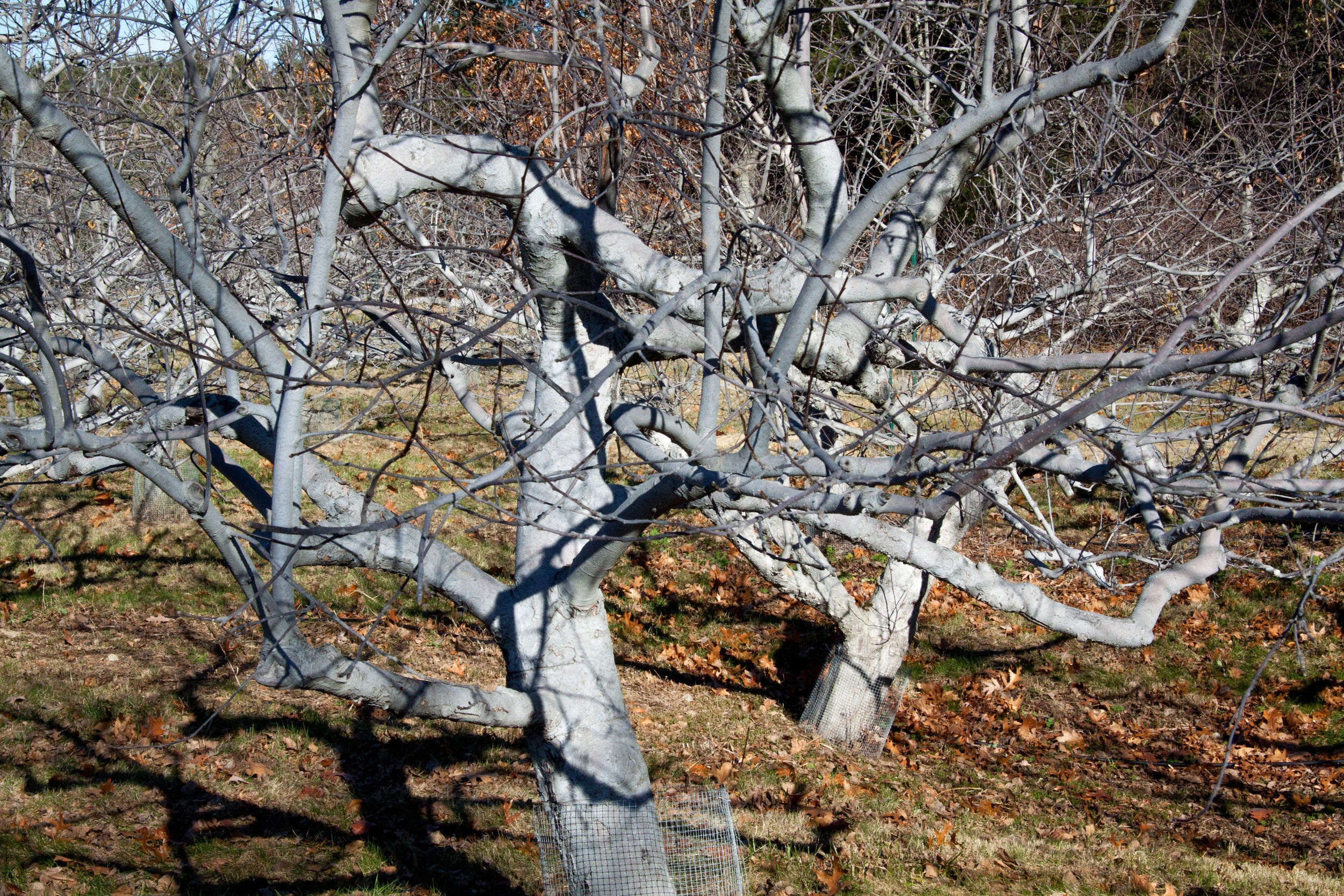
Apple Tree on a December Morning
. . . everything inside my wooden body slows down as I enter dormancy. My only work is to prepare for winter, knowing frost and snow will soon arrive and the soft belly of earth under my branches will harden. I shake off my last attached leaves. With no food to make all winter long I won’t need any of them. I will use my stash of nutrients to keep my buds healthy and my cells alive.
The freezing temperatures could do harm, but I will prepare. My cell membranes will change and become more pliable so that water can leave the cells and fill the spaces between, forming a layer of insulation. But that’s not all. Earlier in the fall I converted starches to sugars, and this sweetened, viscous syrupy liquid is my own form of anti-freeze.
Winter is a good time for contemplation. Once someone left a slim, small book titled, Four Huts: Asian Writings on the Simple Life, under my limbs. The four authors, one Chinese and three Japanese, all from different centuries, wrote about the simple homes they built for themselves after they retired from worldly duties. In describing their lives, they conveyed how much they were drawn to live close to nature and how much they appreciated the arts, especially music.
I know what it’s like to get rid of things, to scale back to the necessary. I do this every autumn when I stop thinking about producing, about creating, and am able to settle down, notice more about my surroundings, and focus on what is really needed for survival. After all, my fruit buds are all set; that happened in mid-July. I can be content now with a simple life.
Another man also wrote in the woods near a pond not too far from here.
I went to the woods because I wished to live deliberately, to front only the essential facts of life, and see if I could not learn what it had to teach, and not, when I came to die, discover that I had not lived.
This man influenced countless people with his writings, but I have more in common with Matsu Basho, one of the Japanese authors included in that little book. In fact, the farm where I live take its name from one of his poems.
The old pond
A frog jumped in,
Kerplunk! tr: Allen Ginsberg

Returning Home, from the Ox Herding Series, Sculpture LH
In describing life in the little hut where he wrote many haiku, Basho said,
And when the sun has begun to sink behind the rim of hills, I sit quietly in the evening waiting for the moon so I may have my shadow for company . . .
I do that too!
Moon,
Where are you?
The Lessons of a Tortoise
Chinua Achebe is one of Africa’s great storytellers. In one of his books, Anthills of the Savannah, he includes a fable about a leopard and tortoise:
The leopard had been looking for the tortoise and hadn’t found him for a long time. On this day, on a lonely road, he suddenly chanced upon Tortoise, and so he said, “Aha! At last, I’ve caught you. Now get ready to die.” Tortoise of course knew that the game was up and so he said, “Okay, but can I ask you a favor?” and Leopard said, “Well, why not?” Tortoise said, “Before you kill me, could you give me a few moments just to reflect on things?” Leopard thought about it — he wasn’t very bright — and he said, “Well, I don’t see anything wrong with that. You can have a little time.” And so Tortoise, instead of standing still and thinking, began to do something very strange: he began to scratch the soil all around him and throw sand around in all directions. Leopard was mystified by this. He said, “What are you doing? Why are you doing that?” Tortoise said: “I’m doing this because when I’m dead, I want anybody who passes by this place to stop and say, ‘Two people struggled here. A man met his match here.
I had to read this tale again to make sense out of it. I knew there was a lesson, but I couldn’t articulate it immediately. I tend to best understand the world visually and viscerally, not intellectually. I put myself in the tortoise’s position and imagined thrashing my own arms and legs. I wasn’t going to just sit back and let the leopard pounce and eat my body. I was going to engage, to struggle, and to be active till the end.
Last weekend my partner and I attended a production of the musical, Top Eye Open, written by Dillon Bustin at Hibernian Hall in Roxbury. The play takes place in Boston, in 1850, the year the Fugitive Slave Act was signed, a mandate that required states to return runaway slaves to their masters and made it criminal for anyone to help fugitive slaves. The play’s narrative line is formed around the lives of several runaway slaves and the people who helped them towards freedom. Hearing these stories lit the embers in our hearts.

Runaway, wood and bronze figure, LH
As the last applause faded, a woman in the audience stood up and said, ‘I’m not speaking for the production or Hibernian Hall, but this play is a great reminder. Today, officials in Cambridge declared their city, a sanctuary city. We need to ask the mayor of Boston to follow. We all need to keep our Top Eye Open,” referring to the fact that if you were once a slave, even in the North, you needed to be careful whom you trusted, and even when sleeping, keep your “top eye” open. She ended by saying, “Not on my watch!”
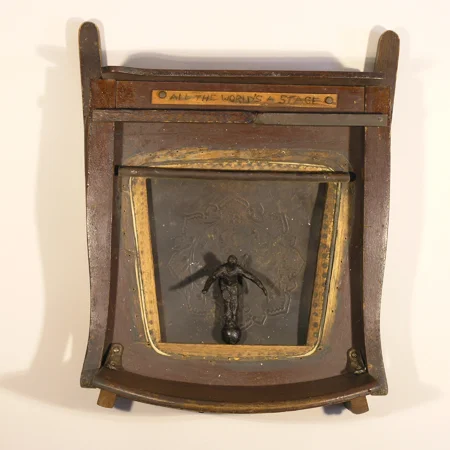
All the World's a Stage, restructured chair and bronze figure, LH
Cambridge has been a sanctuary city since 1985, that is, a city that doesn’t cooperate with U.S. customs and immigration enforcement policies. It stands to lose federal funding when Donald Trump comes in to office. Most of us don’t know about sanctuary cities because we are not immigrants:
As a Sanctuary City, Cambridge affirms the basic human rights and dignity of every human being and provides education, health and other services to all residents of Cambridge, regardless of their immigration status.
Stories are powerful reminders of those who have struggled before us. On this weekend of Thanksgiving, let’s all remember to struggle against injustice and complacency. Let anyone writing the history of these turbulent times declare, “The people rose out of their dormancy in unforeseen numbers and the dirt flew in all directions. With sand in his eyes and dirt covering his spots, the leopard slunk away. Then, as the world watched and waited, a bale of turtles flapped their way out of the ground. Their mother’s legacy survives, even stronger than before.”
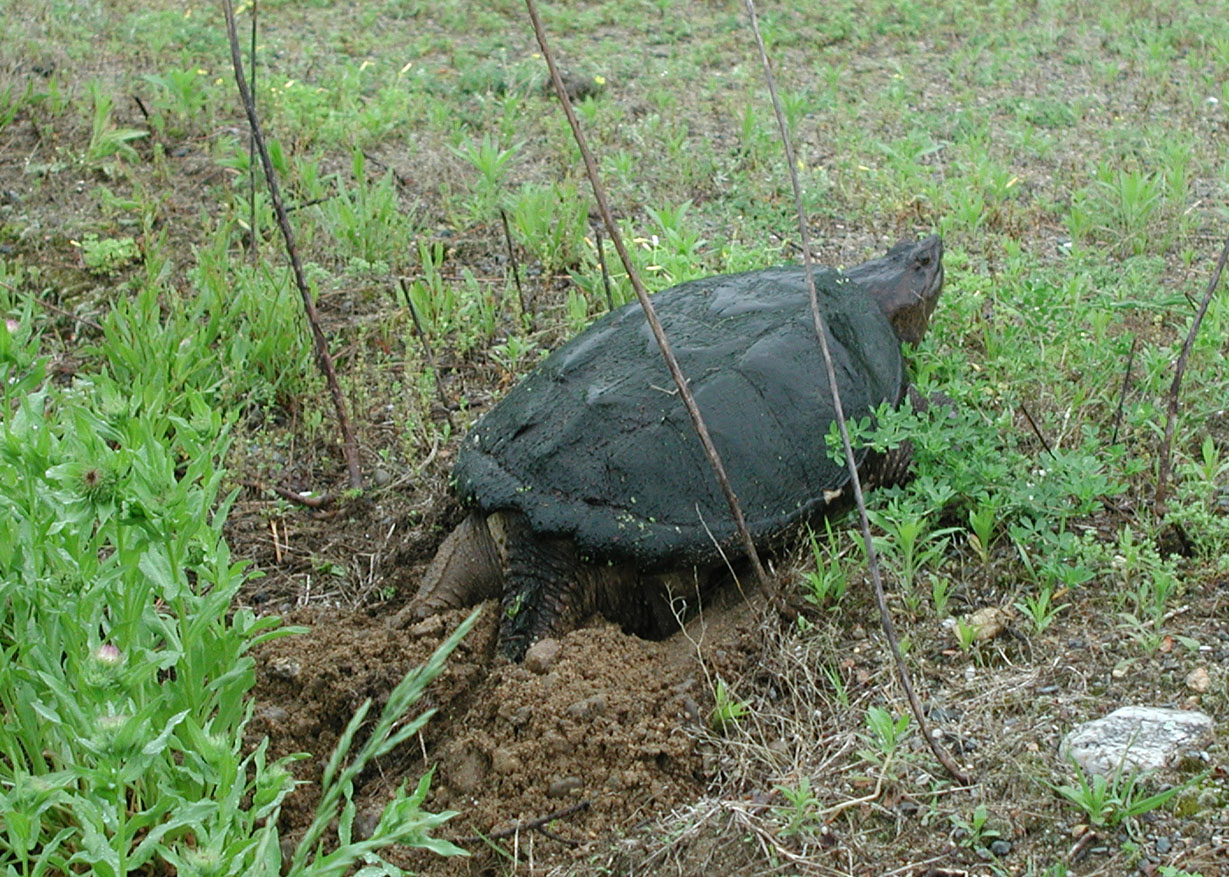
Snapping Turtle Laying Eggs at Old Frog Pond Farm
In the Studio
Long I lived checked by the bars of a cage;
Now I have turned again to Nature and Freedom.
—T’ao Chi’en, tr. Arthur Waley
I think about the purpose of my sculpture while our president-elect considers appointments of men to positions of power — men who are openly anti-Semitic, anti-abortion, anti-gay, anti-anyone different from that face they see in the mirror.

Birdcage, bronze figure, wood, and found objects, LH
When I am working in the studio, I have to separate myself from the frenzy of the world and quiet my mind. If I bring the chaos of the world into a sculpture I create more chaos. The process requires me to enter a sanctified space and focus on one thing. Post-election, I am finding this hard to do.
Two weeks ago, I submitted Birdcage along with several other sculptures for an exhibition on the theme, Home, Self, Spirit, Space. The prospectus asked for a statement about the work. Capturing what I do in a few sentences is always challenging, but I wrote, “I create small bronze figures and use either wood or found objects as ‘homes’ for these figures to inhabit. The natural materials and patina of age of the old objects give this work a context outside of the modern world. The sculpture creates a contained and lucid space the viewer can enter.”

In the Wave, bronze figure and wood, LH
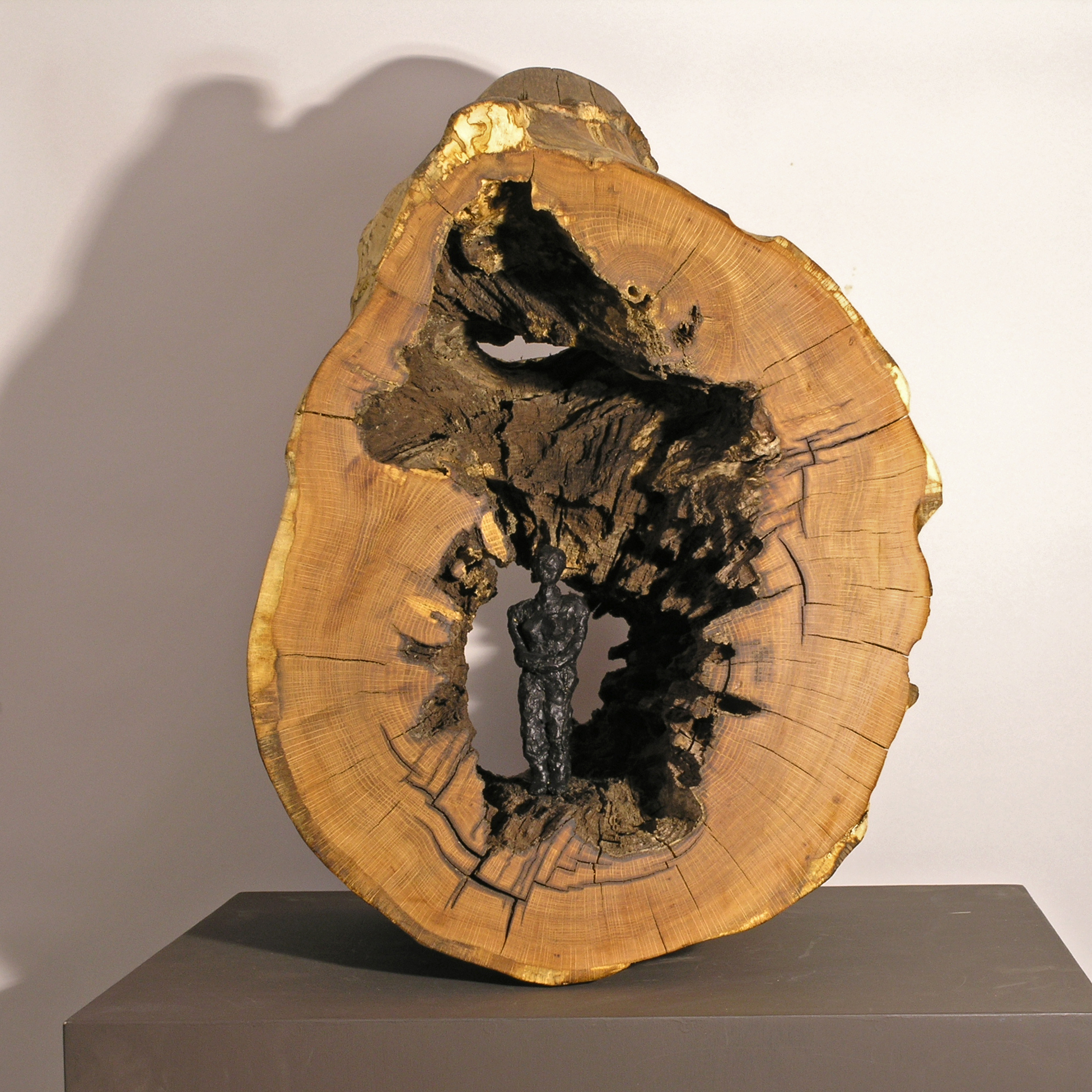
Woman in Log, bronze figure and wood, LH
An orchard is also such a space. The wood nymph, Pomona, one of those lesser gods in the Roman pantheon, was the Goddess of orchards. She is often pictured with a curved pruning knife, walking among her trees, splitting the bark, and inserting grafts. She waters them from a nearby stream with the same attention one would give a new lover. Yesterday, my daughter Ariel and I walked through our orchard. We pruned out an armful of water sprouts, those twigs that grow several feet straight up in one year on apple trees. We’re working together on a sculpture for an exhibit using apple prunings as the primary medium. Ariel is grafting tree branches, covering the largest wall in the studio while I sculpt the small figures that will populate the tree. We work in silence, usually without stopping for lunch, only speaking when it is about the process.

Ariel Matisse grafting apple branches.
Some art is explicitly about fighting injustice and racism, it speaks loudly and will not be silenced. And it is important! But right now, I find it helpful to sit quietly, sculpt small figures and bend apple branches with my daughter. It feels good to work in the studio where we can recharge and aspire to make art that will breathe fresh air into the world.
P.S. Look closely at Birdcage, the door is open!
Even in Darkness
A Jewish law requires farmers to keep Shemitah, to let their fields lie fallow for a full year, once every seven years. It is written in the Torah, the holy book. During the Shemitah year, the farmer opens the orchard gate to everyone. This wild fruit is free for the picking.
Six years you shall sow your field, and six years you shall prune your vineyard, and gather in its fruit. But in the seventh year shall be a Sabbath of solemn rest for the land, a Sabbath for G‑d . . .
The time of Shemitah is a period for the land to rest and for the farmers to devote to their spiritual life. Of course, farmers with animals still need to care for them, but the intent is for the farmers to take a break from physical labor, and dedicate themselves to inner work.

Winter Barn, 2016, Cloth, Found Objects, Wood, Bronze Figure, 2' x 2', LH
Taking a little time to be in quiet within the day or the week is keeping Shemitah on a small scale, similar to observing Sabbath or attending church. I like to rise early in the dark hours before the trafficking of the world begins. The noises I hear are the quiet hooting of distant owls and our parrots cooing before I slip the night blankets off their cages. It’s like going to the monastery for a few days, which I did last weekend for the Wild Grasses Sesshin. A Sesshin in Zen Buddhism is a silent retreat when participants follow a strict schedule of long hours of meditation, ritualized sharing of meals, and work practice. Silence, both inner and outer, is at the heart of the retreat. We walk with heads down, eyes lowered, making no eye contact, trying to keep our attention within our own minds and not think about what is happening around us.
This retreat was different than the monthly Sesshin at Zen Mountain Monastery, because it was all women. The layout of the meditation hall, usually fastidious rows of square meditation cushions in formal lines, was, for this retreat, softened by forming two concentric circles. We were a community of women. We shared our pain, our joy, and our equanimity, all mysteriously in and through the silence. We ate passing large bowls of food from one to the other and ladling it out into our bowls. The hot water came at the end to clean the bowls, and we sipped this offering and were grateful for the delicious food to sustain our practice, prepared by the men at the monastery who supported this time when the women could be together.
We noticed in taking time out from the company of men a deeper relaxation into the space of our own bodies. When I returned home and was telling my partner, Blase, and our friend, Ron, about the retreat, they both said, “That’s how men feel, too, when they gather without women.” Blase and Ron have been part of the men’s workshop world, leading programs such as Men’s Wisdom Council and Mythic Warrior for many years. It’s good for the sexes to separate and then come back together, carrying what we have learned about ourselves.
Susan Sontag said in the 80’s in response to the frenzy of large-scale art, “There is too much art making and not enough listening.” I know I need more of this deep listening, but it can be challenging to find time in a busy day to pause and be grateful, and to listen with my whole body. Poets know this kind of deep listening. I love the description of the poet Rilke, a guest in the Duino castle near Trieste, hearing the verses that later became the Duino Elegies, ten mystical and haunting poems of despair, loneliness, and ecstasy.
Farmers used to write during the winter months, the resting time. Today, growing seasons are extended with heated green houses and there’s little break between planting garlic in late fall, digging up root crops, and starting seeds and setting out early greens. It's hard to find that quiet time.
I’ve read that 21st century farmers in Israel find that keeping Shemitah is challenging, and they have ways to get around it. The reality of our time is different from 2500 years ago, but the intention remains a good one. It is necessary to push that pause button, to write poetry, to take time to taste the fruit. Especially in times of darkness, it’s good to gather with friends and communities, listen deeply, and share the fruits we discover.
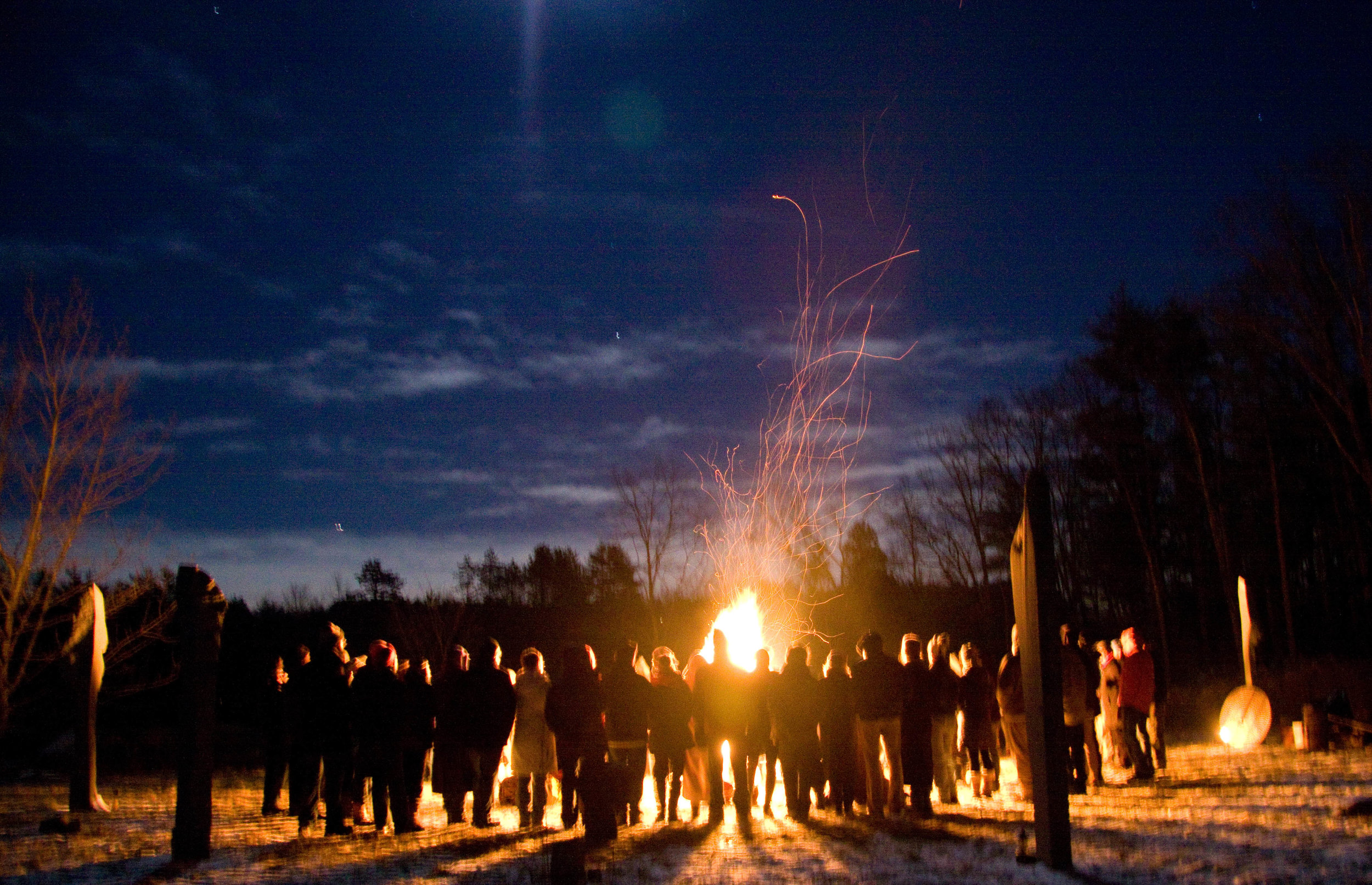
Solstice Celebration, Old Frog Pond Farm, 2014
Especially as the days grow darker; remember there’s even more work to do. We must get involved with issues we care about, support women and children everywhere, and especially protect the earth — she’s going to need our help more than ever.
. . . because truly being here is so much; because everything here
apparently needs us, this fleeting world, which in some strange way
keeps calling to us . . .
from Rilke’s Ninth Elegy, tr. Stephen Mitchell
Search Blog
-
2025
- May 9, 2025 A View from the Tractor Seat
- Apr 11, 2025 Dig
-
2024
- Jan 7, 2024 Winter Wassail
-
2022
- Dec 11, 2022 Keeping Time
- Jun 17, 2022 This Apple-Shaped Earth
- Jan 23, 2022 What is a Jizo?
- Jan 16, 2022 An Invite and Housekeeping Update
- Jan 1, 2022 The Year of the Frog: What Orchardists Do While Apple Trees are Chilling
-
2021
- Oct 24, 2021 Figs
- Oct 3, 2021 The Artist and the Orchard: A Memoir
- Aug 8, 2021 Red-Fleshed Apples
- Jul 25, 2021 When We Were Trees
- Jun 27, 2021 Castor Beans—Who Knew?
- Jun 13, 2021 Spring Training at a Zen Monastery
- May 4, 2021 Our Trees are in Bloom
- Apr 18, 2021 Hooray!
- Jan 24, 2021 Wassailing, virtually!
- Jan 1, 2021 Sitting
-
2020
- Dec 21, 2020 Darkness to Light
- Nov 28, 2020 One Heart
- Sep 18, 2020 Juggling Flowers, Fruit, and Vegetables
- Aug 23, 2020 Refuge
- Aug 9, 2020 Bags of Fertilizer
- Aug 2, 2020 The Sermon of the Blue Heron
- Jul 26, 2020 What's the Buzz?
- Jul 19, 2020 Farm Moments
- Jul 12, 2020 Lost Wax
- Jul 5, 2020 Catalpa: The Hugging Tree
- Jun 28, 2020 Pedaling Peace
- Jun 21, 2020 See Change
- Jun 14, 2020 Lalla Unveiled
- Jun 7, 2020 Pond Alchemy
- May 31, 2020 The Birth of Fruit
- May 24, 2020 An Artist in the Orchard
- May 17, 2020 Walking the Land: Returning Home
- May 10, 2020 Stinging Nettles: Gifts from the Great Mother
- May 3, 2020 The Mystery of Swallow
- Apr 26, 2020 Aerial Bruststrokes
- Apr 19, 2020 Simple Pleasures
- Apr 12, 2020 Weeds and Other Gifts
- Apr 5, 2020 Remembering the Seeds
- Mar 29, 2020 Blow on the Embers
- Mar 22, 2020 Ripples
-
2019
- Nov 16, 2019 Tibet Impressions
- Nov 9, 2019 Forest Tales
- Oct 13, 2019 The Gift
- Aug 4, 2019 The Season is Apples, Berries, and Grandfather Fire
- Jun 8, 2019 Pointers for a Writing Life
- May 12, 2019 Mothers of the Earth
- Apr 6, 2019 The Apple-Shaped Earth
- Mar 23, 2019 You Don’t Know What You Have Till It’s Gone
- Feb 23, 2019 Generations
- Feb 9, 2019 What Are We Doing to the Earth, John Chapman?
-
2018
- Dec 31, 2018 Long Shadows
- Oct 6, 2018 A Pilgrimage to India
- Aug 18, 2018 Scrap Wrenn
- Aug 11, 2018 Off-the-Wall Comments from an Ignorant Farmer
- Jul 28, 2018 Creative Connect
- Jul 14, 2018 How is the Orchard?
- Jun 30, 2018 Which Way?
- Jun 16, 2018 Geese, Herons, Beavers, and the Baby Steps of a Lapsed Blogger
- Feb 24, 2018 Mama's Coupons — Good Forever
- Jan 27, 2018 January Ice
- Jan 13, 2018 The Muse
-
2017
- Dec 30, 2017 A Dream for the New Year
- Dec 23, 2017 A New Year for Apples
- Dec 16, 2017 Intuition
- Nov 22, 2017 Thanksgiving OM
- Nov 4, 2017 East Fork Pottery
- Oct 28, 2017 Putting Down New Roots
- Oct 21, 2017 A is for Art
- Oct 14, 2017 Eve domesticus
- Oct 7, 2017 A String Workshop
- Sep 30, 2017 After Applepicking
- Sep 23, 2017 Two Bad Women and One Good Apple
- Sep 16, 2017 Plein Air Poetry
- Sep 9, 2017 Cutting Off a Leg
- Sep 2, 2017 The Changing Landscape
- Aug 26, 2017 All About Art
- Aug 19, 2017 My First Visit to the Farm
- Aug 12, 2017 The First Food
- Aug 5, 2017 A Teapot, a Woman, and maybe a Boat
- Jul 29, 2017 A Raspberry Dilemma
- Jul 22, 2017 Consider the Miracle
- Jul 15, 2017 Meeting Ekphrasis
- Jul 8, 2017 Ripening Fruit
- Jul 1, 2017 The Voice of The Caterpillar
- Jun 24, 2017 Goumi — An Unusual Fructus
- Jun 17, 2017 Concord, an American Bloomsbury
- Jun 10, 2017 The World Is Bonkers — Shall I Laugh or Cry?
- Jun 3, 2017 Bonkers, a Revolutionary Apple
- May 27, 2017 Guardians of the Swamp
- May 20, 2017 There are Mushrooms and There are Morels
- May 13, 2017 "What's in a Name?"
- May 6, 2017 Bloom Follows Pink: Orchard Pollination
- Apr 29, 2017 The Orchard Is at Pink
- Apr 22, 2017 Natural Farming — Part 2 (continuation from last Sunday's blog)
- Apr 15, 2017 Natural Farming — Part 1
- Apr 8, 2017 Boats, Figures, and Catching Fish
- Apr 1, 2017 A Man with a Mission: The Nuts and Bolts of Bronze Casting
- Mar 25, 2017 A Chalice of Spirit, Art, and Nature
- Mar 18, 2017 Hanami — Blossom Viewing
- Mar 11, 2017 Soil Redemption Song
- Mar 4, 2017 Food is Primary Care
- Feb 25, 2017 Pomme de Terre
- Feb 18, 2017 Organic Certification
- Feb 11, 2017 Tantalizing Fruit
- Feb 4, 2017 The Myths of History
- Jan 28, 2017 The Orchard in Winter
- Jan 21, 2017 The Hi-Line
- Jan 14, 2017 Artistic, Botanical, and Social Diversity
- Jan 7, 2017 Where is Eden?
-
2016
- Dec 31, 2016 The Creative Heart
- Dec 24, 2016 A Christmas Tale
- Dec 17, 2016 Who are the Crones?
- Dec 10, 2016 The Olympic Bell (Part Two)
- Dec 3, 2016 Overheard in the Apple Orchard in Early December
- Nov 26, 2016 The Lessons of a Tortoise
- Nov 19, 2016 In the Studio
- Nov 12, 2016 Even in Darkness
- Nov 5, 2016 Southern Apples, an Elephant, Monkey, Rabbit, and Bird, Two Mango Trees and a Birthday
- Oct 29, 2016 The Tools of Art
- Oct 22, 2016 Labyrinths
- Oct 15, 2016 Repairing the Broken
- Oct 8, 2016 When You Are No More
- Oct 1, 2016 Creation Rain
- Sep 24, 2016 Breaking the Glass
- Sep 17, 2016 String Art
- Sep 10, 2016 Poetry and Photosynthesis: It's all in the Leaves
- Sep 3, 2016 In the Plenty of Time
- Aug 27, 2016 Witch Doctors
- Aug 20, 2016 Listen Coyote
- Aug 13, 2016 Milkweed in the Orchard
- Aug 6, 2016 Some People See a Turtle
- Jul 30, 2016 Arborshaping
- Jul 23, 2016 Joseph Wheelwright: Sculptor of Stones and Trees
- Jul 16, 2016 Asian Pears
- Jul 9, 2016 Gold Leaf, Grief, and the Creative Process
- Jul 2, 2016 The Olympic Bell (Part One)
- Jun 25, 2016 Around the Mulberry Bush
- Jun 18, 2016 Avoiding Apples
- Jun 11, 2016 Fructus
- Jun 4, 2016 Astonishing Apples
- May 28, 2016 Scare the Caterpillars
- May 21, 2016 Join the Club!
- May 14, 2016 The Graft
- May 7, 2016 Rooster, Rhubarb, Rue
- Apr 30, 2016 What do Dolphins and Nettles Have in Common?
- Apr 23, 2016 Art Prunings
- Apr 16, 2016 A Few of the First Arrivals
- Apr 9, 2016 Taste the Spirit of Sustainable Agriculture
- Apr 2, 2016 First Orchard Spray - March 22-24, 2016
- Mar 26, 2016 Hawkeye Apple
- Mar 19, 2016 Desiring the Almata Apple
- Mar 12, 2016 Ugly Fruit
- Mar 5, 2016 Winter Tracks
- Feb 27, 2016 Splash
- Feb 20, 2016 Pruning
- Feb 13, 2016 Orchard Ruminants
- Feb 6, 2016 A Gathering of Seeds
- Jan 30, 2016 Orchard Dragons
- Jan 23, 2016 Tree Rings
- Jan 17, 2016 The Fallen Tree
- Jan 7, 2016 Wassailing the Apple Trees
- Jan 1, 2016 The New Year