LINDA HOFFMAN
Creative Connect
Sheets of rain slice across the pond, while our thirty-eight resident Canada geese poke at their feathers or calmly stare. Human wellbeing often depends on being dry, out of the rain, but in those moments when I enjoy the geese, I also enjoy getting wet.
You might call such a moment being alive, but as an artist I call it being creative. For by creativity I mean the potential to connect with the world outside oneself, whether near to home—the geese in the rain, a field of wildflowers, or far from home—the terror of immigrant children separated from their parents.
When I experience long periods without this creative energy rising, I don’t feel connected. I fall into an abyss of my own mind, a morass of thinking about myself. Creativity makes me feel connected to the world. We all share this experience; it is inherently human.
The opposite is also true. We can be in the most beautiful place and not appreciate it; we block the beauty from entering our marrow. We can be in the most loving relationship and not allow the love to enter. When we don’t connect, we don't belong. Caught in the rain, we fear our clothing is getting wet or ruined, and we make it a problem. We hurry, frown, hunch up, forget the larger picture.
This longing to be connected with a big 220 amp plug drives my art. Even when I am grieving or burdened, when the world appears deeply troubled and dysfunctional, I try to keep this connective amperage flowing. For I know life will continue to change like wood to ash or leaves to compost, and human creativity is recognizing and living with these transitions and using them. A friend sent me a link to an article about an artist's painting exhibit. The artist, Kelly Thorndike, is an Iraqi vet who was stationed at the horrific Abu Ghraib prison when a bomb went off. In the second before shrapnel hit and seriously wounded him, Thorndike saw a nearby inmate blown to pieces. It’s worth a read. Creative work can help us process events and feelings we store in our minds.
A few nights ago, I was finishing a new sculpture, a mandala of sorts, with a great hollow tree in the center, and small meditating figures surrounding it.

Sculpture in process leaning on the wall.
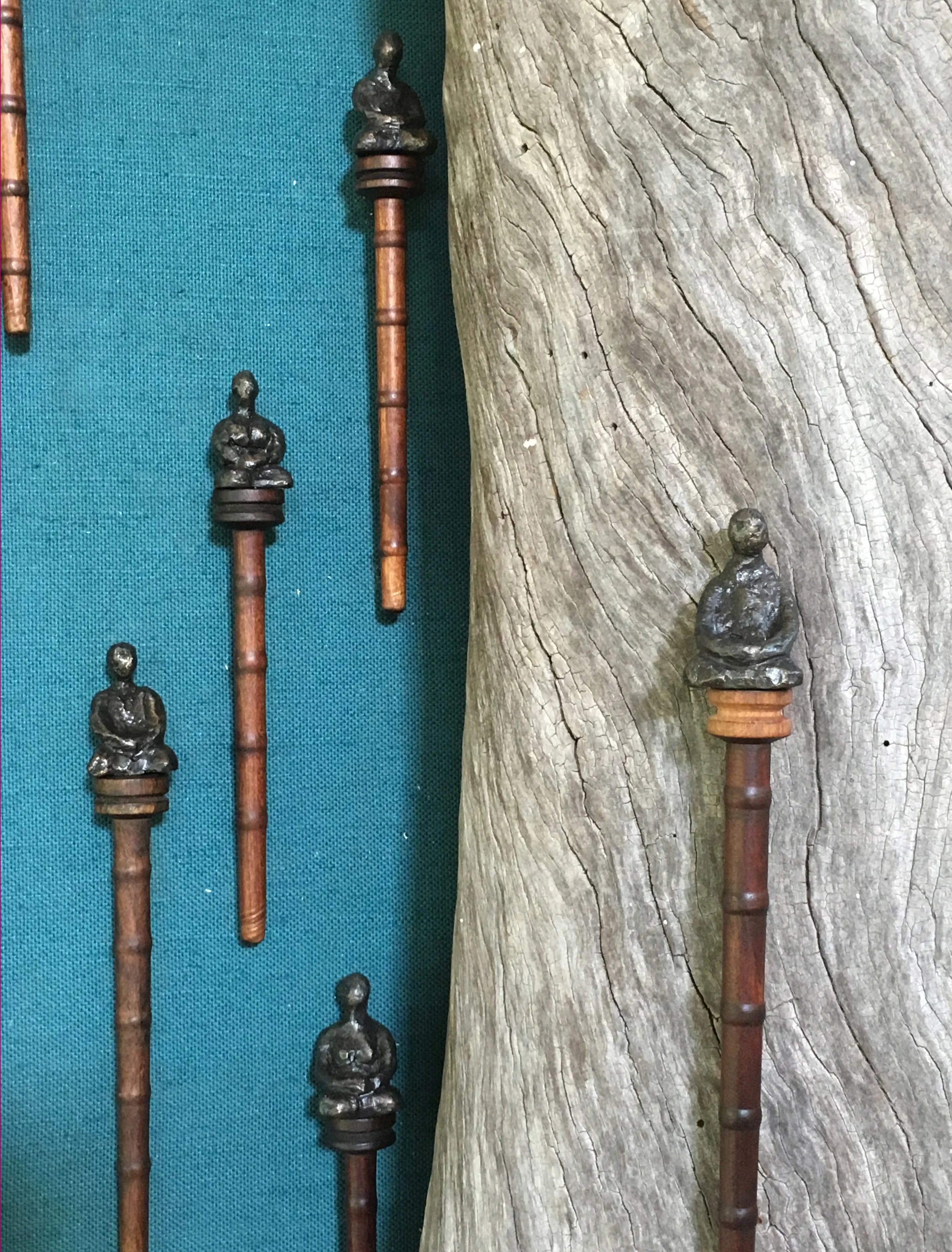
I think the outer work is complete, but I have one part yet to finish. The Buddhas are sitting on wooden dowels, bobbins from an old textile mill in Lowell.
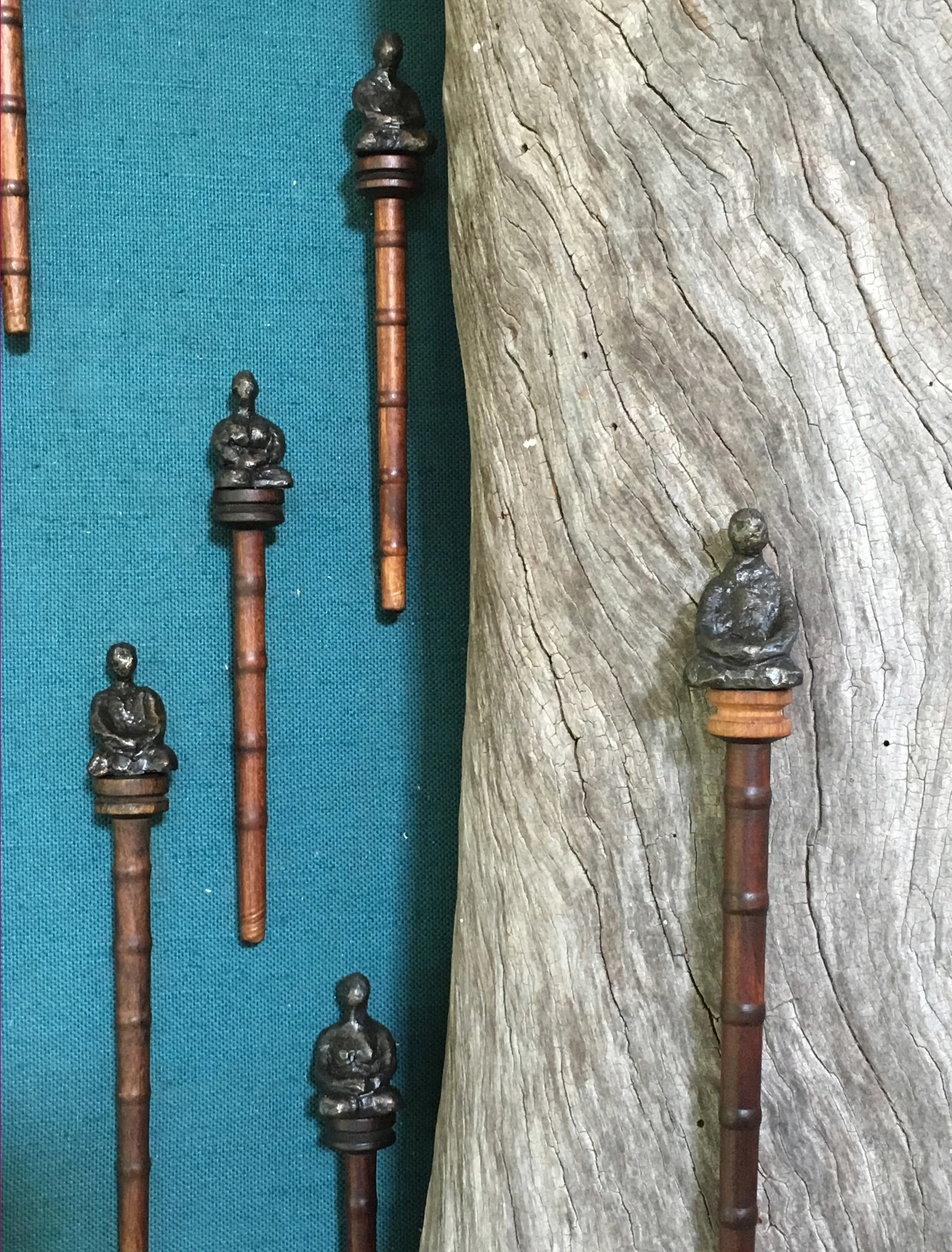
Sculpture detail, LH
They are hollow. I want to place a word, a prayer, a meditation for the world inside each of these wooden tubes. I cut up a watercolor and wrote single words on each one—compassion, wisdom, suffering . . . but then didn’t feel this was exactly right. As I was putting tools away, I noticed a bag of leftover National Geographic maps from making the sculpture, The Teapot Explorer.
I pulled out one, ‘Peoples of the Mideast’, a map of Libya, Saudi Arabia, Egypt, Iran, Turkey, and Afghanistan, with pictures of all the different ethnic groups from these areas—Bedouin, Qashqai, Armenian, Turk, Lur, Kurd among others. In one corner of the map there is a box describing the ethno-linguistic groups titled, An Awesome Human Mosaic. I thought of adding the names of indigenous people inside each bobbin in recognition of the depth of so much human diversity.

Copyright 1972 National Geographic Society
Then I opened a second map, ‘Great Migrations’, depicting eighteen migration patterns around the globe—birds, mammals, insects, reptiles, amphibians, crustaceans, micro-organisms, and fish. I traced the Monarch’s multi-generational migration of 4000 miles. I followed the equally miraculous journey of the Loggerhead turtle 9000 miles from beginning to end, back to the very beach where it was born. Each of these creatures as unique as the indigenous people I admire.
I left the studio filled with awe.
Early the next morning on my way to the studio, I stopped to visit the geese. Some of the them were on the dam wetting their feet, others stood in the lawn alongside it. I appreciated so much life right outside the door. Then I continued to my studio determined to write this blog. I’m not sure the blog is quite finished, and I don’t know how or when I will finish the sculpture, but as I look up from my page, startled at the sound of flapping wings, I see the geese practicing. It's flying-lesson time for the young.
How is the Orchard?
It’s the question I am most often asked, and it has become my least favorite question to answer. Have you ever been in this situation? That which you most don’t want to talk about is exactly what elicits the most interest. The old Zen saying—you find your fate on the road you take to avoid it—is apropos.
No one asks, “How is your spirit, Linda?” A few ask, “How is the studio?” or about the children and about my husband, Blase. But a disproportionate number inquire, “How are the apples?” They know we’ve had some bad years.
To the apples, then. Well, maybe. . .
You see, I just don’t want to write about them. I love the trees, the land on which they grow, the wildflowers, the seasons of their lives, the bare branches in the winter, pruning, the blossoms, the buzz of pollination. In 2015, we had a magnificent bloom and gathered for apple blossom viewing with shakuhatchi music floating out from a hidden speaker in one of the trees.
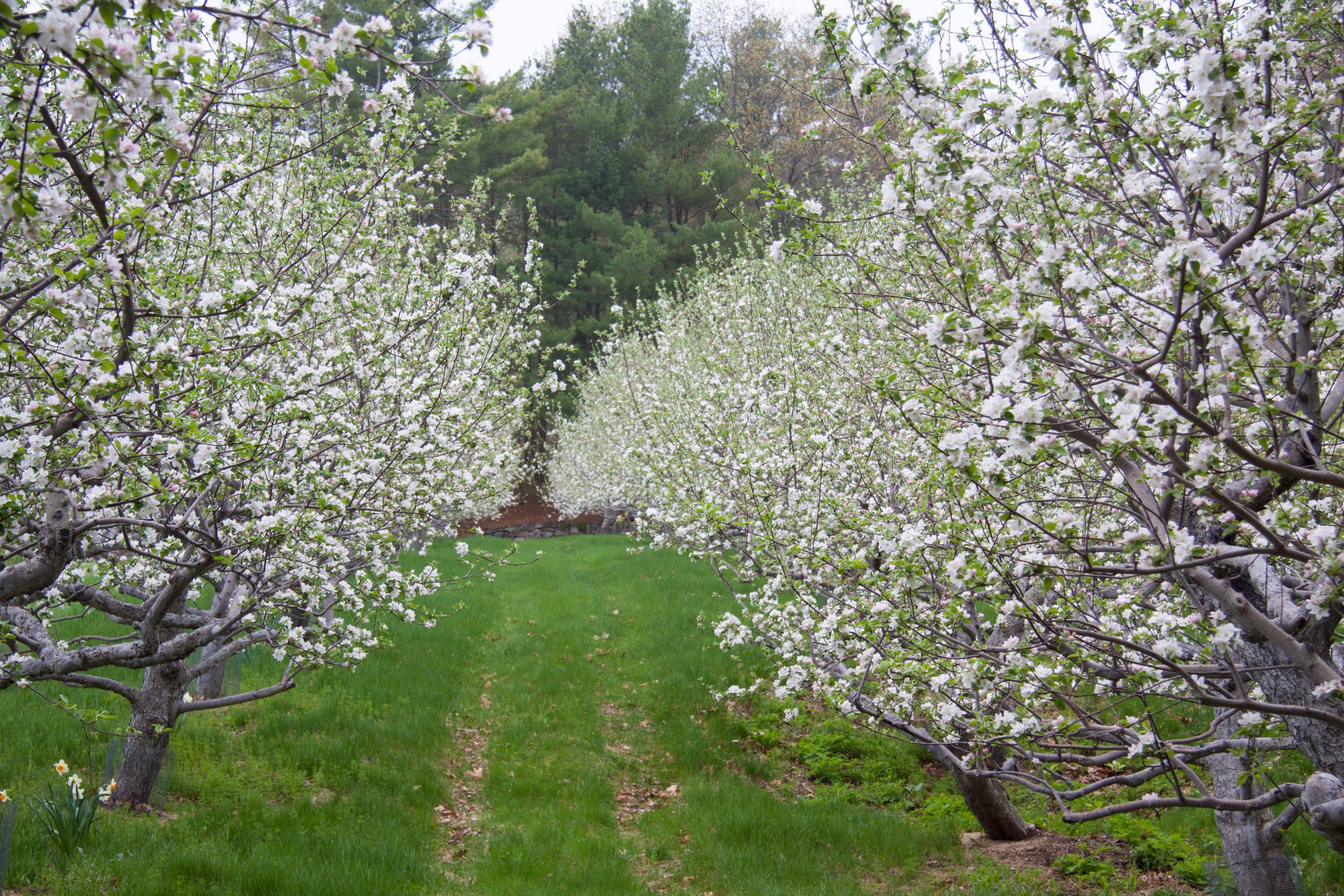
Apple Blossoms Macintosh Apples
The blossoms turned to fruit, and we had a splendid crop.
But the truth is that 2015 was the last year we had a munificent harvest. In 2016, we had no fruit because of an early frost. Last fall, we had a bumper crop, but horrible scab rendered all our Macintosh and Golden Delicious apples unsellable. Out of the last four years, we’ve had one great year and one all-right year. We need to look honestly at what is happening despite the amazing 2017 Honey Crisp harvest.

My daughter, Ariel, picking Honey Crisp apples in 2017.
Growing organic apples was never part of a get-rich scheme. When I moved into the farmhouse in 2001, the abandoned orchard across the road and I shared many characteristics. I was hurt, confused, and without solid ground under my feet. The orchard grew brambles, poison ivy, but no fruit. Bringing back the orchard became an artistic as well as spiritual passion; it grew and flourished as I healed, grafting a new life.
There is a great demand for local organic apples, and the orchard proved to be economically sustainable. However, our experience in recent years is changing the equation. Blase and I are questioning the orchard’s future. With a demanding schedule of time and resources for orchard care, growing organic apples on our scale is proving to not be sustainable. It’s not emotionally supportive: It’s downright depressing.
And why aren’t there any apples this year?
Among the multitude of interrelated answers, some I know and many I don’t. Thinning is certainly one reason. Most apple orchards thin their trees with chemical thinners when the fruit is only a few millimeters in size. This reduces the number of apples, fooling the tree into thinking it needs to produce a decent crop the following year to guarantee long-term survival. We thin our small trees by hand, too much fruit will impede healthy growth, but the mature trees are simply too big and too many so they produce a copious crop one year, and a pocket-sized one the following year—biennial production. I also think last year’s wildly successful scab fungi weakened the trees. Earlier this spring we took out seventy-five old trees—fifty Macintosh, the scab magnets, and twenty-five old. undesirable, meaning unsellable, Red Delicious trees. Fluctuating weather patterns accelerated by climate change are creating new challenges for orchardists and farmers in New England. Even though we have bees, the struggles facing our native pollinators makes pollination of apples in a cold spring a concern. Bees don’t go out of their hive unless the weather is over 55 degrees and they loathe rain. In spite of this litany, except for recent deer damage, the trees are leafy and healthy. Of course they are: No stress with no crop!
But the inexorable problem remains—there is no crop once again. This orchard that has meant so much to me, fed and nourished many others for the last fifteen years, this orchard that has been my companion, my lover, and a great teacher, is not sustainable. We are caring for some four hundred trees, too many to do this work part-time and unprofessionally. If we had a small mixed orchard it would be different.
What are we going to do? Blase and I are beginning to talk about how to make some kind of change. I have friends who decided reluctantly to move out of their house once their children fledged. I have an artist friend who moved with her husband to San Miquel d’Allende, Mexico, where, because the dollar stretches further, they built a magnificent glass and stucco house and studio. But we don't want to move. We don’t want to leave the farm.
Blase and I are both creating new directions as we live the decade of our sixties. Blase is organizing community events here and working with people one on one. He’s also returning more often to his woodworking shop in Maynard and fixing up his camp on the marsh on the North shore. He still tends a large kitchen garden and he repairs every dang machine that breaks, and they all do . . . .
I work with our part-time women farmers, Holly, Julia, and Hannah three days a week. We pull invasives, pick fruit, weed, mulch, and create new planting beds. Strawberry harvest is over and blueberries are next. On the last 90 degree Friday, we netted the blueberry rows. We were so fried by the heat, I let everyone go home at 4 o’clock instead of 5, had a shower, and promptly collapsed, forgetting about my dear friend Marion Stoddart’s party (I am so sorry, Marion).
Together, we also make art! Holly made a snake with all the sticks that needed to be picked up among the wildflowers near Paul Matisse’s Olympic Bell. Julia painted the signs for Which Way? Hannah has created some of our most memorable Instagram posts.

Planning is underway for our 12th Annual Outdoor Sculpture Exhibit, and the artists will be installing their work in August. I love finding just the right location for each sculptor's work. This year, artist Anne Eder, known at the farm for her extraordinary installations of mythical creatures, will be overseeing her students from the Harvard Ceramics Studio with their own interdisciplinary sculptural installations. And my studio will be open on September 15 & 16th, part of the Bolton Harvard Open Studio. There is much work, both farm and art, to do. In some ways it is a relief not to have a big apple crop, I have more time for other projects. Yet, when I look at the photo of Ariel and the Honey Crisp apples, I cringe with disappointment—no apple-picking, no biting into juicy organic apples, no cider-making.
What is our fate? And what road am I on trying to avoid my own? It’s right in front of me—and I can only say I am grateful.
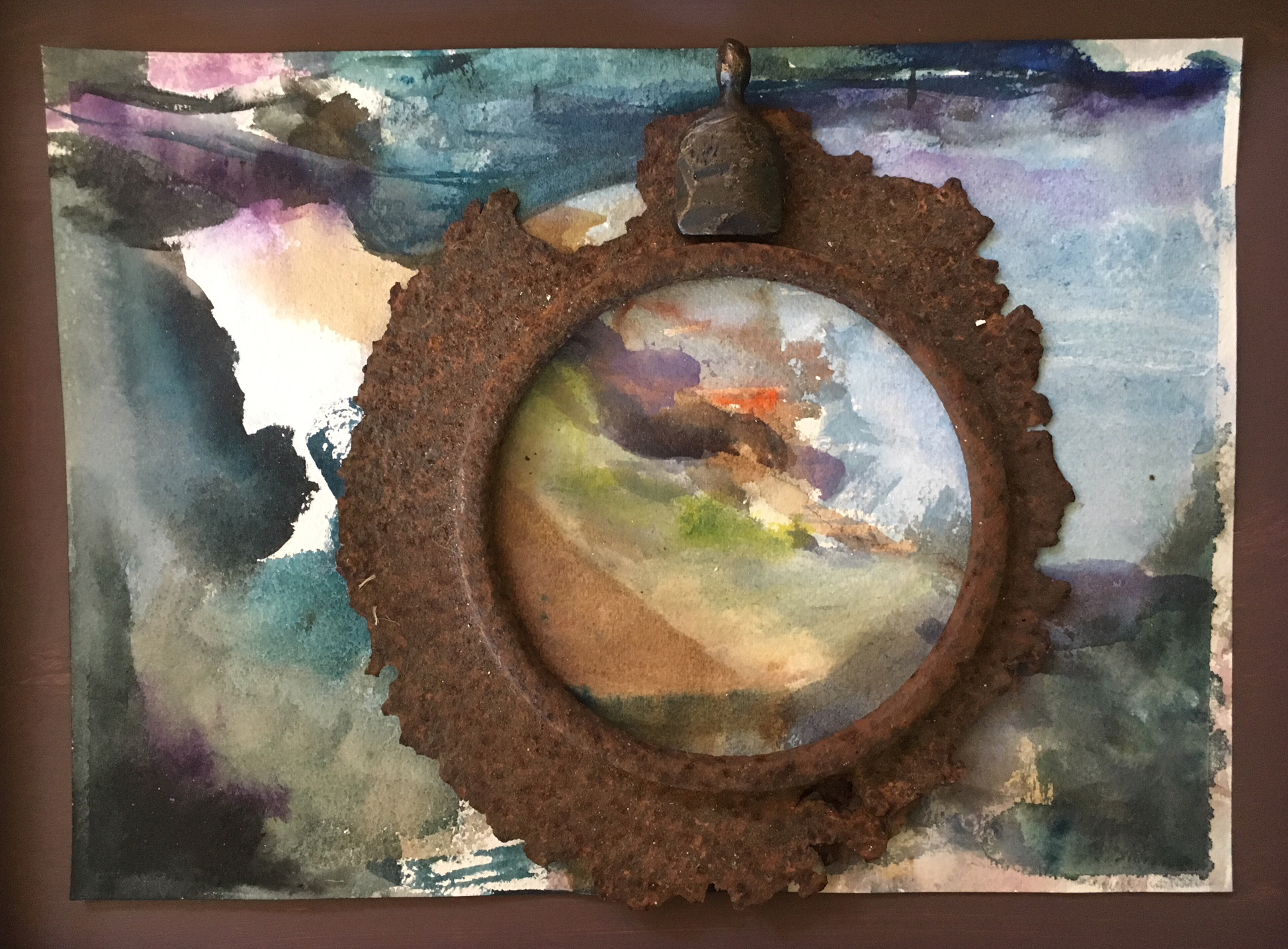
The Earth, experiment with found object, watercolor, and bronze figure, LH
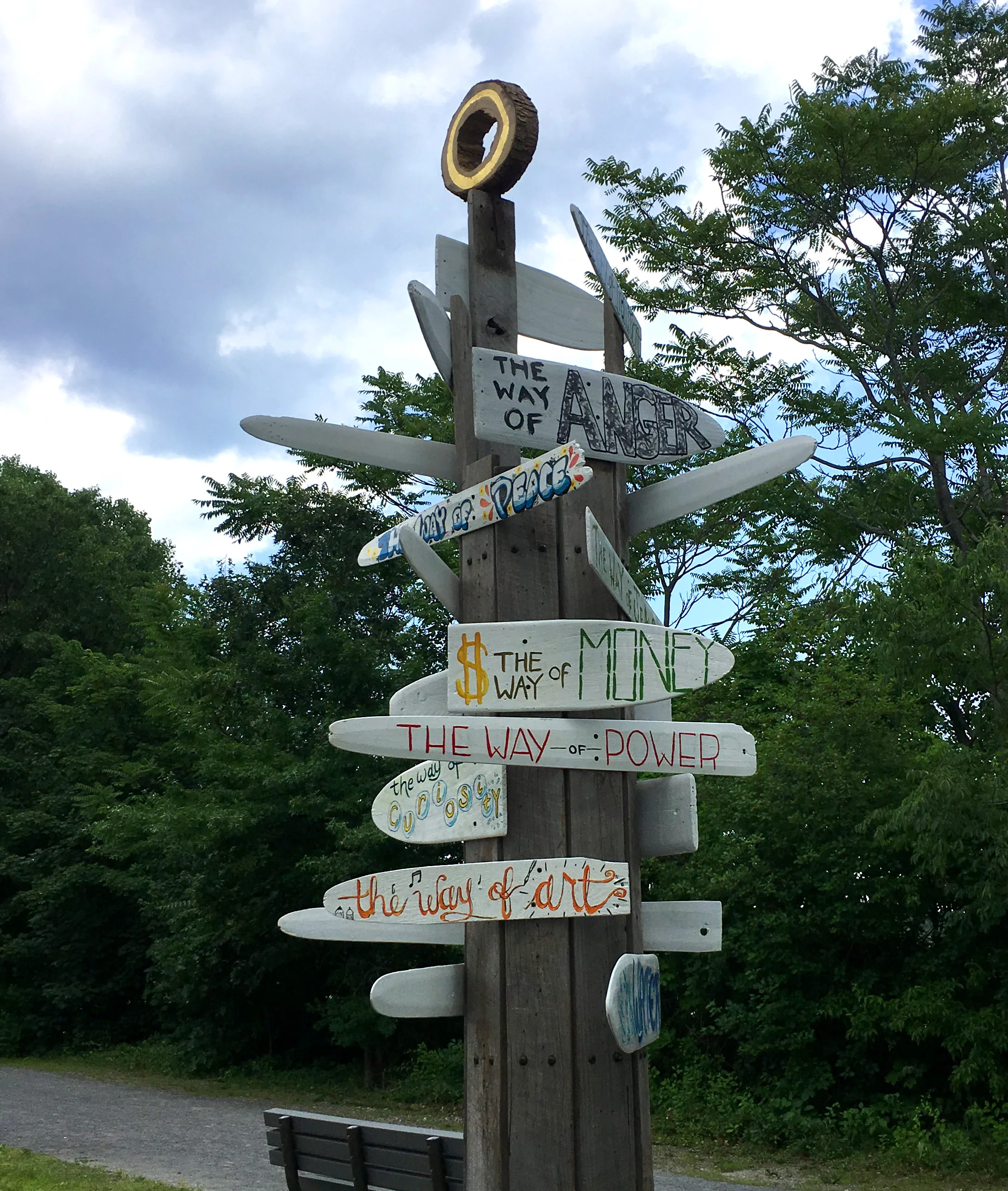
Which Way?
Studios without Walls, the group of artists that organizes an annual outdoor sculpture exhibit along the Muddy River in Brookline, has expanded to a new location—the Newton Upper Falls Greenway. This exhibit of Beyond Boundaries, organized by the talented artist, Wendy Wolf, fills an old railroad bed trail through Newton Highlands with fifteen installations.

We All Speak the Same Language, Wendy Wolf
My sculpture for the Newton Greenway, Which Way?, has had several lives. In the late 1990s, the sculpture, then titled The Way of Signs, was on the Boston Common, before being moved to Commonwealth Avenue in Brighton for a season. It was a signpost with signs pointing in every direction—The Way of Peace, The Way of Doubt, The Way of Jealousy, The Way of Love. When this piece found its way home again, I dismantled it and put it in storage. In March of 2003, I remade it for a women's peace vigil at Old Frog Pond Farm. I repainted its old signs with the names of countries—Iraq, Iran, Syria, Brazil, India, Pakistan, the United States, Bosnia, Somalia. A group of seventy-five women gathered at the farm on the evening of March 7 to protest sending troops to Iraq. With light from home-made torches, we walked over the snow from our bonfire near the farmhouse, down the hill, across the stone bridge, and out to a point where the sculpture glowed from the torchlight and lit the white snow. No boundaries, no barbed wire fences, no gun-protected borders: simply directions to parts of the world where we wanted to send our love. (I can't find the Boston Globe photo but here is one I took when I installed it.)

The Way of Peace, LH, installed at Old Frog Pond Farm
The Way of Peace had a sojourn a few years later in the town of Lawrence, along a canal. A group of anarchists adopted it and hung some of their own signs and a small plastic flying pig.
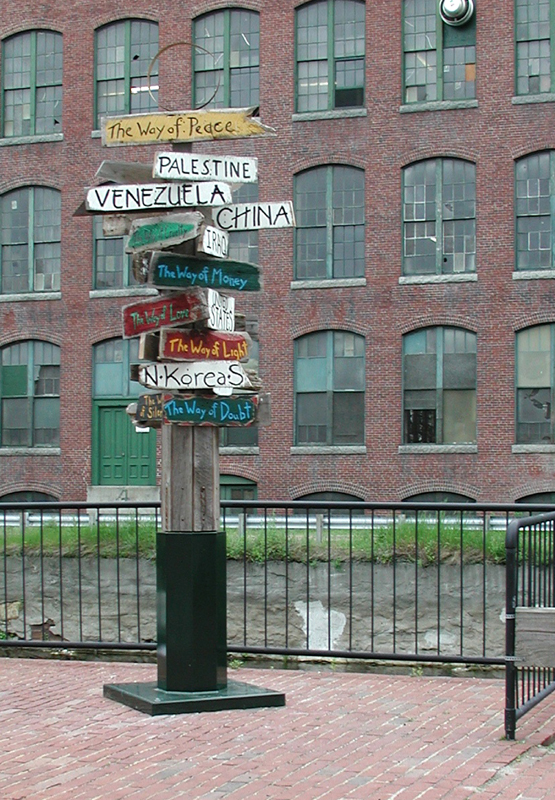
The Way of Peace, Lawrence, MA
Since this incarnation, the base and the wooden post have been gathering dust, while the signs were painted over becoming street signs pointing the way to pick-your-own raspberries and organic apples at Old Frog Pond Farm.
For the call for art for the Upper Newton Greenway, I decided to resurrect the sculpture. Though our world aches for peace, I decided to return to the sculpture’s original incarnation with new signs pointing to emotions and desires that we can all relate to—The Way of Joy, The Way of Jealousy, The Way of Generosity, The Way of Money, The Way of Fame, The Way of Water.
Looking around the farm for wood to make the signs from, I decided to use some unusual boards I have been harboring for many years, unsure of how or if I wanted to use them. They are thin and long, of varying sizes, with rounded oval ends. Trappers used them for drying pelts. They would stretch the animal inside out, pulling it over and down, and pinning it to the boards. Then they could scrape away the innards and leave the skin to dry. I painted the dirty, somewhat oily wood, a clean white.

I asked Julia Tricca, one of our farmers, if she wanted to help. I know she is a good artist. I explained that I wanted a mix of colors and graphics for each sign. She was immediately drawn into the project, and made interesting lettering and designs for several signs. I loved what she did and turned the project over. For the next few weeks she would leave us in the fields or berry patches and go into the studio to work on the signs.
To complete Which Way?, I placed a round of wood sliced from the trunk of tree with a hollow center, anthropomorphizing the sculpture with a “head.” The signs became her arms, like the Chinese goddess Kwan Yin, known in Japanese as Avalokiteshvara, the Bodhisattva with many eyes and arms who sees all the cries of the world and has enough arms to offer help in all directions. Last week, Mike LaBonte, another part-time farmworker helped me install the sculpture in Newton. (If you work at the farm, it is likely you will be pulled into an art project.)
When we finished installing, Mike left. I was sitting in the pick-up truck I’d borrowed from my husband, Blase, looking at Which Way? through the windshield when a large group of people appeared. I watched their surprise and delight, then got out of the truck and introduced myself. They had gathered because a fire alarm had gone off in their office building. I explained my sculpture was part of an exhibit that would be installed over the weekend. A young man said he thought Which Way? was wonderful and I asked, “Why?” He replied after considering, “Because it humanizes the area.” That’s the joy of public art! It’s a surprise gift. We do speak the same language.
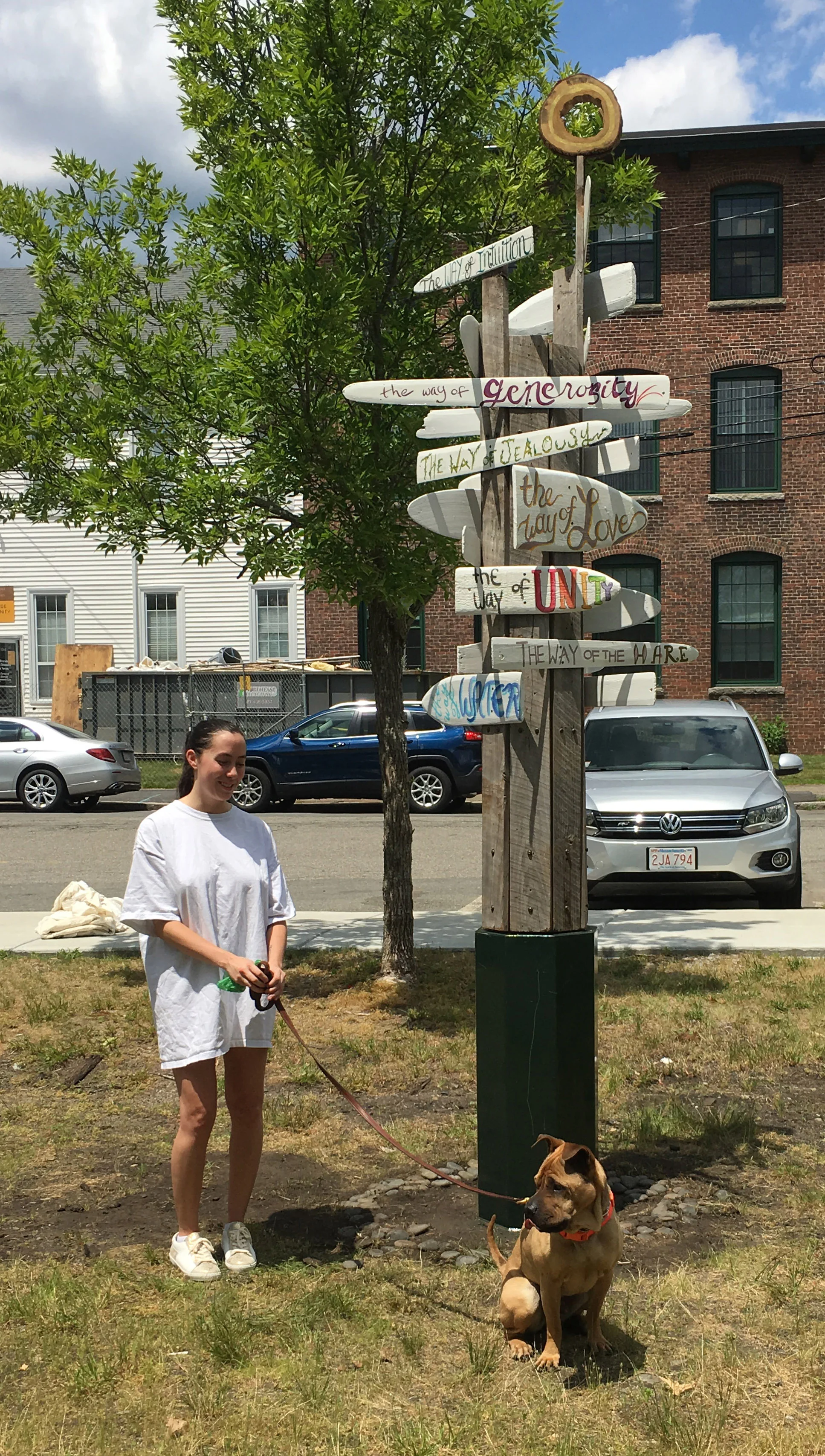
Hannah and her dog, George, were so excited to see the sculpture being installed they asked me to take a photo and send it to them.
The troops marched into Iraq despite our peace vigil—as a country we still follow The Way of War. But we do have choices individually. We can try many directions and see where they lead. We can make good choices.
The exhibit will be up all summer. If you are in the area, stop by! You can enter the trail through the parking lot for the Boston Ballet School in the TJ Max mall at 153 Needham Street, Newton Highlands or pull into one of the parking spots at Pettee Square at 94 Oak Street, Newton Upper Falls. Here are a few photos of the other installations to entice you.

Swarm, Joe Wright

Soaring High, Janet Kawada

Qwgkak of the Upper Falls, Anne Eder Photo: Anne Eder
The other artists are: Stacy Piwinski, Maria Ritz, Gregory Steinsieck, Gail Jerauld Bos, Freeedom Baird, Madeleine Lord, Betty Ann Libby, Myrna Balk, and Louise Farrell. For information: Studio Without Walls.
Geese, Herons, Beavers, and the Baby Steps of a Lapsed Blogger
For those who have been faithful followers of my blog, who have worried, and asked, “Is everything all right?” My reply is a hearty, “Yes!”. It’s simply been a busy spring. So much has happened that I don’t know where to begin. Thus, baby steps.
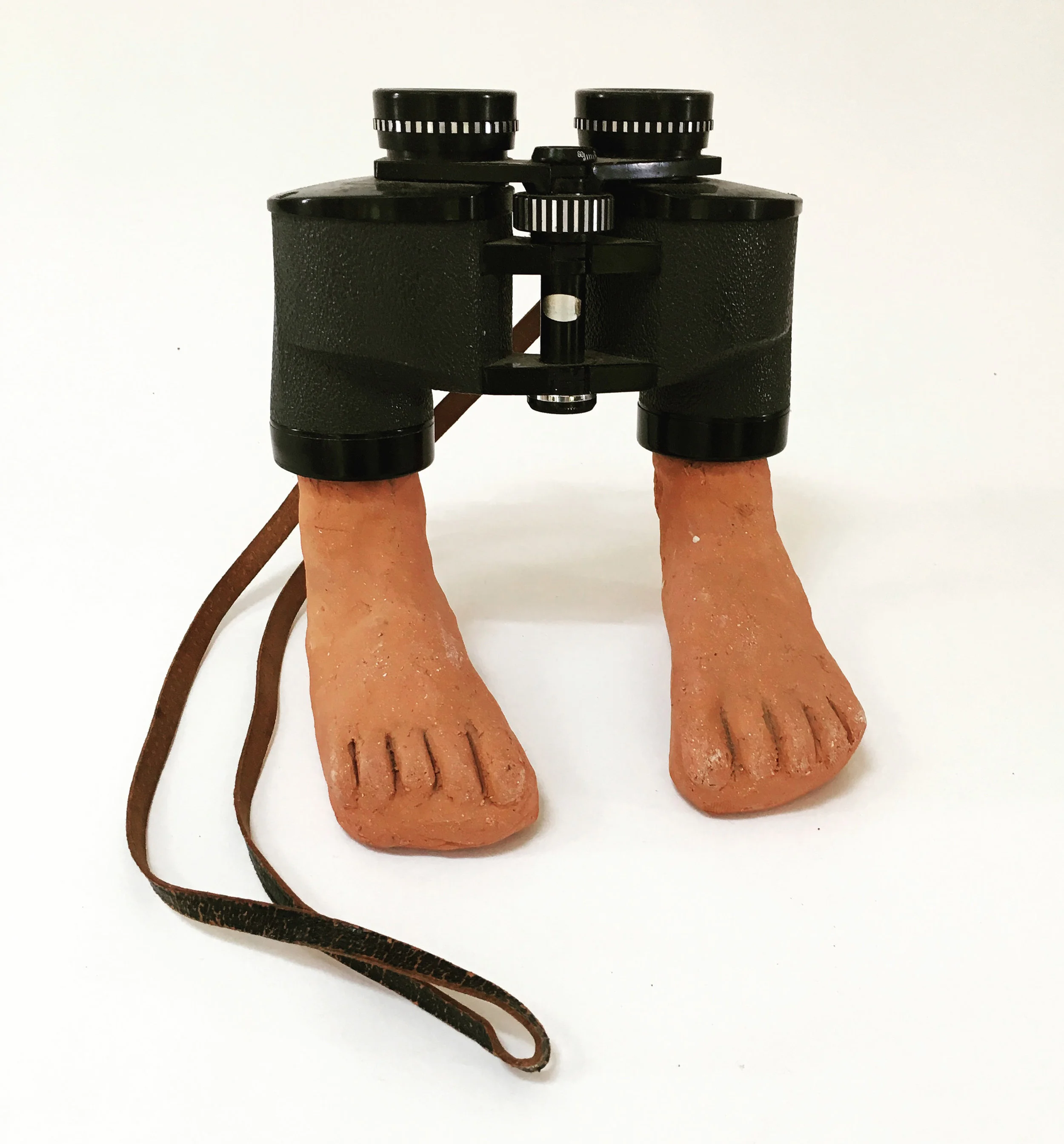
Scultpure. LH
I watch the geese. We have, I think, eight families, but they often mix together and it is hard to tell who belongs to whom. They are eating machines and when I listen closely I hear their beaks snap as they grab grass, insects, and whatever else they are snacking on. They are also poop machines and walking around the farm requires attention to the ground before you step.
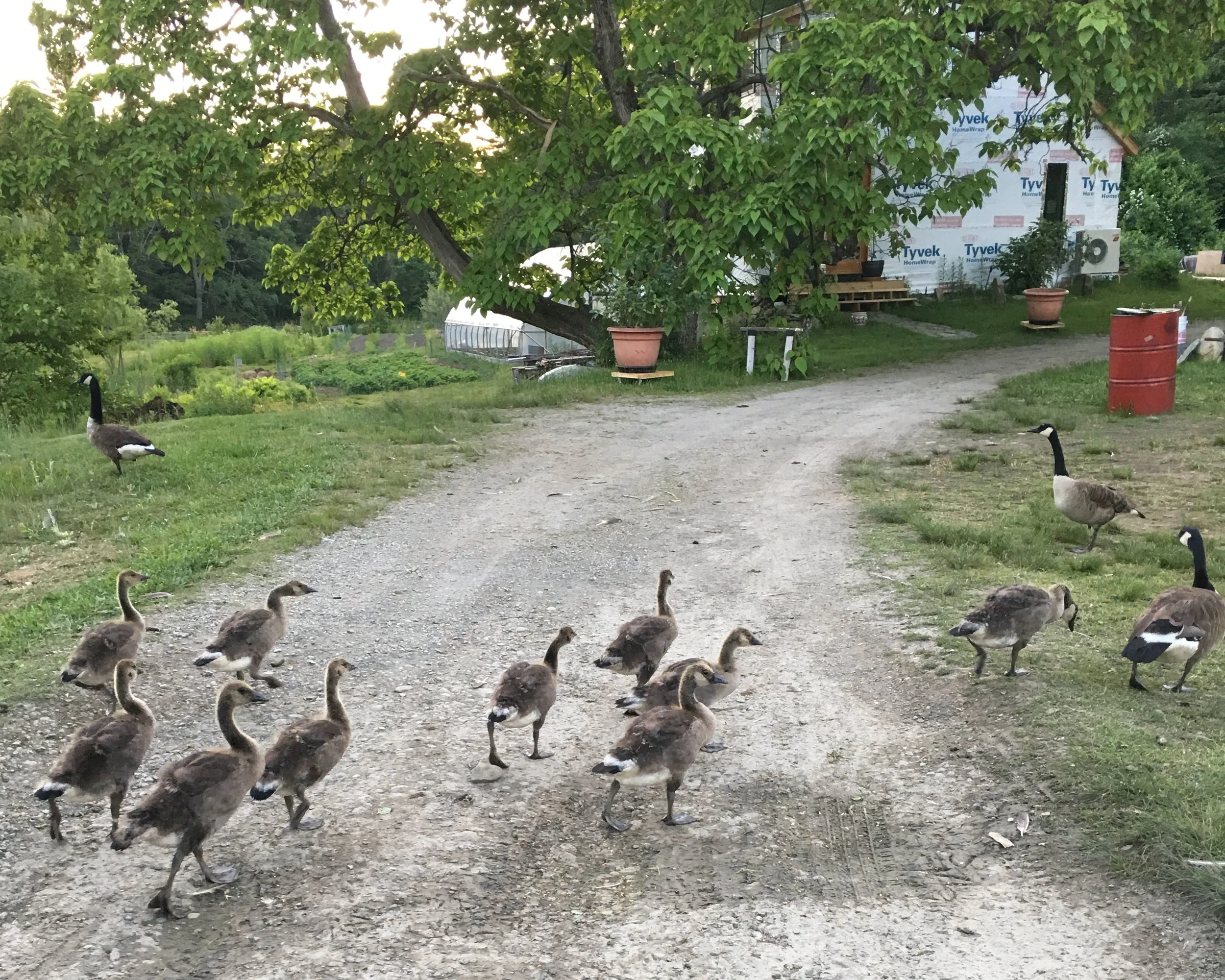
The geese love being here because of the pond. They need a body of water for protection. The hissing and tongue-sticking-out behavior of the defensive adults seems bravado distraction to give the goslings time to scurry into the pond.
The young herons are also a treat to watch.
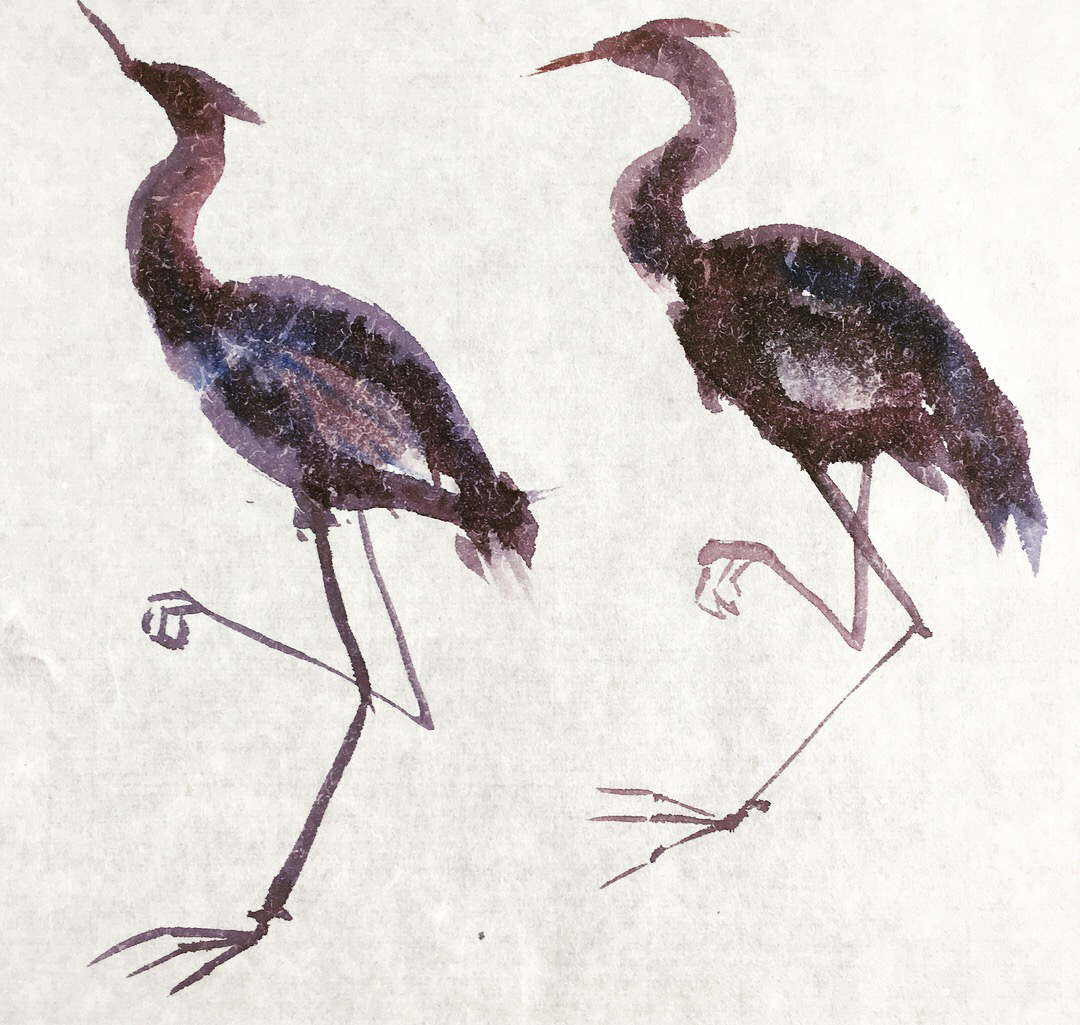
Two Herons, Watercolor, LH
One caught a frog in the mixed fruit orchard by the house. Another has been fascinated by something in the chicken coop. Then she or he walked across the street into the orchard and meandered down a row of apple trees. It is most unusual behavior for a heron. These young birds haven’t learned to fear humans or their domains; innate curiosity lures them close. This morning one came walking up the driveway; I half expected a knock at the front door. Older herons have their reserved spots around the pond — one stands near the willows, another across the pond, and a third on the far side of the dam. This heron pays no attention to the medley of black, Northern water snakes that congregate on the warm rocks. I look down when I walk around the pond; sometimes the snakes prefer to hide in the long grass.
When I look up, I see my studio. There is no siding on the outside walls, only plastic Tyvek wrap like a Christo art installation. Inside, however, I am working and enjoying the new light-filled space immensely. We don’t have a CSA at the farm this year, and we don’t have any full time workers – which means I try to make time each week for art.
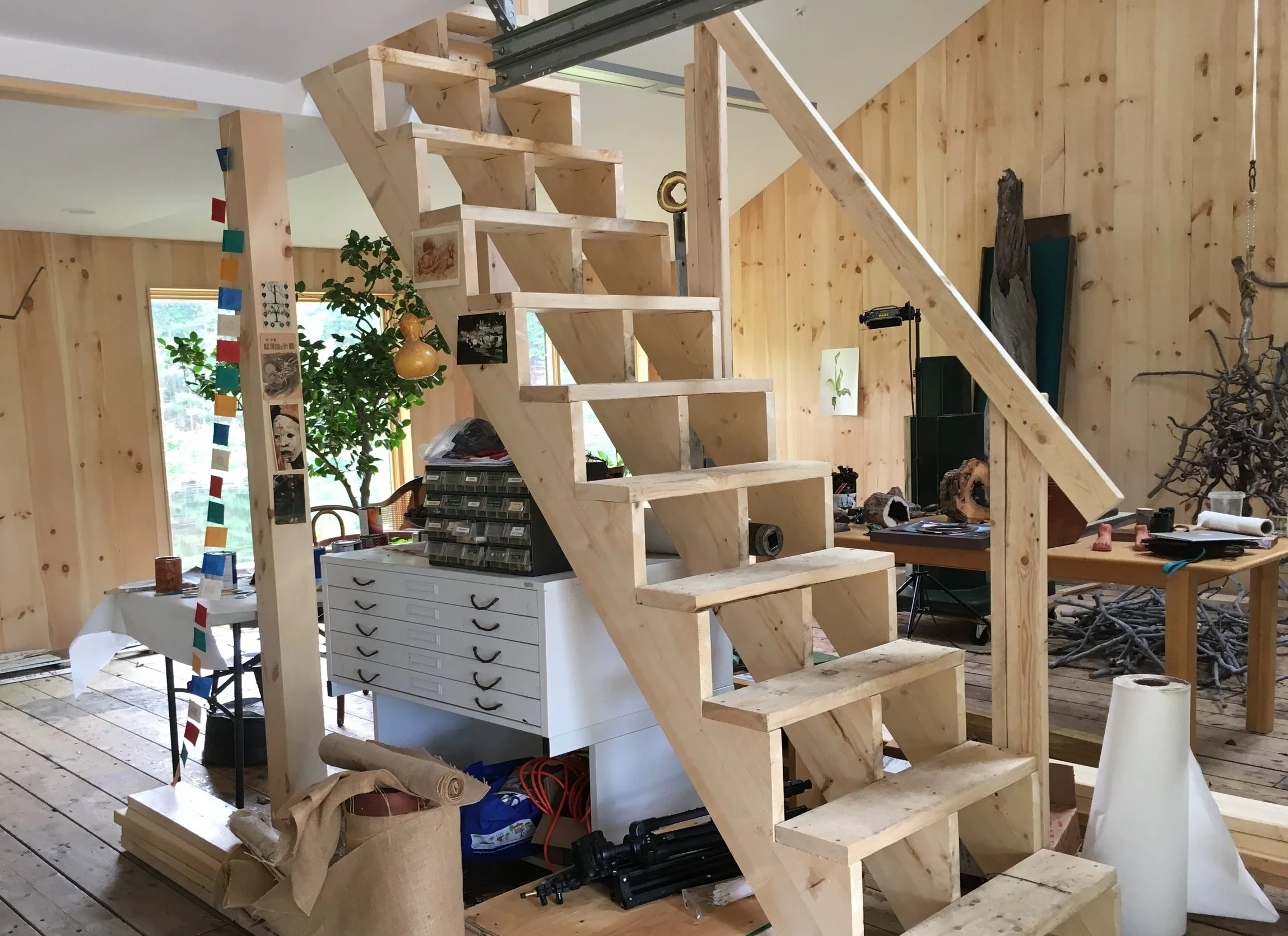
New Studio (difficult to photograph)
So far it has been working and I’ve installed new work in four outdoor exhibits this spring.
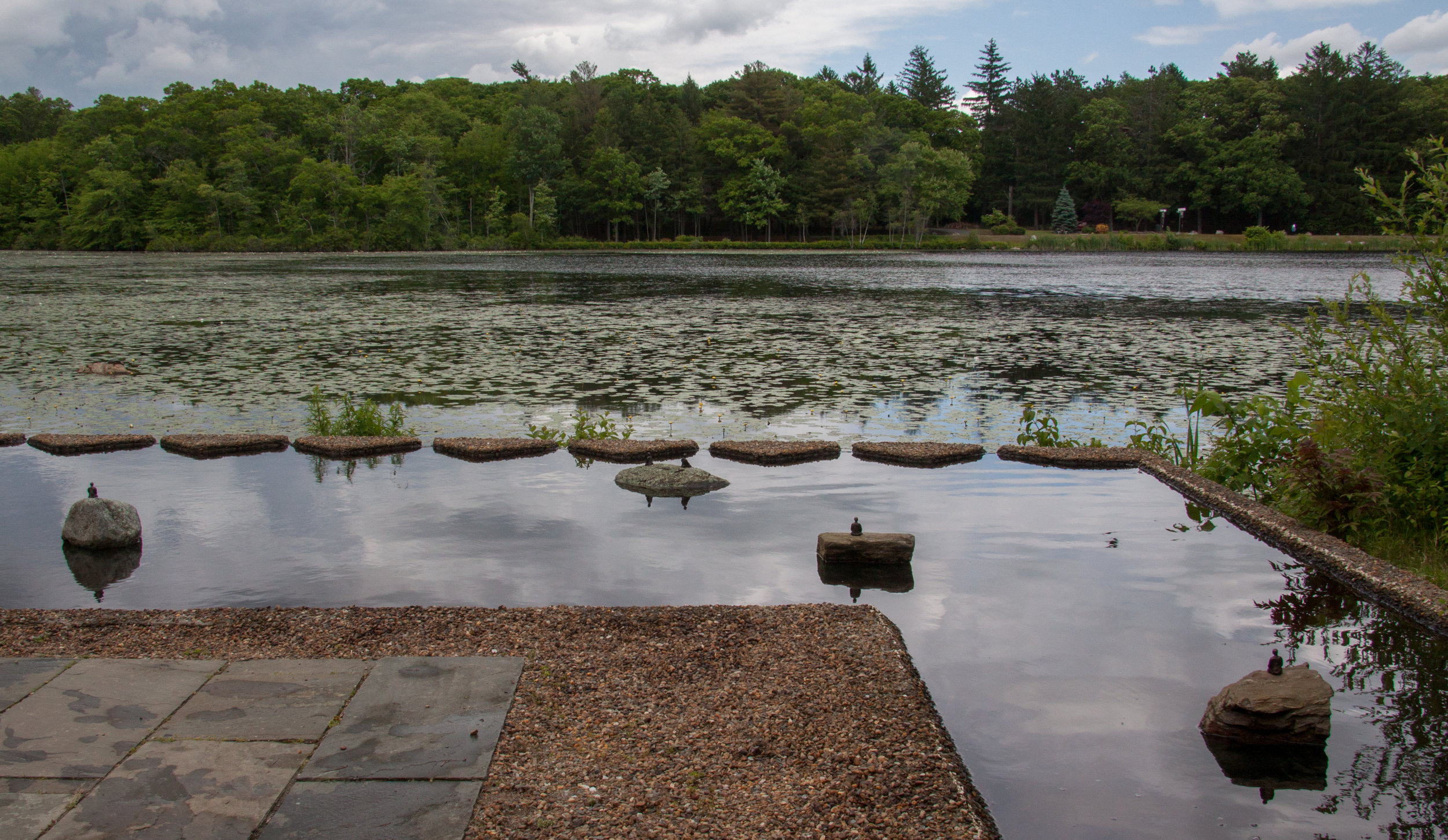
Just Sitting, Installation at the Fuller Museum, Brockton, MA
I also try to spend a little time at the end of the day sitting in a chair with the windows wide open looking over the pond. One evening I saw something swimming, making what looked like figure eight circles on the far side. This went on for quite a while until I decided I would go up to the house to get some binoculars, risking of course, the creature’s disappearance.
When I returned to the studio and held the binoculars up to my eyes, I saw that there were two beavers, not one, swimming together. One swam ahead while the other approached, then slid up over them, then swam off, and circled round. In silence the beavers came together again, then separated; joined and parted. Beavers making love in the pond! A few more times and they disappeared. Now I keep binoculars by my window seat. I will not use these to make another scutlpure!
Search Blog
-
2025
- May 9, 2025 A View from the Tractor Seat
- Apr 11, 2025 Dig
-
2024
- Jan 7, 2024 Winter Wassail
-
2022
- Dec 11, 2022 Keeping Time
- Jun 17, 2022 This Apple-Shaped Earth
- Jan 23, 2022 What is a Jizo?
- Jan 16, 2022 An Invite and Housekeeping Update
- Jan 1, 2022 The Year of the Frog: What Orchardists Do While Apple Trees are Chilling
-
2021
- Oct 24, 2021 Figs
- Oct 3, 2021 The Artist and the Orchard: A Memoir
- Aug 8, 2021 Red-Fleshed Apples
- Jul 25, 2021 When We Were Trees
- Jun 27, 2021 Castor Beans—Who Knew?
- Jun 13, 2021 Spring Training at a Zen Monastery
- May 4, 2021 Our Trees are in Bloom
- Apr 18, 2021 Hooray!
- Jan 24, 2021 Wassailing, virtually!
- Jan 1, 2021 Sitting
-
2020
- Dec 21, 2020 Darkness to Light
- Nov 28, 2020 One Heart
- Sep 18, 2020 Juggling Flowers, Fruit, and Vegetables
- Aug 23, 2020 Refuge
- Aug 9, 2020 Bags of Fertilizer
- Aug 2, 2020 The Sermon of the Blue Heron
- Jul 26, 2020 What's the Buzz?
- Jul 19, 2020 Farm Moments
- Jul 12, 2020 Lost Wax
- Jul 5, 2020 Catalpa: The Hugging Tree
- Jun 28, 2020 Pedaling Peace
- Jun 21, 2020 See Change
- Jun 14, 2020 Lalla Unveiled
- Jun 7, 2020 Pond Alchemy
- May 31, 2020 The Birth of Fruit
- May 24, 2020 An Artist in the Orchard
- May 17, 2020 Walking the Land: Returning Home
- May 10, 2020 Stinging Nettles: Gifts from the Great Mother
- May 3, 2020 The Mystery of Swallow
- Apr 26, 2020 Aerial Bruststrokes
- Apr 19, 2020 Simple Pleasures
- Apr 12, 2020 Weeds and Other Gifts
- Apr 5, 2020 Remembering the Seeds
- Mar 29, 2020 Blow on the Embers
- Mar 22, 2020 Ripples
-
2019
- Nov 16, 2019 Tibet Impressions
- Nov 9, 2019 Forest Tales
- Oct 13, 2019 The Gift
- Aug 4, 2019 The Season is Apples, Berries, and Grandfather Fire
- Jun 8, 2019 Pointers for a Writing Life
- May 12, 2019 Mothers of the Earth
- Apr 6, 2019 The Apple-Shaped Earth
- Mar 23, 2019 You Don’t Know What You Have Till It’s Gone
- Feb 23, 2019 Generations
- Feb 9, 2019 What Are We Doing to the Earth, John Chapman?
-
2018
- Dec 31, 2018 Long Shadows
- Oct 6, 2018 A Pilgrimage to India
- Aug 18, 2018 Scrap Wrenn
- Aug 11, 2018 Off-the-Wall Comments from an Ignorant Farmer
- Jul 28, 2018 Creative Connect
- Jul 14, 2018 How is the Orchard?
- Jun 30, 2018 Which Way?
- Jun 16, 2018 Geese, Herons, Beavers, and the Baby Steps of a Lapsed Blogger
- Feb 24, 2018 Mama's Coupons — Good Forever
- Jan 27, 2018 January Ice
- Jan 13, 2018 The Muse
-
2017
- Dec 30, 2017 A Dream for the New Year
- Dec 23, 2017 A New Year for Apples
- Dec 16, 2017 Intuition
- Nov 22, 2017 Thanksgiving OM
- Nov 4, 2017 East Fork Pottery
- Oct 28, 2017 Putting Down New Roots
- Oct 21, 2017 A is for Art
- Oct 14, 2017 Eve domesticus
- Oct 7, 2017 A String Workshop
- Sep 30, 2017 After Applepicking
- Sep 23, 2017 Two Bad Women and One Good Apple
- Sep 16, 2017 Plein Air Poetry
- Sep 9, 2017 Cutting Off a Leg
- Sep 2, 2017 The Changing Landscape
- Aug 26, 2017 All About Art
- Aug 19, 2017 My First Visit to the Farm
- Aug 12, 2017 The First Food
- Aug 5, 2017 A Teapot, a Woman, and maybe a Boat
- Jul 29, 2017 A Raspberry Dilemma
- Jul 22, 2017 Consider the Miracle
- Jul 15, 2017 Meeting Ekphrasis
- Jul 8, 2017 Ripening Fruit
- Jul 1, 2017 The Voice of The Caterpillar
- Jun 24, 2017 Goumi — An Unusual Fructus
- Jun 17, 2017 Concord, an American Bloomsbury
- Jun 10, 2017 The World Is Bonkers — Shall I Laugh or Cry?
- Jun 3, 2017 Bonkers, a Revolutionary Apple
- May 27, 2017 Guardians of the Swamp
- May 20, 2017 There are Mushrooms and There are Morels
- May 13, 2017 "What's in a Name?"
- May 6, 2017 Bloom Follows Pink: Orchard Pollination
- Apr 29, 2017 The Orchard Is at Pink
- Apr 22, 2017 Natural Farming — Part 2 (continuation from last Sunday's blog)
- Apr 15, 2017 Natural Farming — Part 1
- Apr 8, 2017 Boats, Figures, and Catching Fish
- Apr 1, 2017 A Man with a Mission: The Nuts and Bolts of Bronze Casting
- Mar 25, 2017 A Chalice of Spirit, Art, and Nature
- Mar 18, 2017 Hanami — Blossom Viewing
- Mar 11, 2017 Soil Redemption Song
- Mar 4, 2017 Food is Primary Care
- Feb 25, 2017 Pomme de Terre
- Feb 18, 2017 Organic Certification
- Feb 11, 2017 Tantalizing Fruit
- Feb 4, 2017 The Myths of History
- Jan 28, 2017 The Orchard in Winter
- Jan 21, 2017 The Hi-Line
- Jan 14, 2017 Artistic, Botanical, and Social Diversity
- Jan 7, 2017 Where is Eden?
-
2016
- Dec 31, 2016 The Creative Heart
- Dec 24, 2016 A Christmas Tale
- Dec 17, 2016 Who are the Crones?
- Dec 10, 2016 The Olympic Bell (Part Two)
- Dec 3, 2016 Overheard in the Apple Orchard in Early December
- Nov 26, 2016 The Lessons of a Tortoise
- Nov 19, 2016 In the Studio
- Nov 12, 2016 Even in Darkness
- Nov 5, 2016 Southern Apples, an Elephant, Monkey, Rabbit, and Bird, Two Mango Trees and a Birthday
- Oct 29, 2016 The Tools of Art
- Oct 22, 2016 Labyrinths
- Oct 15, 2016 Repairing the Broken
- Oct 8, 2016 When You Are No More
- Oct 1, 2016 Creation Rain
- Sep 24, 2016 Breaking the Glass
- Sep 17, 2016 String Art
- Sep 10, 2016 Poetry and Photosynthesis: It's all in the Leaves
- Sep 3, 2016 In the Plenty of Time
- Aug 27, 2016 Witch Doctors
- Aug 20, 2016 Listen Coyote
- Aug 13, 2016 Milkweed in the Orchard
- Aug 6, 2016 Some People See a Turtle
- Jul 30, 2016 Arborshaping
- Jul 23, 2016 Joseph Wheelwright: Sculptor of Stones and Trees
- Jul 16, 2016 Asian Pears
- Jul 9, 2016 Gold Leaf, Grief, and the Creative Process
- Jul 2, 2016 The Olympic Bell (Part One)
- Jun 25, 2016 Around the Mulberry Bush
- Jun 18, 2016 Avoiding Apples
- Jun 11, 2016 Fructus
- Jun 4, 2016 Astonishing Apples
- May 28, 2016 Scare the Caterpillars
- May 21, 2016 Join the Club!
- May 14, 2016 The Graft
- May 7, 2016 Rooster, Rhubarb, Rue
- Apr 30, 2016 What do Dolphins and Nettles Have in Common?
- Apr 23, 2016 Art Prunings
- Apr 16, 2016 A Few of the First Arrivals
- Apr 9, 2016 Taste the Spirit of Sustainable Agriculture
- Apr 2, 2016 First Orchard Spray - March 22-24, 2016
- Mar 26, 2016 Hawkeye Apple
- Mar 19, 2016 Desiring the Almata Apple
- Mar 12, 2016 Ugly Fruit
- Mar 5, 2016 Winter Tracks
- Feb 27, 2016 Splash
- Feb 20, 2016 Pruning
- Feb 13, 2016 Orchard Ruminants
- Feb 6, 2016 A Gathering of Seeds
- Jan 30, 2016 Orchard Dragons
- Jan 23, 2016 Tree Rings
- Jan 17, 2016 The Fallen Tree
- Jan 7, 2016 Wassailing the Apple Trees
- Jan 1, 2016 The New Year