LINDA HOFFMAN
Two Bad Women and One Good Apple
The Apple Was a Northern Invention
When she ate the pomegranate,
it was as if the seed
with its wet red shining coat
of sweet flesh clinging to the dark core
was one of nature’s eyes. Afterward,
it was nature that was blind,
and she who was wild
with vision, condemned
to see what was before her, and behind.
The poet Eleanor Rand Wilner has a different view on this most well-known ‘apple’ story. I’m not referring to the pomegranate versus apple question — that debate we may never resolve, but to Wilner's portrayal of Eve as ‘wild with vision,’ a seer and a mystic. The poet completely uproots the traditional portrayal of Eve as a fallen women unable to resist the tantalizing offer of the serpent.
The story of Adam and Eve is a collective, cultural invention. However, in my personal version, our sister Eve has been condemned for two thousand years because she satisfied her desire to taste the fruit from the Tree of Knowledge of Good and Evil, because she wanted to know the deep truth about who she was and the meaning of life.
Our Eve had much in common with Lalla or Lal Ded, the 14th century Hindi mystic poet, who also experienced her own expulsion. Married at twelve, starved, beaten, and abused by her husband and in-laws, Lalla was finally able to leave that household when she was in her twenties. She found spiritual teachers and eventually, her own divine wisdom.
I Lalla set forth blooming as a cotton flower
Then the carder and the cleaner kicked me again and again
Next a woman spun me and lifted me from her wheel as gossamer
And in the weaver's room they hung me as warp on the loom
~ Lalla 102
Then the washermen beat and dashed me on the stone
And rubbed me with clay and soap to whiten me
Then the tailor cut me piece by piece
Now, as finished cloth, I have found my way at last to Freedom
~ Lalla 103
Tr. Jennifer Sundeen
Lalla had to tear off the cloth of the society in which she was born and, piece by piece, remake herself from within. She danced naked through the streets, uttering verses that were remembered and passed down, adn then finally recorded 400 years later. A rebel, a seeker, she gave up the comforts of hearth and home to wander, always loving and always teaching. She didn’t follow a prescribed path or religious dogma, but discovered her own truths from within her own body.
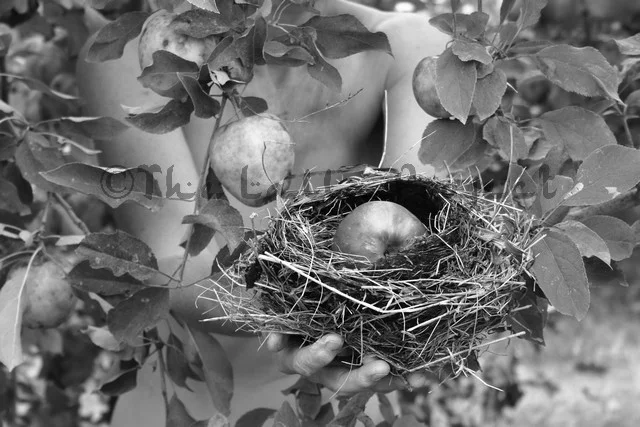
Photo: Carol J. Hicks
Then there is Reinette Clochard, an old French variety, an apple we grow in the orchard. Reinette means ‘little Queen’ in French, and a clochard is a bum, a vagabond, a homeless person. Not only is this a strange name for an apple, but it is an odd juxtaposition of social classes. And why the queen and not the king? The apple is small in size, giving meaning to ‘little’ queen; but her mottled yellow color of skin is more like a wild apple found in the woods, an apple without regal color, one that Thoreau would have grabbed, bitten into, found to be hard, and delighted in its ordinariness. Reinette Clochard’s flesh is pale and soft, creamy, the opposite of the crunchy sweet apples preferred by many today. She can be kept easily at room temperature for several months. That’s why she used to be loaded onto ships for sailors to eat, their only fresh food.
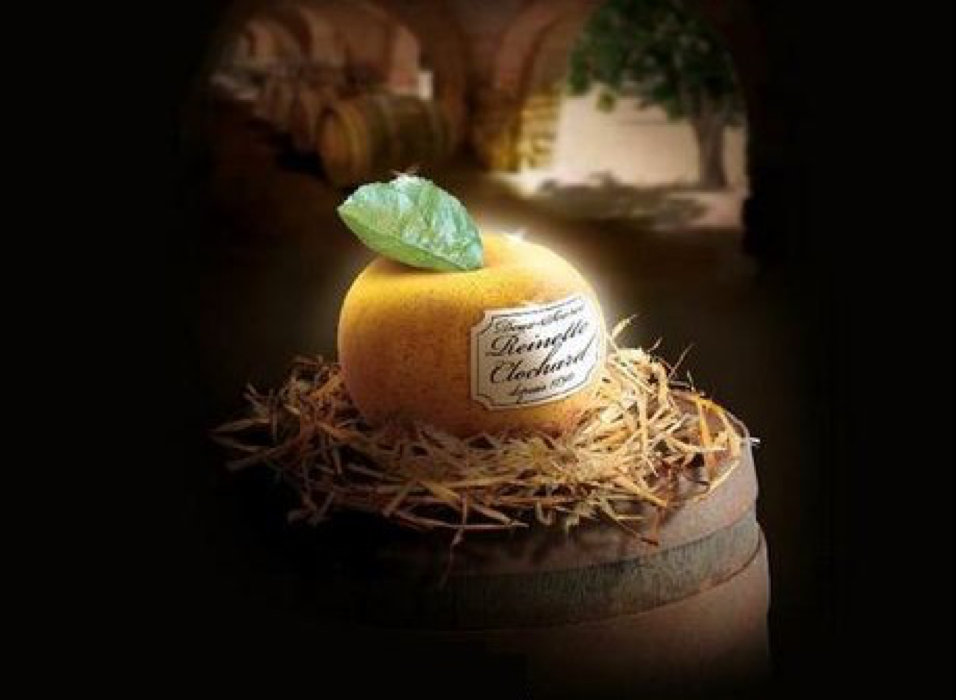
In France, Reinette Clochard is making a comeback. She comes packaged in wooden boxes and is sold as a specialty apple. In our orchard, people disdain her. They don’t know what to make of the name or her appearance.
The apple season at Old Frog Pond Farm has reached its fullest expression. Pickers have been walking the orchard rows, counting the color-coded blocks on their maps to find the Honey Crisp and Crimson Crisp. Once these were picked out, they began picking Liberty and Freedom. Reinette Clochard remained on the tree, her ripe fruit finally falling to the ground, until I went out and rescued her.
And now, you may be wanting to ask, what does Eve, the mystic poet Lalla, and this old French apple have in common?
Apples originated in the forests of Kazakhstan, traveled along the Silk Road in horses’ bellies, and in the pockets of Roman soldiers through Europe and to England, and eventually to America. The apple carries within its skin poetic, mythological, geographic, social, and scientific history. As women, we belong to the lineage of expulsed women seers. We carry the seeds from these early destroyers of social conventions. We need to clamor loudly for what we want. Can you imagine being named little homeless queen? Surely no woman named this apple. We should reject the labels that society assigns us.
When I think of Eve, I see her as a nonconformist, a woman with the strength to go against convention. The same is true for the wild mystic Lalla. Sometimes I forget the lessons they both exemplify. I don’t allow myself to do what matters most to me, what connects me to my deepest roots, or speak my truth. And Reinette Clochard? We shouldn’t forget the girls and women all over the world who are without education, who are demeaned, abused, or locked into confining roles, who still need our help.
Two of the newer apples we grow in the orchard are named Liberty and Freedom. Odd names for a fruit, you might think, but these are disease-resistant varieties. The suggestion is that the orchardist is free from the concern of scab, liberated from the fungal disease that makes growing apples in new England so challenging. These names reflect the significant changes in plant breeding in the last century. If only changing the human heart was as simple.
Today is our last day for apple picking. There are only a few Liberty and Freedom apples on the trees. We need more of both in this world. We need to remember the Eves, the Lallas, and the Reinette Clochards. We need to remember all those, both men and women, who sought knowledge and freedom and did not settle for less.
Guardians of the Swamp
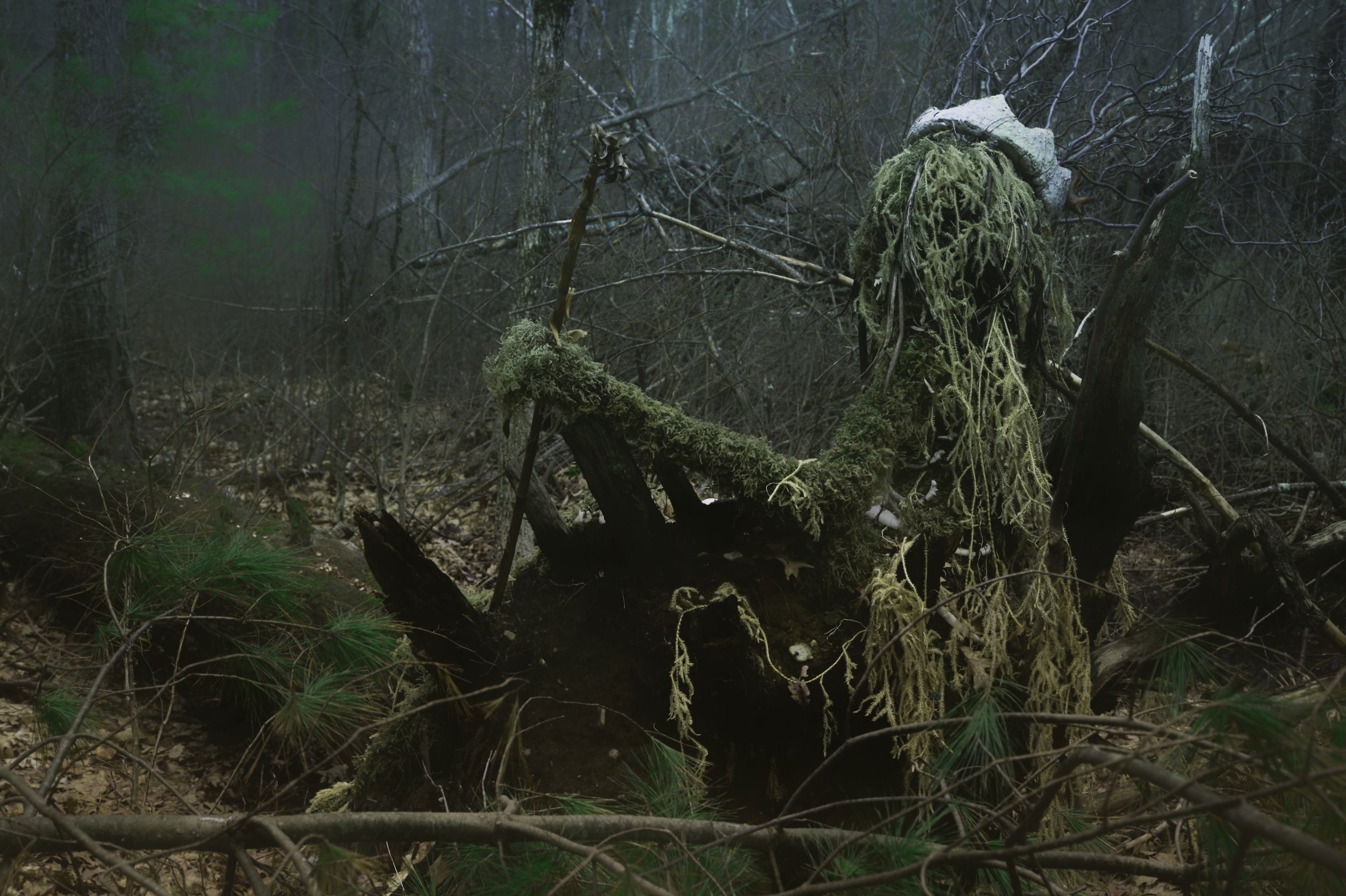
Guardian of the Swamp, Qwkglak, by Anne Eder
When I feel depleted by the chaos in the world, or just my own weariness, I know I need to connect with the work of other artists, writers, and thinkers. I see their art as meridians that connect the darkness of my own psyche with an outward vision of something mysterious, fresh, and true. Anne Eder is an interdisciplinary artist who does just that. Anne created two mythological forest creatures, Qwkglaks, for Old Frog Pond Farm's annual harvest sculpture exhibit last fall. They speak to us directly of the mystery of rain, moss, forest, and deep ecology.

Anne Eder with her newly installed, Qwkglak, the 'King'.
They sit, one poised, like a King on a rotting trunk, the other under the canopy of an upturned root system. The latter, more difficult to find, sits a little way off the main trail, but once spotted, can leave no doubt that some kind of primordial wisdom is being expressed. A young girl with her parents, so taken with this one, stepped off the trail into the bog, her boots sinking, staying behind in the mud as she trod over to it in bare feet. Her parents shyly asked when they returned to the house if they could use the outdoor hose to clean her up before they got into their car. Children are connected to their instincts and are closer to this source of origin.
Baudelaire wrote: “Genius is nothing more nor less than childhood recovered at will.” I consider Anne such a genius. When I look at these magical creatures, they are familiar, and I am enamored, appreciative, of their existence. I smile. I feel better just seeing them. I imagine that Anne’s sculptures get up and move when no one is around. They slink around the woods, crossing the swamp and muttering magical incantations among the trees. Not disturbing a growing plant or settled stone, they step lightly and carefully. Around the King’s log, the skunk cabbage is now in its fullest expression with bright green elephant ears, yet not one leaf has been trampled.
Even if you don’t believe in my magical thinking, we all believe in transformation. How else to understand the pointy purplish claws of the skunk cabbage poking through the ground a few months ago becoming a sprawling thick carpet of green waves? Or a bare tree, suddenly sending green shoots from within dry, seemingly solid bark? Nature continuously transforms itself. Spring leaves, so light-filled, are photosynthesizing like mad to flood the tree with sugars. I look at Anne’s creatures and feel that a similar process is happening: she has orchestrated the coming together of forest materials to become wild creatures who nourish us — ageless creations, a union of art and nature, both healing and uncannily witty.
Anne documented the changes of the creatures over the fall and winter. They dozed under deep snow and woke as the first skunk cabbage poked up. The King lost his scepter and his nose! However, last week, Anne came back and restored the royal Qwkglak with fresh moss and flowers, and a new scepter, a giant, unfurled fern.
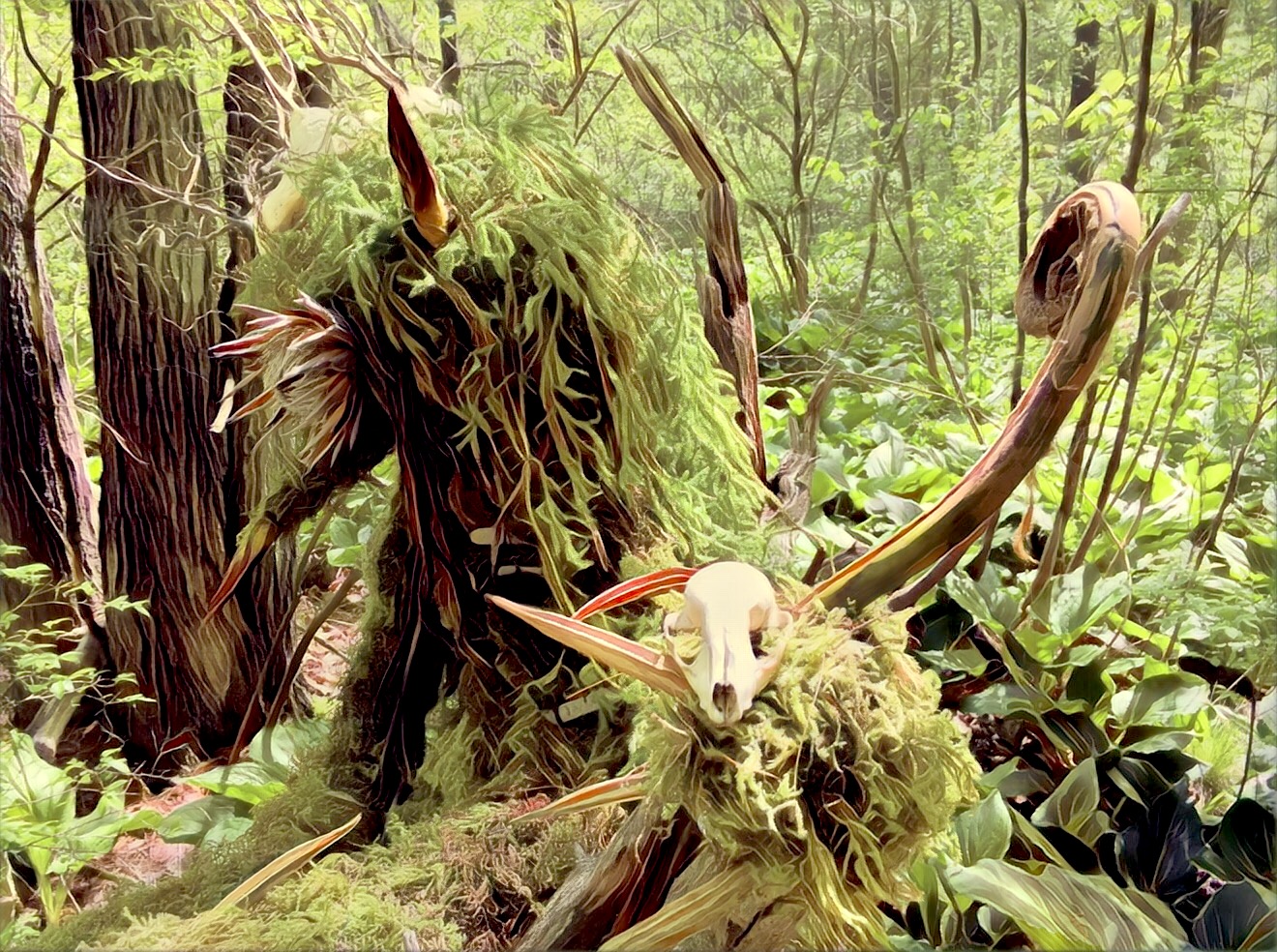
The other ‘Guardian’, she decided to leave to decompose further, to return to the forest from whence it came. Only the ceramic pieces, a few rib bones, and nails will not decay. In the fall, Anne will return again to enhance the King. She will be leaving artifacts for visitors to pay homage to this creature, and even to create a retinue of creatures of their own. We’re honored to have Anne Eider’s work at the farm where we aspire to encourage creativity at the confluence of Agriculture, Art, and Community. Healthy food feeds the body, nature and art feed the spirit, and in sharing both, we support each other. Take a look at Anne Eder's website and mark Sunday, September 10 for the opening day of our annual outdoor sculpture exhibition.
Tantalizing Fruit

Black Rot, Photo credit: Linda Hoffman
Tantalus was a rotten apple! An invited guest on Mt Olympus, he stole nectar and ambrosia and brought it back to impress his friends. But that wasn’t the worst. Later when the gods came to dine with him, he cut up his own son, Pelops, boiled him, and served him to his guests. The gods suspected something was off with the menu and declined to partake; but poor Demeter, distracted by the loss of her daughter, Persephone, took a bit of shoulder.
Zeus ordered that the parts of Pelops be collected and that he be put back together. Hephaestus made him an ivory shoulder, and he grew into a handsome youth, married, and had children of his own. Zeus killed Tantalus and then punished him further by making him stand waist-deep in water while overhead he was shaded by a large apple tree ripe with fruit. However, whenever Tantalus went to drink the water, it dried up; and each time he tried to pluck an apple, the wind blew the branch out of reach. He was trapped inside perpetual desire.
Orchardists desire a beautiful, abundant crop. They worry about the crop all year long. There’s no off-season. Weather can freeze the buds or the blossoms. Even the almost ripe fruit can be the unlucky destination for thirty seconds of hail. Then the apples will be pock-marked and susceptible to disease. Yet, still, growers of apples persevere. There’s something about growing fruit that challenges the soul. And the best part is that it requires hands-on attention.
How surprised I was to learn of a robotized apple picker being developed by Abundant Robotics, Inc. The picker will be drawn by a tractor with nozzles reaching out, up, and down, vacuuming the fruit off the tree. Each step of progress seems to take humans away from touching what we do, touching what we grow, automatizing our lives. Touch is a profound human experience. Think of an infant and how these two senses, touch and taste, are the foundation of her first relationships.
When I first saw the advertisement for this small farm in Harvard, MA, it said five bedrooms, a detached garage/barn, apple orchard, and a chicken coop. At that moment in my life, I was unsure about everything. I had never before contemplated owning a house, but I had to find a place to live. I wanted a place that would have rooms for my three children and a studio for making sculpture. I walked with a realtor through the kitchen where dark pine boards covered the walls and ceiling. There were no drawers or cabinets, only open shelves for plates, bowls, and glasses. Above a wood-burning cook stove hung a patchwork of blackened iron pans. This was a real work kitchen. We walked upstairs and I thought, If the house has hot water, everything will be fine. In the master bath, I turned on the hot water faucet in the 1960s avocado-colored sink. Warmth ran over my fingertips.
Maybe because I am a sculptor I trust what I feel with my hands. That touch of warmth gave me the confidence to move to the farm. But I had no idea that once I started to grow apples, I would become like Tantalus, desirous of plucking more and more fruit.

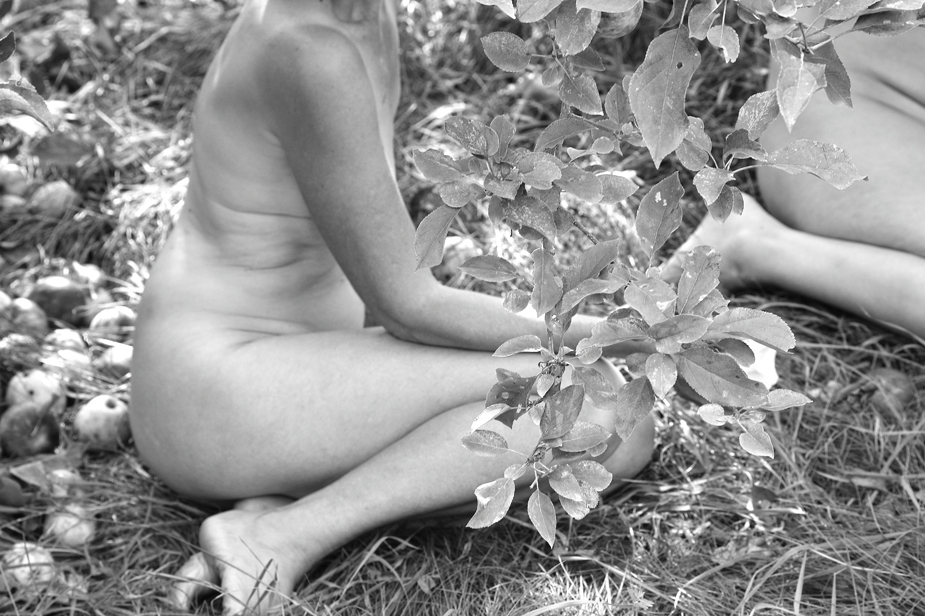
Women and Apples, Photo Credit: Carol J. Hicks
Even with extreme shifts of weather and unexpected environmental conditions, I persist. In winter, walking through the orchard, bending down the branches, pruning off what is no longer needed, and running my fingers over the frozen fruit buds, I fall again in love with the promise of fruit. And after a full day pruning in the winter cold, I sit in my favorite armchair and read the descriptions of heirloom and modern apples in my stack of saved nursery catalogues. I can’t help but be tantalized. I order a few new varieties for spring planting — a perfect Valentine's Day gift!
Who are the Crones?
We are the crones, the old and wrinkled, wise ones. We have many names— Hecate, Spider Grandmother, Demeter; Siren, Gaea, and Oracle. We wait at the crossroads. We praise and encourage the living, we honor and care for the dying. In times of darkness, we know spring will return.
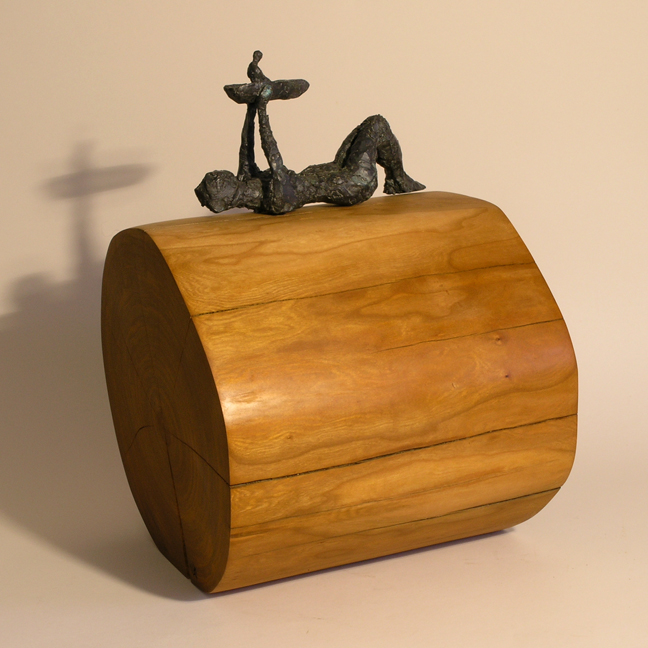
Woman Launching Boat, bronze sculpture, cherry wood, LH
At the time of the winter solstice ancient people believed that we must help the Light to be reborn. In many cultures, the crones facilitated this return. Women carried the mystery of life and death; women labored to guide back the sun.
Then things changed and men took control of women, especially in matters of religion.
Buddhism has traditionally followed the established social norms of the patriarchy into which the Buddha was born. When the Buddha established the rules for his followers, he differentiated between nuns and monks. Any nun, no matter how old or enlightened, had to bow down to a monk, even a novice. In Zen monasteries, the lineage of the transmission from one male teacher to the next has always been chanted as part of the service. Recently, things are changing. At Zen Mountain Monastery we now chant the names of the enlightened women of the way in addition to the male lineage. There were many great and compassionate teachers who taught students both male and female. Today, we have an altar in the front of the meditation hall for Mahapajapati, the first Buddhist nun and teacher.
I began to think about other groups of women left unsung. In the American frontier world, Johnny Appleseed is a celebrated hero. He stands out as a bold revolutionary, spreading seeds and saplings, helping the settlers establish ownership to land by planting an orchard, and sharing his beliefs based on the Swedenborg religion. But who are the frontier women who helped create this country? I found a few famous names—Belle Star, Poker Alice, Pearl deVere, Annie Oakley, Etta Place, and Calamity Jane. Belle was known for riding in a black velvet dress, six guns on her hips, and holding up stagecoaches. Poker Alice—you guessed it—was a devilishly good poker player, and bordello owner. Pearl deVere operated The Old Homestead, a lavishly upscale brothel in Cripple Creek, Colorado. You get the picture. Nice women don’t make history, but the names we choose to remember determine the history we remember.
The myths of ancient people are filled with stories of goddesses whose powers equaled that of their male counterparts. The history of women in the West is much more than brothels, bars, and Wild West shows. It is the story of hardworking American women, Native American women, Spanish-Mexican women, and the Chinese immigrant women who were sold and shipped to California by their impoverished families to work in laundries, bars, and mining camps. We need to remember all of these women and what a dark place the world has been for so many of them.
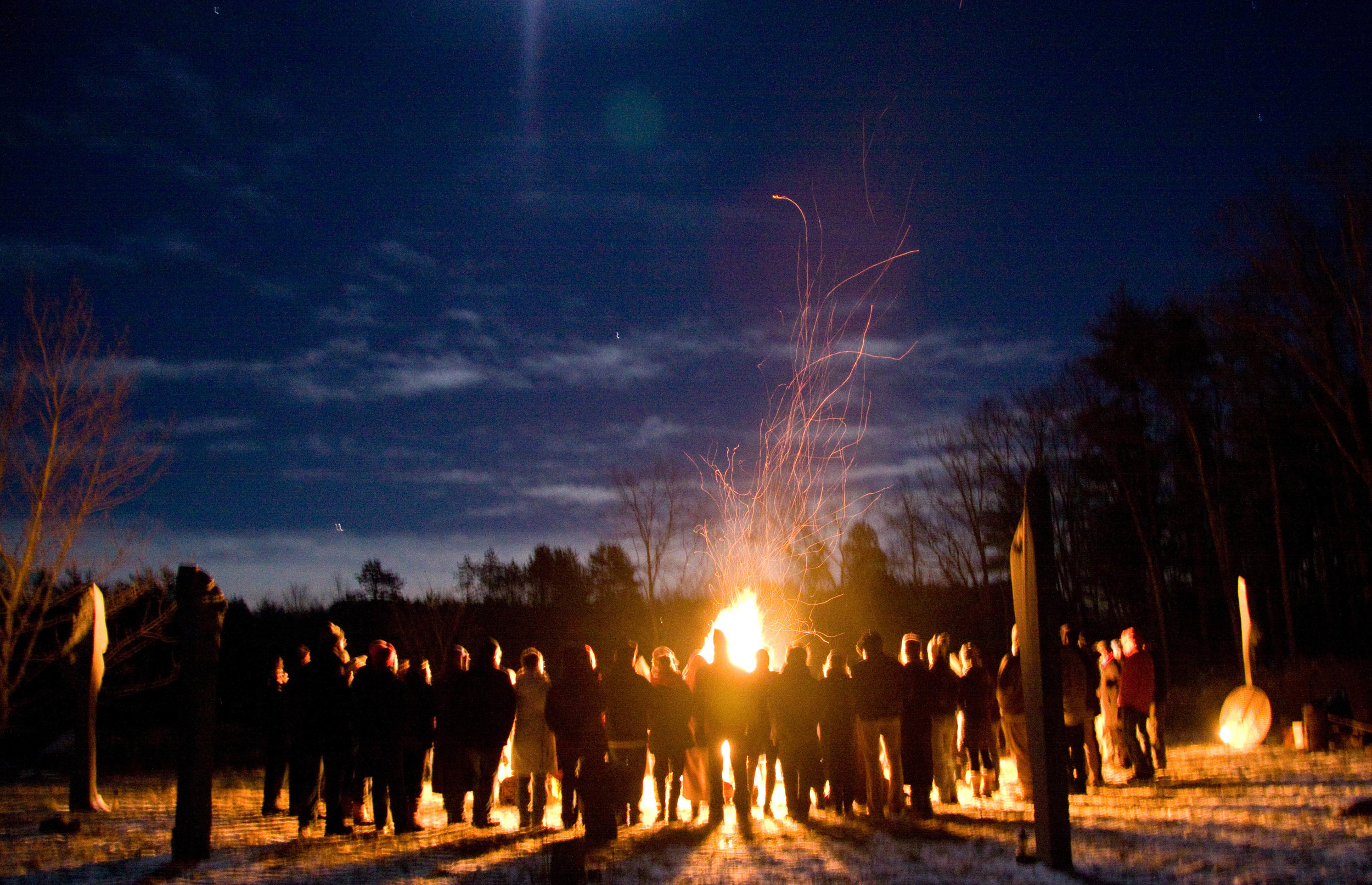
Solstice Fire, Old Frog Pond Farm, photo: Alexis Pappis
December 21st is the winter solstice, the darkest day of the year. At the farm we have a solstice fire where we reenact the return of the sun. In our ritual, it is the crones who go on a journey to find the sun and rebirth the Light. The crones remind us that there are many kinds of darkness. The darkness of racism and sexism, of hatred and war, of injustice, of sorrow and loss. The crones also remind us that there is darkness inside each of us, as well as a light. It is from this light, this often forgotten or darkened light, that the Goddesses labor, and birth the sun. Like Demeter knowing that she will be rejoined with her daughter, Persephone, we need to trust that the light will return, grief will be healed, and plants will bear fruit again.
Carl Jung said, "One does not become enlightened by imagining figures of light, but by making the darkness conscious." In remembering the names of those women who are forgotten, we shine light into the darkness of their cultural obscurity. As we light the solstice fire, we bring light to this world stamped with anger, aggression, and force. In gathering and opening our hearts to one another we grow the light. Happy Solstice!
Search Blog
-
2025
- May 9, 2025 A View from the Tractor Seat
- Apr 11, 2025 Dig
-
2024
- Jan 7, 2024 Winter Wassail
-
2022
- Dec 11, 2022 Keeping Time
- Jun 17, 2022 This Apple-Shaped Earth
- Jan 23, 2022 What is a Jizo?
- Jan 16, 2022 An Invite and Housekeeping Update
- Jan 1, 2022 The Year of the Frog: What Orchardists Do While Apple Trees are Chilling
-
2021
- Oct 24, 2021 Figs
- Oct 3, 2021 The Artist and the Orchard: A Memoir
- Aug 8, 2021 Red-Fleshed Apples
- Jul 25, 2021 When We Were Trees
- Jun 27, 2021 Castor Beans—Who Knew?
- Jun 13, 2021 Spring Training at a Zen Monastery
- May 4, 2021 Our Trees are in Bloom
- Apr 18, 2021 Hooray!
- Jan 24, 2021 Wassailing, virtually!
- Jan 1, 2021 Sitting
-
2020
- Dec 21, 2020 Darkness to Light
- Nov 28, 2020 One Heart
- Sep 18, 2020 Juggling Flowers, Fruit, and Vegetables
- Aug 23, 2020 Refuge
- Aug 9, 2020 Bags of Fertilizer
- Aug 2, 2020 The Sermon of the Blue Heron
- Jul 26, 2020 What's the Buzz?
- Jul 19, 2020 Farm Moments
- Jul 12, 2020 Lost Wax
- Jul 5, 2020 Catalpa: The Hugging Tree
- Jun 28, 2020 Pedaling Peace
- Jun 21, 2020 See Change
- Jun 14, 2020 Lalla Unveiled
- Jun 7, 2020 Pond Alchemy
- May 31, 2020 The Birth of Fruit
- May 24, 2020 An Artist in the Orchard
- May 17, 2020 Walking the Land: Returning Home
- May 10, 2020 Stinging Nettles: Gifts from the Great Mother
- May 3, 2020 The Mystery of Swallow
- Apr 26, 2020 Aerial Bruststrokes
- Apr 19, 2020 Simple Pleasures
- Apr 12, 2020 Weeds and Other Gifts
- Apr 5, 2020 Remembering the Seeds
- Mar 29, 2020 Blow on the Embers
- Mar 22, 2020 Ripples
-
2019
- Nov 16, 2019 Tibet Impressions
- Nov 9, 2019 Forest Tales
- Oct 13, 2019 The Gift
- Aug 4, 2019 The Season is Apples, Berries, and Grandfather Fire
- Jun 8, 2019 Pointers for a Writing Life
- May 12, 2019 Mothers of the Earth
- Apr 6, 2019 The Apple-Shaped Earth
- Mar 23, 2019 You Don’t Know What You Have Till It’s Gone
- Feb 23, 2019 Generations
- Feb 9, 2019 What Are We Doing to the Earth, John Chapman?
-
2018
- Dec 31, 2018 Long Shadows
- Oct 6, 2018 A Pilgrimage to India
- Aug 18, 2018 Scrap Wrenn
- Aug 11, 2018 Off-the-Wall Comments from an Ignorant Farmer
- Jul 28, 2018 Creative Connect
- Jul 14, 2018 How is the Orchard?
- Jun 30, 2018 Which Way?
- Jun 16, 2018 Geese, Herons, Beavers, and the Baby Steps of a Lapsed Blogger
- Feb 24, 2018 Mama's Coupons — Good Forever
- Jan 27, 2018 January Ice
- Jan 13, 2018 The Muse
-
2017
- Dec 30, 2017 A Dream for the New Year
- Dec 23, 2017 A New Year for Apples
- Dec 16, 2017 Intuition
- Nov 22, 2017 Thanksgiving OM
- Nov 4, 2017 East Fork Pottery
- Oct 28, 2017 Putting Down New Roots
- Oct 21, 2017 A is for Art
- Oct 14, 2017 Eve domesticus
- Oct 7, 2017 A String Workshop
- Sep 30, 2017 After Applepicking
- Sep 23, 2017 Two Bad Women and One Good Apple
- Sep 16, 2017 Plein Air Poetry
- Sep 9, 2017 Cutting Off a Leg
- Sep 2, 2017 The Changing Landscape
- Aug 26, 2017 All About Art
- Aug 19, 2017 My First Visit to the Farm
- Aug 12, 2017 The First Food
- Aug 5, 2017 A Teapot, a Woman, and maybe a Boat
- Jul 29, 2017 A Raspberry Dilemma
- Jul 22, 2017 Consider the Miracle
- Jul 15, 2017 Meeting Ekphrasis
- Jul 8, 2017 Ripening Fruit
- Jul 1, 2017 The Voice of The Caterpillar
- Jun 24, 2017 Goumi — An Unusual Fructus
- Jun 17, 2017 Concord, an American Bloomsbury
- Jun 10, 2017 The World Is Bonkers — Shall I Laugh or Cry?
- Jun 3, 2017 Bonkers, a Revolutionary Apple
- May 27, 2017 Guardians of the Swamp
- May 20, 2017 There are Mushrooms and There are Morels
- May 13, 2017 "What's in a Name?"
- May 6, 2017 Bloom Follows Pink: Orchard Pollination
- Apr 29, 2017 The Orchard Is at Pink
- Apr 22, 2017 Natural Farming — Part 2 (continuation from last Sunday's blog)
- Apr 15, 2017 Natural Farming — Part 1
- Apr 8, 2017 Boats, Figures, and Catching Fish
- Apr 1, 2017 A Man with a Mission: The Nuts and Bolts of Bronze Casting
- Mar 25, 2017 A Chalice of Spirit, Art, and Nature
- Mar 18, 2017 Hanami — Blossom Viewing
- Mar 11, 2017 Soil Redemption Song
- Mar 4, 2017 Food is Primary Care
- Feb 25, 2017 Pomme de Terre
- Feb 18, 2017 Organic Certification
- Feb 11, 2017 Tantalizing Fruit
- Feb 4, 2017 The Myths of History
- Jan 28, 2017 The Orchard in Winter
- Jan 21, 2017 The Hi-Line
- Jan 14, 2017 Artistic, Botanical, and Social Diversity
- Jan 7, 2017 Where is Eden?
-
2016
- Dec 31, 2016 The Creative Heart
- Dec 24, 2016 A Christmas Tale
- Dec 17, 2016 Who are the Crones?
- Dec 10, 2016 The Olympic Bell (Part Two)
- Dec 3, 2016 Overheard in the Apple Orchard in Early December
- Nov 26, 2016 The Lessons of a Tortoise
- Nov 19, 2016 In the Studio
- Nov 12, 2016 Even in Darkness
- Nov 5, 2016 Southern Apples, an Elephant, Monkey, Rabbit, and Bird, Two Mango Trees and a Birthday
- Oct 29, 2016 The Tools of Art
- Oct 22, 2016 Labyrinths
- Oct 15, 2016 Repairing the Broken
- Oct 8, 2016 When You Are No More
- Oct 1, 2016 Creation Rain
- Sep 24, 2016 Breaking the Glass
- Sep 17, 2016 String Art
- Sep 10, 2016 Poetry and Photosynthesis: It's all in the Leaves
- Sep 3, 2016 In the Plenty of Time
- Aug 27, 2016 Witch Doctors
- Aug 20, 2016 Listen Coyote
- Aug 13, 2016 Milkweed in the Orchard
- Aug 6, 2016 Some People See a Turtle
- Jul 30, 2016 Arborshaping
- Jul 23, 2016 Joseph Wheelwright: Sculptor of Stones and Trees
- Jul 16, 2016 Asian Pears
- Jul 9, 2016 Gold Leaf, Grief, and the Creative Process
- Jul 2, 2016 The Olympic Bell (Part One)
- Jun 25, 2016 Around the Mulberry Bush
- Jun 18, 2016 Avoiding Apples
- Jun 11, 2016 Fructus
- Jun 4, 2016 Astonishing Apples
- May 28, 2016 Scare the Caterpillars
- May 21, 2016 Join the Club!
- May 14, 2016 The Graft
- May 7, 2016 Rooster, Rhubarb, Rue
- Apr 30, 2016 What do Dolphins and Nettles Have in Common?
- Apr 23, 2016 Art Prunings
- Apr 16, 2016 A Few of the First Arrivals
- Apr 9, 2016 Taste the Spirit of Sustainable Agriculture
- Apr 2, 2016 First Orchard Spray - March 22-24, 2016
- Mar 26, 2016 Hawkeye Apple
- Mar 19, 2016 Desiring the Almata Apple
- Mar 12, 2016 Ugly Fruit
- Mar 5, 2016 Winter Tracks
- Feb 27, 2016 Splash
- Feb 20, 2016 Pruning
- Feb 13, 2016 Orchard Ruminants
- Feb 6, 2016 A Gathering of Seeds
- Jan 30, 2016 Orchard Dragons
- Jan 23, 2016 Tree Rings
- Jan 17, 2016 The Fallen Tree
- Jan 7, 2016 Wassailing the Apple Trees
- Jan 1, 2016 The New Year