LINDA HOFFMAN
Bonkers, a Revolutionary Apple
The origin of the word “Bonkers” is British, and refers to being mad or crazy, as in “the crowd went bonkers when the Beatles first appeared on stage.” As a word, it’s alive and fun to say, with the opening bon(g), almost like a deep bell, then the hard ‘k,’ leading to the ‘ssss’ finale. But the best part is that it’s a great apple. My Bonkers apples are bright red, hard, large, and unusually clean, meaning in apple lingo, blemish free. It’s a juicy apple, and while I can’t say I’m struck by its particular subtlety — lemony, or cinnamony woodsy or musky — I do really enjoy it. There’s a thwack sound when you bite it — sharp, clear, and crisp.
I first heard mention of the Bonkers apple at a round table discussion on apples, the twenty-four-hour meeting I attend every year with a group of iconoclast holistic apple growers. Michael Phillips, the organizer and author of the book, The Holistic Apple Grower, said how much he liked the Bonkers apple. I loved the name, so that’s all it took; a few words touting its merits, and I was sold.

Bonkers apple on June 2, 2017, twice the size of the Stayman in the background. (and all other apples). It's covered with white clay to protect it from the plum curculio beetle.
I ordered my Bonkers from Cummins Nursery, a small family nursery in Ithaca, New York. It was one among the many dwarf apples I bought for our wall of espaliered trees. Once it fruited, I started recommending it to other apple growing friends. They came back saying they couldn’t find it; the commercial nurseries had never even heard of it. It turns out there is good reason. Cornell’s apple breeding program named it NY73334-35 about fifteen years ago, and sent it around to a few nurseries for testing. Cummins was one of the nurseries that got it and grew it, and they in turn sent a free tree to Michael Phillips, who grew it and liked it, and decided to sell it to his customers. Michael told me that he would go out with his daughter, Gracie, to pick the first fruit, calling it NY followed by a long string of numbers. I can imagine their pleasure making up numbers, saying whatever came to mind, NY63587 or NY7575755, enjoying a certain silliness as father and daughter went out to pick fruit.
Cornell never did release the apple; and thus it never became an official variety. However, when Michael decided to sell these apples, he needed a real name:
I polled customers and someone suggested Yonkers for the New York connection. I shifted that to Bonkers, in part because these fruit develop parthenocarpically, and so there can be some irregularly shaped fruit. But mostly because it sounded fun.
Are you wondering about the word, ‘parthenocarpically’? I had to look it up, and learned that it’s like bananas and pineapples, when the fruit grows but doesn’t need a seed. I also asked Michael. He told me:
That whole partheno business is akin to seedless watermelons. Fruit can grow without the ovule-pollen connection. It’s absolutely bonkers that this apple does this! Not every flower becomes an apple. And this also explains the irregularly shaped fruit that sometimes I find.
Bonkers is a cross between Liberty, a tasty modern disease-resistant apple, and Red Delicious, the apple that is so often snubbed today. When our customers tell me that they don’t like Red Delicious, I explain that Red Delicious apples picked right from the tree are nothing like the insipid Red Delicious apples sold at most grocery stores. Ours are crunchy, and not too sweet, with a little lime flavor that I like in an apple. There is a reason that the Red Delicious apple was named, Delicious, and that it was the best-selling apple worldwide for decades. In India, the third largest grower of apples in the world, it’s still the number one apple.
So while production in the United States has dropped considerably, that artful dodger, the Red Delicious apple, is alive and well in its newest guise as Bonkers. It’s an underground revolutionary, making its way slowly throughout New England, from one apple grower to another. If you want to be part of this Bonkers movement, plant a Bonkers apple. And if you can’t find one, let me know. I will graft a few Bonkers apples with scion wood from one of our Bonkers apple trees. However, you’ll have to wait a few years, however, to taste this rebellious fruit.
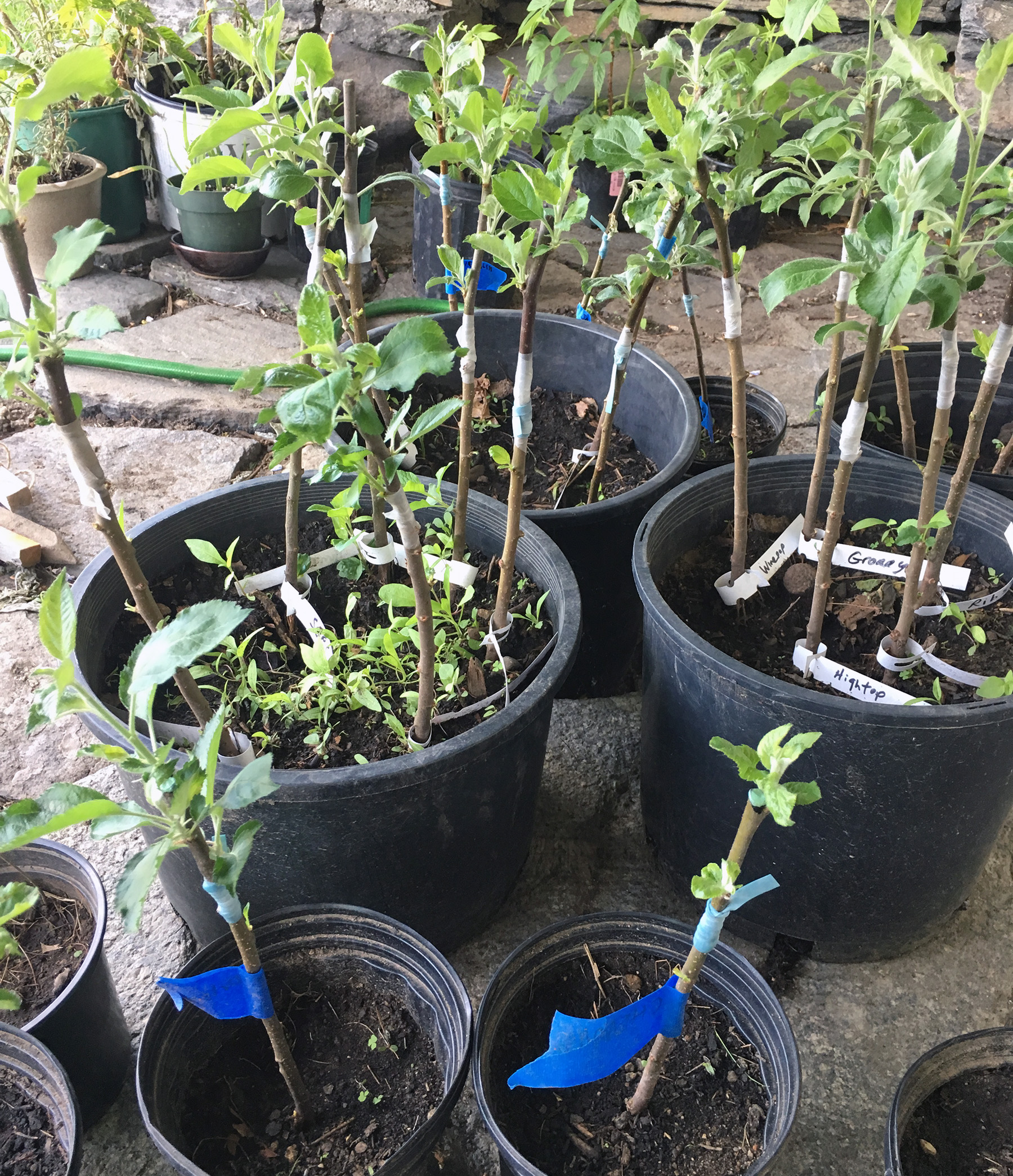
This spring's apple grafts on M7 rootstocks waiting to go into the orchard.
Soil Redemption Song
Michael Phillips, author of The Apple Grower and The Holistic Orchard, now has a new book, Mycorrhizal Planet, just published by Chelsea Green Publishing. There was some disagreement between Phillips and the publisher about the title for the book, so he conducted a poll asking friends for input. A cattle rancher, a regional publisher, a permaculture guru, a biodynamic herbalist, an academic, and an orchardist/artist, among others, all weighed in on which of three titles they preferred. I voted without hesitation for Mycorrhizal Alchemy, but Chelsea Green decided to go with Mycorrhizal Planet (Mycorrhizal Pathways was the other choice). Alchemy suggests transformation, mystery, and ancient practices, all of which I am drawn towards. It’s a little like taking old found objects and making them into art.
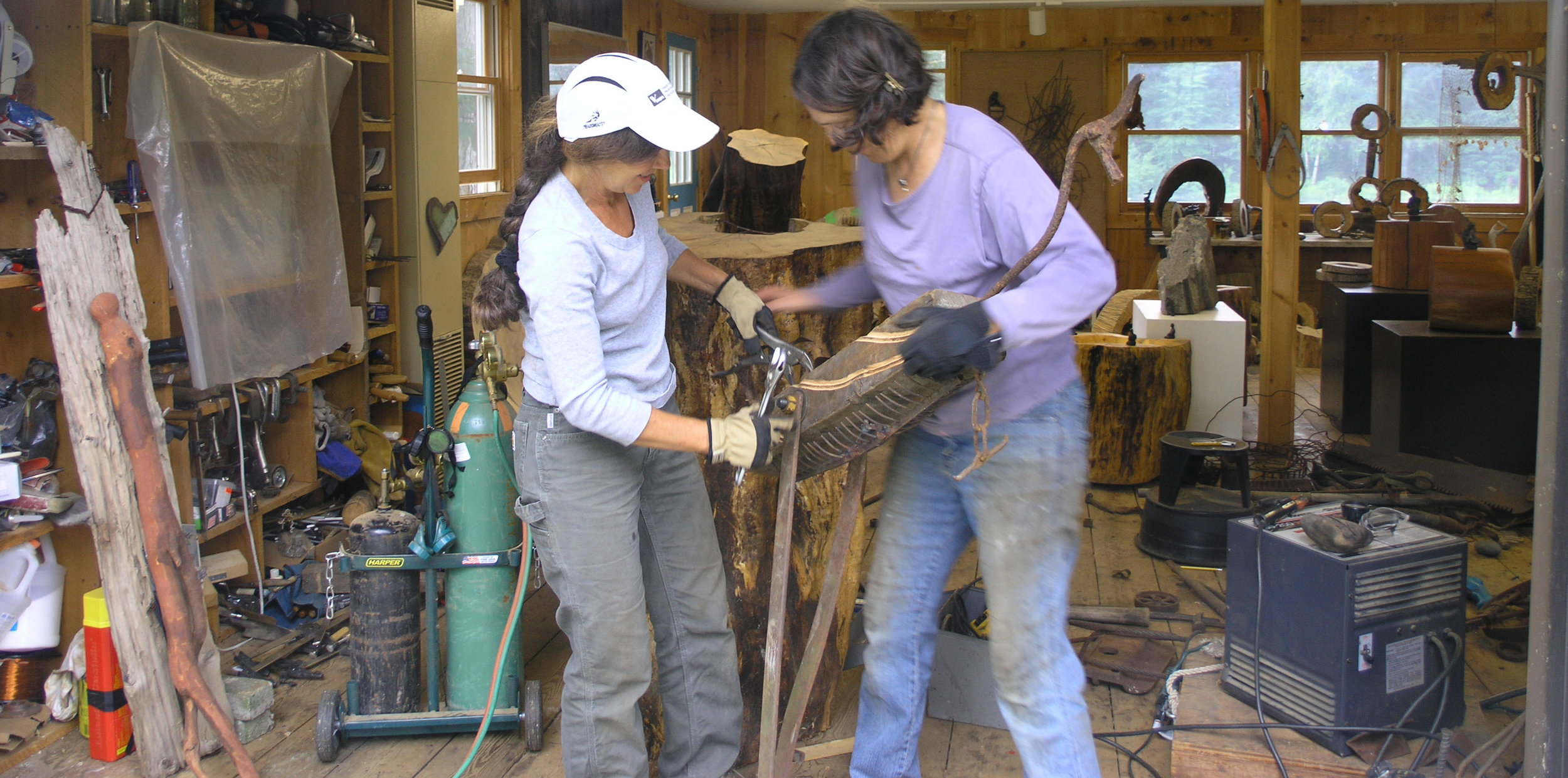
Linda Hoffman (left) and Madeleine Lord working on Belle the Bird in Hoffman's Studio, 2009
In the painting, The Alchemist by Cornelis Bega, a hunched figure sits in a cave-like room, intent on what is happening inside a glass jar. Books, notebooks, and earthenware pots surround him, suggesting a lifetime of mixing substances and studying their reactions. The alchemist is grounded and humble in Bega’s depiction. It’s a lonely art, much maligned as a materialistic quest to turn ore into gold; when, in fact, alchemists made considerable contributions to early science.
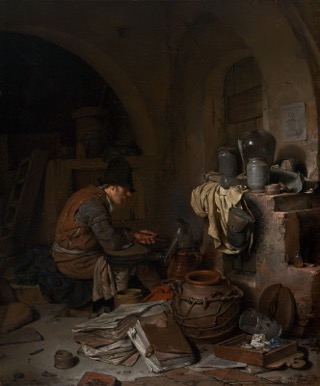
The Alchemist, Cornelis Bega
I think of Michael Phillips like this alchemist, studying the threads of life in the soil, appreciating them, and sharing their magic. Mycorrhizal fungi form a fibrous network stretching throughout the soil, attaching to roots, and connecting plant roots to each other. These fungi process minerals and feed them up to the plants, sending up just what is required. They will even provide storage for a plant’s bounty until leaner times, or pass on needed nutrients to other plants. It's a hidden world that scientists are only beginning to explore.

Photo courtesy of Larry Petersen, University of Guelph
“Each and every Mycorrhizal pulsating with nutrient flow, [is] making our lives possible,” Phillips writes. I consider Phillip’s passion to understand soil devotional.
Interestingly, Buddhism conceives of our world as one in which everything is interrelated and interdependent; nothing is separate in all of existence (or non-existence). Buddhism uses the analogy of the jeweled Net of Indra to describe this global interconnectedness. Imagine a vast net spreading out infinitely in all directions. At every crossing point in the net is a reflective jewel, and each jewel contains the reflection of every other jewel. If I were to put a mark on one gemstone, it would appear on every other one. How we treat one person ripples across the entire world.
The world under our feet is no different. Trees even share nutrients through Mycorrhizal fungi attached to their roots with trees of different species. It’s a little mind blowing — this network of fungi in the soil supporting the cosmic connection between all beings throughout space and time.
Phillips told me that he actually wanted the title to be Soil Redemption Song, inspired by Bob Marley’s haunting Redemption Song.
[…]
Won't you help to sing
These songs of freedom?
'Cause all I ever have
Redemption songs
Redemption songs
Emancipate yourselves from mental slavery
None but ourselves can free our minds
Have no fear for atomic energy
'Cause none of them can stop the time
How long shall they kill our prophets
While we stand aside and look? Ooh
Some say it's just a part of it
We've got to fulfill the Book
Won't you help to sing
These songs of freedom?
'Cause all I ever have
Redemption songs
Redemption songs
Redemption songs
Michael told me that as he pondered the lyrics of this song, he wrote, “Healthy plant metabolism begins with a molecule of water, a breath of carbon, and light energy from our nearest star. The tangible science behind all this unlocks the righteous way to farm and garden, give honor to trees, and plain do right by this earth. Nothing has ever excited me more.”
Mycorrhizal Planet provides practical information for the farmer, gardener, orchardist, and forester, as well as inspiration for all of us who have temporarily lost heart from following the daily news. If you’d like to order the book please go to Phillips’ website. He’ll sign a copy and send it to you.
Listen closely when you next walk among the trees. You might just hear the great alchemist Bob Marley singing — transforming our pain with his courage. Listen!
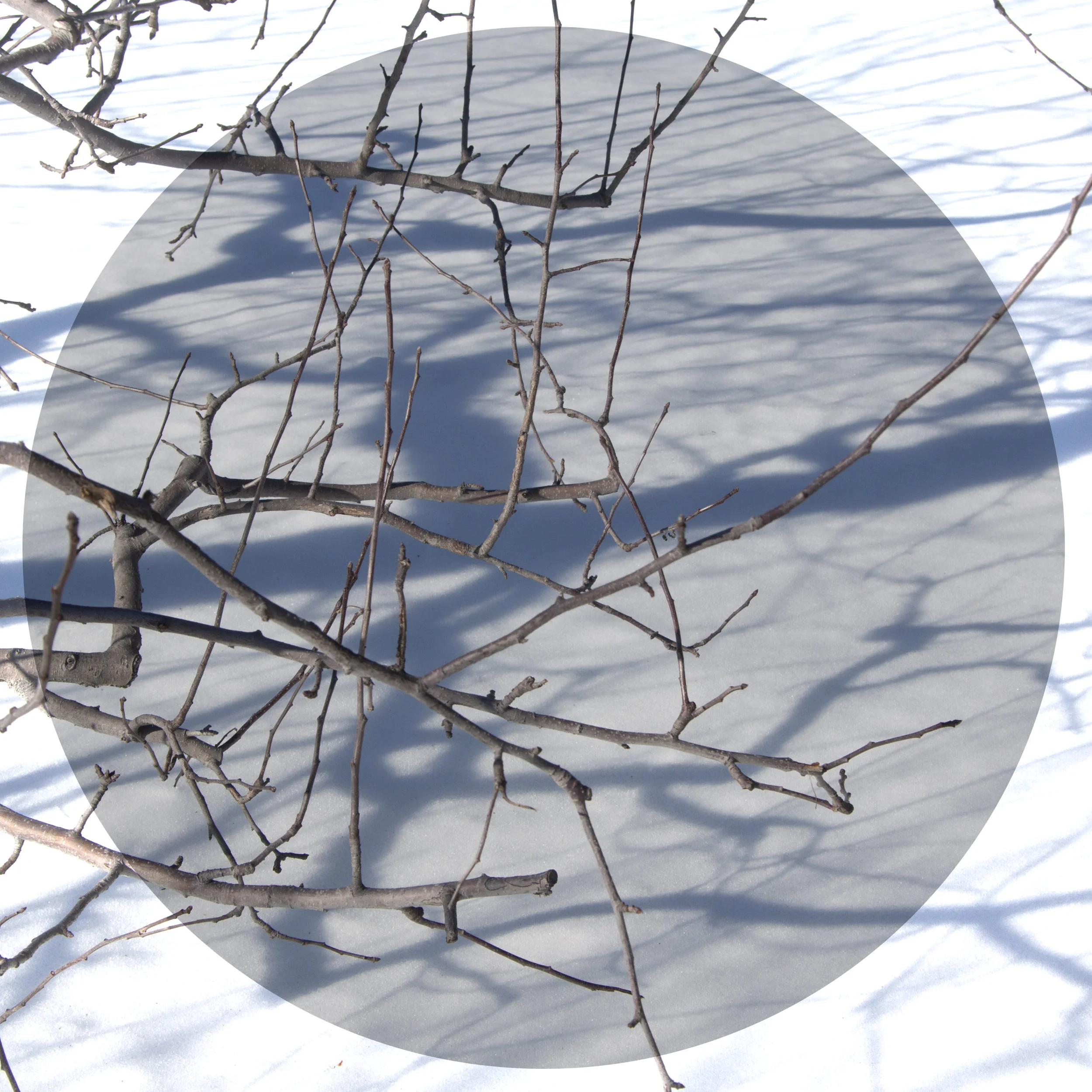
The Orchard in Winter
In 2006, when I was first learning about organic apple growing, I heard about a group of holistic apple growers who gather in western Massachusetts once a year for twenty-four hours of apple conversation. I signed up. Thirty men and two women besides myself, met at noon at Stumps Sprouts, a retreat center in Rowley, Massachusetts. We began with a vegetarian lunch. In the dining room an earthy energy emanated from the rugged men in Carharts, flannel shirts, and work boots. One thin man with a long grey beard had Felco pruners hanging on his belt, just in case something needed pruning. Up in the barn, to begin our first session, Michael Phillips, the organizer and author of The Holistic Orchard as well as the forthcoming, Mycorrhizal Planet, asked us to introduce our orchards. One of the men I met was Alan Suprenant who has a small orchard in Ashfield, Massachusetts. I asked Alan if he would be a guest blogger.
The Orchard in Winter by Alan Suprenant
When we think of an orchard, we think about eating delicious fruit in the crisp, fall sunshine. We think of the wonderful fragrance of the trees in bloom, the gentle colors of the blossoms, the soft breeze that blows petals around our feet. But what of the orchard in winter, when trees seem to sleep, limbs akimbo against their bed of snow?
We can learn a lot from spending time with the orchard now, at this quiet time of year, observing what, on the surface, might at first seem unobservable. There’s a lot to learn about ourselves as well, there being many parallels between our lives and the lives of the trees.
Winter dormancy finds the orchard patiently waiting for a new year and the beginning of another growing cycle. This can be a time of patience and unfolding for us as well, as we anticipate and plan for what’s next in our lives and our lives with the trees. There’s little to do and much to be — loving, appreciative, optimistic, excited — as we wait for spring. How might we do this quietly, the way they do? Perhaps we just sit and watch them be still, as the light changes and the wind blows.

Trees in Winter, Photo: Alan Suprenant
Snow on the horizontal limbs of a well-pruned fruit tree allows us to clearly see the tree’s bones, the structure that supports the weight of a good crop. The fruit buds have already formed last summer. They will absorb the sunlight and ripen the fruit to its utmost potential.
What does it mean for our lives to have good bones and a structure that supports us in bearing fruit? Good friends? Work we love? Self care? Balance in what we do? What feeds us in our lives, and how might we absorb it for our ripening?
A fruit tree should be pruned each year. Removing what isn’t needed helps ripen the fruit. Sometimes, looking down at a growing pile of discarded wood, it seems like I’m taking an awful lot away. But I’m paring down to what is essential for and about the tree, so it can become more of itself. It’s an art, this figuring out what to keep, and well worth it, because what grows now will be healthy, productive, and strong.
Pruning our own lives can be equally challenging, as we figure out, learning as we go — what is essential about and for us. What might we discard that no longer serves us? An assumption? A belief? A story that limits us or people we know? How might we prune our relationships so they grow stronger and yield the best that we and others have to offer?
Some of the branches I cut in winter, scions, are saved for grafting onto rootstock in the spring. You make new trees this way, by gently inserting new wood into old, binding the two together until, fed by the soil and the sun, they become one. What parts of others might we take into ourselves to grow something new? And how will our new branching grow over the years? All this watching and waiting makes me better with the trees. I’m more able to understand the way they grow, what they need, how they respond to weather and light. I try something and then I pause — for a minute, a month, or a year — and see what happens, what the trees and my experience tell me. And it makes me better with my life as well. I’m more able to let things and people take their natural course. I can see more clearly what someone needs in order to feel safe or productive or loved.
Teaching people about my orchard gives me the opportunity to share not just the technical things — which limbs to take, what varieties to choose, how to hold the knife to make a good graft — but the essence of the orchard — a place of profound learning, quiet and, ultimately, delight.
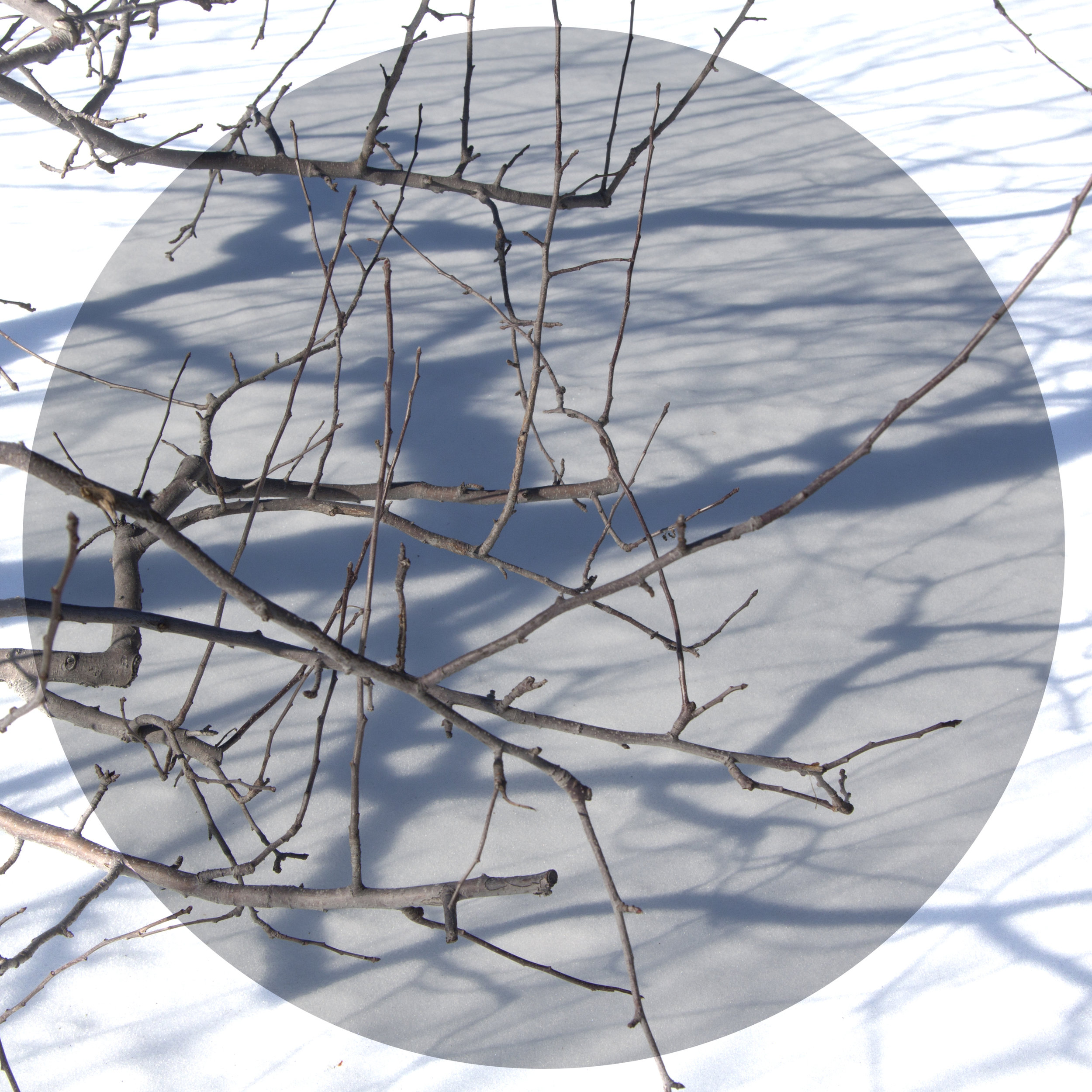
Winter Shadows, Photo:Linda Hoffman
Search Blog
-
2025
- May 9, 2025 A View from the Tractor Seat
- Apr 11, 2025 Dig
-
2024
- Jan 7, 2024 Winter Wassail
-
2022
- Dec 11, 2022 Keeping Time
- Jun 17, 2022 This Apple-Shaped Earth
- Jan 23, 2022 What is a Jizo?
- Jan 16, 2022 An Invite and Housekeeping Update
- Jan 1, 2022 The Year of the Frog: What Orchardists Do While Apple Trees are Chilling
-
2021
- Oct 24, 2021 Figs
- Oct 3, 2021 The Artist and the Orchard: A Memoir
- Aug 8, 2021 Red-Fleshed Apples
- Jul 25, 2021 When We Were Trees
- Jun 27, 2021 Castor Beans—Who Knew?
- Jun 13, 2021 Spring Training at a Zen Monastery
- May 4, 2021 Our Trees are in Bloom
- Apr 18, 2021 Hooray!
- Jan 24, 2021 Wassailing, virtually!
- Jan 1, 2021 Sitting
-
2020
- Dec 21, 2020 Darkness to Light
- Nov 28, 2020 One Heart
- Sep 18, 2020 Juggling Flowers, Fruit, and Vegetables
- Aug 23, 2020 Refuge
- Aug 9, 2020 Bags of Fertilizer
- Aug 2, 2020 The Sermon of the Blue Heron
- Jul 26, 2020 What's the Buzz?
- Jul 19, 2020 Farm Moments
- Jul 12, 2020 Lost Wax
- Jul 5, 2020 Catalpa: The Hugging Tree
- Jun 28, 2020 Pedaling Peace
- Jun 21, 2020 See Change
- Jun 14, 2020 Lalla Unveiled
- Jun 7, 2020 Pond Alchemy
- May 31, 2020 The Birth of Fruit
- May 24, 2020 An Artist in the Orchard
- May 17, 2020 Walking the Land: Returning Home
- May 10, 2020 Stinging Nettles: Gifts from the Great Mother
- May 3, 2020 The Mystery of Swallow
- Apr 26, 2020 Aerial Bruststrokes
- Apr 19, 2020 Simple Pleasures
- Apr 12, 2020 Weeds and Other Gifts
- Apr 5, 2020 Remembering the Seeds
- Mar 29, 2020 Blow on the Embers
- Mar 22, 2020 Ripples
-
2019
- Nov 16, 2019 Tibet Impressions
- Nov 9, 2019 Forest Tales
- Oct 13, 2019 The Gift
- Aug 4, 2019 The Season is Apples, Berries, and Grandfather Fire
- Jun 8, 2019 Pointers for a Writing Life
- May 12, 2019 Mothers of the Earth
- Apr 6, 2019 The Apple-Shaped Earth
- Mar 23, 2019 You Don’t Know What You Have Till It’s Gone
- Feb 23, 2019 Generations
- Feb 9, 2019 What Are We Doing to the Earth, John Chapman?
-
2018
- Dec 31, 2018 Long Shadows
- Oct 6, 2018 A Pilgrimage to India
- Aug 18, 2018 Scrap Wrenn
- Aug 11, 2018 Off-the-Wall Comments from an Ignorant Farmer
- Jul 28, 2018 Creative Connect
- Jul 14, 2018 How is the Orchard?
- Jun 30, 2018 Which Way?
- Jun 16, 2018 Geese, Herons, Beavers, and the Baby Steps of a Lapsed Blogger
- Feb 24, 2018 Mama's Coupons — Good Forever
- Jan 27, 2018 January Ice
- Jan 13, 2018 The Muse
-
2017
- Dec 30, 2017 A Dream for the New Year
- Dec 23, 2017 A New Year for Apples
- Dec 16, 2017 Intuition
- Nov 22, 2017 Thanksgiving OM
- Nov 4, 2017 East Fork Pottery
- Oct 28, 2017 Putting Down New Roots
- Oct 21, 2017 A is for Art
- Oct 14, 2017 Eve domesticus
- Oct 7, 2017 A String Workshop
- Sep 30, 2017 After Applepicking
- Sep 23, 2017 Two Bad Women and One Good Apple
- Sep 16, 2017 Plein Air Poetry
- Sep 9, 2017 Cutting Off a Leg
- Sep 2, 2017 The Changing Landscape
- Aug 26, 2017 All About Art
- Aug 19, 2017 My First Visit to the Farm
- Aug 12, 2017 The First Food
- Aug 5, 2017 A Teapot, a Woman, and maybe a Boat
- Jul 29, 2017 A Raspberry Dilemma
- Jul 22, 2017 Consider the Miracle
- Jul 15, 2017 Meeting Ekphrasis
- Jul 8, 2017 Ripening Fruit
- Jul 1, 2017 The Voice of The Caterpillar
- Jun 24, 2017 Goumi — An Unusual Fructus
- Jun 17, 2017 Concord, an American Bloomsbury
- Jun 10, 2017 The World Is Bonkers — Shall I Laugh or Cry?
- Jun 3, 2017 Bonkers, a Revolutionary Apple
- May 27, 2017 Guardians of the Swamp
- May 20, 2017 There are Mushrooms and There are Morels
- May 13, 2017 "What's in a Name?"
- May 6, 2017 Bloom Follows Pink: Orchard Pollination
- Apr 29, 2017 The Orchard Is at Pink
- Apr 22, 2017 Natural Farming — Part 2 (continuation from last Sunday's blog)
- Apr 15, 2017 Natural Farming — Part 1
- Apr 8, 2017 Boats, Figures, and Catching Fish
- Apr 1, 2017 A Man with a Mission: The Nuts and Bolts of Bronze Casting
- Mar 25, 2017 A Chalice of Spirit, Art, and Nature
- Mar 18, 2017 Hanami — Blossom Viewing
- Mar 11, 2017 Soil Redemption Song
- Mar 4, 2017 Food is Primary Care
- Feb 25, 2017 Pomme de Terre
- Feb 18, 2017 Organic Certification
- Feb 11, 2017 Tantalizing Fruit
- Feb 4, 2017 The Myths of History
- Jan 28, 2017 The Orchard in Winter
- Jan 21, 2017 The Hi-Line
- Jan 14, 2017 Artistic, Botanical, and Social Diversity
- Jan 7, 2017 Where is Eden?
-
2016
- Dec 31, 2016 The Creative Heart
- Dec 24, 2016 A Christmas Tale
- Dec 17, 2016 Who are the Crones?
- Dec 10, 2016 The Olympic Bell (Part Two)
- Dec 3, 2016 Overheard in the Apple Orchard in Early December
- Nov 26, 2016 The Lessons of a Tortoise
- Nov 19, 2016 In the Studio
- Nov 12, 2016 Even in Darkness
- Nov 5, 2016 Southern Apples, an Elephant, Monkey, Rabbit, and Bird, Two Mango Trees and a Birthday
- Oct 29, 2016 The Tools of Art
- Oct 22, 2016 Labyrinths
- Oct 15, 2016 Repairing the Broken
- Oct 8, 2016 When You Are No More
- Oct 1, 2016 Creation Rain
- Sep 24, 2016 Breaking the Glass
- Sep 17, 2016 String Art
- Sep 10, 2016 Poetry and Photosynthesis: It's all in the Leaves
- Sep 3, 2016 In the Plenty of Time
- Aug 27, 2016 Witch Doctors
- Aug 20, 2016 Listen Coyote
- Aug 13, 2016 Milkweed in the Orchard
- Aug 6, 2016 Some People See a Turtle
- Jul 30, 2016 Arborshaping
- Jul 23, 2016 Joseph Wheelwright: Sculptor of Stones and Trees
- Jul 16, 2016 Asian Pears
- Jul 9, 2016 Gold Leaf, Grief, and the Creative Process
- Jul 2, 2016 The Olympic Bell (Part One)
- Jun 25, 2016 Around the Mulberry Bush
- Jun 18, 2016 Avoiding Apples
- Jun 11, 2016 Fructus
- Jun 4, 2016 Astonishing Apples
- May 28, 2016 Scare the Caterpillars
- May 21, 2016 Join the Club!
- May 14, 2016 The Graft
- May 7, 2016 Rooster, Rhubarb, Rue
- Apr 30, 2016 What do Dolphins and Nettles Have in Common?
- Apr 23, 2016 Art Prunings
- Apr 16, 2016 A Few of the First Arrivals
- Apr 9, 2016 Taste the Spirit of Sustainable Agriculture
- Apr 2, 2016 First Orchard Spray - March 22-24, 2016
- Mar 26, 2016 Hawkeye Apple
- Mar 19, 2016 Desiring the Almata Apple
- Mar 12, 2016 Ugly Fruit
- Mar 5, 2016 Winter Tracks
- Feb 27, 2016 Splash
- Feb 20, 2016 Pruning
- Feb 13, 2016 Orchard Ruminants
- Feb 6, 2016 A Gathering of Seeds
- Jan 30, 2016 Orchard Dragons
- Jan 23, 2016 Tree Rings
- Jan 17, 2016 The Fallen Tree
- Jan 7, 2016 Wassailing the Apple Trees
- Jan 1, 2016 The New Year