LINDA HOFFMAN
Organic Certification
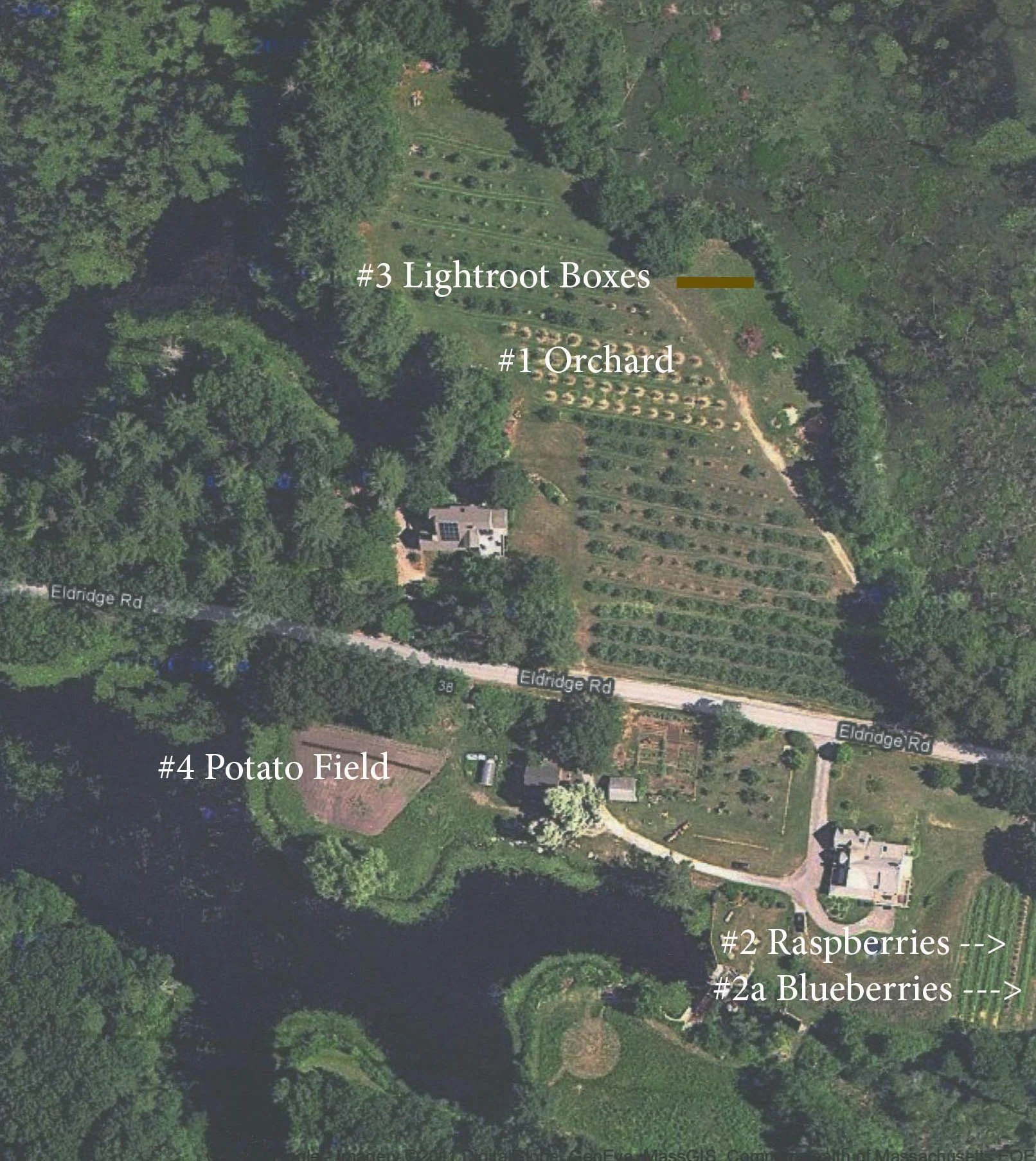
Last week I filled out our annual organic certification paperwork due February 15th. It’s one of those items on my To Do list that I often put off. When a farmer wants to be an organic grower and label her produce organic, each crop on the farm must be certified by a regional certifying agency. First, the applicant needs to demonstrate that for three years the land has been free from contaminating chemicals. Then, the crops must be grown according to organic standards; specifically, any material used on the crop must be on the Organic Materials Review Institute’s (OMRI) list of approved materials or individually approved by a certifying agency. If a farmer chooses not to become certified, yet still follows all the regulations, she can tell customers that the crop is grown according to organic standards, but cannot label it organic. The standards are stringent, and the United States Department of Agriculture can slap on a fine of up to $10,000 for each infraction.
Now that I am filling out the certification papers for the 11th year in a row it doesn’t take me as long as it used to. But I remember the first year I nervously submitted our thirty-page application, including maps of the land, a soil report, a list of materials I had used or planned to use, and harvest, selling, and storage plans. The certifier wanted to be sure that there was no possibility of contamination at any step in the process of delivering the crop to the consumer. The final requirement before receiving certification was the annual onsite inspector visit.
I knew that being certified would create our market. Our certifier had told me that there were no other pick-your-own certified organic orchards in Massachusetts. Without it, why would anyone be attracted to our little farm, when we were surrounded by so many commercial orchards that not only offered apples, but cider donuts, farmstands, mazes, petting zoos, and hay rides — big time agri-tainment?
On the day of our appointment, the inspector arrived with copies of our application and a clipboard of questions. He wanted to see the shed where we stored all of our materials, the tractor, the sprayer and other tools, our spray log, and receipts for all materials purchased—in short, everything related to the farm operation. It was a bit like having a nosy mother-in-law inspect your domestic abilities. I thought I’d done everything correctly, but the inspector noted some inconsistencies that needed to be addressed before the orchard could receive organic certification.
The most difficult issue to resolve was my early season copper spray for fire blight, a standard in the orchard arsenal. Copper is a mined material; I never imagined that it wouldn’t be organic. The product label said it contained copper sulfate and copper oxychloride, both Greek to me (I never took chemistry), and other inert materials. The inspector told me he was not worried about the first two materials, but that I would need to find out about the inert ingredients, which companies are hesitant to reveal because of trade secrets. Those inert ingredients could make us ineligible for certification for three years. With my friend Kavita’s help, we discovered that our product was on an older OMRI list. We were ecstatic and called the organic certifier. He said, “This is good news,” but he cautioned us. “The product might have changed—otherwise, why wasn’t it on the current list? If the material is the same as on the older list, you need to get the company to state that in writing.”
We called the company numerous times and sent beseeching emails. Fortunately, we reached a sympathetic person who explained that the product was changed to a different label due to a “consolidation of product line.” Neither the active nor inert ingredients had changed. He said the company didn’t list it because the paperwork was so arduous. We were very appreciative and the farm officially received organic certification a few weeks later. Now, I get approval for every product before I use it in the orchard. And because we are one of two organic pick-your-own orchards in the state, and still the only one in eastern MA, we are picked out every fall before Columbus Day.
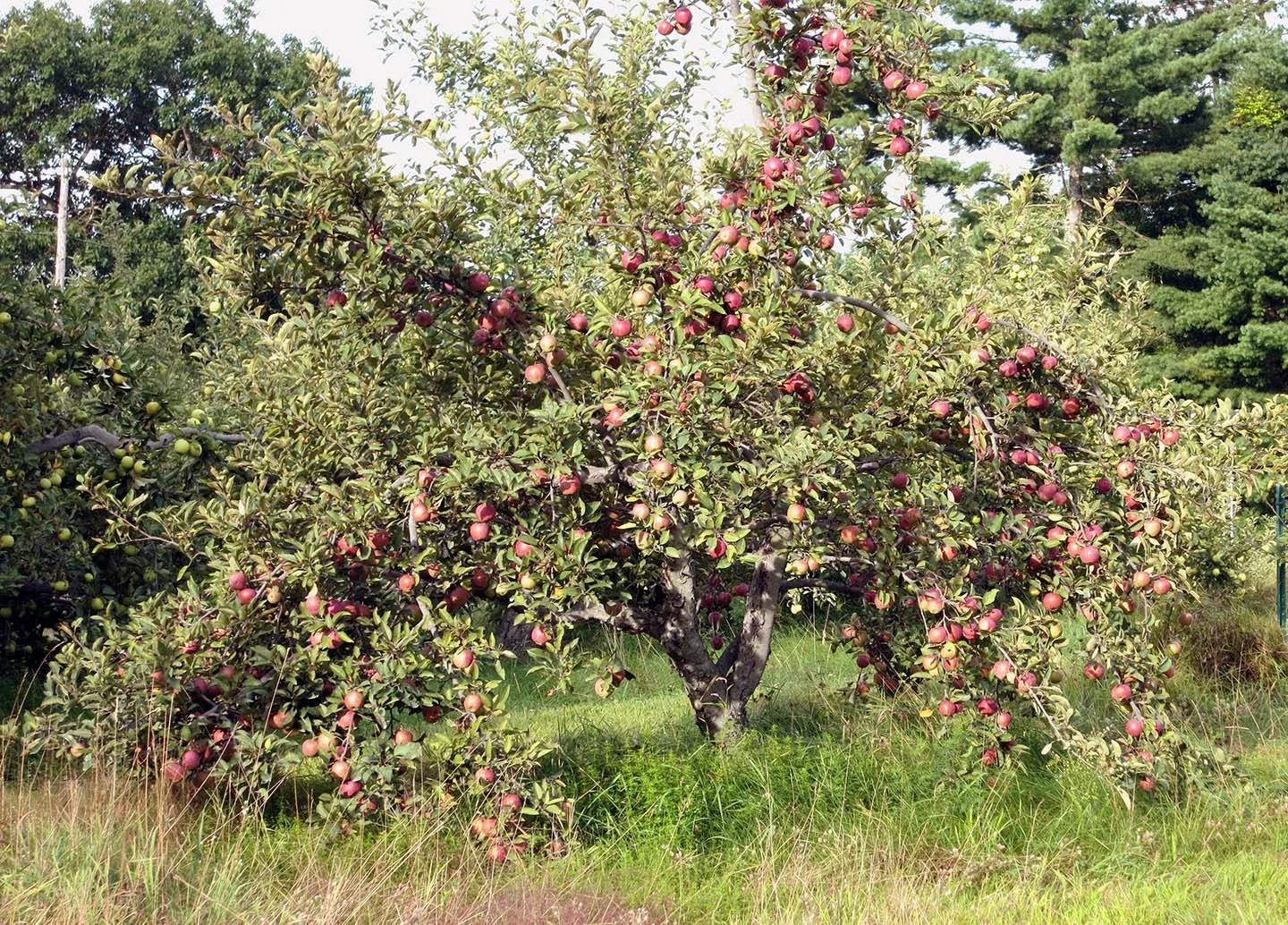
Apple Tree at Old Frog Pond Farm, 2013 Photo Credit: Linda Hoffman
Today, I wouldn't consider spraying a harsh chemical on our trees or herbicide under the trees, but I continue to apply for certification. Organic certification creates the market for our small farm. But I know that organic is only a minimum requirement for healthy food. The nutritional content of our food makes the big difference in human health and it’s the biological activity in the soil that feeds the plants that feed us. I’ll be writing about nutrient dense growing in a future blog. But that’s why it’s important to know your farm and know your farmer!
Tantalizing Fruit

Black Rot, Photo credit: Linda Hoffman
Tantalus was a rotten apple! An invited guest on Mt Olympus, he stole nectar and ambrosia and brought it back to impress his friends. But that wasn’t the worst. Later when the gods came to dine with him, he cut up his own son, Pelops, boiled him, and served him to his guests. The gods suspected something was off with the menu and declined to partake; but poor Demeter, distracted by the loss of her daughter, Persephone, took a bit of shoulder.
Zeus ordered that the parts of Pelops be collected and that he be put back together. Hephaestus made him an ivory shoulder, and he grew into a handsome youth, married, and had children of his own. Zeus killed Tantalus and then punished him further by making him stand waist-deep in water while overhead he was shaded by a large apple tree ripe with fruit. However, whenever Tantalus went to drink the water, it dried up; and each time he tried to pluck an apple, the wind blew the branch out of reach. He was trapped inside perpetual desire.
Orchardists desire a beautiful, abundant crop. They worry about the crop all year long. There’s no off-season. Weather can freeze the buds or the blossoms. Even the almost ripe fruit can be the unlucky destination for thirty seconds of hail. Then the apples will be pock-marked and susceptible to disease. Yet, still, growers of apples persevere. There’s something about growing fruit that challenges the soul. And the best part is that it requires hands-on attention.
How surprised I was to learn of a robotized apple picker being developed by Abundant Robotics, Inc. The picker will be drawn by a tractor with nozzles reaching out, up, and down, vacuuming the fruit off the tree. Each step of progress seems to take humans away from touching what we do, touching what we grow, automatizing our lives. Touch is a profound human experience. Think of an infant and how these two senses, touch and taste, are the foundation of her first relationships.
When I first saw the advertisement for this small farm in Harvard, MA, it said five bedrooms, a detached garage/barn, apple orchard, and a chicken coop. At that moment in my life, I was unsure about everything. I had never before contemplated owning a house, but I had to find a place to live. I wanted a place that would have rooms for my three children and a studio for making sculpture. I walked with a realtor through the kitchen where dark pine boards covered the walls and ceiling. There were no drawers or cabinets, only open shelves for plates, bowls, and glasses. Above a wood-burning cook stove hung a patchwork of blackened iron pans. This was a real work kitchen. We walked upstairs and I thought, If the house has hot water, everything will be fine. In the master bath, I turned on the hot water faucet in the 1960s avocado-colored sink. Warmth ran over my fingertips.
Maybe because I am a sculptor I trust what I feel with my hands. That touch of warmth gave me the confidence to move to the farm. But I had no idea that once I started to grow apples, I would become like Tantalus, desirous of plucking more and more fruit.

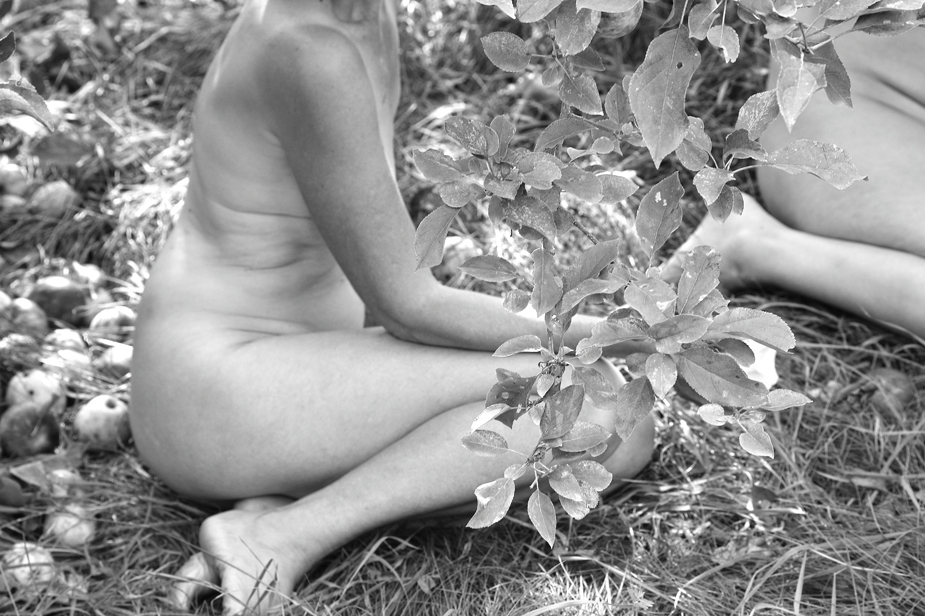
Women and Apples, Photo Credit: Carol J. Hicks
Even with extreme shifts of weather and unexpected environmental conditions, I persist. In winter, walking through the orchard, bending down the branches, pruning off what is no longer needed, and running my fingers over the frozen fruit buds, I fall again in love with the promise of fruit. And after a full day pruning in the winter cold, I sit in my favorite armchair and read the descriptions of heirloom and modern apples in my stack of saved nursery catalogues. I can’t help but be tantalized. I order a few new varieties for spring planting — a perfect Valentine's Day gift!
Search Blog
-
2025
- May 9, 2025 A View from the Tractor Seat
- Apr 11, 2025 Dig
-
2024
- Jan 7, 2024 Winter Wassail
-
2022
- Dec 11, 2022 Keeping Time
- Jun 17, 2022 This Apple-Shaped Earth
- Jan 23, 2022 What is a Jizo?
- Jan 16, 2022 An Invite and Housekeeping Update
- Jan 1, 2022 The Year of the Frog: What Orchardists Do While Apple Trees are Chilling
-
2021
- Oct 24, 2021 Figs
- Oct 3, 2021 The Artist and the Orchard: A Memoir
- Aug 8, 2021 Red-Fleshed Apples
- Jul 25, 2021 When We Were Trees
- Jun 27, 2021 Castor Beans—Who Knew?
- Jun 13, 2021 Spring Training at a Zen Monastery
- May 4, 2021 Our Trees are in Bloom
- Apr 18, 2021 Hooray!
- Jan 24, 2021 Wassailing, virtually!
- Jan 1, 2021 Sitting
-
2020
- Dec 21, 2020 Darkness to Light
- Nov 28, 2020 One Heart
- Sep 18, 2020 Juggling Flowers, Fruit, and Vegetables
- Aug 23, 2020 Refuge
- Aug 9, 2020 Bags of Fertilizer
- Aug 2, 2020 The Sermon of the Blue Heron
- Jul 26, 2020 What's the Buzz?
- Jul 19, 2020 Farm Moments
- Jul 12, 2020 Lost Wax
- Jul 5, 2020 Catalpa: The Hugging Tree
- Jun 28, 2020 Pedaling Peace
- Jun 21, 2020 See Change
- Jun 14, 2020 Lalla Unveiled
- Jun 7, 2020 Pond Alchemy
- May 31, 2020 The Birth of Fruit
- May 24, 2020 An Artist in the Orchard
- May 17, 2020 Walking the Land: Returning Home
- May 10, 2020 Stinging Nettles: Gifts from the Great Mother
- May 3, 2020 The Mystery of Swallow
- Apr 26, 2020 Aerial Bruststrokes
- Apr 19, 2020 Simple Pleasures
- Apr 12, 2020 Weeds and Other Gifts
- Apr 5, 2020 Remembering the Seeds
- Mar 29, 2020 Blow on the Embers
- Mar 22, 2020 Ripples
-
2019
- Nov 16, 2019 Tibet Impressions
- Nov 9, 2019 Forest Tales
- Oct 13, 2019 The Gift
- Aug 4, 2019 The Season is Apples, Berries, and Grandfather Fire
- Jun 8, 2019 Pointers for a Writing Life
- May 12, 2019 Mothers of the Earth
- Apr 6, 2019 The Apple-Shaped Earth
- Mar 23, 2019 You Don’t Know What You Have Till It’s Gone
- Feb 23, 2019 Generations
- Feb 9, 2019 What Are We Doing to the Earth, John Chapman?
-
2018
- Dec 31, 2018 Long Shadows
- Oct 6, 2018 A Pilgrimage to India
- Aug 18, 2018 Scrap Wrenn
- Aug 11, 2018 Off-the-Wall Comments from an Ignorant Farmer
- Jul 28, 2018 Creative Connect
- Jul 14, 2018 How is the Orchard?
- Jun 30, 2018 Which Way?
- Jun 16, 2018 Geese, Herons, Beavers, and the Baby Steps of a Lapsed Blogger
- Feb 24, 2018 Mama's Coupons — Good Forever
- Jan 27, 2018 January Ice
- Jan 13, 2018 The Muse
-
2017
- Dec 30, 2017 A Dream for the New Year
- Dec 23, 2017 A New Year for Apples
- Dec 16, 2017 Intuition
- Nov 22, 2017 Thanksgiving OM
- Nov 4, 2017 East Fork Pottery
- Oct 28, 2017 Putting Down New Roots
- Oct 21, 2017 A is for Art
- Oct 14, 2017 Eve domesticus
- Oct 7, 2017 A String Workshop
- Sep 30, 2017 After Applepicking
- Sep 23, 2017 Two Bad Women and One Good Apple
- Sep 16, 2017 Plein Air Poetry
- Sep 9, 2017 Cutting Off a Leg
- Sep 2, 2017 The Changing Landscape
- Aug 26, 2017 All About Art
- Aug 19, 2017 My First Visit to the Farm
- Aug 12, 2017 The First Food
- Aug 5, 2017 A Teapot, a Woman, and maybe a Boat
- Jul 29, 2017 A Raspberry Dilemma
- Jul 22, 2017 Consider the Miracle
- Jul 15, 2017 Meeting Ekphrasis
- Jul 8, 2017 Ripening Fruit
- Jul 1, 2017 The Voice of The Caterpillar
- Jun 24, 2017 Goumi — An Unusual Fructus
- Jun 17, 2017 Concord, an American Bloomsbury
- Jun 10, 2017 The World Is Bonkers — Shall I Laugh or Cry?
- Jun 3, 2017 Bonkers, a Revolutionary Apple
- May 27, 2017 Guardians of the Swamp
- May 20, 2017 There are Mushrooms and There are Morels
- May 13, 2017 "What's in a Name?"
- May 6, 2017 Bloom Follows Pink: Orchard Pollination
- Apr 29, 2017 The Orchard Is at Pink
- Apr 22, 2017 Natural Farming — Part 2 (continuation from last Sunday's blog)
- Apr 15, 2017 Natural Farming — Part 1
- Apr 8, 2017 Boats, Figures, and Catching Fish
- Apr 1, 2017 A Man with a Mission: The Nuts and Bolts of Bronze Casting
- Mar 25, 2017 A Chalice of Spirit, Art, and Nature
- Mar 18, 2017 Hanami — Blossom Viewing
- Mar 11, 2017 Soil Redemption Song
- Mar 4, 2017 Food is Primary Care
- Feb 25, 2017 Pomme de Terre
- Feb 18, 2017 Organic Certification
- Feb 11, 2017 Tantalizing Fruit
- Feb 4, 2017 The Myths of History
- Jan 28, 2017 The Orchard in Winter
- Jan 21, 2017 The Hi-Line
- Jan 14, 2017 Artistic, Botanical, and Social Diversity
- Jan 7, 2017 Where is Eden?
-
2016
- Dec 31, 2016 The Creative Heart
- Dec 24, 2016 A Christmas Tale
- Dec 17, 2016 Who are the Crones?
- Dec 10, 2016 The Olympic Bell (Part Two)
- Dec 3, 2016 Overheard in the Apple Orchard in Early December
- Nov 26, 2016 The Lessons of a Tortoise
- Nov 19, 2016 In the Studio
- Nov 12, 2016 Even in Darkness
- Nov 5, 2016 Southern Apples, an Elephant, Monkey, Rabbit, and Bird, Two Mango Trees and a Birthday
- Oct 29, 2016 The Tools of Art
- Oct 22, 2016 Labyrinths
- Oct 15, 2016 Repairing the Broken
- Oct 8, 2016 When You Are No More
- Oct 1, 2016 Creation Rain
- Sep 24, 2016 Breaking the Glass
- Sep 17, 2016 String Art
- Sep 10, 2016 Poetry and Photosynthesis: It's all in the Leaves
- Sep 3, 2016 In the Plenty of Time
- Aug 27, 2016 Witch Doctors
- Aug 20, 2016 Listen Coyote
- Aug 13, 2016 Milkweed in the Orchard
- Aug 6, 2016 Some People See a Turtle
- Jul 30, 2016 Arborshaping
- Jul 23, 2016 Joseph Wheelwright: Sculptor of Stones and Trees
- Jul 16, 2016 Asian Pears
- Jul 9, 2016 Gold Leaf, Grief, and the Creative Process
- Jul 2, 2016 The Olympic Bell (Part One)
- Jun 25, 2016 Around the Mulberry Bush
- Jun 18, 2016 Avoiding Apples
- Jun 11, 2016 Fructus
- Jun 4, 2016 Astonishing Apples
- May 28, 2016 Scare the Caterpillars
- May 21, 2016 Join the Club!
- May 14, 2016 The Graft
- May 7, 2016 Rooster, Rhubarb, Rue
- Apr 30, 2016 What do Dolphins and Nettles Have in Common?
- Apr 23, 2016 Art Prunings
- Apr 16, 2016 A Few of the First Arrivals
- Apr 9, 2016 Taste the Spirit of Sustainable Agriculture
- Apr 2, 2016 First Orchard Spray - March 22-24, 2016
- Mar 26, 2016 Hawkeye Apple
- Mar 19, 2016 Desiring the Almata Apple
- Mar 12, 2016 Ugly Fruit
- Mar 5, 2016 Winter Tracks
- Feb 27, 2016 Splash
- Feb 20, 2016 Pruning
- Feb 13, 2016 Orchard Ruminants
- Feb 6, 2016 A Gathering of Seeds
- Jan 30, 2016 Orchard Dragons
- Jan 23, 2016 Tree Rings
- Jan 17, 2016 The Fallen Tree
- Jan 7, 2016 Wassailing the Apple Trees
- Jan 1, 2016 The New Year