LINDA HOFFMAN
A New Year for Apples
Many of you who have been following my weekly blog know that this fall I became quite discouraged about farming and the orchard and so much that I’ve poured myself into over the last ten years. In large part, my frustration was due to a fungal pathogen, Venturia inaequalis, better known as scab. But thanks to a persuasive mentor and the researchers at PRI, I’m finding the door is opening and there is light on the other side.
PRI refers not to Public Radio International, but to Purdie, Rutgers, and Illinois Universities, the name of the cooperative disease resistant apple breeding program that has patented apples such as Scarlett O'Hara, Sundance, Pixie Crunch, and CrimsonCrisp — all apples bred to be crunchy, attractive, tasty and most importantly, resistant to apple scab.
When I started growing apples in 2005, my mentor Denis Wagner’s first concern was what we were going to do about apple scab, one of the worst problems for organic orchardists in New England. Denis advised I spray micronized sulfur, a common material used in agriculture to fight fungal infections. It is a mined material and permitted under organic regulations. The Sumerians used sulfur 4,500 years ago to combat disease in their crops.
The scab fungus overwinters in the orchard floor. In the spring, after a warm, rainy period — millions of spores float upwards into the tree like dust motes in sunlight. Landing on warm and wet, fresh green leaves, the scab shows up as innocuous-looking dark spots on the leaves. But gradually, these black cloudy patches grow darker and spread over the leaf surface. Unchecked, the fungus becomes rampant and jumps from leaf to fruit.
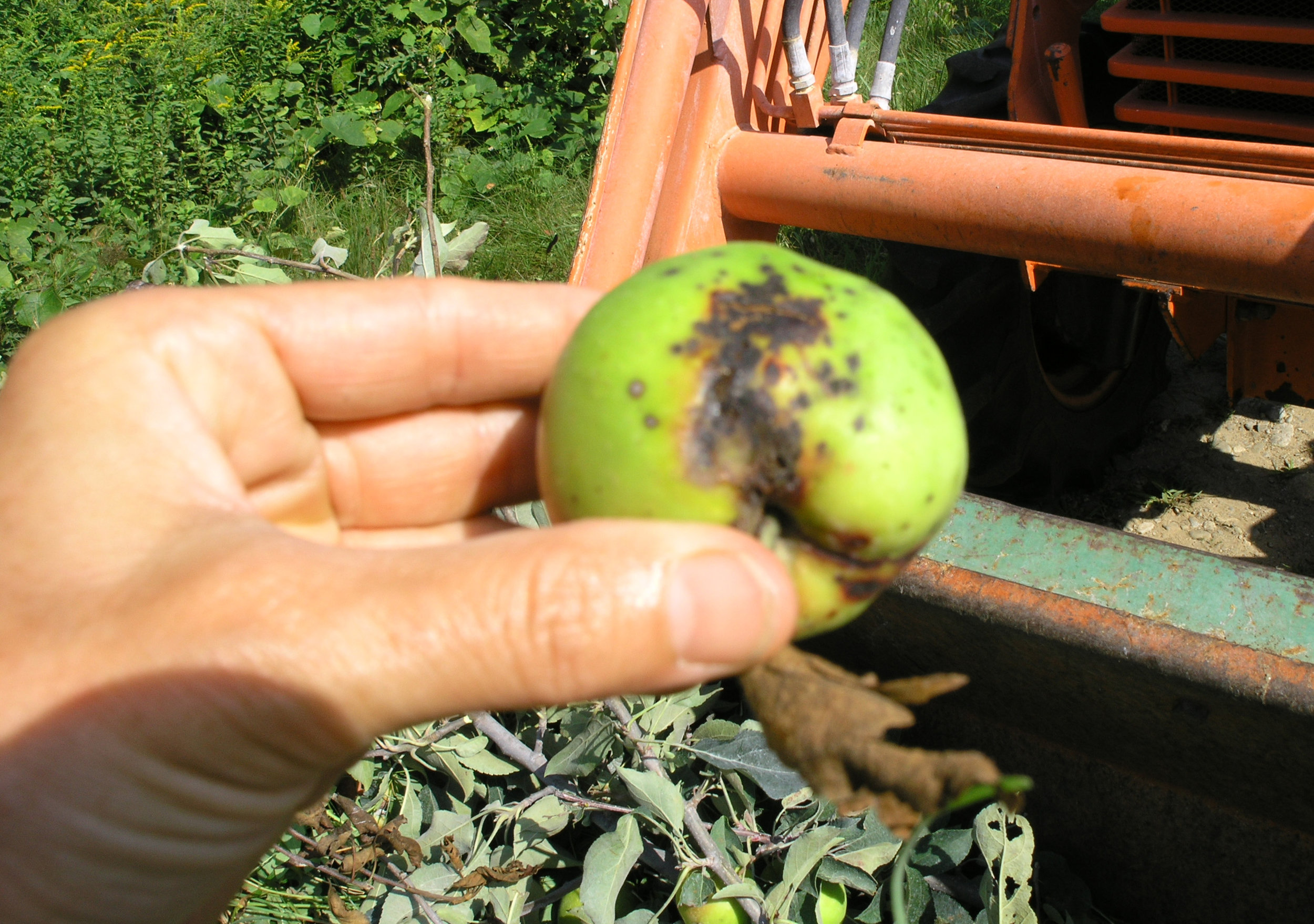
The apples develop brown crusty scabs and eventually crack. Sulfur applied to the leaves changes the pH and makes them an inhospitable host. The problem is getting spray onto every leaf surface — next to impossible — and renewing the coverage after it rains. An organic orchardist might need to spray sulfur fifteen times or more.
Over next few years, I learned through my holistic apple grower’s network how to calculate the spore release and not spray at every threat of precipitation. I would spray only when there was a large percentage of inoculant. I found I could keep the virus in check, unless we have a bad year – meaning a very wet spring. Then it becomes impossible to control. Ten years ago was a ghastly season. The scab was so ugly on the Macintosh trees that I decided to take down every Mac that wasn’t in the first three rows. My thinking was that I could confine these scab-susceptible trees and control it better. Macintosh trees are notorious scab magnets.
This year was again a banner year for scab. We lost half our fruit. Scab jumped from the Macintosh to the Golden Delicious, and then to the Blushing Golden, varieties that are normally scab resistant. With the Macs in the front three rows of the orchard, it was not a welcoming site for those entering the orchard: for people coming to pick apples for the first time, it was alarming.
I consulted with Denis again. “Remove them,” he said. “The trees are old and very densely planted.” I hemmed and hawed. I didn’t want to take down any trees. But I knew that even when I sprayed I got only about 50% coverage because of the tree size and density. I told Denis I would consider removing them and began my Macintosh cogitation.
What to do? Take down thirty-five beautiful trees? Take down only one row to start? I spoke with another apple grower and he suggested leaving a few Macs – because they make lovely early season cider. ‘Ah, what a good idea,’ I thought. I mentioned this to Denis.
“Linda,” he said. “You made the decision to get rid of them, just get rid of them.”
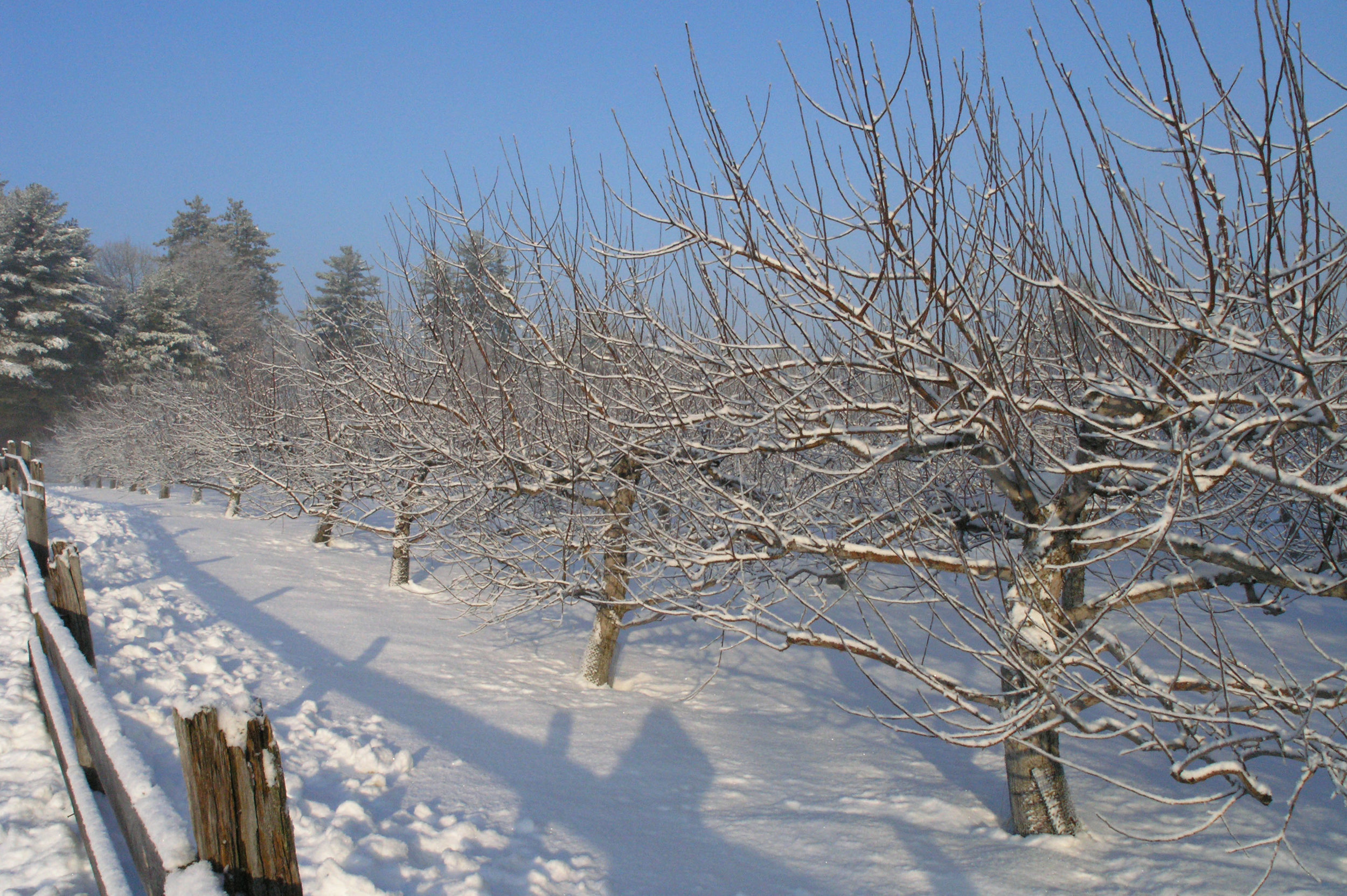
First Row of Macintosh Trees
A phone call came in.
“Don't hang up!” a gentleman said. “This isn’t a solicitation. I’m interested in organic apple wood.”
I would have hung up, but at that moment I was stewing in apple wood decisions. It would take considerable labor to cut down thirty-five full size trees, pile the branches, burn them, and stack the burnable logs.
“We’re looking for some organic apple wood to make charcoal,” the man said. “We think we can sell it to high end organic restaurants.”
He had my attention. He was in Arizona, but coming to New England and wanted to visit the farm, meet me, and see the trees. I explained that this year, I actually had a few large trees that I was planning to take down. We agreed to meet.
Len Kronman visited along with his business partner, Dave Santos. I don’t know how they are related, but Dave is younger and Len is older. Dave seems to be the on the ground man and Len is perhaps a financial backer. While we were walking through the orchard I told Len about my attempt at creating a wild orchard pointing out Valerian and Jerusalem artichokes growing between the trees.
“My daughter-in-law had just published a book on wildflowers. Would you like a copy?” he asked.
“Oh yes,” I replied.
“Please send her a copy,” he directed Dave.
Len is also an art collector; he specializes in Native American art. But as he said a few times, he just loves to collect. We took a tour of sculpture on the farm, and he chose a piece of mine, a small figure sitting on a tall rock. All this from organic apple wood . . .
Dave and I chose a date when he would come with a few men, a chipper, and a truck. Then he called back, apologetically.
“Would it be all right if we chipped and left the branches less than 2” in diameter? It will be too small for charcoal,” he explained. “If we take it away we will need to bring two trucks – one for the charcoal making wood and the other for the twig stuff.”
Chipped wood from the smaller branches is called ramial wood chips. They have more nutrients than older wood. They’re hard to come by unless you have your own chipper. We always burn our prunings in a huge bonfire and then spread the ashes around the trees.
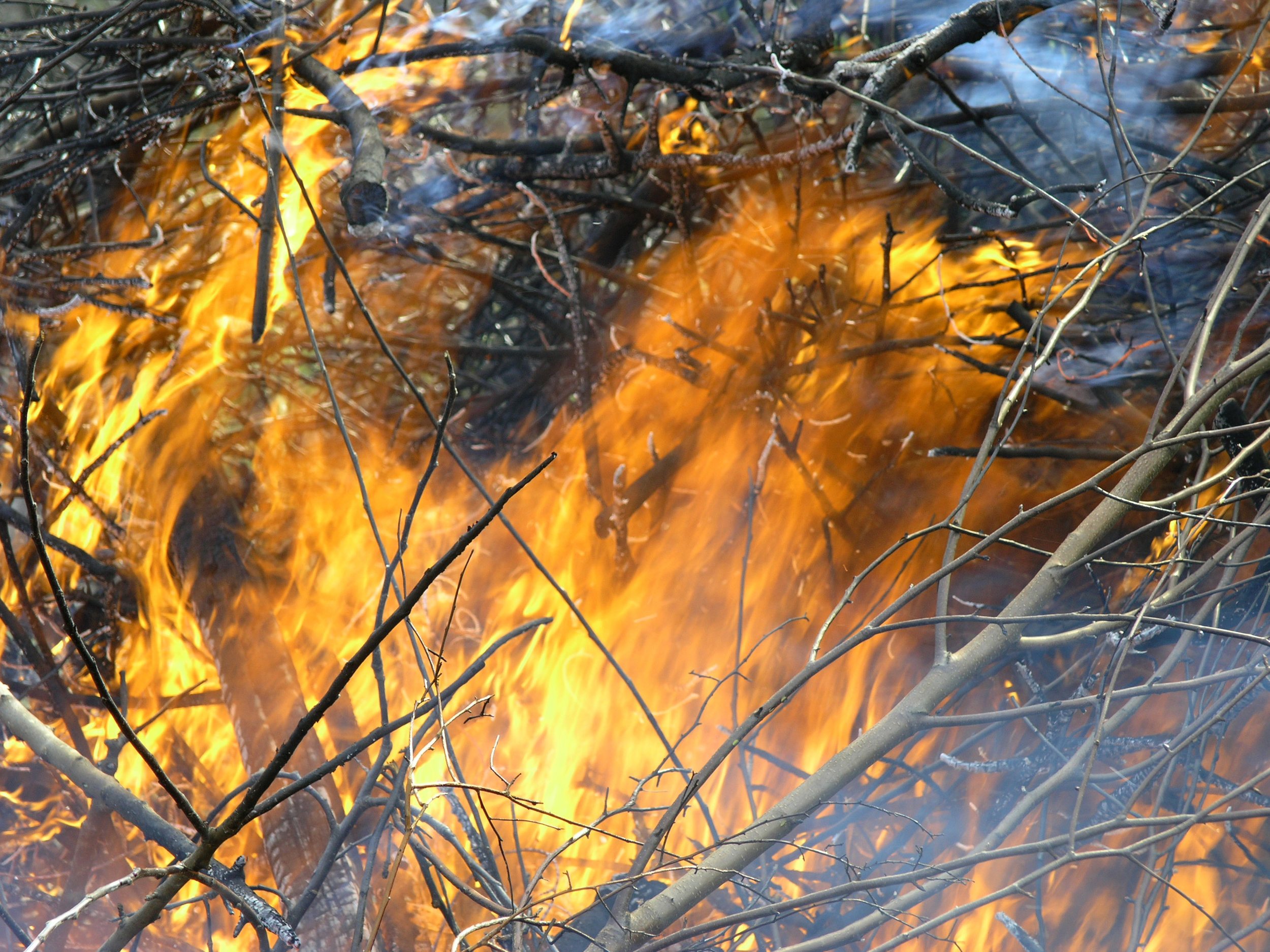
Bonfire of Apple Prunings
‘Nutrients for the trees,’ I thought. “I would love to have them!”
Dave and his crew won’t be here until after Christmas, but I am feeling better about removing the Macintosh trees. I’ve already ordered replacements — two early season, scab resistant varieties from the PRI breeding program. In the front row will be Pristine, a hardy yellow apple, with crunch and sweetness, that I already grow. And for the second row, Redfree, another early season apple with skin color 90% red wash over yellow. The tree salesman also convinced me to put in an order for the new Evercrisp apple. He said, “You might have to wait a year or so, but you’ll love it!” I’m looking forward to the ripening of the new year filled with things not yet known, not yet tasted, not yet seen. I hope you are, too! All best for the Holdiays!
Search Blog
-
2025
- May 9, 2025 A View from the Tractor Seat
- Apr 11, 2025 Dig
-
2024
- Jan 7, 2024 Winter Wassail
-
2022
- Dec 11, 2022 Keeping Time
- Jun 17, 2022 This Apple-Shaped Earth
- Jan 23, 2022 What is a Jizo?
- Jan 16, 2022 An Invite and Housekeeping Update
- Jan 1, 2022 The Year of the Frog: What Orchardists Do While Apple Trees are Chilling
-
2021
- Oct 24, 2021 Figs
- Oct 3, 2021 The Artist and the Orchard: A Memoir
- Aug 8, 2021 Red-Fleshed Apples
- Jul 25, 2021 When We Were Trees
- Jun 27, 2021 Castor Beans—Who Knew?
- Jun 13, 2021 Spring Training at a Zen Monastery
- May 4, 2021 Our Trees are in Bloom
- Apr 18, 2021 Hooray!
- Jan 24, 2021 Wassailing, virtually!
- Jan 1, 2021 Sitting
-
2020
- Dec 21, 2020 Darkness to Light
- Nov 28, 2020 One Heart
- Sep 18, 2020 Juggling Flowers, Fruit, and Vegetables
- Aug 23, 2020 Refuge
- Aug 9, 2020 Bags of Fertilizer
- Aug 2, 2020 The Sermon of the Blue Heron
- Jul 26, 2020 What's the Buzz?
- Jul 19, 2020 Farm Moments
- Jul 12, 2020 Lost Wax
- Jul 5, 2020 Catalpa: The Hugging Tree
- Jun 28, 2020 Pedaling Peace
- Jun 21, 2020 See Change
- Jun 14, 2020 Lalla Unveiled
- Jun 7, 2020 Pond Alchemy
- May 31, 2020 The Birth of Fruit
- May 24, 2020 An Artist in the Orchard
- May 17, 2020 Walking the Land: Returning Home
- May 10, 2020 Stinging Nettles: Gifts from the Great Mother
- May 3, 2020 The Mystery of Swallow
- Apr 26, 2020 Aerial Bruststrokes
- Apr 19, 2020 Simple Pleasures
- Apr 12, 2020 Weeds and Other Gifts
- Apr 5, 2020 Remembering the Seeds
- Mar 29, 2020 Blow on the Embers
- Mar 22, 2020 Ripples
-
2019
- Nov 16, 2019 Tibet Impressions
- Nov 9, 2019 Forest Tales
- Oct 13, 2019 The Gift
- Aug 4, 2019 The Season is Apples, Berries, and Grandfather Fire
- Jun 8, 2019 Pointers for a Writing Life
- May 12, 2019 Mothers of the Earth
- Apr 6, 2019 The Apple-Shaped Earth
- Mar 23, 2019 You Don’t Know What You Have Till It’s Gone
- Feb 23, 2019 Generations
- Feb 9, 2019 What Are We Doing to the Earth, John Chapman?
-
2018
- Dec 31, 2018 Long Shadows
- Oct 6, 2018 A Pilgrimage to India
- Aug 18, 2018 Scrap Wrenn
- Aug 11, 2018 Off-the-Wall Comments from an Ignorant Farmer
- Jul 28, 2018 Creative Connect
- Jul 14, 2018 How is the Orchard?
- Jun 30, 2018 Which Way?
- Jun 16, 2018 Geese, Herons, Beavers, and the Baby Steps of a Lapsed Blogger
- Feb 24, 2018 Mama's Coupons — Good Forever
- Jan 27, 2018 January Ice
- Jan 13, 2018 The Muse
-
2017
- Dec 30, 2017 A Dream for the New Year
- Dec 23, 2017 A New Year for Apples
- Dec 16, 2017 Intuition
- Nov 22, 2017 Thanksgiving OM
- Nov 4, 2017 East Fork Pottery
- Oct 28, 2017 Putting Down New Roots
- Oct 21, 2017 A is for Art
- Oct 14, 2017 Eve domesticus
- Oct 7, 2017 A String Workshop
- Sep 30, 2017 After Applepicking
- Sep 23, 2017 Two Bad Women and One Good Apple
- Sep 16, 2017 Plein Air Poetry
- Sep 9, 2017 Cutting Off a Leg
- Sep 2, 2017 The Changing Landscape
- Aug 26, 2017 All About Art
- Aug 19, 2017 My First Visit to the Farm
- Aug 12, 2017 The First Food
- Aug 5, 2017 A Teapot, a Woman, and maybe a Boat
- Jul 29, 2017 A Raspberry Dilemma
- Jul 22, 2017 Consider the Miracle
- Jul 15, 2017 Meeting Ekphrasis
- Jul 8, 2017 Ripening Fruit
- Jul 1, 2017 The Voice of The Caterpillar
- Jun 24, 2017 Goumi — An Unusual Fructus
- Jun 17, 2017 Concord, an American Bloomsbury
- Jun 10, 2017 The World Is Bonkers — Shall I Laugh or Cry?
- Jun 3, 2017 Bonkers, a Revolutionary Apple
- May 27, 2017 Guardians of the Swamp
- May 20, 2017 There are Mushrooms and There are Morels
- May 13, 2017 "What's in a Name?"
- May 6, 2017 Bloom Follows Pink: Orchard Pollination
- Apr 29, 2017 The Orchard Is at Pink
- Apr 22, 2017 Natural Farming — Part 2 (continuation from last Sunday's blog)
- Apr 15, 2017 Natural Farming — Part 1
- Apr 8, 2017 Boats, Figures, and Catching Fish
- Apr 1, 2017 A Man with a Mission: The Nuts and Bolts of Bronze Casting
- Mar 25, 2017 A Chalice of Spirit, Art, and Nature
- Mar 18, 2017 Hanami — Blossom Viewing
- Mar 11, 2017 Soil Redemption Song
- Mar 4, 2017 Food is Primary Care
- Feb 25, 2017 Pomme de Terre
- Feb 18, 2017 Organic Certification
- Feb 11, 2017 Tantalizing Fruit
- Feb 4, 2017 The Myths of History
- Jan 28, 2017 The Orchard in Winter
- Jan 21, 2017 The Hi-Line
- Jan 14, 2017 Artistic, Botanical, and Social Diversity
- Jan 7, 2017 Where is Eden?
-
2016
- Dec 31, 2016 The Creative Heart
- Dec 24, 2016 A Christmas Tale
- Dec 17, 2016 Who are the Crones?
- Dec 10, 2016 The Olympic Bell (Part Two)
- Dec 3, 2016 Overheard in the Apple Orchard in Early December
- Nov 26, 2016 The Lessons of a Tortoise
- Nov 19, 2016 In the Studio
- Nov 12, 2016 Even in Darkness
- Nov 5, 2016 Southern Apples, an Elephant, Monkey, Rabbit, and Bird, Two Mango Trees and a Birthday
- Oct 29, 2016 The Tools of Art
- Oct 22, 2016 Labyrinths
- Oct 15, 2016 Repairing the Broken
- Oct 8, 2016 When You Are No More
- Oct 1, 2016 Creation Rain
- Sep 24, 2016 Breaking the Glass
- Sep 17, 2016 String Art
- Sep 10, 2016 Poetry and Photosynthesis: It's all in the Leaves
- Sep 3, 2016 In the Plenty of Time
- Aug 27, 2016 Witch Doctors
- Aug 20, 2016 Listen Coyote
- Aug 13, 2016 Milkweed in the Orchard
- Aug 6, 2016 Some People See a Turtle
- Jul 30, 2016 Arborshaping
- Jul 23, 2016 Joseph Wheelwright: Sculptor of Stones and Trees
- Jul 16, 2016 Asian Pears
- Jul 9, 2016 Gold Leaf, Grief, and the Creative Process
- Jul 2, 2016 The Olympic Bell (Part One)
- Jun 25, 2016 Around the Mulberry Bush
- Jun 18, 2016 Avoiding Apples
- Jun 11, 2016 Fructus
- Jun 4, 2016 Astonishing Apples
- May 28, 2016 Scare the Caterpillars
- May 21, 2016 Join the Club!
- May 14, 2016 The Graft
- May 7, 2016 Rooster, Rhubarb, Rue
- Apr 30, 2016 What do Dolphins and Nettles Have in Common?
- Apr 23, 2016 Art Prunings
- Apr 16, 2016 A Few of the First Arrivals
- Apr 9, 2016 Taste the Spirit of Sustainable Agriculture
- Apr 2, 2016 First Orchard Spray - March 22-24, 2016
- Mar 26, 2016 Hawkeye Apple
- Mar 19, 2016 Desiring the Almata Apple
- Mar 12, 2016 Ugly Fruit
- Mar 5, 2016 Winter Tracks
- Feb 27, 2016 Splash
- Feb 20, 2016 Pruning
- Feb 13, 2016 Orchard Ruminants
- Feb 6, 2016 A Gathering of Seeds
- Jan 30, 2016 Orchard Dragons
- Jan 23, 2016 Tree Rings
- Jan 17, 2016 The Fallen Tree
- Jan 7, 2016 Wassailing the Apple Trees
- Jan 1, 2016 The New Year