LINDA HOFFMAN
Soil Redemption Song
Michael Phillips, author of The Apple Grower and The Holistic Orchard, now has a new book, Mycorrhizal Planet, just published by Chelsea Green Publishing. There was some disagreement between Phillips and the publisher about the title for the book, so he conducted a poll asking friends for input. A cattle rancher, a regional publisher, a permaculture guru, a biodynamic herbalist, an academic, and an orchardist/artist, among others, all weighed in on which of three titles they preferred. I voted without hesitation for Mycorrhizal Alchemy, but Chelsea Green decided to go with Mycorrhizal Planet (Mycorrhizal Pathways was the other choice). Alchemy suggests transformation, mystery, and ancient practices, all of which I am drawn towards. It’s a little like taking old found objects and making them into art.
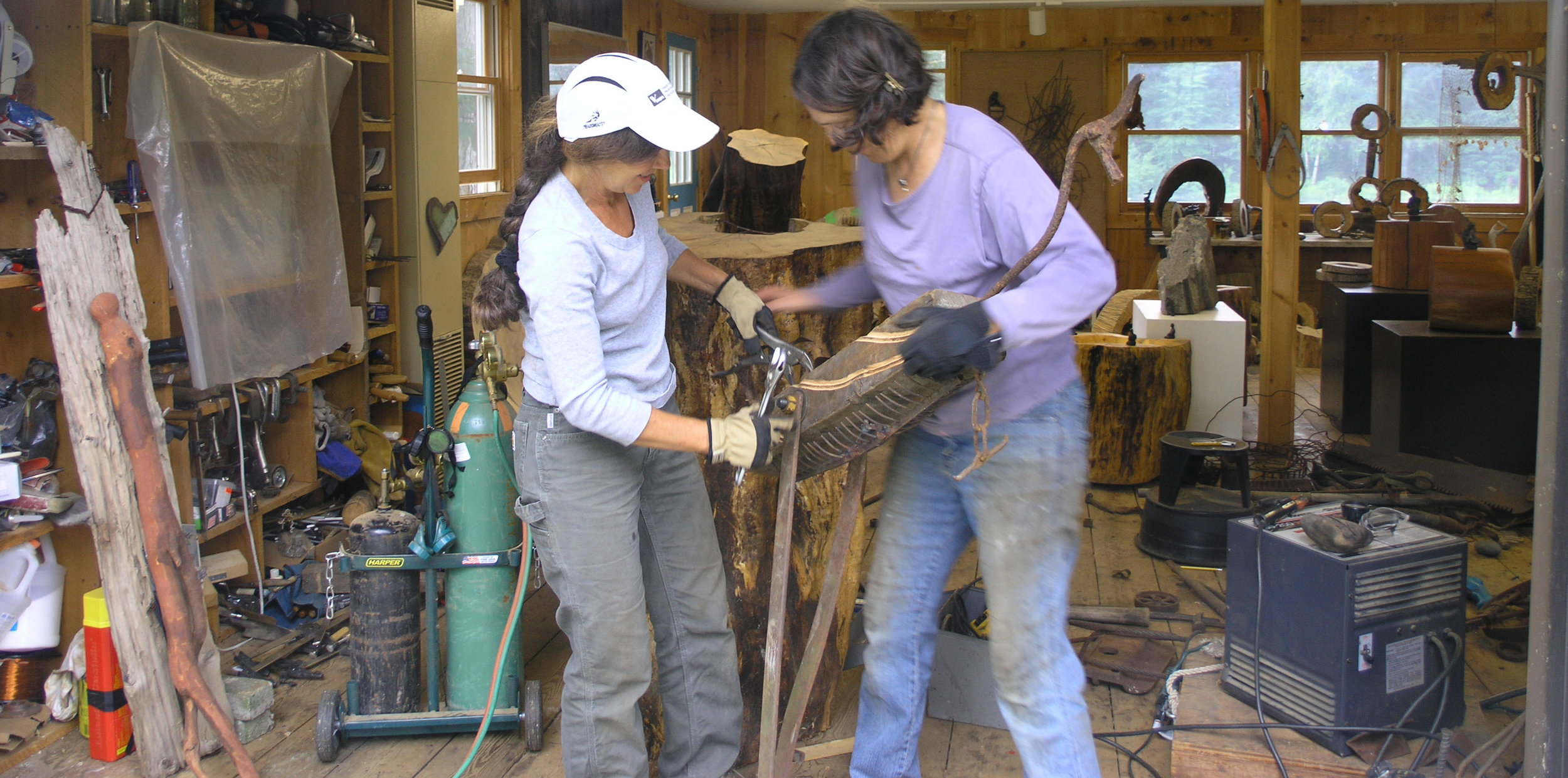
Linda Hoffman (left) and Madeleine Lord working on Belle the Bird in Hoffman's Studio, 2009
In the painting, The Alchemist by Cornelis Bega, a hunched figure sits in a cave-like room, intent on what is happening inside a glass jar. Books, notebooks, and earthenware pots surround him, suggesting a lifetime of mixing substances and studying their reactions. The alchemist is grounded and humble in Bega’s depiction. It’s a lonely art, much maligned as a materialistic quest to turn ore into gold; when, in fact, alchemists made considerable contributions to early science.
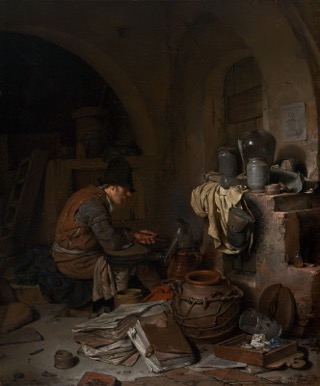
The Alchemist, Cornelis Bega
I think of Michael Phillips like this alchemist, studying the threads of life in the soil, appreciating them, and sharing their magic. Mycorrhizal fungi form a fibrous network stretching throughout the soil, attaching to roots, and connecting plant roots to each other. These fungi process minerals and feed them up to the plants, sending up just what is required. They will even provide storage for a plant’s bounty until leaner times, or pass on needed nutrients to other plants. It's a hidden world that scientists are only beginning to explore.

Photo courtesy of Larry Petersen, University of Guelph
“Each and every Mycorrhizal pulsating with nutrient flow, [is] making our lives possible,” Phillips writes. I consider Phillip’s passion to understand soil devotional.
Interestingly, Buddhism conceives of our world as one in which everything is interrelated and interdependent; nothing is separate in all of existence (or non-existence). Buddhism uses the analogy of the jeweled Net of Indra to describe this global interconnectedness. Imagine a vast net spreading out infinitely in all directions. At every crossing point in the net is a reflective jewel, and each jewel contains the reflection of every other jewel. If I were to put a mark on one gemstone, it would appear on every other one. How we treat one person ripples across the entire world.
The world under our feet is no different. Trees even share nutrients through Mycorrhizal fungi attached to their roots with trees of different species. It’s a little mind blowing — this network of fungi in the soil supporting the cosmic connection between all beings throughout space and time.
Phillips told me that he actually wanted the title to be Soil Redemption Song, inspired by Bob Marley’s haunting Redemption Song.
[…]
Won't you help to sing
These songs of freedom?
'Cause all I ever have
Redemption songs
Redemption songs
Emancipate yourselves from mental slavery
None but ourselves can free our minds
Have no fear for atomic energy
'Cause none of them can stop the time
How long shall they kill our prophets
While we stand aside and look? Ooh
Some say it's just a part of it
We've got to fulfill the Book
Won't you help to sing
These songs of freedom?
'Cause all I ever have
Redemption songs
Redemption songs
Redemption songs
Michael told me that as he pondered the lyrics of this song, he wrote, “Healthy plant metabolism begins with a molecule of water, a breath of carbon, and light energy from our nearest star. The tangible science behind all this unlocks the righteous way to farm and garden, give honor to trees, and plain do right by this earth. Nothing has ever excited me more.”
Mycorrhizal Planet provides practical information for the farmer, gardener, orchardist, and forester, as well as inspiration for all of us who have temporarily lost heart from following the daily news. If you’d like to order the book please go to Phillips’ website. He’ll sign a copy and send it to you.
Listen closely when you next walk among the trees. You might just hear the great alchemist Bob Marley singing — transforming our pain with his courage. Listen!
Artistic, Botanical, and Social Diversity
In 1887, the United States Department of Agriculture in Washington, D.C. hired an immigrant artist to be on its staff. Born in Germany, Wilhem Heinrich Prestele’s parents emigrated to the United States with their family in 1843 when Wilhelm was five years old. His father, Joseph Presetele, had been a head gardener for King Ludwig I of Bavaria and a painter of fruits and flowers.
In his mid-twenties, William Henry Prestele, as he was now called, was a struggling artist living on Ninth Avenue in New York City with a wife and three children to support. William had inherited his father’s abilities, and when the opportunity to make a series of nurseryman’s plates for a Bloomington, Indiana, nursery came up, he packed up his young family, moved from New York to Indiana, and started his career as a botanical illustrator. None of the plates from this time exist, but an 1869 edition of Gardener's Monthly wrote:
We have now before us a fruit piece...prepared by W. H. Prestele. We are in the habit of admiring European art in this line, and have often wished Americans could successfully compete with it. We now have it here. We never saw anything of the kind better executed from any part of the world.
Prestele’s next position was in the USDA’s new pomological division. He painted watercolors for the National Agricultural Library’s collection, which grew to hold 7,584 watercolors of different varieties of fruits and nuts, including 3,802 paintings of apples. There were 21 artists who contributed to the collection, and nine of them were women.

Dolls Autumn Apple painted by William Henry Prestele, U.S. Department of Agriculture Pomological Watercolor Collection. Rare and Special Collections, National Agricultural Library, Beltsville, Maryland
The watercolors and drawings of fruit by these artists are among the most beautiful of early American art, no less amazing than the landscape paintings of the same era by the likes of Thomas Cole and his student Frederic Church. Though these artists had widely divergent subjects—towering mountains and flowing water on the one hand, versus seedpods, blossoms, and fruit on the other — they shared a desire for scientific accuracy and transcendent awe for their subjects. Americans’ appreciation for wilderness seemed to have paralleled their enjoyment of the apple.
The consumer knew that some apples were better for dessert, and some for pies, while others needed to be stored for several months to develop their flavors. The public appreciated the details of their differences — one licorice, another bitter, some with hints of orange, others lemony, nutty, or cinnamon-ny. The Nomenclature of the Apple by W. H. Ragan, printed in 1905, listed the unique apples offered by nursery catalogues from 1804 to 1904 — there were 6,654! The 19th century was a heyday for apples.
In the 1920s and 30s, with more people living in cities, the industrialization of food production advanced. Longer shelf life and ease of shipping became more important than taste. It was far easier to focus on a few varieties for mass production. It was all about commerce, all about looks; and the appreciation of the unique tastes of locally picked apples vanished. By the time my mother shopped for apples in Philadelphia in the 1950s and 60s, there were only a handful of apple varieties available in the supermarket. I remember liking the tart Winesap, while my brother preferred the sweeter Red Delicious.
I love the fact that the USDA hired artists to create extravagantly detailed renderings of fruits and nuts. We have lost a quality that comes with hand-painting, handwriting, and drawing. Sharing is a button on Facebook, and a catalogue is a collection of photographs. But more importantly, as these few varieties were crossed and re-crossed, their good taste and their health diminished. Red Delicious stayed a lovely red on the outside, but inside became mealy and boring. Unlike in a diverse orchard, where one variety might suffer insect pressure, while other varieties are ignored by pests; the insects prepared thorough, full-on attacks and feasted in these monocultures. As a result, pesticide use greatly increased. As any biological grower knows, diversity is key for healthy agriculture.
Diversity is also key to responding to climate change. A Northern apple grower might soon need to plant some Southern apples that don't require as many chill hours. Apple trees start to grow only after they receive a certain number of chill hours followed by heat. Each variety has its own ‘chill’ requirement. To read more about chill requirements for both apples and people read The New Year 2016 blog.
Diversity is key in every aspect our lives — the food we eat, the people we interact with, the news we read. We don’t always realize how we insulate ourselves and build walls around many aspects of our lives. We need healthy ecosystems just as much as we need healthy societal systems. And we need imagination! My friend, Vico Fabris, paints beautiful imaginary botanicals.
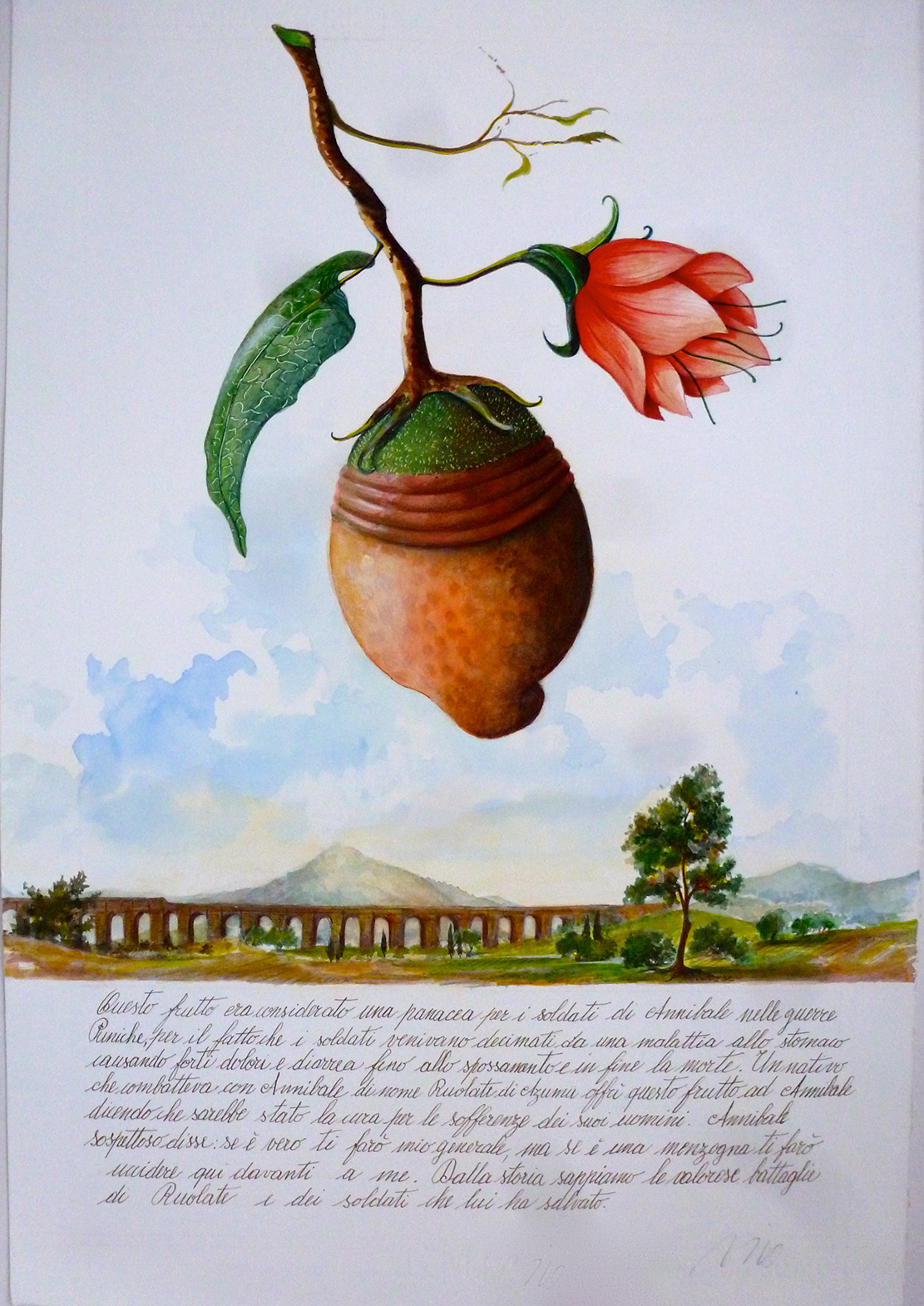
Azumacea, Vico Fabbris
Written in Vico’s native Italian under this painting is local legend about the plant, its medicinal properties, fragrance, and source. Vico celebrates diversity in every one of his paintings.
I doubt either of us could find support as artists in this United States government. When our President Elect asked Warhol to do a portrait of Trump Tower, Trump was “very upset that [the series] wasn’t color-coordinated,” and the deal fell through. We’ll all just have to take down that wall brick by brick., and keep America as artistically, botanically, and socially diverse as possible.
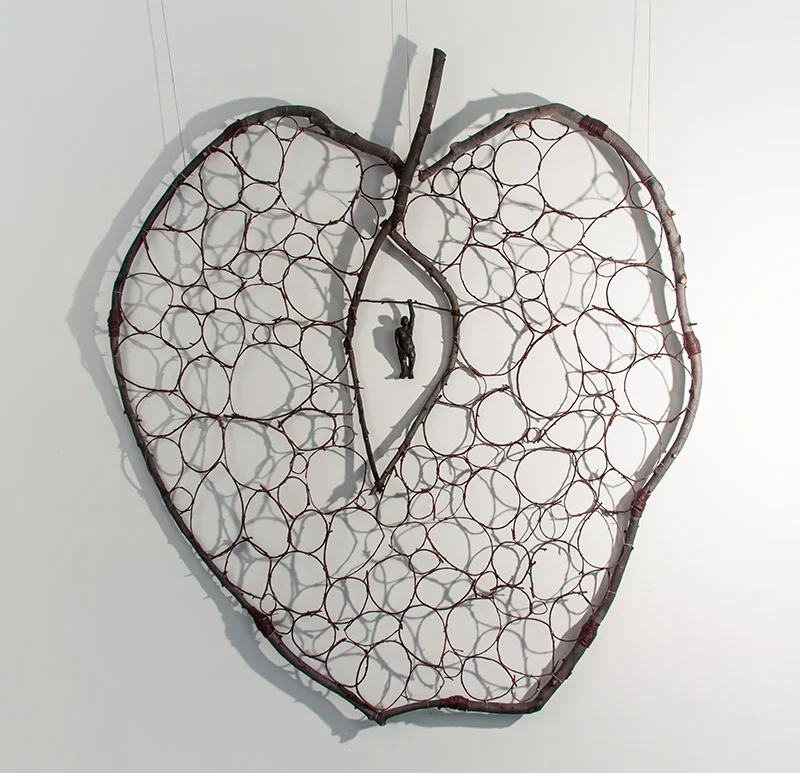
Where is Eden?
“Way to the East, at the source of four rivers” it says in the Bible. But this description doesn’t really help. The Tigris and the Euphrates are two locator rivers for Eden, but they have different sources, and there is no confluence of four rivers nearby. Medieval cartographers placed Eden on the far edge of their maps, beyond Asia, as if in unexplored territory. They often drew a walled garden and a naked little man and woman to mark the location.

Beatus Map, locating Garden of Eden (1109)
For centuries, Eden was considered a real place and it belonged on any map of the world, but no one quite knew exactly where to locate it. When coordinate mapping began in the 15th century, Eden was placed at 0 degrees latitude and 180 degrees longitude — until it became apparent that the coordinates pointed to an area in the middle of the Pacific Ocean. Today, we don’t try to put Eden on the map — but that doesn’t mean we don’t try to find it.
What is Eden, after all, but getting what we want, when we want it? That’s what the Buddha understood 2500 years and built the foundation of his teaching from his understanding that we all suffer because of our desires. When things go our way, we are happy, and when they don’t, we suffer. Eden is that lovely place where every desire is satisfied: the world is our oyster. The Buddha taught that the way out from this suffering was to understand that satisfying our cravings will never bring happiness, because all of life is impermanent. When we think we have it — whatever it is — something shifts — and once again we are looking for the next rosy apple.
Eden and Paradise are often used synonymously. To the Persians, Paradise meant a walled garden, while to the Hebrews it was an orchard. Indeed, I would agree that an orchard is as close as it comes to Eden. Trees that grow and produce sweet fruit year after year are really quite miraculous. There is so much about fruit trees that is astonishing — even simple apple branches — those irregular shaped, pruned and grafted, sculpted limbs, bewitching with their freedom and artistry.
Thus we have the genesis of the exhibit, After Apple Pruning. Using apple branches pruned from dormant trees and a few grafted roots from young trees that died, and with the help of good friends, Lynn Horsky and Gabrielle White, and my daughter, Ariel Matisse, we have created an Eden of apple orchard related sculpture for The Gallery at Villageworks in Acton, Massachusetts. We populated many of the branches with bronze figures that I first sculpted in wax — Adam and Eve, serpents, people sitting, bending, kneeling, reading, mediating, resting, as well as hanging from trees, tempting a snake, or embracing.
A few days ago, in anticipation of the installation, I became almost hysterical with worry. Two large wall panels took most of one day to figure out how to hang, including three trips to the hardware store and two consultations with my neighbor, a retired engineer (No nails in the walls was a gallery restriction). I didn’t want to rent and drive a 15’ truck and the forecast was solid rain for installation day. Moving so many very delicate branches was frightening, because one never knows when reassembling a piece if it will come together the way it did before. I watched as my mind went into a tail spin. I was struggling outside the garden walls.
The installation was smoother than expected; though one small, but important branch broke and caused a small panic. Blase, my partner, helped enormously. Clearly my prior distress was for naught. Today, we no longer look for Eden on a map, but I would place it for the next three months, a little to the east, in Acton. I simply love to be in the gallery space among all of the art. My Eden has been the pleasure of working with Lynn and Gabi, and seeing my daughter fully engage a challenging project. Eden is inside the mind, always nearby, no farther than our next thought.
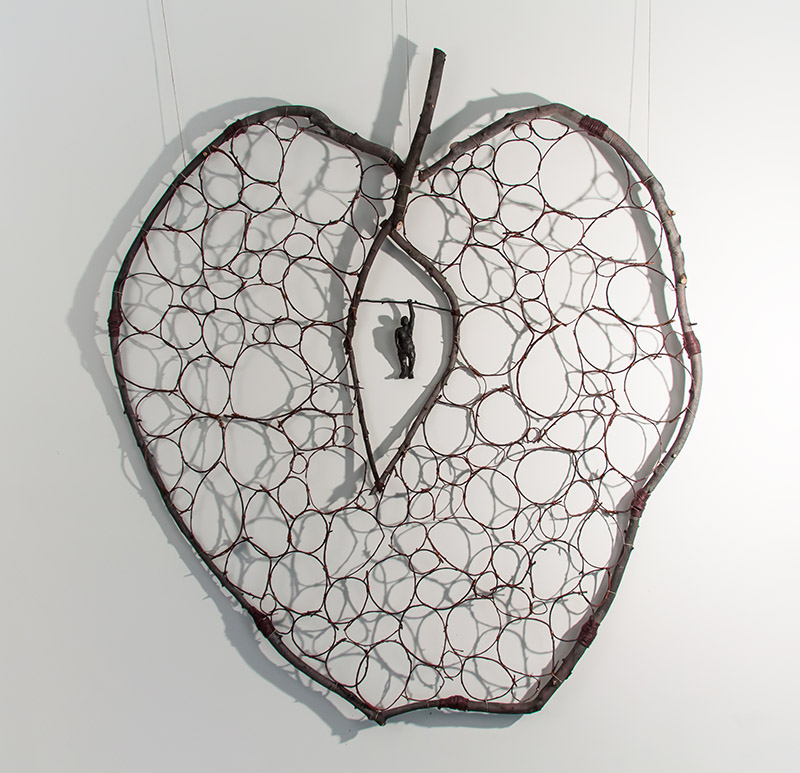
From One Seed, Linda Hoffman & Gabrielle White
Please join us!
Opening Reception for the Artists
Sunday, January 15 from 3-5 pm at 525 Massachusetts Ave, Acton, MA.
Exhibition dates: January 6 – March 30, 2017
Gallery hours: M-F 9-5.
Artist Hours in the Gallery
Fridays, Feb 3, 10, 24; March 10, 24; noon to 2pm
Poetry Reading in the Gallery
Celebrating the publication of "Before We Were Birds"
By Susan Edwards Richmond
Sunday, March 12 at 3pm
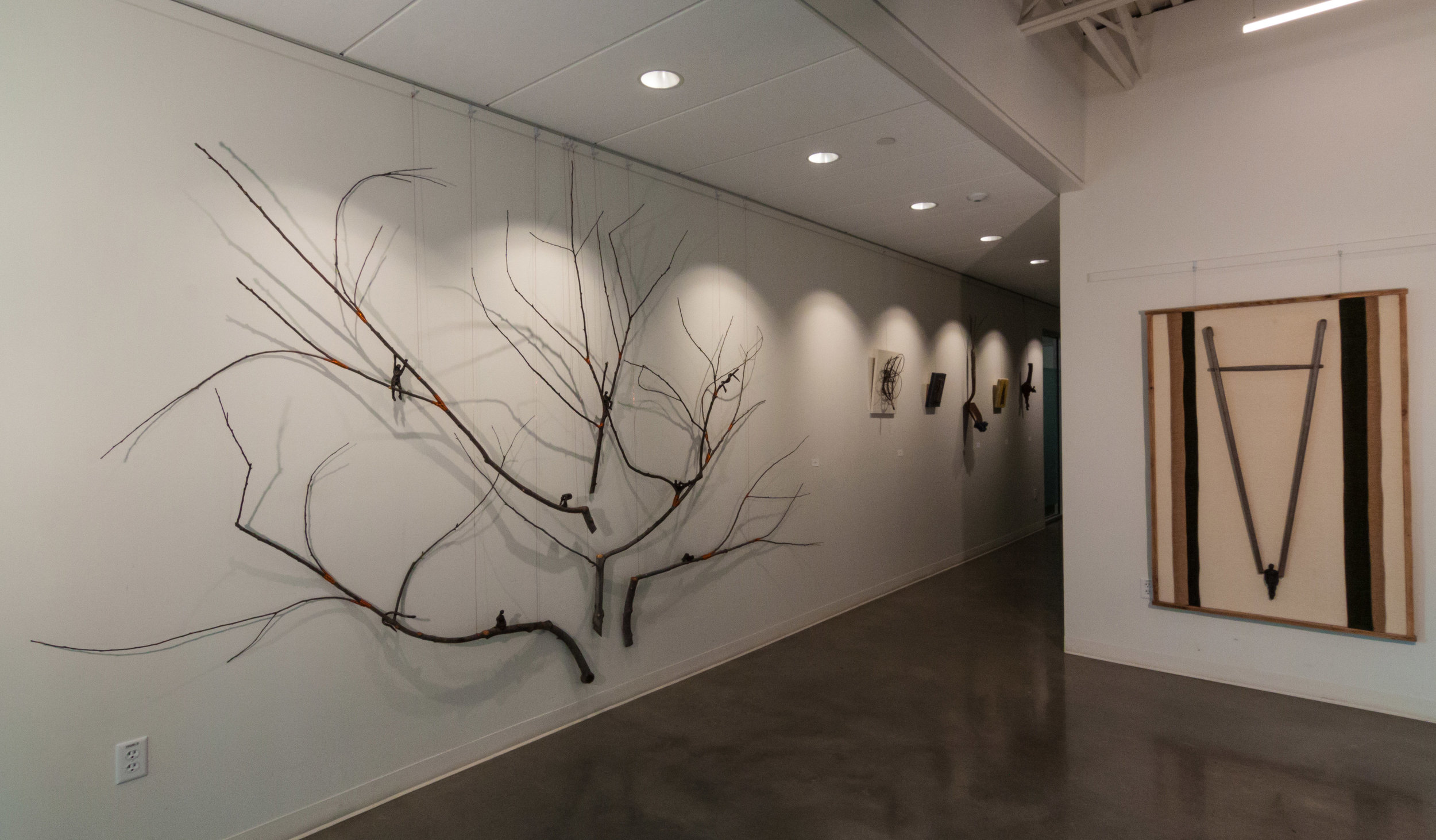
Grafting a Life (Left Wall) Linda Hoffman & Ariel Matisse
The Creative Heart
I watched as my son, Alex, carefully undid the wrapping, opened the wooden box, and lifted a corner of the quilted cloth. On his face, I saw a strange look of disbelief. “It’s broken,” he said. Now it was my turn to be stunned. The beautiful ceramic bowl sat in broken shards on its rose-colored cloth. I was crushed and horrified. It felt like a betrayal.
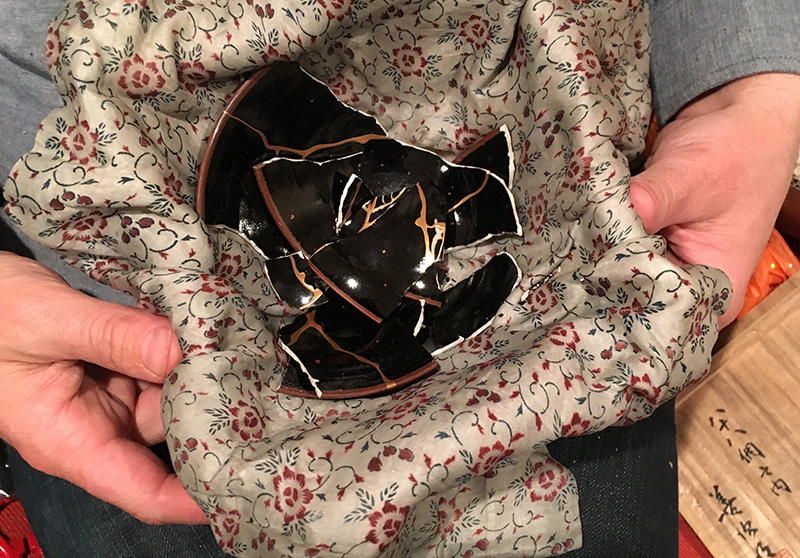
A few months ago, I wrote a blog about Kintsugi — the Japanese art of repairing a broken bowl with gold. For Christmas, I offered a Japanese tea bowl that had been repaired using this method, to Alex and my daughter-in-law, Connie. I felt it would be a meaningful gift as they embarked on married life together. With baby Vita now a hear and half, a new baby on the way, and the opening of a store in Asheville, North Carolina, East Fork Pottery, their life is full. I thought of the Kintsugi bowl with its veins of gold as a symbol of creatively and beautifully overcoming challenges.
A week later, I was still feeling badly about how my gift turned out. I thought to myself, I should make something with these shards — a sculpture — and give it to them. I mentioned my idea to Alex and he seemed a little put off — then he said, “Yes, um, we should do a repair.” And I understood that he wanted to repair the bowl himself. I had kept it anticipating that I would return the broken shards to the gallery, but they graciously refunded the price I had paid. We decided to talk about it in early January when we will next be together.
Everything in our world is impermanent. Wood turns to ash and fallen leaves to compost. The broken pot shards can become something else. Accepting change is about no longer being stuck in what was, but moving on. This moving on is the awakening of our creative heart.
I know that my well-being depends on feeling that I have connected to that place of creativity inside my heart. With days of less meaningful doing, I begin to fall into this dark abyss of my own mind. I become disjointed, my body altogether not my body, my limbs connected like a puppet. I don’t act with spontaneity and wholeness. I can be in the most beautiful place and if I don’t feel connected to it, I can’t appreciate it because I block the beauty from entering my bones. I can be in the most loving relationship and not allow this love to enter.
Each creative act makes use of something that is unresolved in our hearts. Each creative act makes the world whole. In this new year, let’s make whatever is broken whole again. We don’t, in fact, can’t know what it will look like. Who would ever imagine that a river carved a canyon that enthralls millions of people thousands of years later. I can’t imagine what will possibly come out of this box of pot shards, but this is precisely the process that heals broken places and turns them into art.
In this new year, I’d like to remember that broken bowl when I find myself slipping away from my creative heart, when I feel alone and cut off. For I know that in doing the work I will find my way back. We all share this longing that is deeply human, that beseeches us to be fully our own life, to belong completely to the entirety. Our longing is the gift we can offer.
When I started this weekly blog, Apples, Art, and Spirit, one year ago, I thought it would be a one-year project and I would be using the orchard as a springboard to write. With 2016 being a year of no apples, they have been a very silent partner. I’ve decided to commit to another year, and hopefully with some good winter chill, we will have an apple crop and there will be more apple-inspired writing. Please join me, share the blog with your friends, and together let’s lift the corner of the new year, white, and pure, and unknown. It’s ours to create for the very first time.

Search Blog
-
2025
- May 9, 2025 A View from the Tractor Seat
- Apr 11, 2025 Dig
-
2024
- Jan 7, 2024 Winter Wassail
-
2022
- Dec 11, 2022 Keeping Time
- Jun 17, 2022 This Apple-Shaped Earth
- Jan 23, 2022 What is a Jizo?
- Jan 16, 2022 An Invite and Housekeeping Update
- Jan 1, 2022 The Year of the Frog: What Orchardists Do While Apple Trees are Chilling
-
2021
- Oct 24, 2021 Figs
- Oct 3, 2021 The Artist and the Orchard: A Memoir
- Aug 8, 2021 Red-Fleshed Apples
- Jul 25, 2021 When We Were Trees
- Jun 27, 2021 Castor Beans—Who Knew?
- Jun 13, 2021 Spring Training at a Zen Monastery
- May 4, 2021 Our Trees are in Bloom
- Apr 18, 2021 Hooray!
- Jan 24, 2021 Wassailing, virtually!
- Jan 1, 2021 Sitting
-
2020
- Dec 21, 2020 Darkness to Light
- Nov 28, 2020 One Heart
- Sep 18, 2020 Juggling Flowers, Fruit, and Vegetables
- Aug 23, 2020 Refuge
- Aug 9, 2020 Bags of Fertilizer
- Aug 2, 2020 The Sermon of the Blue Heron
- Jul 26, 2020 What's the Buzz?
- Jul 19, 2020 Farm Moments
- Jul 12, 2020 Lost Wax
- Jul 5, 2020 Catalpa: The Hugging Tree
- Jun 28, 2020 Pedaling Peace
- Jun 21, 2020 See Change
- Jun 14, 2020 Lalla Unveiled
- Jun 7, 2020 Pond Alchemy
- May 31, 2020 The Birth of Fruit
- May 24, 2020 An Artist in the Orchard
- May 17, 2020 Walking the Land: Returning Home
- May 10, 2020 Stinging Nettles: Gifts from the Great Mother
- May 3, 2020 The Mystery of Swallow
- Apr 26, 2020 Aerial Bruststrokes
- Apr 19, 2020 Simple Pleasures
- Apr 12, 2020 Weeds and Other Gifts
- Apr 5, 2020 Remembering the Seeds
- Mar 29, 2020 Blow on the Embers
- Mar 22, 2020 Ripples
-
2019
- Nov 16, 2019 Tibet Impressions
- Nov 9, 2019 Forest Tales
- Oct 13, 2019 The Gift
- Aug 4, 2019 The Season is Apples, Berries, and Grandfather Fire
- Jun 8, 2019 Pointers for a Writing Life
- May 12, 2019 Mothers of the Earth
- Apr 6, 2019 The Apple-Shaped Earth
- Mar 23, 2019 You Don’t Know What You Have Till It’s Gone
- Feb 23, 2019 Generations
- Feb 9, 2019 What Are We Doing to the Earth, John Chapman?
-
2018
- Dec 31, 2018 Long Shadows
- Oct 6, 2018 A Pilgrimage to India
- Aug 18, 2018 Scrap Wrenn
- Aug 11, 2018 Off-the-Wall Comments from an Ignorant Farmer
- Jul 28, 2018 Creative Connect
- Jul 14, 2018 How is the Orchard?
- Jun 30, 2018 Which Way?
- Jun 16, 2018 Geese, Herons, Beavers, and the Baby Steps of a Lapsed Blogger
- Feb 24, 2018 Mama's Coupons — Good Forever
- Jan 27, 2018 January Ice
- Jan 13, 2018 The Muse
-
2017
- Dec 30, 2017 A Dream for the New Year
- Dec 23, 2017 A New Year for Apples
- Dec 16, 2017 Intuition
- Nov 22, 2017 Thanksgiving OM
- Nov 4, 2017 East Fork Pottery
- Oct 28, 2017 Putting Down New Roots
- Oct 21, 2017 A is for Art
- Oct 14, 2017 Eve domesticus
- Oct 7, 2017 A String Workshop
- Sep 30, 2017 After Applepicking
- Sep 23, 2017 Two Bad Women and One Good Apple
- Sep 16, 2017 Plein Air Poetry
- Sep 9, 2017 Cutting Off a Leg
- Sep 2, 2017 The Changing Landscape
- Aug 26, 2017 All About Art
- Aug 19, 2017 My First Visit to the Farm
- Aug 12, 2017 The First Food
- Aug 5, 2017 A Teapot, a Woman, and maybe a Boat
- Jul 29, 2017 A Raspberry Dilemma
- Jul 22, 2017 Consider the Miracle
- Jul 15, 2017 Meeting Ekphrasis
- Jul 8, 2017 Ripening Fruit
- Jul 1, 2017 The Voice of The Caterpillar
- Jun 24, 2017 Goumi — An Unusual Fructus
- Jun 17, 2017 Concord, an American Bloomsbury
- Jun 10, 2017 The World Is Bonkers — Shall I Laugh or Cry?
- Jun 3, 2017 Bonkers, a Revolutionary Apple
- May 27, 2017 Guardians of the Swamp
- May 20, 2017 There are Mushrooms and There are Morels
- May 13, 2017 "What's in a Name?"
- May 6, 2017 Bloom Follows Pink: Orchard Pollination
- Apr 29, 2017 The Orchard Is at Pink
- Apr 22, 2017 Natural Farming — Part 2 (continuation from last Sunday's blog)
- Apr 15, 2017 Natural Farming — Part 1
- Apr 8, 2017 Boats, Figures, and Catching Fish
- Apr 1, 2017 A Man with a Mission: The Nuts and Bolts of Bronze Casting
- Mar 25, 2017 A Chalice of Spirit, Art, and Nature
- Mar 18, 2017 Hanami — Blossom Viewing
- Mar 11, 2017 Soil Redemption Song
- Mar 4, 2017 Food is Primary Care
- Feb 25, 2017 Pomme de Terre
- Feb 18, 2017 Organic Certification
- Feb 11, 2017 Tantalizing Fruit
- Feb 4, 2017 The Myths of History
- Jan 28, 2017 The Orchard in Winter
- Jan 21, 2017 The Hi-Line
- Jan 14, 2017 Artistic, Botanical, and Social Diversity
- Jan 7, 2017 Where is Eden?
-
2016
- Dec 31, 2016 The Creative Heart
- Dec 24, 2016 A Christmas Tale
- Dec 17, 2016 Who are the Crones?
- Dec 10, 2016 The Olympic Bell (Part Two)
- Dec 3, 2016 Overheard in the Apple Orchard in Early December
- Nov 26, 2016 The Lessons of a Tortoise
- Nov 19, 2016 In the Studio
- Nov 12, 2016 Even in Darkness
- Nov 5, 2016 Southern Apples, an Elephant, Monkey, Rabbit, and Bird, Two Mango Trees and a Birthday
- Oct 29, 2016 The Tools of Art
- Oct 22, 2016 Labyrinths
- Oct 15, 2016 Repairing the Broken
- Oct 8, 2016 When You Are No More
- Oct 1, 2016 Creation Rain
- Sep 24, 2016 Breaking the Glass
- Sep 17, 2016 String Art
- Sep 10, 2016 Poetry and Photosynthesis: It's all in the Leaves
- Sep 3, 2016 In the Plenty of Time
- Aug 27, 2016 Witch Doctors
- Aug 20, 2016 Listen Coyote
- Aug 13, 2016 Milkweed in the Orchard
- Aug 6, 2016 Some People See a Turtle
- Jul 30, 2016 Arborshaping
- Jul 23, 2016 Joseph Wheelwright: Sculptor of Stones and Trees
- Jul 16, 2016 Asian Pears
- Jul 9, 2016 Gold Leaf, Grief, and the Creative Process
- Jul 2, 2016 The Olympic Bell (Part One)
- Jun 25, 2016 Around the Mulberry Bush
- Jun 18, 2016 Avoiding Apples
- Jun 11, 2016 Fructus
- Jun 4, 2016 Astonishing Apples
- May 28, 2016 Scare the Caterpillars
- May 21, 2016 Join the Club!
- May 14, 2016 The Graft
- May 7, 2016 Rooster, Rhubarb, Rue
- Apr 30, 2016 What do Dolphins and Nettles Have in Common?
- Apr 23, 2016 Art Prunings
- Apr 16, 2016 A Few of the First Arrivals
- Apr 9, 2016 Taste the Spirit of Sustainable Agriculture
- Apr 2, 2016 First Orchard Spray - March 22-24, 2016
- Mar 26, 2016 Hawkeye Apple
- Mar 19, 2016 Desiring the Almata Apple
- Mar 12, 2016 Ugly Fruit
- Mar 5, 2016 Winter Tracks
- Feb 27, 2016 Splash
- Feb 20, 2016 Pruning
- Feb 13, 2016 Orchard Ruminants
- Feb 6, 2016 A Gathering of Seeds
- Jan 30, 2016 Orchard Dragons
- Jan 23, 2016 Tree Rings
- Jan 17, 2016 The Fallen Tree
- Jan 7, 2016 Wassailing the Apple Trees
- Jan 1, 2016 The New Year