LINDA HOFFMAN
Meeting Ekphrasis
Ekphrasis is a genre of writing about a work of art. Homer’s lengthy and vivid description of Achilles' shield in The Iliad is one of the oldest examples, though Keat’s Ode to a Grecian Urn is more quoted, especially its enigmatic last lines.
Beauty is truth, truth beauty,—that is all
Ye know on earth, and all ye need to know.
The writer, and most often a poet, explores a work of art, responds to it, even adds elements from his or her own life. The Poetry Foundation defines an ekphrastic poem as follows: “Through the imaginative act of narrating and reflecting on the ‘action’ of a painting or sculpture, the poet may amplify and expand its meaning.” I love this description and thought about it when I sat down to write a statement about a new sculpture I am exhibiting at 6 Bridges Gallery in Maynard, Massachusetts (July 11 – August 12).

Meeting in the studio. sculpture, 2017
To write about, Meeting, I started by considering its materials — rope and wood. Rope is used to connect one object to another, a canoe to a tree or a skiff to a dock. A rope hammock connects two trees. What intrigued me when I placed the thick rope into the walnut trunk was that it connected back to itself. There was no connecting of two objects but a unifying of the whole. The ends disappeared as if there were no ends.
This section of a tug-of-war-size rope has been in my studio for six years ago. Back then, I suspended it, tied it, uncoiled part of it, and wove it back into itself. When I hung up the heavy coil, it made me think of a Japanese Enso, the circle that is an expression of enlightenment, the ultimate connection with everything because there is nothing inside or outside, nothing separate or divided, nothing to connect, no beginning and no ending.
I then wrapped a thin white twine around the rope, the way a snake coils around a stick. It reminded me of a painting I saw in a small church in Florence. Christ was nailed to the cross alone up on Calvary Hill. There was a simple white cloth wrapped around his pelvis, the cloth painted as if being blown by a gentle breeze. The body was dead, but life stirred in the simplicity of the white threads. The painter may have been suggesting that life is never completely extinguished.
The wood component of the sculpture, a walnut trunk, sawn twice to reveal its two hollow sections, has also been in my studio for a number of years. A bronze sculpture I made of Kwan Yin, the Goddess of Compassion, sat on it for a while, but I removed her knowing the wood had something else to reveal.
One day I took the tug-of-war rope and threaded it through and around the wood. I was intrigued by what I saw, but also by what I didn’t see. In Meeting, we don’t actually see whether the two ends of the rope meet. It’s a question that is unanswered. The rope, in its serpentine path around and into the trunk reveals only part of itself. It is like happening upon a snake, though the head and tail are hidden.
Meeting is the word for the worship practice of the Quakers. I went to a Quaker elementary school where we had ‘meeting for worship’ on Wednesday mornings. We sat in silence unless someone was moved to speak. In a Quaker Meeting, we meet ourselves, we meet God, we meet each other.
Art is a form of meeting. We meet the work, its materials, colors, and forms, the artist and ourselves. Ekphrasis writing is a form of meeting. When I write about my own work, I discover connections that I had never considered while making the piece. And when I read the writing of others who have been inspired my art, I encounter the work differently.
At another summer exhibit where I have a sculpture, Art on the Trails: Finding Solace in the Woods at the Beal Preserve in Southborough, MA (June 7 – September 24), there will be a reading of ekphrastic poems written about the works of the exhibiting artists. I have a new casting of Tree Harp in the exhibit and hope there will be a poem written about it. I much prefer to hear what others write about my sculpture. An ekphrastic poem that I treasure was written by Joanne Reynolds about my sculpture Ordinary Pine when it was installed at the Jackson Homestead in Newton, Massachusetts.
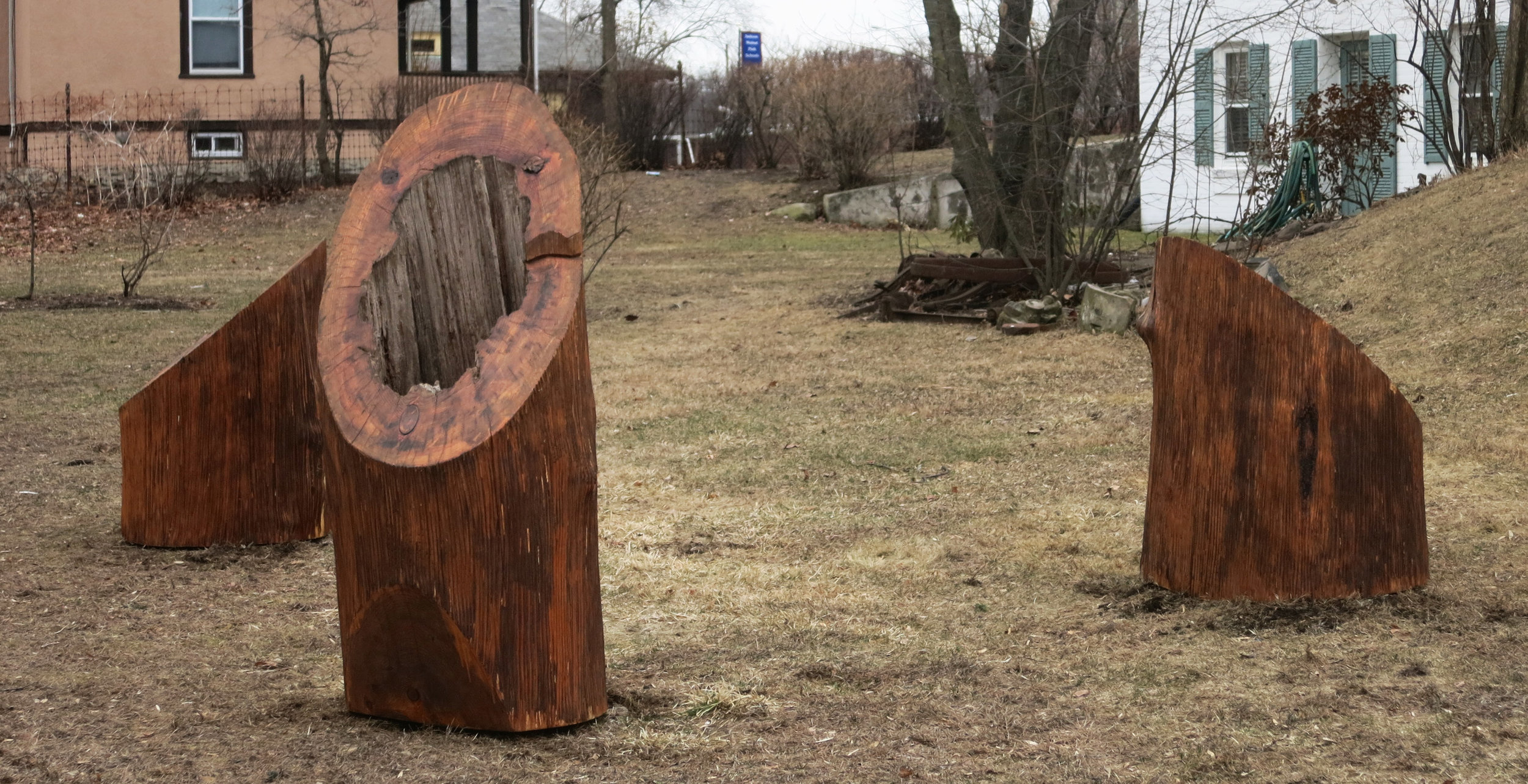
Ordinary Pine, partial view, installed at Jackson Homestead, Newton, MA
Ordinary Pine
What happened? That is to say, what happened
To us? Or between us? What
Will become of us now?
True, you were older. Suffered
The deluge. Cast a shadow
More borrowed than your own.
I came shortly after. Not so much a part
As a go-between - a link.
I remember the way you reached out
To the youngest - your great hands - how well they played!
Facing away from you now, each of us
Cut down, I long to see you.
Both of you.
Such a hole in each of us.
—Joanne Reynolds
Guardians of the Swamp
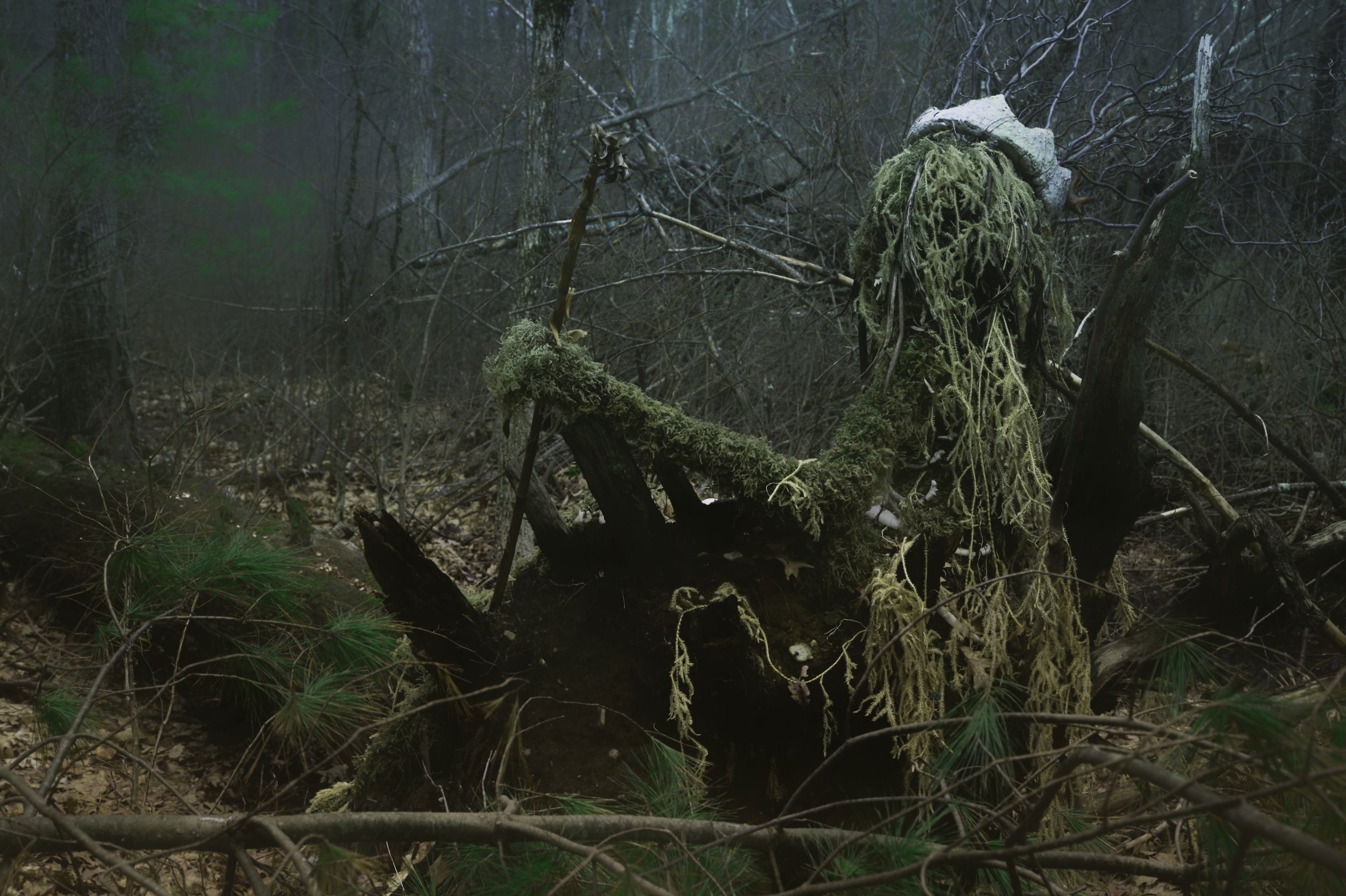
Guardian of the Swamp, Qwkglak, by Anne Eder
When I feel depleted by the chaos in the world, or just my own weariness, I know I need to connect with the work of other artists, writers, and thinkers. I see their art as meridians that connect the darkness of my own psyche with an outward vision of something mysterious, fresh, and true. Anne Eder is an interdisciplinary artist who does just that. Anne created two mythological forest creatures, Qwkglaks, for Old Frog Pond Farm's annual harvest sculpture exhibit last fall. They speak to us directly of the mystery of rain, moss, forest, and deep ecology.

Anne Eder with her newly installed, Qwkglak, the 'King'.
They sit, one poised, like a King on a rotting trunk, the other under the canopy of an upturned root system. The latter, more difficult to find, sits a little way off the main trail, but once spotted, can leave no doubt that some kind of primordial wisdom is being expressed. A young girl with her parents, so taken with this one, stepped off the trail into the bog, her boots sinking, staying behind in the mud as she trod over to it in bare feet. Her parents shyly asked when they returned to the house if they could use the outdoor hose to clean her up before they got into their car. Children are connected to their instincts and are closer to this source of origin.
Baudelaire wrote: “Genius is nothing more nor less than childhood recovered at will.” I consider Anne such a genius. When I look at these magical creatures, they are familiar, and I am enamored, appreciative, of their existence. I smile. I feel better just seeing them. I imagine that Anne’s sculptures get up and move when no one is around. They slink around the woods, crossing the swamp and muttering magical incantations among the trees. Not disturbing a growing plant or settled stone, they step lightly and carefully. Around the King’s log, the skunk cabbage is now in its fullest expression with bright green elephant ears, yet not one leaf has been trampled.
Even if you don’t believe in my magical thinking, we all believe in transformation. How else to understand the pointy purplish claws of the skunk cabbage poking through the ground a few months ago becoming a sprawling thick carpet of green waves? Or a bare tree, suddenly sending green shoots from within dry, seemingly solid bark? Nature continuously transforms itself. Spring leaves, so light-filled, are photosynthesizing like mad to flood the tree with sugars. I look at Anne’s creatures and feel that a similar process is happening: she has orchestrated the coming together of forest materials to become wild creatures who nourish us — ageless creations, a union of art and nature, both healing and uncannily witty.
Anne documented the changes of the creatures over the fall and winter. They dozed under deep snow and woke as the first skunk cabbage poked up. The King lost his scepter and his nose! However, last week, Anne came back and restored the royal Qwkglak with fresh moss and flowers, and a new scepter, a giant, unfurled fern.
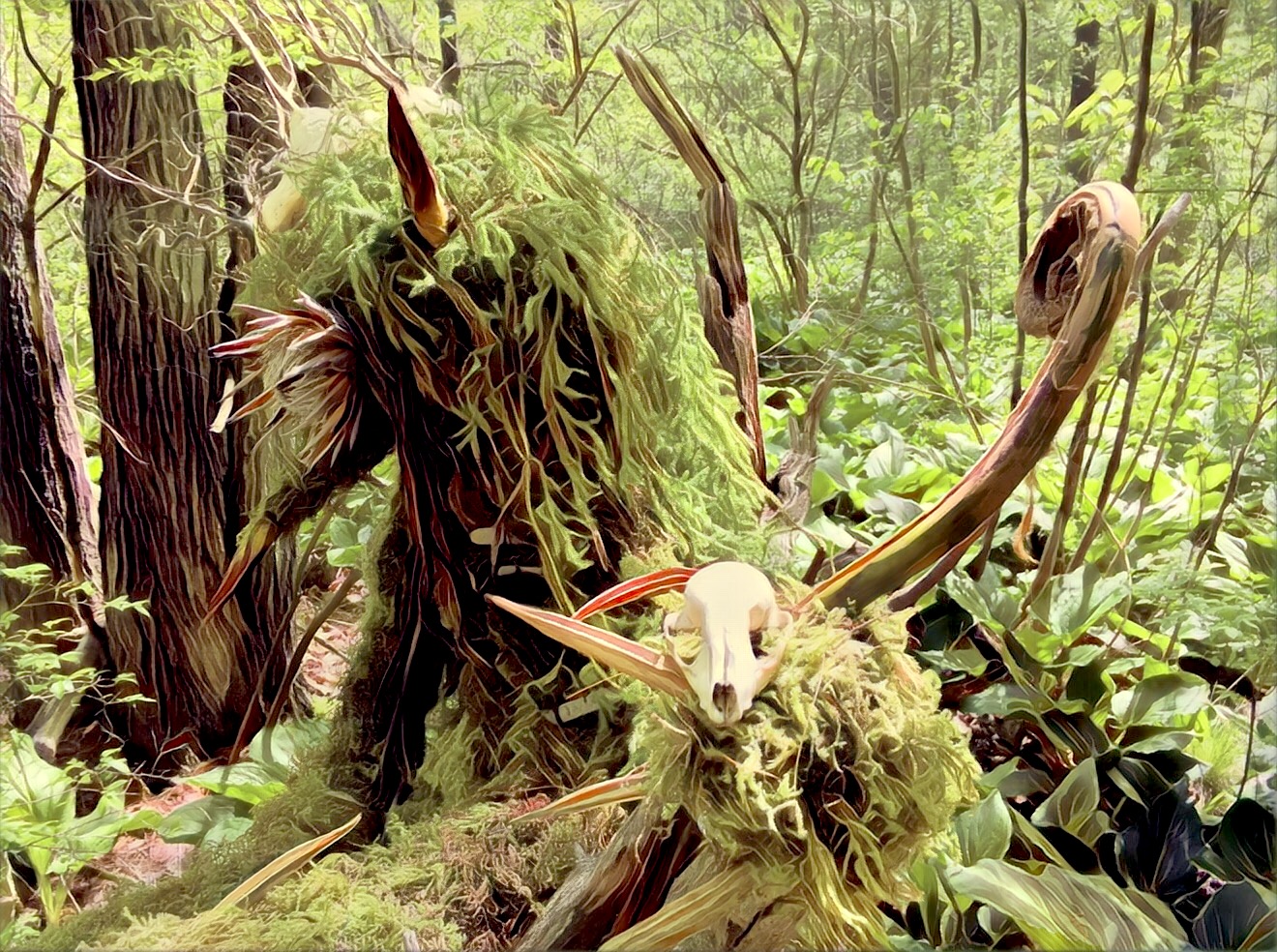
The other ‘Guardian’, she decided to leave to decompose further, to return to the forest from whence it came. Only the ceramic pieces, a few rib bones, and nails will not decay. In the fall, Anne will return again to enhance the King. She will be leaving artifacts for visitors to pay homage to this creature, and even to create a retinue of creatures of their own. We’re honored to have Anne Eider’s work at the farm where we aspire to encourage creativity at the confluence of Agriculture, Art, and Community. Healthy food feeds the body, nature and art feed the spirit, and in sharing both, we support each other. Take a look at Anne Eder's website and mark Sunday, September 10 for the opening day of our annual outdoor sculpture exhibition.
A Man with a Mission: The Nuts and Bolts of Bronze Casting

Zach Gabbard in the wax room at Mission Foundry.
Zach Gabbard, the owner and founder of Mission Foundry, is a man of many talents. He works the wax room, mold making, metal finishing, and casting. In the photo above, on the slab of yellow foam behind Zach, some small wax figures await preparation for casting. This preparation includes adding a wax funnel to the sculpture, as well as any additional wax supports, called sprues or gates, to help with the flow of bronze to all parts of the sculpture. I don’t have a photo of a wax sculpture with sprues but below are two seahorses with their funnel and sprues in bronze. (It made such an interesting object I kept it as cast).

Bronze Seahorses with funnel and sprues on my desk.
The prepared wax sculpture is then dipped in a slurry, floured with dry silica powder, and hung to dry. In the two photos below, Zach is building up the mold on an architectural element that he will cast into bronze. The funnel is attached to the top of this cornice piece.
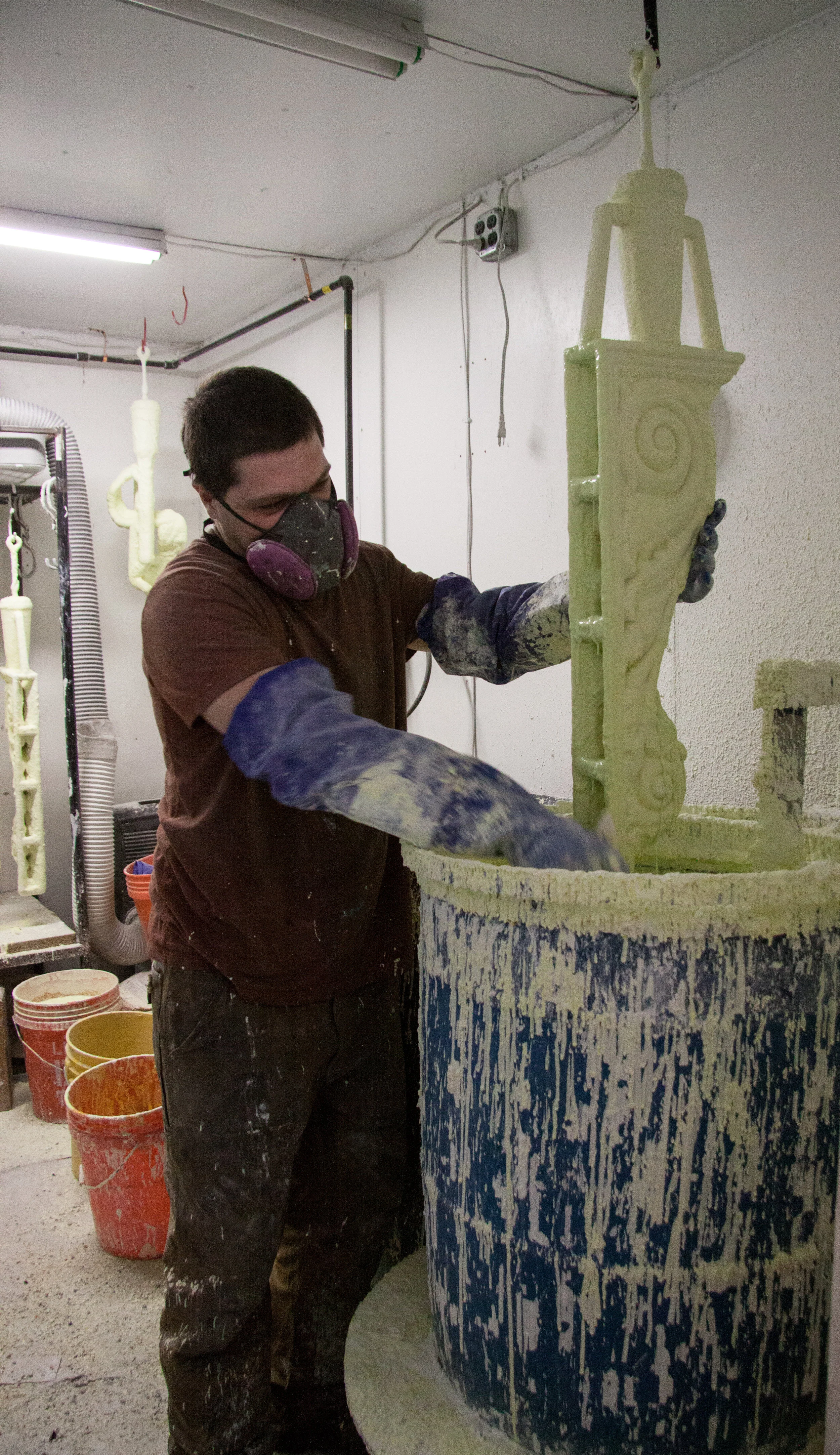
Dipping the wax to build up the ceramic mold.

Flouring the dipped mold.
This process builds up a hard ceramic shell over the wax. It takes about a week to create a 3/8-inch shell in a series of nine dippings with drying time. The ceramic mold is fired at a low temperature to melt out the wax; then it is fired at 1500 degrees for about an hour to fuse the mold. Any residue from the wax vaporizes, the mold vitrifies (heats to a glass-like state), and glows a fiery red.
This is the moment to pour the melted bronze that has been heated in a furnace to about 2100 degrees into the mold. Once the bronze cools, the cast sculpture is ready to be removed from its hard ceramic shell. The only way to get the sculpture out is to completely break the shell, hammering first, and then picking out any ceramic pieces that remain. The last small particles of the shell are removed by sandblasting the bronze.
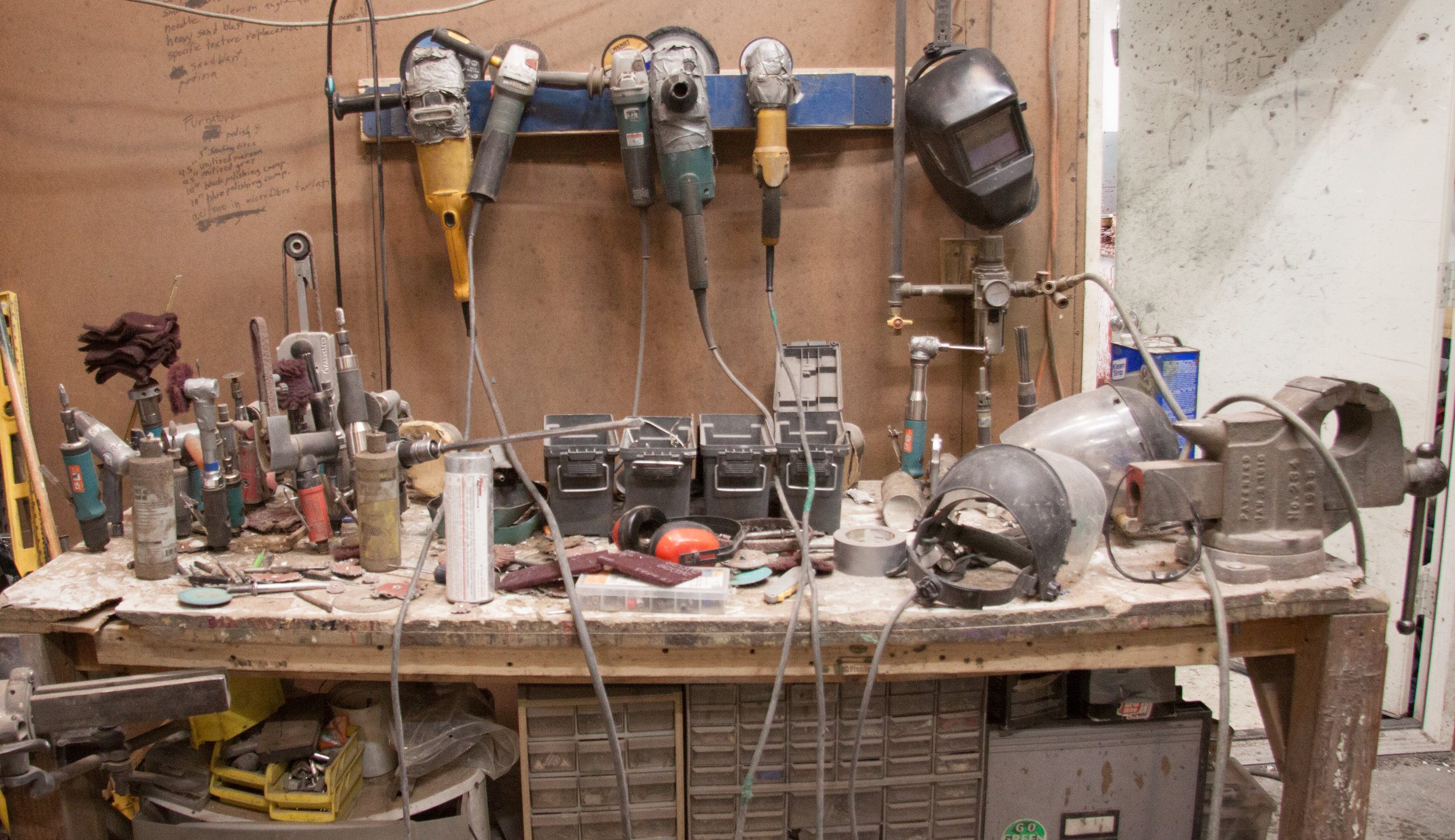
The metal working bench at Mission Foundry.
Metal finishing is next. The bronze sculpture still has the funnel with sprues attached. These have to be cut off, and the surface worked, so there is no sign of the supports. Think of freeing the bronzes seahorses from their poised equilibrium.
When a sculpture is cast in several parts like the Chalice I made for the Unitarian Universalist Church in Harvard, the pieces must be welded together.
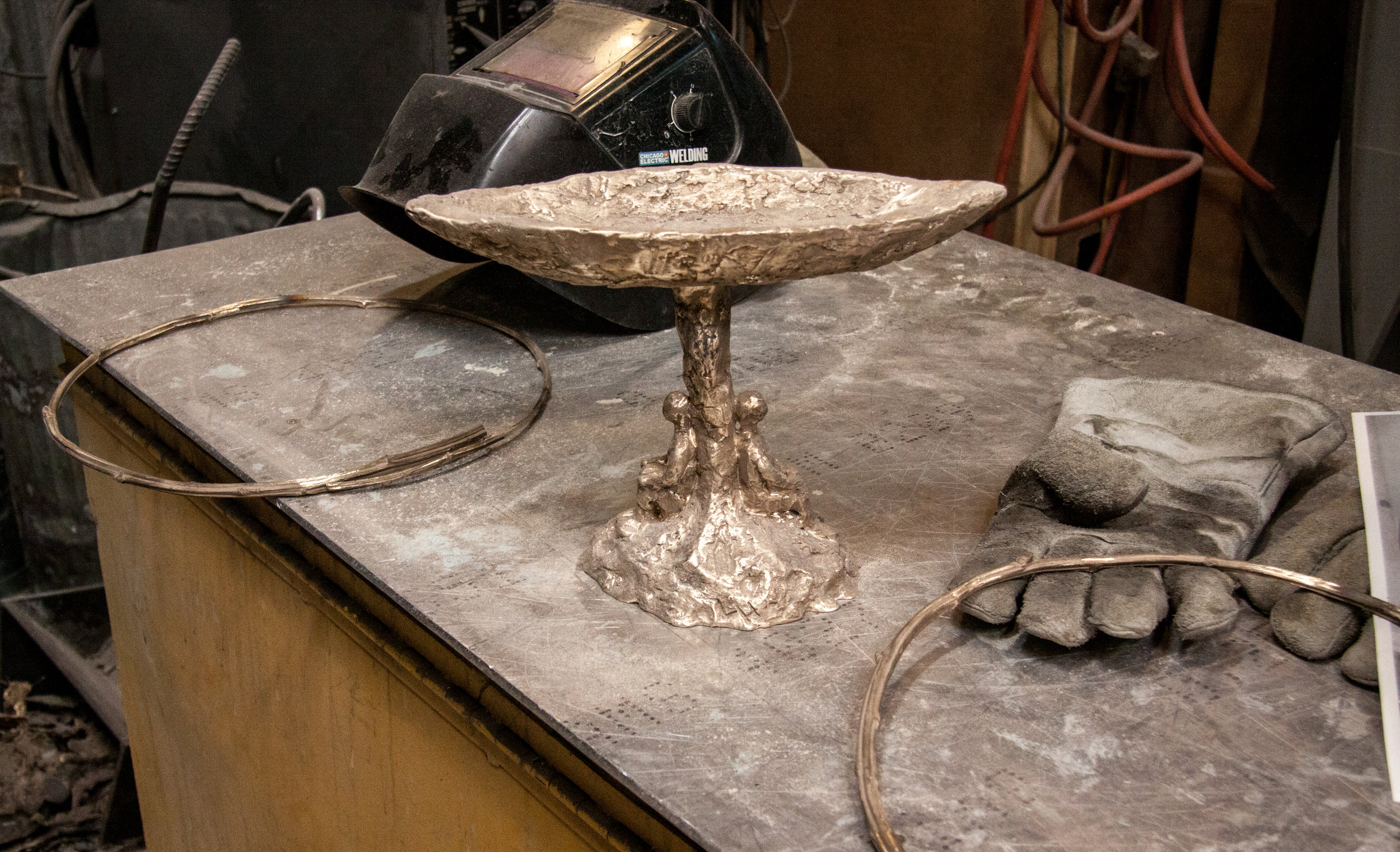
The two circular tree branches will be welded to the sculpture to form the two circles surrounding the chalice flame.
The sculpture is now ready for a final sandblasting before its patina. The patina is the treatment on the surface, and the colors can range from black to green to a polished gold. The sculpture is heated with a blow torch, and a chemical or a combination of chemicals are brushed onto it. The reaction of the bronze with the heated chemicals oxidizes the surface and forms the patina. A coat of wax is added to protect it.
Now we have a finished sculpture, but no mold. That’s the rub. This process is called ‘Lost Wax.’ The sculpture is one-of-a-kind; and I cannot make another copy. If I had wanted to make an edition, that is several copies of the same piece, my original wax would have been used to make a rubber mold with a hard ceramic exterior encasing the rubber and giving it solidity. This rubber mold could then be used to make additional wax models of my sculpture. The process would then go to step one again – the wax preparation with a funnel and spruing, and dipping and flouring, to build up the hard shell for the bronze pouring. Every casting needs one wax model and a ceramic mold built up around it that will be destroyed in the process. To make several copies, you need to have a mold made from the original so you can make several wax copies.
For my small bronze figures, I go straight to casting from the wax without making a rubber mold. These pieces are cast solid and are one-of-a-kind. For larger pieces, the weight of the piece and the amount of bronze needed makes this direct casting impossible. By making a rubber mold, a wax positive of the sculpture can be created so that when the bronze is poured the final sculpture will be hollow. However, each wax copy made from the rubber mold needs to be retouched. A hand or seahorse tail might be distorted in the unmolding and either the artist or the foundry will need to touch up the wax. No two sculptures are ever exactly the same.
Zach is now casting Tree Harp for me. This sculpture has a two-part rubber mold; the wax parts will be cast separately and then put together. When I go to the foundry to see the completed wax, I will sign this one 3/6. This signifies that there will be 6 castings allowed and that this is the first. Once all the castings are produced, the rubber mold will be destroyed to prevent more copies of the sculpture. After Tree Harp is cast, I’ll apply the gold leaf in my studio and it will be ready to live permanently outdoors.

Tree Harp 1/6 at Old Frog Pond Farm. Photo:Robert Hesse
A great amount of work takes place in a foundry – the artisans working there are artists. At a large foundry, there will be workers who make molds and others who work only in wax. Many of them are sculptors, supporting themselves with a foundry job. Zach is just starting his foundry and does everything but the casting alone. I am so appreciative of his talents. When you enter the foundry door, there is a large sculpture — a wild vision of crazy sunflowers. It’s Zach’s work. I’ve already asked him to bring it to the farm for our outdoor sculpture exhibit this fall.
A Chalice of Spirit, Art, and Nature
Six months ago, I was asked by a small committee if I would make a chalice for the First Congregational Unitarian Church of Harvard. They would soon be welcoming a new minister, and it was to be a symbol of this new beginning. A chalice – hmm, I had no idea. At the Last Supper, Jesus drank from a wine-filled cup, and it became the much sought after Holy Grail, but I didn’t have a personal relationship with this Christian object of worship.
The committee explained that their chalice commission was not actually a cup, but a flaming chalice, the official symbol of the Unitarian Universalist (UU) Association. It represents two important liturgical symbols—the chalice and the flame—and they are united by two circles.
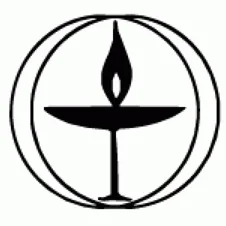
The Unitarian Universalist website says, “We are a house without walls, a congregation without spiritual boundaries.” This symbol, likewise, seems to hold no one meaning or interpretation, but to represent the broadest possible teachings of significant importance in the Unitarian Church—generosity, love, justice, compassion, as well as service and sacrifice for others.
Light, flames, candles, and sacred fires cross religious boundaries. In my childhood synagogue, there was an ornate lamp hanging in front of the ark where the Torah was stored. It hung by three golden chains from the high domed ceiling. I often wondered if it was really an eternal lamp, and considered, while I sat through a long service, the logistics of filling it with oil and lighting it.
Light is easy to identify with, but I wasn’t asked to make the light but the chalice to support it. Then I remembered the story of Siddhartha before he became the Buddha. For six years after leaving his home, Siddhartha followed many teachers and excelled at the most austere practices. At one point, so emaciated that he was close to death, he realized that he was not getting closer to what he was seeking. That’s when he recalled sitting under an apple tree as a child while the adults were plowing the fields; he remembered his calm state of mind. He resolved to take nourishment, find this calm mind again, and sit under a tree until he reached enlightenment.
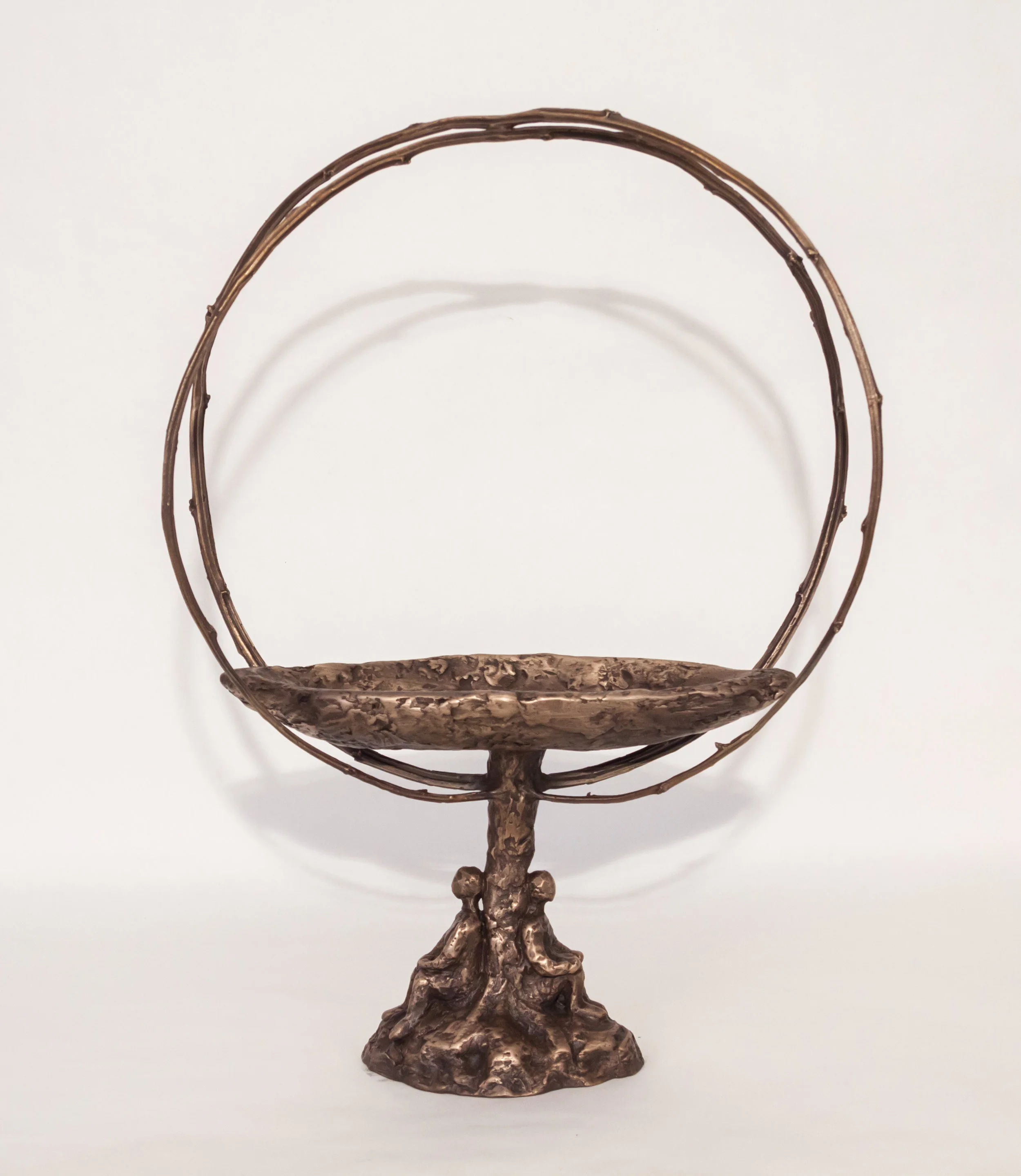
I’m an orchardist in a town well-known for its beautiful orchards. Our fruit trees offer us sustenance and beauty. Trees also offer refuge. I think we can all remember sitting against the trunk of a tree; it’s so simple, and universal. Inspired by my own love for trees and the Buddha’s story, I decided to use the image of a tree for Harvard’s Unitarian Church’s chalice. I made the trunk to support the chalice bowl and sculpted two small seated figures leaning against its trunk, enjoying the peacefulness, exemplifying a calm abiding, an equanimity. Above the figures, for the two circles, I used tree branches. The branches will encircle a glass sphere oil lamp (not pictured).
I made the sculpture in wax and had it cast into bronze. (I will write about bronze casting in another blog.) This Sunday it will be lit for the first time. The service begins at 10:00 am, 9 Ayer Road in the center of Harvard. All are welcome!
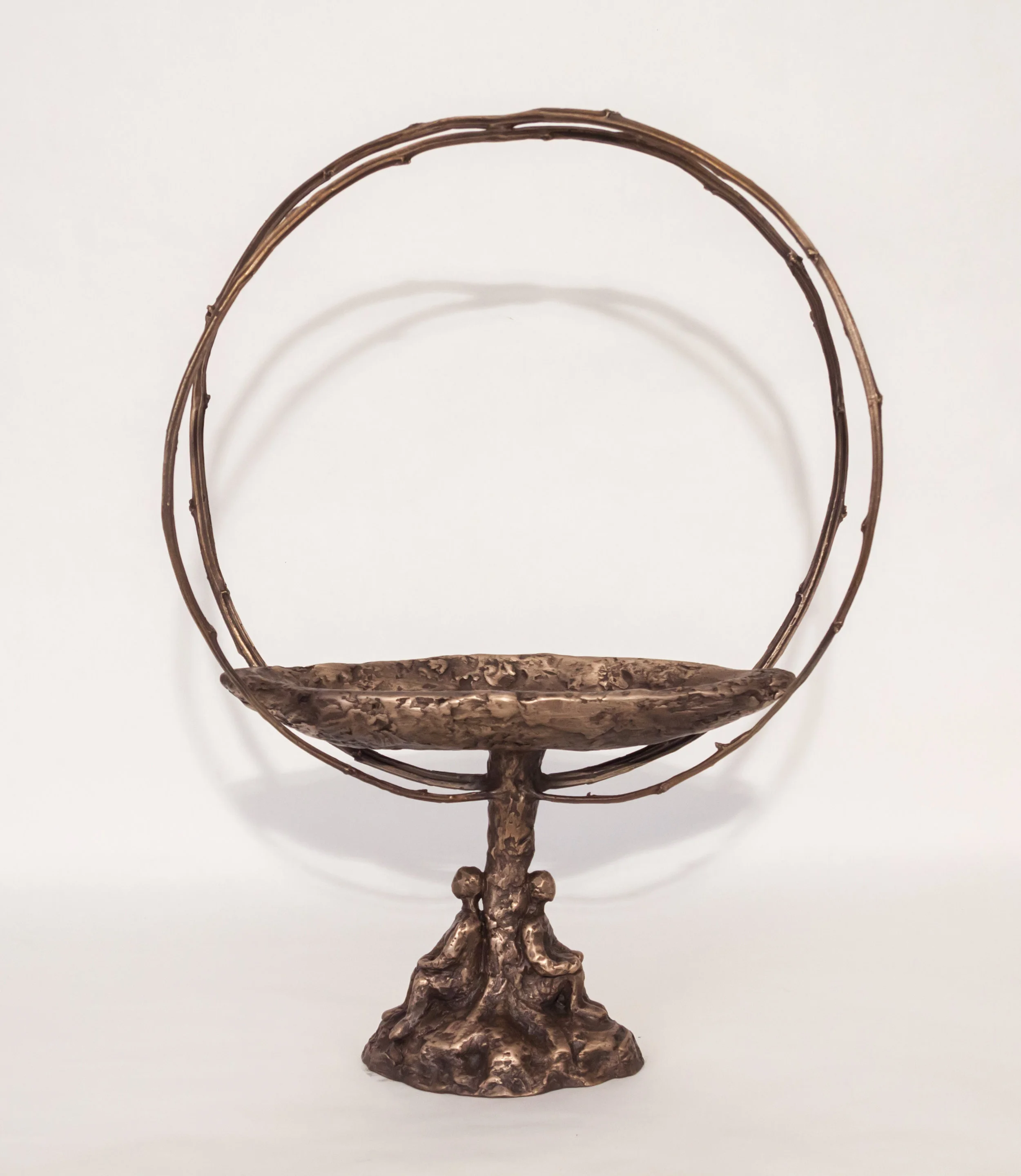
First Congregational Unitarian Church of Harvard Chalice
Search Blog
-
2025
- May 9, 2025 A View from the Tractor Seat
- Apr 11, 2025 Dig
-
2024
- Jan 7, 2024 Winter Wassail
-
2022
- Dec 11, 2022 Keeping Time
- Jun 17, 2022 This Apple-Shaped Earth
- Jan 23, 2022 What is a Jizo?
- Jan 16, 2022 An Invite and Housekeeping Update
- Jan 1, 2022 The Year of the Frog: What Orchardists Do While Apple Trees are Chilling
-
2021
- Oct 24, 2021 Figs
- Oct 3, 2021 The Artist and the Orchard: A Memoir
- Aug 8, 2021 Red-Fleshed Apples
- Jul 25, 2021 When We Were Trees
- Jun 27, 2021 Castor Beans—Who Knew?
- Jun 13, 2021 Spring Training at a Zen Monastery
- May 4, 2021 Our Trees are in Bloom
- Apr 18, 2021 Hooray!
- Jan 24, 2021 Wassailing, virtually!
- Jan 1, 2021 Sitting
-
2020
- Dec 21, 2020 Darkness to Light
- Nov 28, 2020 One Heart
- Sep 18, 2020 Juggling Flowers, Fruit, and Vegetables
- Aug 23, 2020 Refuge
- Aug 9, 2020 Bags of Fertilizer
- Aug 2, 2020 The Sermon of the Blue Heron
- Jul 26, 2020 What's the Buzz?
- Jul 19, 2020 Farm Moments
- Jul 12, 2020 Lost Wax
- Jul 5, 2020 Catalpa: The Hugging Tree
- Jun 28, 2020 Pedaling Peace
- Jun 21, 2020 See Change
- Jun 14, 2020 Lalla Unveiled
- Jun 7, 2020 Pond Alchemy
- May 31, 2020 The Birth of Fruit
- May 24, 2020 An Artist in the Orchard
- May 17, 2020 Walking the Land: Returning Home
- May 10, 2020 Stinging Nettles: Gifts from the Great Mother
- May 3, 2020 The Mystery of Swallow
- Apr 26, 2020 Aerial Bruststrokes
- Apr 19, 2020 Simple Pleasures
- Apr 12, 2020 Weeds and Other Gifts
- Apr 5, 2020 Remembering the Seeds
- Mar 29, 2020 Blow on the Embers
- Mar 22, 2020 Ripples
-
2019
- Nov 16, 2019 Tibet Impressions
- Nov 9, 2019 Forest Tales
- Oct 13, 2019 The Gift
- Aug 4, 2019 The Season is Apples, Berries, and Grandfather Fire
- Jun 8, 2019 Pointers for a Writing Life
- May 12, 2019 Mothers of the Earth
- Apr 6, 2019 The Apple-Shaped Earth
- Mar 23, 2019 You Don’t Know What You Have Till It’s Gone
- Feb 23, 2019 Generations
- Feb 9, 2019 What Are We Doing to the Earth, John Chapman?
-
2018
- Dec 31, 2018 Long Shadows
- Oct 6, 2018 A Pilgrimage to India
- Aug 18, 2018 Scrap Wrenn
- Aug 11, 2018 Off-the-Wall Comments from an Ignorant Farmer
- Jul 28, 2018 Creative Connect
- Jul 14, 2018 How is the Orchard?
- Jun 30, 2018 Which Way?
- Jun 16, 2018 Geese, Herons, Beavers, and the Baby Steps of a Lapsed Blogger
- Feb 24, 2018 Mama's Coupons — Good Forever
- Jan 27, 2018 January Ice
- Jan 13, 2018 The Muse
-
2017
- Dec 30, 2017 A Dream for the New Year
- Dec 23, 2017 A New Year for Apples
- Dec 16, 2017 Intuition
- Nov 22, 2017 Thanksgiving OM
- Nov 4, 2017 East Fork Pottery
- Oct 28, 2017 Putting Down New Roots
- Oct 21, 2017 A is for Art
- Oct 14, 2017 Eve domesticus
- Oct 7, 2017 A String Workshop
- Sep 30, 2017 After Applepicking
- Sep 23, 2017 Two Bad Women and One Good Apple
- Sep 16, 2017 Plein Air Poetry
- Sep 9, 2017 Cutting Off a Leg
- Sep 2, 2017 The Changing Landscape
- Aug 26, 2017 All About Art
- Aug 19, 2017 My First Visit to the Farm
- Aug 12, 2017 The First Food
- Aug 5, 2017 A Teapot, a Woman, and maybe a Boat
- Jul 29, 2017 A Raspberry Dilemma
- Jul 22, 2017 Consider the Miracle
- Jul 15, 2017 Meeting Ekphrasis
- Jul 8, 2017 Ripening Fruit
- Jul 1, 2017 The Voice of The Caterpillar
- Jun 24, 2017 Goumi — An Unusual Fructus
- Jun 17, 2017 Concord, an American Bloomsbury
- Jun 10, 2017 The World Is Bonkers — Shall I Laugh or Cry?
- Jun 3, 2017 Bonkers, a Revolutionary Apple
- May 27, 2017 Guardians of the Swamp
- May 20, 2017 There are Mushrooms and There are Morels
- May 13, 2017 "What's in a Name?"
- May 6, 2017 Bloom Follows Pink: Orchard Pollination
- Apr 29, 2017 The Orchard Is at Pink
- Apr 22, 2017 Natural Farming — Part 2 (continuation from last Sunday's blog)
- Apr 15, 2017 Natural Farming — Part 1
- Apr 8, 2017 Boats, Figures, and Catching Fish
- Apr 1, 2017 A Man with a Mission: The Nuts and Bolts of Bronze Casting
- Mar 25, 2017 A Chalice of Spirit, Art, and Nature
- Mar 18, 2017 Hanami — Blossom Viewing
- Mar 11, 2017 Soil Redemption Song
- Mar 4, 2017 Food is Primary Care
- Feb 25, 2017 Pomme de Terre
- Feb 18, 2017 Organic Certification
- Feb 11, 2017 Tantalizing Fruit
- Feb 4, 2017 The Myths of History
- Jan 28, 2017 The Orchard in Winter
- Jan 21, 2017 The Hi-Line
- Jan 14, 2017 Artistic, Botanical, and Social Diversity
- Jan 7, 2017 Where is Eden?
-
2016
- Dec 31, 2016 The Creative Heart
- Dec 24, 2016 A Christmas Tale
- Dec 17, 2016 Who are the Crones?
- Dec 10, 2016 The Olympic Bell (Part Two)
- Dec 3, 2016 Overheard in the Apple Orchard in Early December
- Nov 26, 2016 The Lessons of a Tortoise
- Nov 19, 2016 In the Studio
- Nov 12, 2016 Even in Darkness
- Nov 5, 2016 Southern Apples, an Elephant, Monkey, Rabbit, and Bird, Two Mango Trees and a Birthday
- Oct 29, 2016 The Tools of Art
- Oct 22, 2016 Labyrinths
- Oct 15, 2016 Repairing the Broken
- Oct 8, 2016 When You Are No More
- Oct 1, 2016 Creation Rain
- Sep 24, 2016 Breaking the Glass
- Sep 17, 2016 String Art
- Sep 10, 2016 Poetry and Photosynthesis: It's all in the Leaves
- Sep 3, 2016 In the Plenty of Time
- Aug 27, 2016 Witch Doctors
- Aug 20, 2016 Listen Coyote
- Aug 13, 2016 Milkweed in the Orchard
- Aug 6, 2016 Some People See a Turtle
- Jul 30, 2016 Arborshaping
- Jul 23, 2016 Joseph Wheelwright: Sculptor of Stones and Trees
- Jul 16, 2016 Asian Pears
- Jul 9, 2016 Gold Leaf, Grief, and the Creative Process
- Jul 2, 2016 The Olympic Bell (Part One)
- Jun 25, 2016 Around the Mulberry Bush
- Jun 18, 2016 Avoiding Apples
- Jun 11, 2016 Fructus
- Jun 4, 2016 Astonishing Apples
- May 28, 2016 Scare the Caterpillars
- May 21, 2016 Join the Club!
- May 14, 2016 The Graft
- May 7, 2016 Rooster, Rhubarb, Rue
- Apr 30, 2016 What do Dolphins and Nettles Have in Common?
- Apr 23, 2016 Art Prunings
- Apr 16, 2016 A Few of the First Arrivals
- Apr 9, 2016 Taste the Spirit of Sustainable Agriculture
- Apr 2, 2016 First Orchard Spray - March 22-24, 2016
- Mar 26, 2016 Hawkeye Apple
- Mar 19, 2016 Desiring the Almata Apple
- Mar 12, 2016 Ugly Fruit
- Mar 5, 2016 Winter Tracks
- Feb 27, 2016 Splash
- Feb 20, 2016 Pruning
- Feb 13, 2016 Orchard Ruminants
- Feb 6, 2016 A Gathering of Seeds
- Jan 30, 2016 Orchard Dragons
- Jan 23, 2016 Tree Rings
- Jan 17, 2016 The Fallen Tree
- Jan 7, 2016 Wassailing the Apple Trees
- Jan 1, 2016 The New Year