LINDA HOFFMAN
The Sermon of the Blue Heron
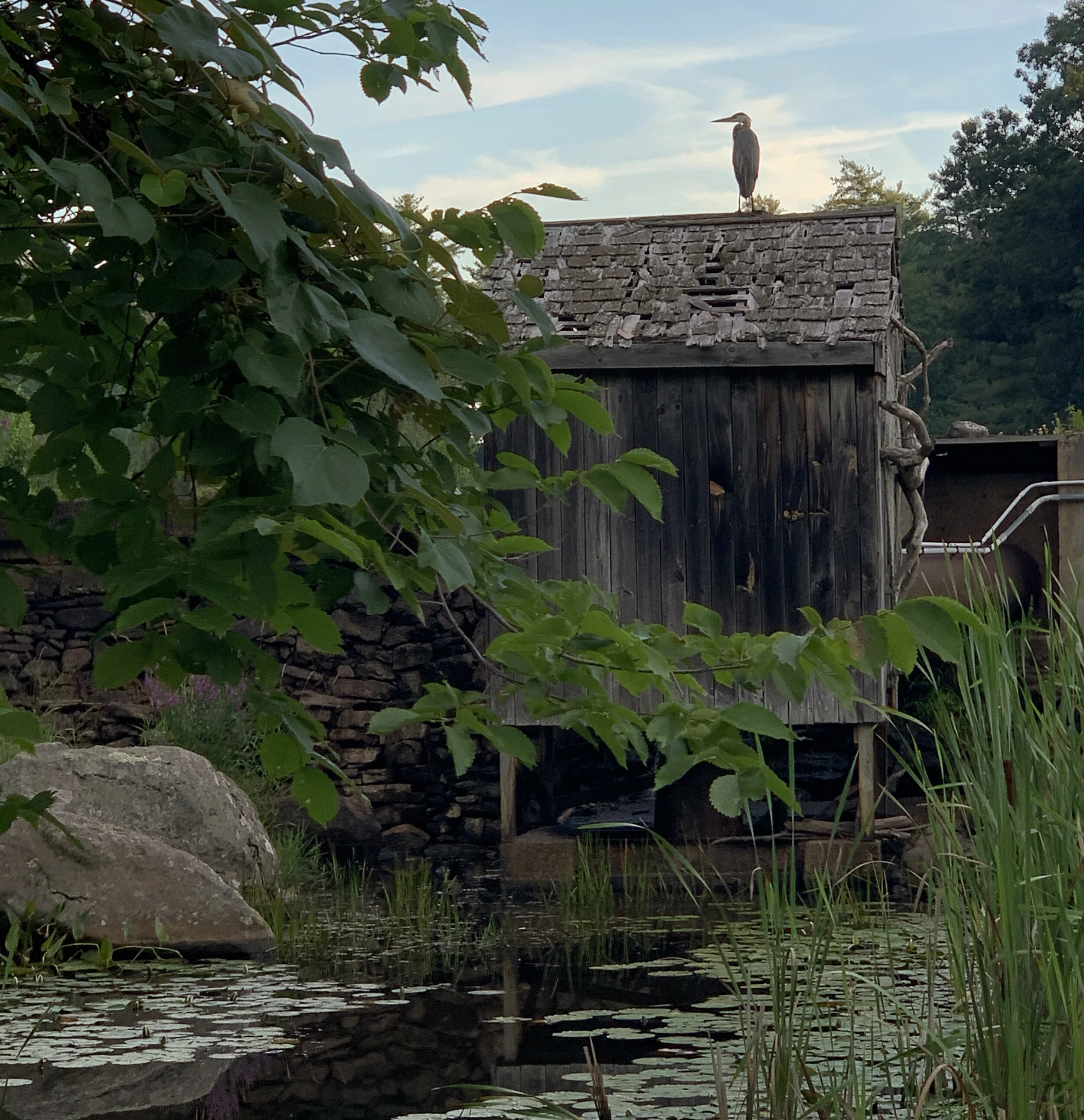
I walked out of the house early yesterday morning and saw a blue heron preaching from the roof peak of the little hut at the waterfall next to the dam. I feigned disinterest and sauntered quietly down the hill towards a new garden bed, hoping the heron wouldn’t fly away. It turned its head 180 degrees, but didn’t fly off.
This garden was planted last week, watered well, but not since—and we’ve had no rain. We’ve had no rain all summer, not a full day of soaking down wetness, not since too much rain in early May when we lost half our apple crop from poor pollination. We water the crop plants and the fruit trees and a few gardens pumping water from the pond, but much else is dry, parched, and crunches underfoot.
We’re lost without water, like we’re lost without a road map. Plants genetically receive all kinds of direction. Grow towards the sun, make your leaves larger because you are in the shade and need more photosynthesis, switch to ‘dry’ mode and pull in so that you can survive this drought. I think about where my inner direction comes from, how can I be sure I am hearing it. Sometimes my deepest yearnings feel like quicksand, holding me in inactivity without a guiding star. I was relieved to see the garden was alive, the transplants had survived the hot week.
I walked back up the hill and over to my studio. A few minutes later, I was upstairs at my desk with my morning tea when the heron flew by and landed near the pond. I thought it might be preaching to turtles, water snakes, maybe even the water lilies opening from their tightly closed night to better hear the heron’s wisdom. Herons know water; for they are fishermen and spend long hours watching water.
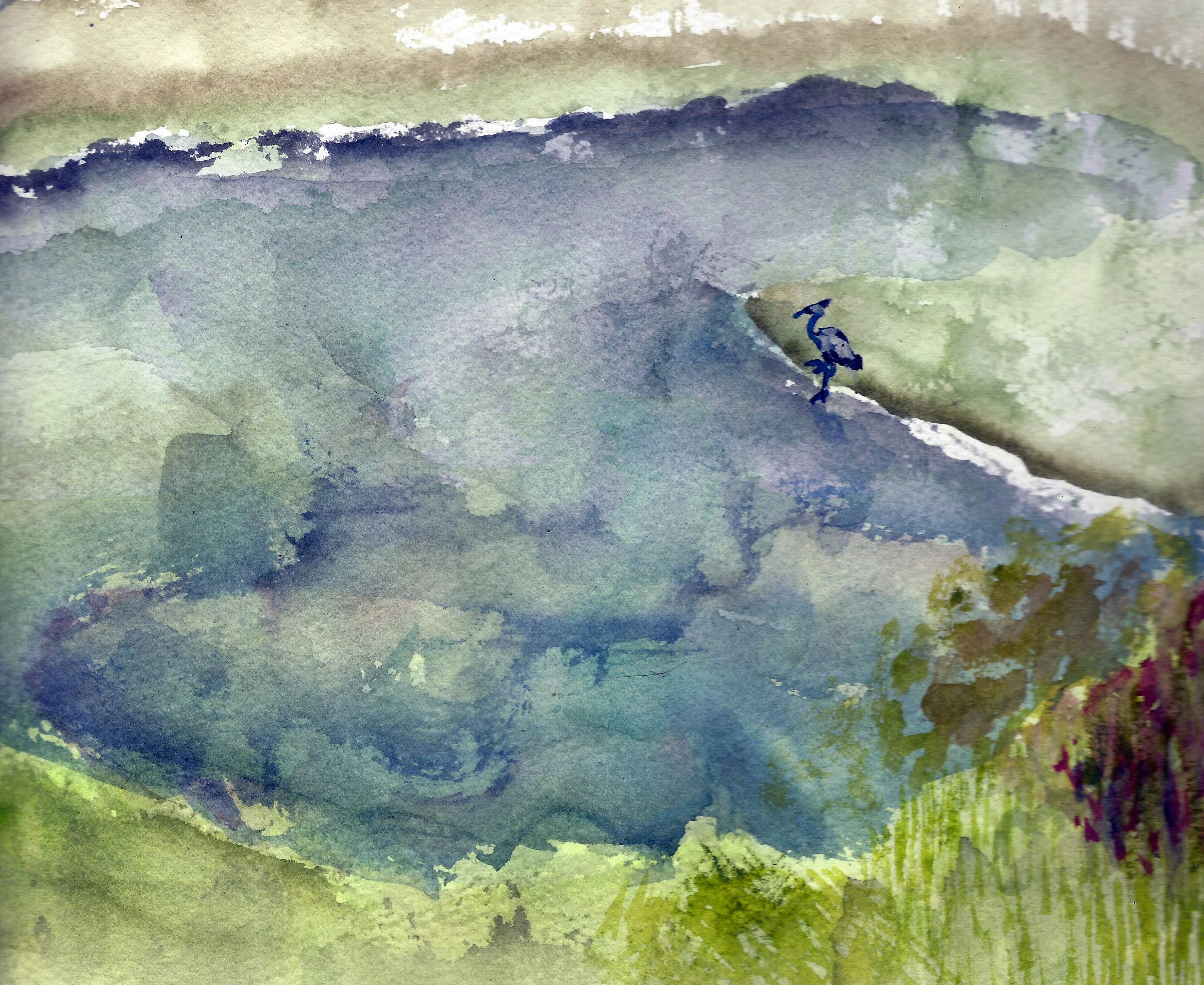
The heron, however, surely didn’t know it was standing halfway between the summer solstice and the fall equinox, on the pagan holiday, Lughnasad. This holiday is celebrated on the first of August and marks the beginning of the wheat harvest and the sun’s slow descent towards winter. For us at the farm, early August is when we harvest the first tree fruits, peaches, plums, and early season apples. It’s also the last time to get seeds into the ground for late fall crops. In the midst of a global pandemic, while areas of the world suffer extreme drought and other places experience massive and destructive floods, the heron stands at the boundary of earth and water with equipoise, catching its food, a guardian of the old ways.
As we shift to this new season, maybe it’s a time for us to reassess our ways. Make some choices of what we are carrying into the next phase. Spring flowers are a distant memory, while yarrow is in bloom, Queen Anne’s lace is at its peak, and goldenrod is opening to yellow. The night insects have begun their incantations. What to take with us and what to let go?
What do you want to put energy into? Energy flows where intention goes. What’s driving you? What brings you joy? We can’t do it all, not in one season. But we can be part of it all.
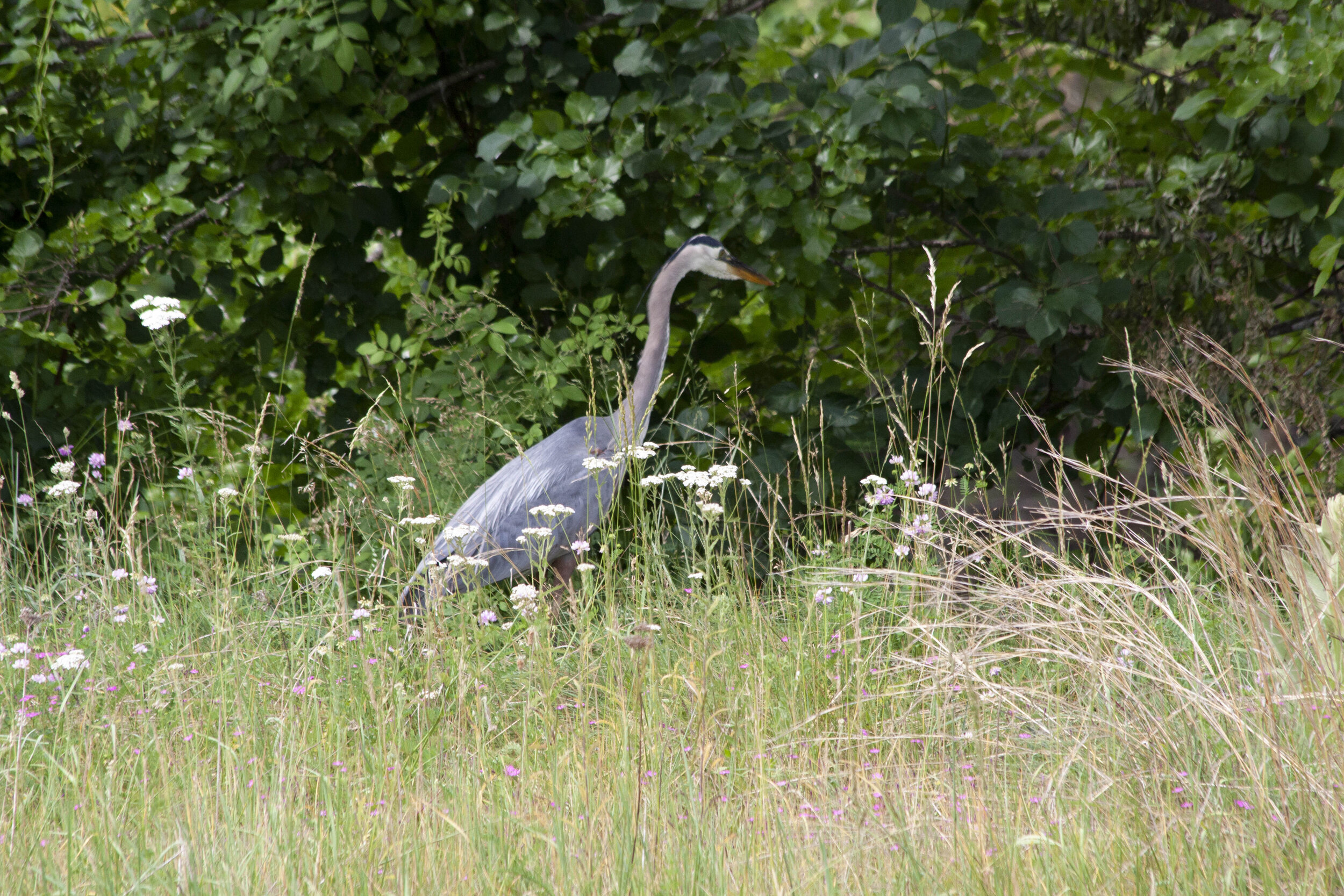
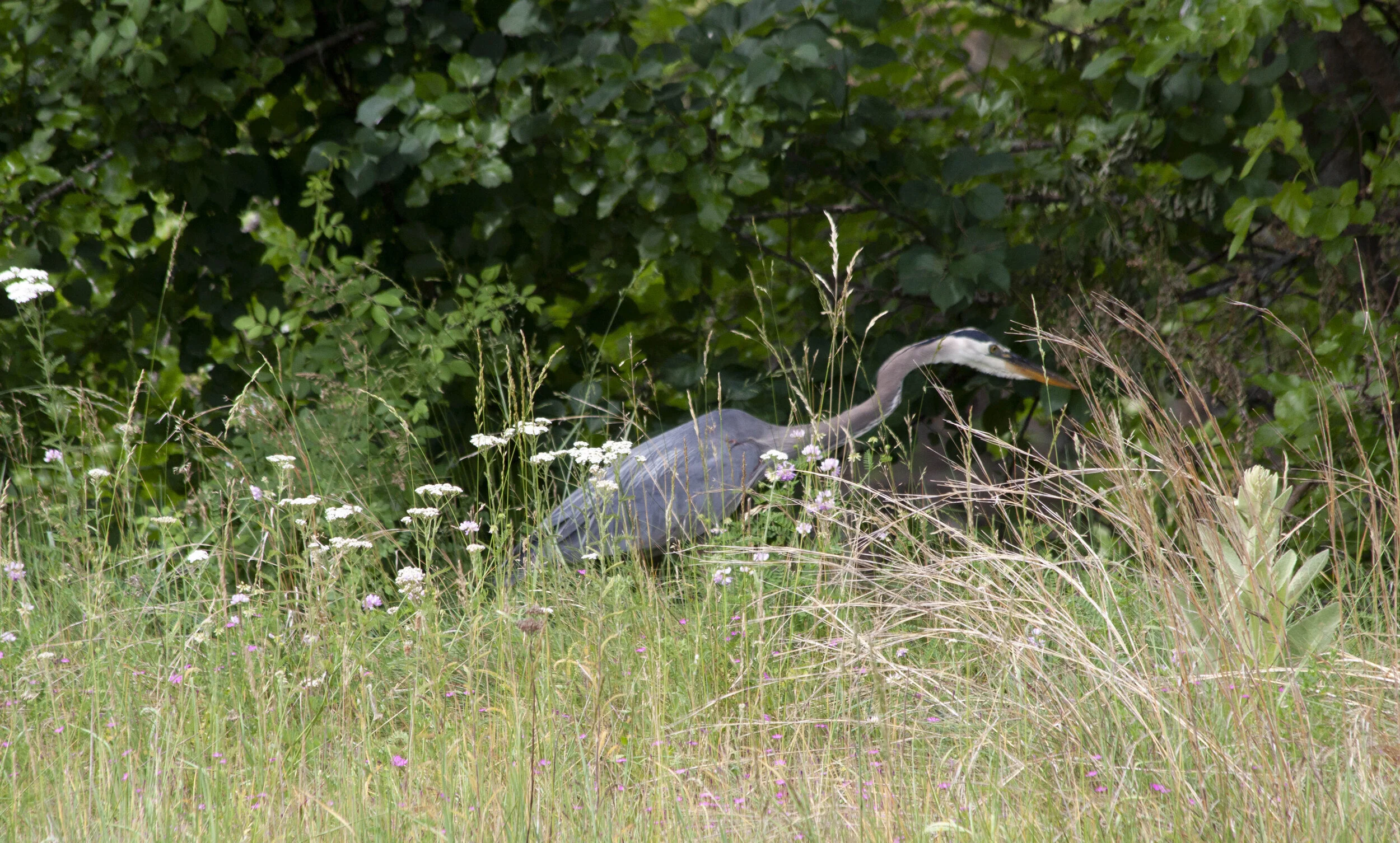
At the farm we now have fewer bluebirds, the orioles have migrated, and only one pair of barn swallows are still sitting on eggs. But the heron remains—majestic, otherworldly, its squawks coming from deep in the earth, a wisdom that calls out, “Take heed. What are you doing with this one precious life?”
The World Is Bonkers — Shall I Laugh or Cry?
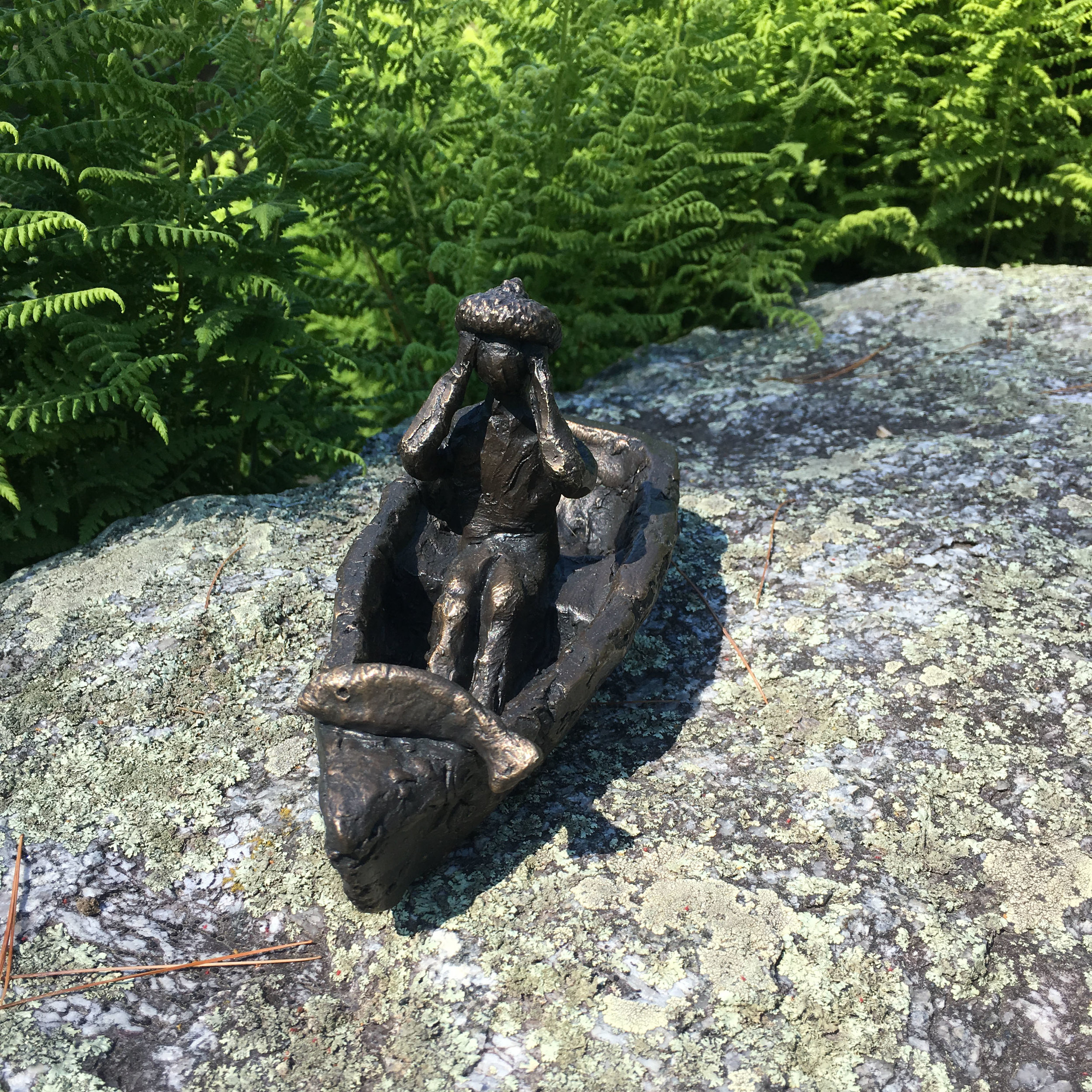
The World is Bonkers, 2017, bronze: Sculpture LH
Last week I wrote about Bonkers, the revolutionary apple – but unknown to me – the Atlantic, two weeks earlier, published an article, Why So Much is Bonkers Right Now. The Atlantic mentioned at least ten references to this imported British word. For example, Mother Jones had recently reassured its readers: “It’s Not Just You . . . This Week Was Bonkers,” referring to the latest Trump charades. And Vox used the word to describe Netflix’s newest film, Okja: “a bonkers corporate satire staring Tilda Swinton and a superpig.” I saw a two-page spread advertising the film in the New Yorker magazine. The image, a young woman leading a giant creature with a factory building as its saddle spewing out pollution from one of three smokestacks, was so fascinating I looked it up on Rotten Tomatoes and found that it is a story of an extraordinary human animal bond threatened by capitalist consumers.
The Atlantic article also mentions the word Bonkers’ first use on American soil in 1965, when an American film reviewer of the film Paranoia used the word to describe “Marcello Mastroianni as going slowly bonkers while sharing a bath, bed, and Bedouin with three co-stars.” In the 1980s, there was a candy named Bonkers. Its commercial takes the prize for worst of its kind, but you can watch it here. And there is a recent memoir by the comedian Jennifer Saunders, Bonkers: My Life in Laughs. What is the appeal of this Bonkers everyone is using? Zany, crazy, madcap, screwy, wacky? The Atlantic article ended with an appreciatory note, saying that this British word is “uniquely suited to this American moment: a time when news can be so often confusing, and overwhelming, and, all in all, a little bit bonkers.”
Yet to describe our world as Bonkers doesn’t feel right. After the Manchester killings and the London Bridge savagery, the world is not Bonkers, but alarming. Withdrawing America from the Paris Climate Accord is equally horrifying. Bonkers is a non-judgmental adjective; it resists condemnation. Faced with the harsh reality of innocent lives lost, the continued devastation of people’s homes from war and terrorism, and the loss of species and habitat because of climate change, Bonkers doesn’t describe the depth of suffering in our world.
Yet, at the same moment that devastation is happening all around, I watch young children skip merrily before climbing aboard a big yellow school bus and bike down our street with fishing rods tucked under their arms, knowing nothing about the follies of their parents’ generation. I feel similarly protective of the spotted brown and white eggs in a small nest high in a branch of the Saturn peach. These birds will know nothing of the perils facing the earth. This contrast between the news and what is happening in my backyard does make me feel like this world is Bonkers.
Today, a friend came by and we spent several hours removing peaches from the Saturn peach tree. Last week it was pruned to about half its size, and now we needed to thin the heavy fruit set. Packed together on the branches like sardines in a tin, the tree had produced a crazy number of apples. When this much fruit grows tightly together, disease spreads, the fruit is small, and it taxes the health of a tree. I heard myself say to her the ‘B’ word, ‘The tree is Bonkers – it has way too much fruit.’
Suffering is all around us, but miraculous beauty is too. Maybe the gift of the word Bonkers is that it describes craziness without being judgmental. We can do so much more to relieve suffering in the world if we don’t wallow in judging thoughts, but take up our lives wholeheartedly. Whether we grow miraculous peaches, listen to another’s pain, or spearhead an activist role to clean up the planet, every day we have the opportunity to hold back our anger, yet take in the grief; to feel the devastation, yet fight for change. Maybe to declare that this world is Bonkers is to bring lightness to the seriousness of our situation, and to let laughter wash over our tears.

Meditator with Acorn, 2017, bronze, Sculpture LH
Search Blog
-
2025
- May 9, 2025 A View from the Tractor Seat
- Apr 11, 2025 Dig
-
2024
- Jan 7, 2024 Winter Wassail
-
2022
- Dec 11, 2022 Keeping Time
- Jun 17, 2022 This Apple-Shaped Earth
- Jan 23, 2022 What is a Jizo?
- Jan 16, 2022 An Invite and Housekeeping Update
- Jan 1, 2022 The Year of the Frog: What Orchardists Do While Apple Trees are Chilling
-
2021
- Oct 24, 2021 Figs
- Oct 3, 2021 The Artist and the Orchard: A Memoir
- Aug 8, 2021 Red-Fleshed Apples
- Jul 25, 2021 When We Were Trees
- Jun 27, 2021 Castor Beans—Who Knew?
- Jun 13, 2021 Spring Training at a Zen Monastery
- May 4, 2021 Our Trees are in Bloom
- Apr 18, 2021 Hooray!
- Jan 24, 2021 Wassailing, virtually!
- Jan 1, 2021 Sitting
-
2020
- Dec 21, 2020 Darkness to Light
- Nov 28, 2020 One Heart
- Sep 18, 2020 Juggling Flowers, Fruit, and Vegetables
- Aug 23, 2020 Refuge
- Aug 9, 2020 Bags of Fertilizer
- Aug 2, 2020 The Sermon of the Blue Heron
- Jul 26, 2020 What's the Buzz?
- Jul 19, 2020 Farm Moments
- Jul 12, 2020 Lost Wax
- Jul 5, 2020 Catalpa: The Hugging Tree
- Jun 28, 2020 Pedaling Peace
- Jun 21, 2020 See Change
- Jun 14, 2020 Lalla Unveiled
- Jun 7, 2020 Pond Alchemy
- May 31, 2020 The Birth of Fruit
- May 24, 2020 An Artist in the Orchard
- May 17, 2020 Walking the Land: Returning Home
- May 10, 2020 Stinging Nettles: Gifts from the Great Mother
- May 3, 2020 The Mystery of Swallow
- Apr 26, 2020 Aerial Bruststrokes
- Apr 19, 2020 Simple Pleasures
- Apr 12, 2020 Weeds and Other Gifts
- Apr 5, 2020 Remembering the Seeds
- Mar 29, 2020 Blow on the Embers
- Mar 22, 2020 Ripples
-
2019
- Nov 16, 2019 Tibet Impressions
- Nov 9, 2019 Forest Tales
- Oct 13, 2019 The Gift
- Aug 4, 2019 The Season is Apples, Berries, and Grandfather Fire
- Jun 8, 2019 Pointers for a Writing Life
- May 12, 2019 Mothers of the Earth
- Apr 6, 2019 The Apple-Shaped Earth
- Mar 23, 2019 You Don’t Know What You Have Till It’s Gone
- Feb 23, 2019 Generations
- Feb 9, 2019 What Are We Doing to the Earth, John Chapman?
-
2018
- Dec 31, 2018 Long Shadows
- Oct 6, 2018 A Pilgrimage to India
- Aug 18, 2018 Scrap Wrenn
- Aug 11, 2018 Off-the-Wall Comments from an Ignorant Farmer
- Jul 28, 2018 Creative Connect
- Jul 14, 2018 How is the Orchard?
- Jun 30, 2018 Which Way?
- Jun 16, 2018 Geese, Herons, Beavers, and the Baby Steps of a Lapsed Blogger
- Feb 24, 2018 Mama's Coupons — Good Forever
- Jan 27, 2018 January Ice
- Jan 13, 2018 The Muse
-
2017
- Dec 30, 2017 A Dream for the New Year
- Dec 23, 2017 A New Year for Apples
- Dec 16, 2017 Intuition
- Nov 22, 2017 Thanksgiving OM
- Nov 4, 2017 East Fork Pottery
- Oct 28, 2017 Putting Down New Roots
- Oct 21, 2017 A is for Art
- Oct 14, 2017 Eve domesticus
- Oct 7, 2017 A String Workshop
- Sep 30, 2017 After Applepicking
- Sep 23, 2017 Two Bad Women and One Good Apple
- Sep 16, 2017 Plein Air Poetry
- Sep 9, 2017 Cutting Off a Leg
- Sep 2, 2017 The Changing Landscape
- Aug 26, 2017 All About Art
- Aug 19, 2017 My First Visit to the Farm
- Aug 12, 2017 The First Food
- Aug 5, 2017 A Teapot, a Woman, and maybe a Boat
- Jul 29, 2017 A Raspberry Dilemma
- Jul 22, 2017 Consider the Miracle
- Jul 15, 2017 Meeting Ekphrasis
- Jul 8, 2017 Ripening Fruit
- Jul 1, 2017 The Voice of The Caterpillar
- Jun 24, 2017 Goumi — An Unusual Fructus
- Jun 17, 2017 Concord, an American Bloomsbury
- Jun 10, 2017 The World Is Bonkers — Shall I Laugh or Cry?
- Jun 3, 2017 Bonkers, a Revolutionary Apple
- May 27, 2017 Guardians of the Swamp
- May 20, 2017 There are Mushrooms and There are Morels
- May 13, 2017 "What's in a Name?"
- May 6, 2017 Bloom Follows Pink: Orchard Pollination
- Apr 29, 2017 The Orchard Is at Pink
- Apr 22, 2017 Natural Farming — Part 2 (continuation from last Sunday's blog)
- Apr 15, 2017 Natural Farming — Part 1
- Apr 8, 2017 Boats, Figures, and Catching Fish
- Apr 1, 2017 A Man with a Mission: The Nuts and Bolts of Bronze Casting
- Mar 25, 2017 A Chalice of Spirit, Art, and Nature
- Mar 18, 2017 Hanami — Blossom Viewing
- Mar 11, 2017 Soil Redemption Song
- Mar 4, 2017 Food is Primary Care
- Feb 25, 2017 Pomme de Terre
- Feb 18, 2017 Organic Certification
- Feb 11, 2017 Tantalizing Fruit
- Feb 4, 2017 The Myths of History
- Jan 28, 2017 The Orchard in Winter
- Jan 21, 2017 The Hi-Line
- Jan 14, 2017 Artistic, Botanical, and Social Diversity
- Jan 7, 2017 Where is Eden?
-
2016
- Dec 31, 2016 The Creative Heart
- Dec 24, 2016 A Christmas Tale
- Dec 17, 2016 Who are the Crones?
- Dec 10, 2016 The Olympic Bell (Part Two)
- Dec 3, 2016 Overheard in the Apple Orchard in Early December
- Nov 26, 2016 The Lessons of a Tortoise
- Nov 19, 2016 In the Studio
- Nov 12, 2016 Even in Darkness
- Nov 5, 2016 Southern Apples, an Elephant, Monkey, Rabbit, and Bird, Two Mango Trees and a Birthday
- Oct 29, 2016 The Tools of Art
- Oct 22, 2016 Labyrinths
- Oct 15, 2016 Repairing the Broken
- Oct 8, 2016 When You Are No More
- Oct 1, 2016 Creation Rain
- Sep 24, 2016 Breaking the Glass
- Sep 17, 2016 String Art
- Sep 10, 2016 Poetry and Photosynthesis: It's all in the Leaves
- Sep 3, 2016 In the Plenty of Time
- Aug 27, 2016 Witch Doctors
- Aug 20, 2016 Listen Coyote
- Aug 13, 2016 Milkweed in the Orchard
- Aug 6, 2016 Some People See a Turtle
- Jul 30, 2016 Arborshaping
- Jul 23, 2016 Joseph Wheelwright: Sculptor of Stones and Trees
- Jul 16, 2016 Asian Pears
- Jul 9, 2016 Gold Leaf, Grief, and the Creative Process
- Jul 2, 2016 The Olympic Bell (Part One)
- Jun 25, 2016 Around the Mulberry Bush
- Jun 18, 2016 Avoiding Apples
- Jun 11, 2016 Fructus
- Jun 4, 2016 Astonishing Apples
- May 28, 2016 Scare the Caterpillars
- May 21, 2016 Join the Club!
- May 14, 2016 The Graft
- May 7, 2016 Rooster, Rhubarb, Rue
- Apr 30, 2016 What do Dolphins and Nettles Have in Common?
- Apr 23, 2016 Art Prunings
- Apr 16, 2016 A Few of the First Arrivals
- Apr 9, 2016 Taste the Spirit of Sustainable Agriculture
- Apr 2, 2016 First Orchard Spray - March 22-24, 2016
- Mar 26, 2016 Hawkeye Apple
- Mar 19, 2016 Desiring the Almata Apple
- Mar 12, 2016 Ugly Fruit
- Mar 5, 2016 Winter Tracks
- Feb 27, 2016 Splash
- Feb 20, 2016 Pruning
- Feb 13, 2016 Orchard Ruminants
- Feb 6, 2016 A Gathering of Seeds
- Jan 30, 2016 Orchard Dragons
- Jan 23, 2016 Tree Rings
- Jan 17, 2016 The Fallen Tree
- Jan 7, 2016 Wassailing the Apple Trees
- Jan 1, 2016 The New Year