LINDA HOFFMAN
The Myths of History
I’ve been reading the book, Sapiens, by Yuval Noah Harari. The author’s broad lens, an overview of our species from early man to the present time, is helpful as my focus has been so closely fixed on the daily headlines. Our brothers and sisters, members of our same genus, Homo, like Neanderthal man, Homo erectus, Homo soloensis, Homo floresiensis, among others, lived on this planet for millions of years. Then, Homo sapiens (Wise Man so we defined ourselves) evolved in West Africa, and spread throughout the Asian landmass, and all of the other members of our genus disappeared. Theories abound and no one really knows whether we were responsible. However, we do know a little about early sapien ways.
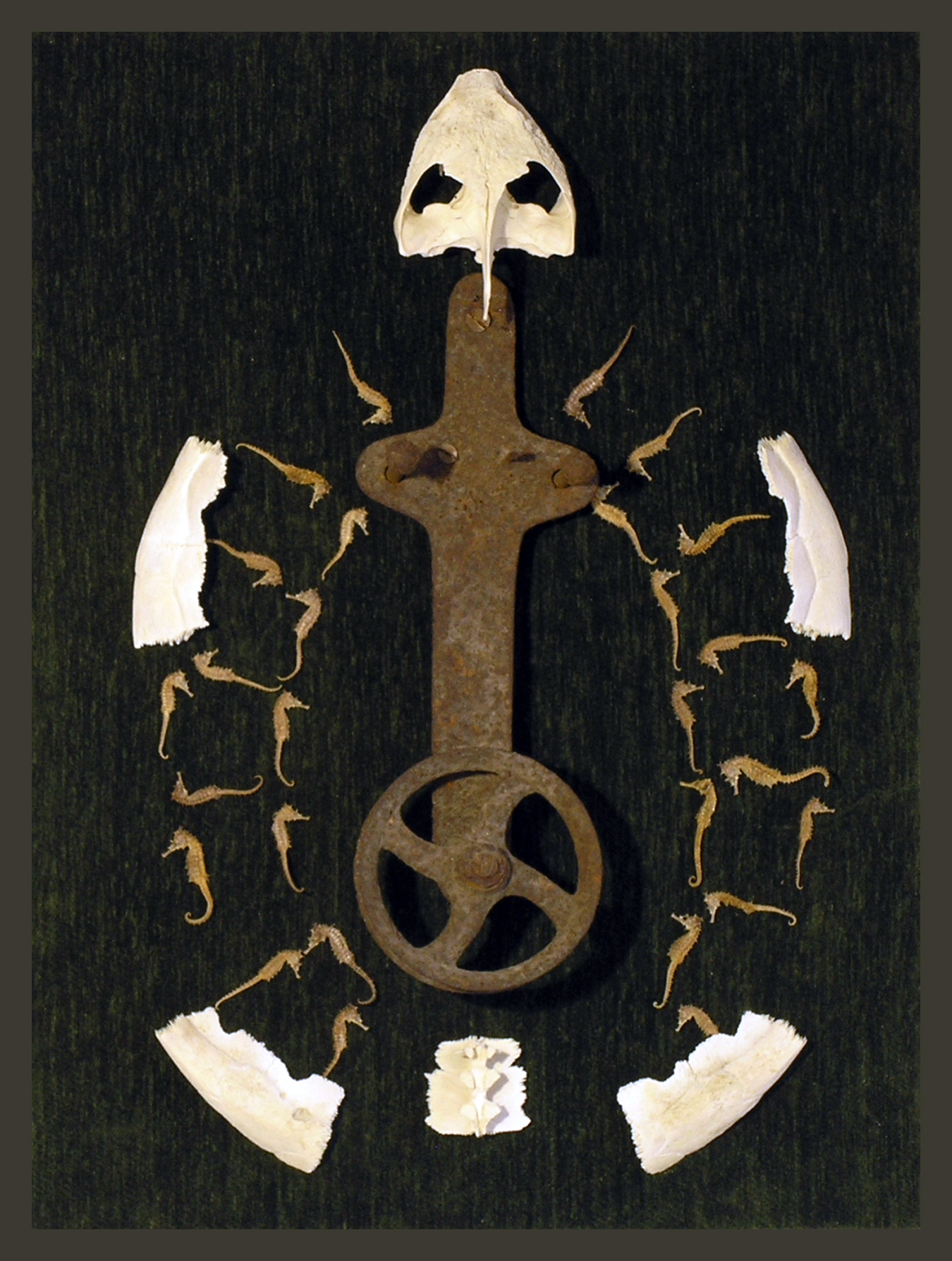
Ancient Turtle, Sculpture, LH
Homo sapiens, not content to stay in any one place, forged ahead. The first place we colonized was Australia, quite an undertaking considering the distance over land and water, but Homo sapiens did what we had been evolving to do. We stepped onto the landmass of what we call Australia where there were no other human beings, and changed it forever. Sapiens encountered great animals like 450 pound kangaroos, giant koala bears, and dragon size lizards. However, within a few short millennia, twenty-three of the twenty-four mammals weighing over one hundred pounds went extinct. Large animals have only one or two offspring and the gestation period is long. If the animal’s young are killed, even as few as one every month or so, in a few thousand years, they die out. As hunter and gatherers, we were not necessarily aware of the changes we were causing, but science points to the irreversible transformations we triggered.
Homo sapiens evolved extremely quickly. Unlike Homo erectus, for example, who used stone tools and remained essentially the same for two million years — Homo sapiens wielded the hoe, the pen, and the brush, becoming farmers, and then, artists, politicians, scholars, scientists, and philosophers in a relatively short time. We developed a sophisticated language. Language, the big differential between us and other species, is how we shape our world. With language we decide collectively what to believe in, and how we envision the future. Harari makes the case that so much of our culture is myth anyway — it’s what we collectively believe. Sapiens became powerful because we learned how to collectively believe in myths—the myth of our economic system, the myth that there are countries with borders, the myths of religion. There is no scientific basis for any of these. From an historical perspective, you could say that religions developed and became dominant in a particular area for no more reason than a particular butterfly has blue wings. Perhaps we need to start dismantling some of our myths — especially the ones that separate instead of seek our commonality.
The assumption is that we have evolved from our wild and wooly ways, and developed and believe in sophisticated ideologies that we hold to be true and enable us to live peacefully and cooperatively with each other. But we don’t live peacefully or cooperatively with other sapiens or other creatures on the planet and we haven’t for many years. It’s almost as if our shadow side is finally coming forth and demanding to be seen and heard. It’s not this one election — nothing arises without a cause. On our planet millions of acres of forests are gone, our topsoil is disappearing at alarming rates, our biodiversity is shriveling, and climate change is going to make large areas inhabitable because of high water and high temperatures. Greed, intolerance, and ignorance have all played their role.
This week I’ve been pruning the apple orchard with Denis Wagner who first taught me to prune the trees over a decade ago. We prune in silence until one of us asks about a certain branch. Sometimes we both stand back and gaze up into the crown of the tree wondering if there are some branches that need to be pruned out to encourage growth. We confer amiably and respectfully. We both know that there are multiple choices, and no one knows exactly what is best, but each cut changes the course of the growth of the tree. In the orchard it’s easy; we both want the best for the tree.
Does this analogy translate to the world? Not easily. Denis and I usually agree, and it takes very little for either of us to back down and harmonize with the other. But it does make me think that we need to talk, we need to stop building walls, stop filibustering, and stop being right. History has proved that unless we live compassionately and empathetically, we all suffer.
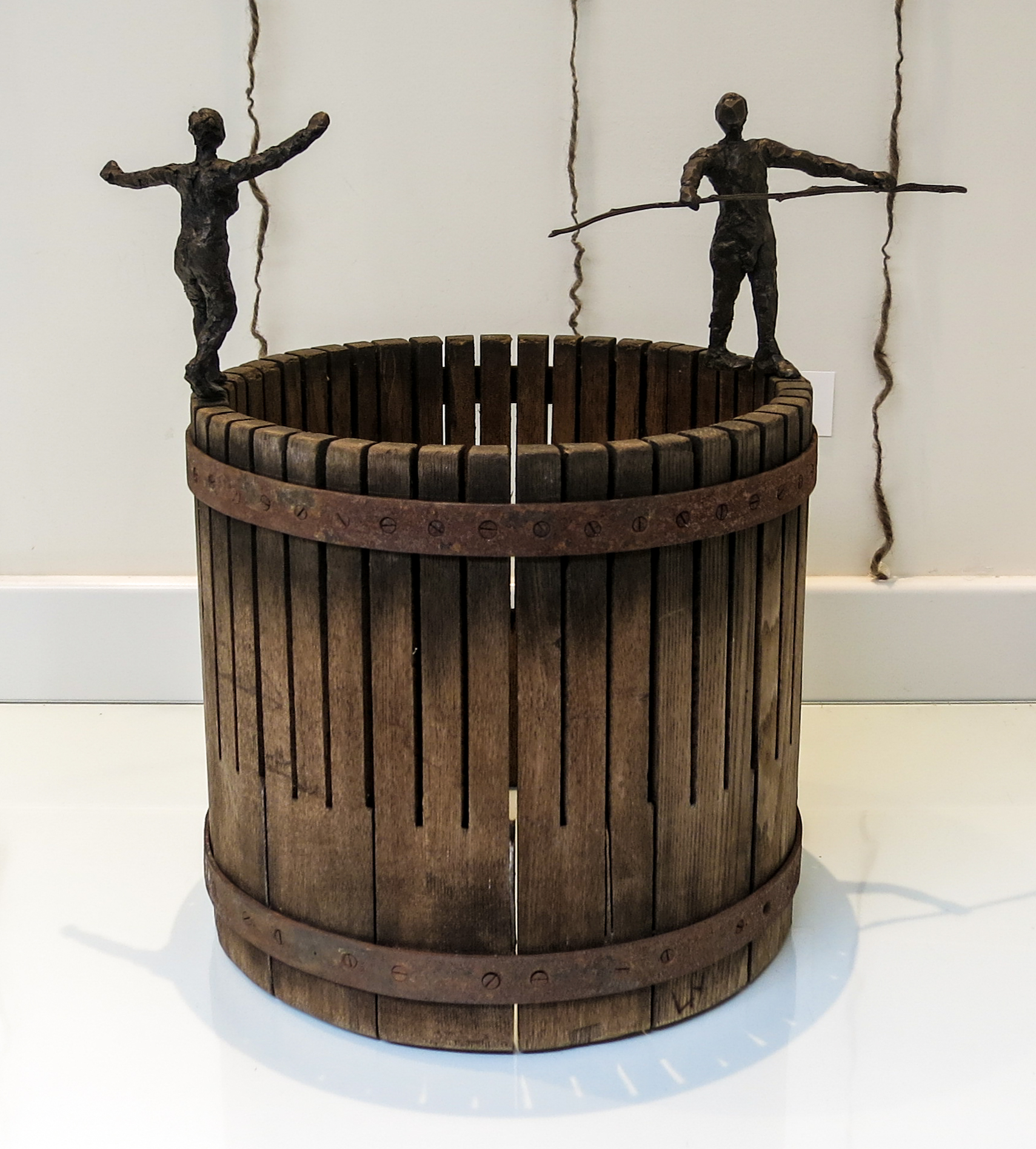
Apple Pressing, LH, 2016, Collection: Madeleine Lord
Hunters and gatherers related to their world with an early form of religion, what today we call animism. Animists believe that humans and animals can communicate — that we can and do have relationships not only with animals, but with trees, and even rocks. We share the world with these other creatures, both animate and inanimate. As we developed, we seemed to have forgotten that relationships are important. We have been focused on the power and the rights of the individual. Perhaps it’s time to throw out this notion of the sacrosanct individual, the one who signs executive orders at 4:42 pm on a Friday afternoon and changes the lives of thousands of people. But that means each of us, too, must loosen our own hold on our individual identity and join the fray – the messiness of living with all of our brothers and sisters, animate and inanimate, no matter what they do or do not believe in.
Above all, we must enter the dialogue, speak up, loudly, and compassionately. We need to tell new stories that inspire and shed light on our earth, our home, our commonness. We are all Homo sapiens. We all have a beating heart.

Family Photo: My son, Alex, and his Dada, 1988
Search Blog
-
2025
- May 9, 2025 A View from the Tractor Seat
- Apr 11, 2025 Dig
-
2024
- Jan 7, 2024 Winter Wassail
-
2022
- Dec 11, 2022 Keeping Time
- Jun 17, 2022 This Apple-Shaped Earth
- Jan 23, 2022 What is a Jizo?
- Jan 16, 2022 An Invite and Housekeeping Update
- Jan 1, 2022 The Year of the Frog: What Orchardists Do While Apple Trees are Chilling
-
2021
- Oct 24, 2021 Figs
- Oct 3, 2021 The Artist and the Orchard: A Memoir
- Aug 8, 2021 Red-Fleshed Apples
- Jul 25, 2021 When We Were Trees
- Jun 27, 2021 Castor Beans—Who Knew?
- Jun 13, 2021 Spring Training at a Zen Monastery
- May 4, 2021 Our Trees are in Bloom
- Apr 18, 2021 Hooray!
- Jan 24, 2021 Wassailing, virtually!
- Jan 1, 2021 Sitting
-
2020
- Dec 21, 2020 Darkness to Light
- Nov 28, 2020 One Heart
- Sep 18, 2020 Juggling Flowers, Fruit, and Vegetables
- Aug 23, 2020 Refuge
- Aug 9, 2020 Bags of Fertilizer
- Aug 2, 2020 The Sermon of the Blue Heron
- Jul 26, 2020 What's the Buzz?
- Jul 19, 2020 Farm Moments
- Jul 12, 2020 Lost Wax
- Jul 5, 2020 Catalpa: The Hugging Tree
- Jun 28, 2020 Pedaling Peace
- Jun 21, 2020 See Change
- Jun 14, 2020 Lalla Unveiled
- Jun 7, 2020 Pond Alchemy
- May 31, 2020 The Birth of Fruit
- May 24, 2020 An Artist in the Orchard
- May 17, 2020 Walking the Land: Returning Home
- May 10, 2020 Stinging Nettles: Gifts from the Great Mother
- May 3, 2020 The Mystery of Swallow
- Apr 26, 2020 Aerial Bruststrokes
- Apr 19, 2020 Simple Pleasures
- Apr 12, 2020 Weeds and Other Gifts
- Apr 5, 2020 Remembering the Seeds
- Mar 29, 2020 Blow on the Embers
- Mar 22, 2020 Ripples
-
2019
- Nov 16, 2019 Tibet Impressions
- Nov 9, 2019 Forest Tales
- Oct 13, 2019 The Gift
- Aug 4, 2019 The Season is Apples, Berries, and Grandfather Fire
- Jun 8, 2019 Pointers for a Writing Life
- May 12, 2019 Mothers of the Earth
- Apr 6, 2019 The Apple-Shaped Earth
- Mar 23, 2019 You Don’t Know What You Have Till It’s Gone
- Feb 23, 2019 Generations
- Feb 9, 2019 What Are We Doing to the Earth, John Chapman?
-
2018
- Dec 31, 2018 Long Shadows
- Oct 6, 2018 A Pilgrimage to India
- Aug 18, 2018 Scrap Wrenn
- Aug 11, 2018 Off-the-Wall Comments from an Ignorant Farmer
- Jul 28, 2018 Creative Connect
- Jul 14, 2018 How is the Orchard?
- Jun 30, 2018 Which Way?
- Jun 16, 2018 Geese, Herons, Beavers, and the Baby Steps of a Lapsed Blogger
- Feb 24, 2018 Mama's Coupons — Good Forever
- Jan 27, 2018 January Ice
- Jan 13, 2018 The Muse
-
2017
- Dec 30, 2017 A Dream for the New Year
- Dec 23, 2017 A New Year for Apples
- Dec 16, 2017 Intuition
- Nov 22, 2017 Thanksgiving OM
- Nov 4, 2017 East Fork Pottery
- Oct 28, 2017 Putting Down New Roots
- Oct 21, 2017 A is for Art
- Oct 14, 2017 Eve domesticus
- Oct 7, 2017 A String Workshop
- Sep 30, 2017 After Applepicking
- Sep 23, 2017 Two Bad Women and One Good Apple
- Sep 16, 2017 Plein Air Poetry
- Sep 9, 2017 Cutting Off a Leg
- Sep 2, 2017 The Changing Landscape
- Aug 26, 2017 All About Art
- Aug 19, 2017 My First Visit to the Farm
- Aug 12, 2017 The First Food
- Aug 5, 2017 A Teapot, a Woman, and maybe a Boat
- Jul 29, 2017 A Raspberry Dilemma
- Jul 22, 2017 Consider the Miracle
- Jul 15, 2017 Meeting Ekphrasis
- Jul 8, 2017 Ripening Fruit
- Jul 1, 2017 The Voice of The Caterpillar
- Jun 24, 2017 Goumi — An Unusual Fructus
- Jun 17, 2017 Concord, an American Bloomsbury
- Jun 10, 2017 The World Is Bonkers — Shall I Laugh or Cry?
- Jun 3, 2017 Bonkers, a Revolutionary Apple
- May 27, 2017 Guardians of the Swamp
- May 20, 2017 There are Mushrooms and There are Morels
- May 13, 2017 "What's in a Name?"
- May 6, 2017 Bloom Follows Pink: Orchard Pollination
- Apr 29, 2017 The Orchard Is at Pink
- Apr 22, 2017 Natural Farming — Part 2 (continuation from last Sunday's blog)
- Apr 15, 2017 Natural Farming — Part 1
- Apr 8, 2017 Boats, Figures, and Catching Fish
- Apr 1, 2017 A Man with a Mission: The Nuts and Bolts of Bronze Casting
- Mar 25, 2017 A Chalice of Spirit, Art, and Nature
- Mar 18, 2017 Hanami — Blossom Viewing
- Mar 11, 2017 Soil Redemption Song
- Mar 4, 2017 Food is Primary Care
- Feb 25, 2017 Pomme de Terre
- Feb 18, 2017 Organic Certification
- Feb 11, 2017 Tantalizing Fruit
- Feb 4, 2017 The Myths of History
- Jan 28, 2017 The Orchard in Winter
- Jan 21, 2017 The Hi-Line
- Jan 14, 2017 Artistic, Botanical, and Social Diversity
- Jan 7, 2017 Where is Eden?
-
2016
- Dec 31, 2016 The Creative Heart
- Dec 24, 2016 A Christmas Tale
- Dec 17, 2016 Who are the Crones?
- Dec 10, 2016 The Olympic Bell (Part Two)
- Dec 3, 2016 Overheard in the Apple Orchard in Early December
- Nov 26, 2016 The Lessons of a Tortoise
- Nov 19, 2016 In the Studio
- Nov 12, 2016 Even in Darkness
- Nov 5, 2016 Southern Apples, an Elephant, Monkey, Rabbit, and Bird, Two Mango Trees and a Birthday
- Oct 29, 2016 The Tools of Art
- Oct 22, 2016 Labyrinths
- Oct 15, 2016 Repairing the Broken
- Oct 8, 2016 When You Are No More
- Oct 1, 2016 Creation Rain
- Sep 24, 2016 Breaking the Glass
- Sep 17, 2016 String Art
- Sep 10, 2016 Poetry and Photosynthesis: It's all in the Leaves
- Sep 3, 2016 In the Plenty of Time
- Aug 27, 2016 Witch Doctors
- Aug 20, 2016 Listen Coyote
- Aug 13, 2016 Milkweed in the Orchard
- Aug 6, 2016 Some People See a Turtle
- Jul 30, 2016 Arborshaping
- Jul 23, 2016 Joseph Wheelwright: Sculptor of Stones and Trees
- Jul 16, 2016 Asian Pears
- Jul 9, 2016 Gold Leaf, Grief, and the Creative Process
- Jul 2, 2016 The Olympic Bell (Part One)
- Jun 25, 2016 Around the Mulberry Bush
- Jun 18, 2016 Avoiding Apples
- Jun 11, 2016 Fructus
- Jun 4, 2016 Astonishing Apples
- May 28, 2016 Scare the Caterpillars
- May 21, 2016 Join the Club!
- May 14, 2016 The Graft
- May 7, 2016 Rooster, Rhubarb, Rue
- Apr 30, 2016 What do Dolphins and Nettles Have in Common?
- Apr 23, 2016 Art Prunings
- Apr 16, 2016 A Few of the First Arrivals
- Apr 9, 2016 Taste the Spirit of Sustainable Agriculture
- Apr 2, 2016 First Orchard Spray - March 22-24, 2016
- Mar 26, 2016 Hawkeye Apple
- Mar 19, 2016 Desiring the Almata Apple
- Mar 12, 2016 Ugly Fruit
- Mar 5, 2016 Winter Tracks
- Feb 27, 2016 Splash
- Feb 20, 2016 Pruning
- Feb 13, 2016 Orchard Ruminants
- Feb 6, 2016 A Gathering of Seeds
- Jan 30, 2016 Orchard Dragons
- Jan 23, 2016 Tree Rings
- Jan 17, 2016 The Fallen Tree
- Jan 7, 2016 Wassailing the Apple Trees
- Jan 1, 2016 The New Year