LINDA HOFFMAN
My First Visit to the Farm
Fruit is ripening, farmers are planting, weeding and harvesting, and outdoor sculpture is being installed, but it wasn’t always this way. Sixteen years ago, I read the real estate listing for the property — five bedrooms, a detached garage/barn, apple orchard, and a chicken coop. I was a sculptor, not a farmer, and definitely not an orchardist, but the rentals I looked at were either too small or had no art studio space. That’s when my friend, Elizabeth, suggested I visit the farm; she had grown up here, and her parents had sold the property to its current owners.
It was mid-March, mud season in New England, when I turned off the highway, drove several miles, and rounded a bend on a narrow country road. I saw sad fences and a gray pond. The farmhouse needed paint and the outbuildings begged for repair. Winter’s old snow and patches of bare ground met my eye; nothing green hinted towards Persephone’s eventual rise from Hades.
I shook hands with the realtor and we entered the front door. A brick fireplace filled the living room where a few pieces of furniture had been placed. It didn’t feel like home, for every personal knickknack had been cleared away. I followed the realtor down three steps into the kitchen. Dark pine boards covered the walls and ceiling. There were no drawers or cabinets, only open shelves for plates, bowls, and glasses. Along one wall, heavy pots for making jam and stocks stood like sentinels guarding alien territory. Above a wood-burning cook stove hung a patchwork of blackened iron pans. This was a work kitchen.
We walked up the stairs and I peered into the small bedrooms with sloping walls and chimneys flues. Enough room for my three children. Simple and practical, the house was over 250 years old, and it had never been fixed up to be someone’s modern suburban dream. We entered the master bedroom, and for some reason I thought, If the house has hot water, everything will be fine. I turned on the hot water faucet in an avocado-colored sink, a popular sixties color, and warmth ran over my fingertips.
We walked outside again: I was drawn towards the pond. An American elm towered high above a small waterfall. Her thin hanging branches swayed in the breeze, and reflections rippled over the surface of the water. When so many elms had died all over America from Dutch Elm disease, this one was clearly thriving.

The Elm, May, 2002
“Can I see the chicken coop?”
Inside the ramshackle white clapboard shed, I teased away thick curtains of cobwebs. Every surface was covered with slimy white-green chicken shit in varying stages of drying. Some forty old hens squawked, panicked by my presence. I had never been near a chicken, and was as much disgusted as fascinated by their gnarly feet, overgrown toenails, and featherless backs — the feathers, I later learned, were worn away by the roosters’ endless mounting.

“What’s going to happen to all these birds?” I asked.
“Why? Would you want them?”
Why not, I thought to myself, not knowing anything about chickens.
“Sure,” I said.
“I’ll ask the owners for you,” the realtor responded.
The other side of the chicken coop housed a Kubota tractor. It came with the property. This orange machine was huge and I looked away. Alongside the shed, a rickety fence marked the wintered-over remains of a sizable kitchen garden. I loved tending a small garden and growing a few vegetables, but this was a garden that would feed a family all winter. Then, crossing the driveway, we walked into a brown, two-story unheated garage. Inside this empty space I could make a new studio. It would hold all the rusty metal, old tools, and machines I use to make sculpture.
The listing had mentioned an old orchard. “Where are the apples?” I asked. He casually gestured across the street. The road was lined with old apple trees. We walked across the street and followed an old cart road that bordered the orchard. I peered through rows of bare branches.
“What would you do with the apples?” he asked.
“I don’t know,” I heard myself say. “I’d have to learn,”
“It’s hard to grow apples,” he cautioned.
I could feel a small delight rise. Pears, cherries, and peaches are all delicious, but apples figure in mythology, history, science, and even religion. I wondered, could I grow apples?
The realtor and I walked to the back of the orchard to a small clearing near some wetlands. A giant bird flew overhead. “Great blue heron,” he said. I nodded, while peering into a weathered shed. Giant earth-encrusted tools silently stood in their stalls. Later I learned the names — manure spreader, back hoe, brush hog, but at the moment they were as otherworldly as the caw caw of the heron, that ancient pterodactyl.
I didn’t consider the reality of taking over a farm and an orchard. Yet something had happened as I walked the property. This place will keep me grounded, I thought to myself.
Now, sixteen years later, the stately Elm is a decaying stump, and though a few new Elms have sprouted nearby, no other tree can replace that loss. Blase, my partner, and I are anticipating the opening of the new harvest season, admittedly with a mix of eagerness and trepidation. We love to greet old friends and welcome new people to the farm. We have a crop of apples this year, and the sculpture exhibit is going to be our largest and, we think, our best exhibit yet. But we don’t enjoy rushing to the phone at 10pm, and finding a customer wondering if we have Gala apples, their favorite.
I am more grounded than ever, but like the changing landscape we are beginning to think about what comes next. Change is what we can count on. We are getting older and beginning to feel different pulls. I want to do more art and Blase wants to work more with people. How will we grow and how will our journeys braid together and transform the landscape? Whatever field we cultivate, the heart will surely grow.

The Almata Apple, just picked!
Natural Farming — Part 1
It may be that when we no longer know what to do,
we have come to our real work
and when we no longer know which way to go,
we have begun our real journey.
—Wendell Berry, Farmer, Poet, and Writer
In 2006, the once abandoned orchard at Old Frog Pond Farm received organic certification. But that didn’t mean I understood what I was doing as an orchardist. An experienced farmer tends the earth for years, season after season, noticing, altering her approach, and trying new ideas. I was following an instruction sheet that I only partially understood. In my search to improve my orchard practices, I came upon the writings of Masanobu Fukuoka (1913-2008), a Japanese rice and citrus grower, who discovered a way to farm that was in harmony with nature. His book, One Straw Revolution, published in English in 1978, became an underground manifesto for a new approach to agriculture: one that did no harm, that did not depend on chemical fertilizers, pesticides, or mountains of compost — one that emphasized ease.

As a young man, Fukuoka worked for the Customs Bureau’s Plant Inspection Division, having studied plant pathology at the university. His long hours led to a bout of acute pneumonia and hospitalization. He lay for days in his hospital room where a broken window let in cold and snow. He recounts that a nurse checked his temperature from time to time, but that was all. In the midst of this icy solitude, he started to fear death approaching. When he was finally released from the hospital, he fell into a terrible depression. The work that had fascinated him seemed useless. He could not sleep or focus on anything. One night on a hill overlooking the harbor, he collapsed with exhaustion. He woke the next morning at dawn, gazing over the water. “Everything I had held in firm conviction,” he wrote, “everything upon which I had ordinarily relied, was swept away with the wind. I felt that I understood nothing.” The next day he handed in his resignation and began wandering, trying to explain to people he met what he had experienced. “I challenged a lot of people with my conviction that everything is meaningless and of no value, that everything returns to nothingness. But this was too much, or too little, for the everyday world to conceive.” He returned to his father’s farm resolved to live a simple life.
I settled myself on the mountain and everything went well up until the time my father entrusted me with the richly bearing trees in the orchard. . . . My conviction was that crops grow themselves and should not have to be grown. I had acted in the belief that everything should be left to take its natural course, but I found that if you apply that way of thinking all at once, before long things do not go so well.
Fukuoka ruined the citrus crop and his father insisted that he leave and get a job and come back when his mind was right. Fukuoka left, and found a job as Head Researcher at a nearby agricultural research center. It was just when Japan was preparing for war and for the next eight years Fukuoka did research devoted to increasing the wartime food supply. Throughout this time, he was always pondering the idea of a natural approach to farming.
Fukuoka returned to his father’s farm, convinced that a grower could trust nature and not use any chemicals. On a clay hillside above the farm, he decided he would grow an orchard of mikan, a Japanese clementine. “The red clay was so hard you could not stick a shovel into it,” he wrote. People had previously grown potatoes there, exhausted the soil, and abandoned the fields. His father thought he was crazy.
To improve the soil, Fukuoka first tried digging holes in the compacted soil and adding organic matter, a physically demanding effort that led nowhere. Then he tried burying straw and ferns that he had carried on his back from higher up on the mountain. But hauling ninety pound loads and digging trenches was exhausting. The trenches eventually caved in, and there was barely any organic matter. He thought of building organic matter in the soil with decomposed wood, but it wasn’t available nearby. This was his “aha” moment — he could grow the wood himself.
Among his citrus trees, he planted pine, cedar, pear, loquats, cherries, and other native trees. On the bare ground under them, he sowed white clover and alfalfa. After several years, the clover grew and blanketed the hillside. He planted daikon, the large white Japanese radish. With its deep taproot, the daikon opened the way for water and air to circulate through the dense clay. The radish reseeded, softening the hard clay soil, and, after a few seasons, Fukuoka could plant root crops like potatoes and eventually more tender vegetables. He continued to sow clover, a nitrogen-fixing plant that returned more nitrogen to the soil than it used. The orchard soil became rich and dark, and the tall trees provided a windbreak protecting the smaller citrus trees. With the ground cover of nitrogen-producing plants, the orchard naturally had all the fertilizer necessary. With the diversity of plants and trees, insect pressure decreased, and he had no need for pesticides.
In Japan, after World War II, there was a great rush to emulate the West and use modern methods, specifically chemicals for farming. At first these new introductions from the West meant less work for the farmers, but it took only one generation before the minerals in the soil were depleted and the crops became dependent on chemical nutrients. Fukuoka knew intuitively that there must be another way.
Over the over the next decades, Fukuoka refined his approach to agriculture and called it natural farming (different from 'do-nothing' farming that had destroyed his father's citrus crop). He believed that farming should be pleasurable and in harmony with nature, not such oppressively hard work that the farmer is left with no time for other pursuits. “There is no time in modern agriculture for a farmer to write a poem or compose a song,” he would grumble. Fukuoka always sold his crops for less than chemically treated produce, because he felt natural food should be less expensive. “After all, natural food [is] easier to grow, even though it [is] more nutritious and tasty.” When Fukuoka learned that a distributor in Tokyo was selling his mikan for a high price, he immediately stopped selling to him.
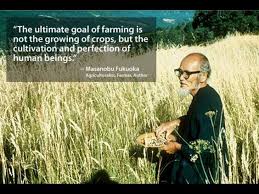
The ultimate goal of farming is not the growing of crops, but the cultivation and perfection of human beings.
—Masanobu Fukuoka
I aspired to Fukuoka’s ease and trust of nature. Having no idea what I would do, for several weeks, I carried around his book, as if the spirit contained within it would infuse the farm. My first real step was to plant comfrey throughout the orchard, a plant that also has a long taproot. People told me that I was really foolish, because comfrey spreads its seeds and will take over gardens, fields, and even orchards. The comfrey didn’t turn out to be a problem, because the deer kept it in check. But what happened next in my desire to create a natural orchard in the spirit of Fukuoka was devastating.
Natural Farming: Part 2 will follow next Sunday.
Search Blog
-
2025
- May 9, 2025 A View from the Tractor Seat
- Apr 11, 2025 Dig
-
2024
- Jan 7, 2024 Winter Wassail
-
2022
- Dec 11, 2022 Keeping Time
- Jun 17, 2022 This Apple-Shaped Earth
- Jan 23, 2022 What is a Jizo?
- Jan 16, 2022 An Invite and Housekeeping Update
- Jan 1, 2022 The Year of the Frog: What Orchardists Do While Apple Trees are Chilling
-
2021
- Oct 24, 2021 Figs
- Oct 3, 2021 The Artist and the Orchard: A Memoir
- Aug 8, 2021 Red-Fleshed Apples
- Jul 25, 2021 When We Were Trees
- Jun 27, 2021 Castor Beans—Who Knew?
- Jun 13, 2021 Spring Training at a Zen Monastery
- May 4, 2021 Our Trees are in Bloom
- Apr 18, 2021 Hooray!
- Jan 24, 2021 Wassailing, virtually!
- Jan 1, 2021 Sitting
-
2020
- Dec 21, 2020 Darkness to Light
- Nov 28, 2020 One Heart
- Sep 18, 2020 Juggling Flowers, Fruit, and Vegetables
- Aug 23, 2020 Refuge
- Aug 9, 2020 Bags of Fertilizer
- Aug 2, 2020 The Sermon of the Blue Heron
- Jul 26, 2020 What's the Buzz?
- Jul 19, 2020 Farm Moments
- Jul 12, 2020 Lost Wax
- Jul 5, 2020 Catalpa: The Hugging Tree
- Jun 28, 2020 Pedaling Peace
- Jun 21, 2020 See Change
- Jun 14, 2020 Lalla Unveiled
- Jun 7, 2020 Pond Alchemy
- May 31, 2020 The Birth of Fruit
- May 24, 2020 An Artist in the Orchard
- May 17, 2020 Walking the Land: Returning Home
- May 10, 2020 Stinging Nettles: Gifts from the Great Mother
- May 3, 2020 The Mystery of Swallow
- Apr 26, 2020 Aerial Bruststrokes
- Apr 19, 2020 Simple Pleasures
- Apr 12, 2020 Weeds and Other Gifts
- Apr 5, 2020 Remembering the Seeds
- Mar 29, 2020 Blow on the Embers
- Mar 22, 2020 Ripples
-
2019
- Nov 16, 2019 Tibet Impressions
- Nov 9, 2019 Forest Tales
- Oct 13, 2019 The Gift
- Aug 4, 2019 The Season is Apples, Berries, and Grandfather Fire
- Jun 8, 2019 Pointers for a Writing Life
- May 12, 2019 Mothers of the Earth
- Apr 6, 2019 The Apple-Shaped Earth
- Mar 23, 2019 You Don’t Know What You Have Till It’s Gone
- Feb 23, 2019 Generations
- Feb 9, 2019 What Are We Doing to the Earth, John Chapman?
-
2018
- Dec 31, 2018 Long Shadows
- Oct 6, 2018 A Pilgrimage to India
- Aug 18, 2018 Scrap Wrenn
- Aug 11, 2018 Off-the-Wall Comments from an Ignorant Farmer
- Jul 28, 2018 Creative Connect
- Jul 14, 2018 How is the Orchard?
- Jun 30, 2018 Which Way?
- Jun 16, 2018 Geese, Herons, Beavers, and the Baby Steps of a Lapsed Blogger
- Feb 24, 2018 Mama's Coupons — Good Forever
- Jan 27, 2018 January Ice
- Jan 13, 2018 The Muse
-
2017
- Dec 30, 2017 A Dream for the New Year
- Dec 23, 2017 A New Year for Apples
- Dec 16, 2017 Intuition
- Nov 22, 2017 Thanksgiving OM
- Nov 4, 2017 East Fork Pottery
- Oct 28, 2017 Putting Down New Roots
- Oct 21, 2017 A is for Art
- Oct 14, 2017 Eve domesticus
- Oct 7, 2017 A String Workshop
- Sep 30, 2017 After Applepicking
- Sep 23, 2017 Two Bad Women and One Good Apple
- Sep 16, 2017 Plein Air Poetry
- Sep 9, 2017 Cutting Off a Leg
- Sep 2, 2017 The Changing Landscape
- Aug 26, 2017 All About Art
- Aug 19, 2017 My First Visit to the Farm
- Aug 12, 2017 The First Food
- Aug 5, 2017 A Teapot, a Woman, and maybe a Boat
- Jul 29, 2017 A Raspberry Dilemma
- Jul 22, 2017 Consider the Miracle
- Jul 15, 2017 Meeting Ekphrasis
- Jul 8, 2017 Ripening Fruit
- Jul 1, 2017 The Voice of The Caterpillar
- Jun 24, 2017 Goumi — An Unusual Fructus
- Jun 17, 2017 Concord, an American Bloomsbury
- Jun 10, 2017 The World Is Bonkers — Shall I Laugh or Cry?
- Jun 3, 2017 Bonkers, a Revolutionary Apple
- May 27, 2017 Guardians of the Swamp
- May 20, 2017 There are Mushrooms and There are Morels
- May 13, 2017 "What's in a Name?"
- May 6, 2017 Bloom Follows Pink: Orchard Pollination
- Apr 29, 2017 The Orchard Is at Pink
- Apr 22, 2017 Natural Farming — Part 2 (continuation from last Sunday's blog)
- Apr 15, 2017 Natural Farming — Part 1
- Apr 8, 2017 Boats, Figures, and Catching Fish
- Apr 1, 2017 A Man with a Mission: The Nuts and Bolts of Bronze Casting
- Mar 25, 2017 A Chalice of Spirit, Art, and Nature
- Mar 18, 2017 Hanami — Blossom Viewing
- Mar 11, 2017 Soil Redemption Song
- Mar 4, 2017 Food is Primary Care
- Feb 25, 2017 Pomme de Terre
- Feb 18, 2017 Organic Certification
- Feb 11, 2017 Tantalizing Fruit
- Feb 4, 2017 The Myths of History
- Jan 28, 2017 The Orchard in Winter
- Jan 21, 2017 The Hi-Line
- Jan 14, 2017 Artistic, Botanical, and Social Diversity
- Jan 7, 2017 Where is Eden?
-
2016
- Dec 31, 2016 The Creative Heart
- Dec 24, 2016 A Christmas Tale
- Dec 17, 2016 Who are the Crones?
- Dec 10, 2016 The Olympic Bell (Part Two)
- Dec 3, 2016 Overheard in the Apple Orchard in Early December
- Nov 26, 2016 The Lessons of a Tortoise
- Nov 19, 2016 In the Studio
- Nov 12, 2016 Even in Darkness
- Nov 5, 2016 Southern Apples, an Elephant, Monkey, Rabbit, and Bird, Two Mango Trees and a Birthday
- Oct 29, 2016 The Tools of Art
- Oct 22, 2016 Labyrinths
- Oct 15, 2016 Repairing the Broken
- Oct 8, 2016 When You Are No More
- Oct 1, 2016 Creation Rain
- Sep 24, 2016 Breaking the Glass
- Sep 17, 2016 String Art
- Sep 10, 2016 Poetry and Photosynthesis: It's all in the Leaves
- Sep 3, 2016 In the Plenty of Time
- Aug 27, 2016 Witch Doctors
- Aug 20, 2016 Listen Coyote
- Aug 13, 2016 Milkweed in the Orchard
- Aug 6, 2016 Some People See a Turtle
- Jul 30, 2016 Arborshaping
- Jul 23, 2016 Joseph Wheelwright: Sculptor of Stones and Trees
- Jul 16, 2016 Asian Pears
- Jul 9, 2016 Gold Leaf, Grief, and the Creative Process
- Jul 2, 2016 The Olympic Bell (Part One)
- Jun 25, 2016 Around the Mulberry Bush
- Jun 18, 2016 Avoiding Apples
- Jun 11, 2016 Fructus
- Jun 4, 2016 Astonishing Apples
- May 28, 2016 Scare the Caterpillars
- May 21, 2016 Join the Club!
- May 14, 2016 The Graft
- May 7, 2016 Rooster, Rhubarb, Rue
- Apr 30, 2016 What do Dolphins and Nettles Have in Common?
- Apr 23, 2016 Art Prunings
- Apr 16, 2016 A Few of the First Arrivals
- Apr 9, 2016 Taste the Spirit of Sustainable Agriculture
- Apr 2, 2016 First Orchard Spray - March 22-24, 2016
- Mar 26, 2016 Hawkeye Apple
- Mar 19, 2016 Desiring the Almata Apple
- Mar 12, 2016 Ugly Fruit
- Mar 5, 2016 Winter Tracks
- Feb 27, 2016 Splash
- Feb 20, 2016 Pruning
- Feb 13, 2016 Orchard Ruminants
- Feb 6, 2016 A Gathering of Seeds
- Jan 30, 2016 Orchard Dragons
- Jan 23, 2016 Tree Rings
- Jan 17, 2016 The Fallen Tree
- Jan 7, 2016 Wassailing the Apple Trees
- Jan 1, 2016 The New Year