LINDA HOFFMAN
Pointers for a Writing Life
At the farm, for the month of June, on Tuesdays, Wednesdays, and Thursdays, I will concentrate on the tasks in front of me. On the other days of the week, as much as possible, I plan to escape to a rental house on Cape Cod. It’s between Wellfleet and Truro on the ocean side, an area I love and where I have vacationed with my children since they were young. My plan is to work on a book I have been writing off and on for five years and more. I would like to finish it, am feeling the pressure to complete this project—or if it seems not-finish worthy, eject it. Send it over and out into the ethers—delete, delete. After all, it is only electronic bits of information.
But thankfully there is Annie Dillard. In her book, The Writing Life, she says, “Writing a book full-time takes between two and ten years.” She offers me relief. I have not been working full-time on this project. I have two other full-time jobs—art and the farm. She also says:
A work in progress quickly becomes feral. It reverts to a wild state overnight . . . As the work grows, it gets harder to control: it is a lion growing in strength. You must visit it every day and reassert your mastery over it. If you skip a day, you are, quite rightly, afraid to open the door to its room.
I understand this ferocity. At home, I cannot open the book for it might take over, grab hold of a leg and not let go. When I am on the road, or somewhere else, anywhere really, on a train, in a hotel room, and now at the Cape, for some reason the danger is not present and I can turn to it, dive in, and to my astonishment, do the work I love—the search to shape of an event, or an object, with words. And then there is the book itself, becoming an entity of its own, taking over, devising its own life. The two of us now living together.
I am writing about moving to Old Frog Pond Farm, assuming the care of the abandoned orchard, and committing to bringing it back organically. What got me here? Why did my marriage fail? How has my Zen practice braided through the orchard work? And what lessons have I learned that appear in my art?
Annie Dillard again:
The strain, like Giacometti’s penciled search for precision and honesty, enlivens the work and impels it toward is truest end. A pile of decent work behind him, no matter how small, fuels the writer’s hope . . .”
Yes, she is right, I do have hope. And then I fall short, I fail as I judge what I am writing. I hear myself say, I am not a real writer. I read other writers whose work I admire and see how my writing lacks their skill. How does one learn to write? Annie Dillard, thankfully, answers this question.
The page, the page, that eternal blankness, the blankness of eternity which you cover slowly, affirming time’s scrawl as a right and your daring as necessity; the page, which you cover woodenly, ruining it, but asserting your freedom and power to act, acknowledging that you ruin everything you touch but touching it nevertheless, because acting is better than being here in mere opacity; the page, which you cover slowly with the crabbed thread of your gut; the page in the purity of possibilities; the page of your death, against which you pit such flawed excellences as you can muster with all your life’s strength; that page will teach you to write.

Other than write, I take beach walks. On my first one, I stopped when I found a horseshoe crab upside down, it’s little pinchers barely moving. I turned it right side up and watched as it began to move. Its long tail spine pointing to where it had come from, its hulk moving towards the waves. It stopped after about ten feet, and I had this sickening feeling that it was dying, right there, in front of me. I touched its pointer, wriggled it from left to right, and it started up again, slowly, another six feet, scraping its way over the sand, leaving its foot-wide trail. We went through this ritual several more times, my teasing the pointer, the crab starting reluctantly to move, but each time it seemed to be moving more slowly.

When it finally reached the waves, I felt this was its most precarious place to be. It stalled. It waited. The surf poured over its hard shell. It seemed to be waiting for something. Then a large wave carried it into the jumble of surf. I saw was the tail spine, sticking up above the wave, pointing.
My First Visit to the Farm
Fruit is ripening, farmers are planting, weeding and harvesting, and outdoor sculpture is being installed, but it wasn’t always this way. Sixteen years ago, I read the real estate listing for the property — five bedrooms, a detached garage/barn, apple orchard, and a chicken coop. I was a sculptor, not a farmer, and definitely not an orchardist, but the rentals I looked at were either too small or had no art studio space. That’s when my friend, Elizabeth, suggested I visit the farm; she had grown up here, and her parents had sold the property to its current owners.
It was mid-March, mud season in New England, when I turned off the highway, drove several miles, and rounded a bend on a narrow country road. I saw sad fences and a gray pond. The farmhouse needed paint and the outbuildings begged for repair. Winter’s old snow and patches of bare ground met my eye; nothing green hinted towards Persephone’s eventual rise from Hades.
I shook hands with the realtor and we entered the front door. A brick fireplace filled the living room where a few pieces of furniture had been placed. It didn’t feel like home, for every personal knickknack had been cleared away. I followed the realtor down three steps into the kitchen. Dark pine boards covered the walls and ceiling. There were no drawers or cabinets, only open shelves for plates, bowls, and glasses. Along one wall, heavy pots for making jam and stocks stood like sentinels guarding alien territory. Above a wood-burning cook stove hung a patchwork of blackened iron pans. This was a work kitchen.
We walked up the stairs and I peered into the small bedrooms with sloping walls and chimneys flues. Enough room for my three children. Simple and practical, the house was over 250 years old, and it had never been fixed up to be someone’s modern suburban dream. We entered the master bedroom, and for some reason I thought, If the house has hot water, everything will be fine. I turned on the hot water faucet in an avocado-colored sink, a popular sixties color, and warmth ran over my fingertips.
We walked outside again: I was drawn towards the pond. An American elm towered high above a small waterfall. Her thin hanging branches swayed in the breeze, and reflections rippled over the surface of the water. When so many elms had died all over America from Dutch Elm disease, this one was clearly thriving.

The Elm, May, 2002
“Can I see the chicken coop?”
Inside the ramshackle white clapboard shed, I teased away thick curtains of cobwebs. Every surface was covered with slimy white-green chicken shit in varying stages of drying. Some forty old hens squawked, panicked by my presence. I had never been near a chicken, and was as much disgusted as fascinated by their gnarly feet, overgrown toenails, and featherless backs — the feathers, I later learned, were worn away by the roosters’ endless mounting.

“What’s going to happen to all these birds?” I asked.
“Why? Would you want them?”
Why not, I thought to myself, not knowing anything about chickens.
“Sure,” I said.
“I’ll ask the owners for you,” the realtor responded.
The other side of the chicken coop housed a Kubota tractor. It came with the property. This orange machine was huge and I looked away. Alongside the shed, a rickety fence marked the wintered-over remains of a sizable kitchen garden. I loved tending a small garden and growing a few vegetables, but this was a garden that would feed a family all winter. Then, crossing the driveway, we walked into a brown, two-story unheated garage. Inside this empty space I could make a new studio. It would hold all the rusty metal, old tools, and machines I use to make sculpture.
The listing had mentioned an old orchard. “Where are the apples?” I asked. He casually gestured across the street. The road was lined with old apple trees. We walked across the street and followed an old cart road that bordered the orchard. I peered through rows of bare branches.
“What would you do with the apples?” he asked.
“I don’t know,” I heard myself say. “I’d have to learn,”
“It’s hard to grow apples,” he cautioned.
I could feel a small delight rise. Pears, cherries, and peaches are all delicious, but apples figure in mythology, history, science, and even religion. I wondered, could I grow apples?
The realtor and I walked to the back of the orchard to a small clearing near some wetlands. A giant bird flew overhead. “Great blue heron,” he said. I nodded, while peering into a weathered shed. Giant earth-encrusted tools silently stood in their stalls. Later I learned the names — manure spreader, back hoe, brush hog, but at the moment they were as otherworldly as the caw caw of the heron, that ancient pterodactyl.
I didn’t consider the reality of taking over a farm and an orchard. Yet something had happened as I walked the property. This place will keep me grounded, I thought to myself.
Now, sixteen years later, the stately Elm is a decaying stump, and though a few new Elms have sprouted nearby, no other tree can replace that loss. Blase, my partner, and I are anticipating the opening of the new harvest season, admittedly with a mix of eagerness and trepidation. We love to greet old friends and welcome new people to the farm. We have a crop of apples this year, and the sculpture exhibit is going to be our largest and, we think, our best exhibit yet. But we don’t enjoy rushing to the phone at 10pm, and finding a customer wondering if we have Gala apples, their favorite.
I am more grounded than ever, but like the changing landscape we are beginning to think about what comes next. Change is what we can count on. We are getting older and beginning to feel different pulls. I want to do more art and Blase wants to work more with people. How will we grow and how will our journeys braid together and transform the landscape? Whatever field we cultivate, the heart will surely grow.

The Almata Apple, just picked!
"What's in a Name?"
Granny Smith, Bramley’s Seedling, and the picaresque Bloody Ploughman are names of apples with unique histories, but I, too, have had my own journey with names. I was born Linda Bess Weiner. When I was a child I disliked my middle name; it seemed too old fashioned. I got the sense from my mother that she really didn’t like it either. The name came from my father’s mother, an overbearing woman. I imagine that my mother must have felt pressured to do what her mother-in-law wanted and thus named me after my great-grandmother. When I was about ten, my mother said I could change it, and we decided together it would be Elizabeth. The initials, LEW, had a nice ring to them, and she gave me a necklace with those letters. We didn’t say anything to my grandmother. However, it never rolled off my tongue without a hiccup of some kind, a hemming and hawing, an exclamation that it wasn’t my real middle name. And then of course the question followed: “What is my middle name?”
After a few years, I simply dropped having a middle name. I was Linda Weiner. It wasn’t a last name that I particularly liked either. There was just too much childhood teasing — Oscar Meyer Weiner hotdogs and worse. Why couldn’t I have a normal last name? I especially felt this frustration given that my family had now moved from the working class refinery town of Chester, Pennsylvania, to Wynnewood, one of the towns of Philadelphia’s prominent Main Line. My schoolmates attended dances at the nearby Merion Cricket Club, but Jews were not allowed. We got along well enough at school, but clearly there were differences. My name gave away my legacy.
The English apple, Bloody Ploughman, was named after a ploughman who was shot by a local gamekeeper for stealing apples. And the popular, Granny Smith, was named after an Australian woman, Maria Smith, who rescued an apple growing in her compost heap. The Bramley, another English apple, was named for a Mr. Bramley who bought a house from Mary Ann Brailsford where she had planted a seedling which grew astonishingly good cooking apples. Bramley allowed a local nursery to propagate it on the condition that it would be named after him. I might have avoided planting this apple if I’d known its patriarchal history.
A group of new apples sport the name, ‘Crisp,’ including Honey Crisp, Golden Crisp, and Cosmic Crisp. The “crisp” in the name indicates that these apples have been bred to be particularly crispy, something the early 21st century public desires. One of my favorite new apples is Bonkers, a cross between a Delicious and a Liberty produced by Cornell University's apple breeding program in Geneva, New York. Bonkers is large, extremely crispy and juicy, and very red; and it is scab free, important for our organic orchard. The name, Bonkers, also has some kick, especially compared to other new scab-free apples like Pristine, Liberty, and Freedom.
When I moved to Cambridge, Massachusetts to live with Paul Matisse, the father of my three children, I told him that I didn’t particularly like my last name. How could I like ‘Weiner’ when I was living with a ‘Matisse,’ one of the most illustrious names in 20th century art? Paul said, “Why don’t you change it?” I immediately thought of the traditional Japanese poets who often took pen names. The Japanese haiku poet, Basho, over his lifetime published poems using three different names. Basho was the last one he adopted after his disciples built him a little hut and planted a basho, a banana tree, in front of it.
The idea appealed to me and I thought of a poetic name like River, a name taken from the natural world. Paul was quick to say, “No.” I think he imagined Linda River was too close to Joan Rivers or some Hollywood star’s stage name. “It should be a normal name,” he said, and he pulled out the Manhattan phone book, opened it at random to the H’s, and found Hoffman. So I took up Hoffman, and went to the Cambridge courthouse and officially changed my name. It was a sort of declaration that I no longer belonged to my family of origin. I was starting out fresh, a new person with Paul; I was a person without a family history.
When, twenty years later, I moved to a rundown farm with a large pond in Harvard, Massachusetts, I decided that I wanted to give this new home a name. I was a small frog leaping into a big pond, not knowing what was waiting for me under the water. I named the farm, Old Frog Pond Farm, after Basho’s haiku.
Old Pond
Frog Jumps
Splash of Water
It felt right to name the farm after a Japanese poem. It connected me to the time when I was living alone in Japan — young, inexperienced, and passionate about the Noh Theater.
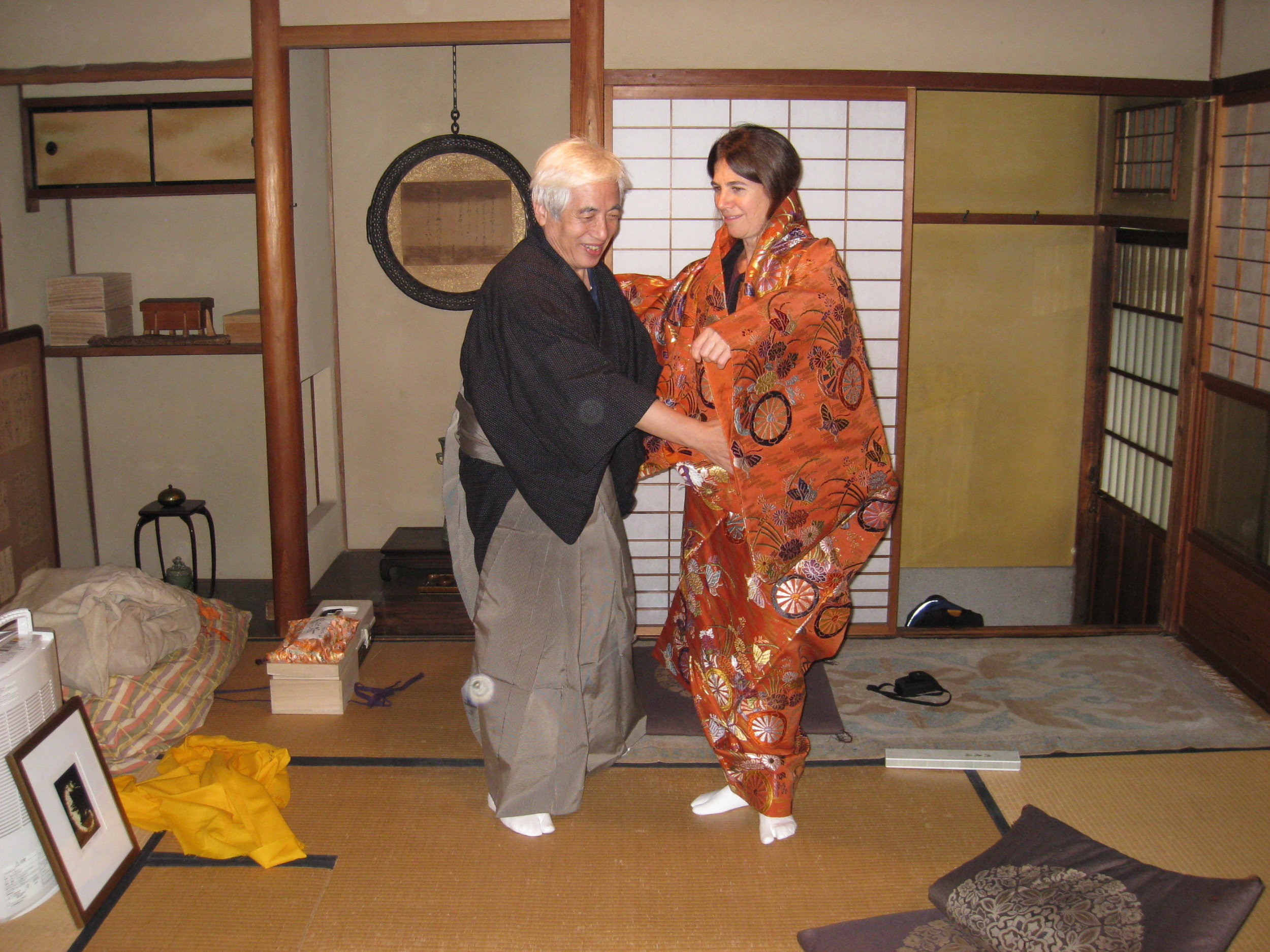
Trying on a silk kimono with my Noh teacher, Takabayashi Koji Sensei.
Naming the farm after Basho’s poem was the beginning of finding a true name, a place where I was grounded in the reality of the soil, physical work, and natural beauty. As I found firm ground beneath my feet, my old names no longer mattered.
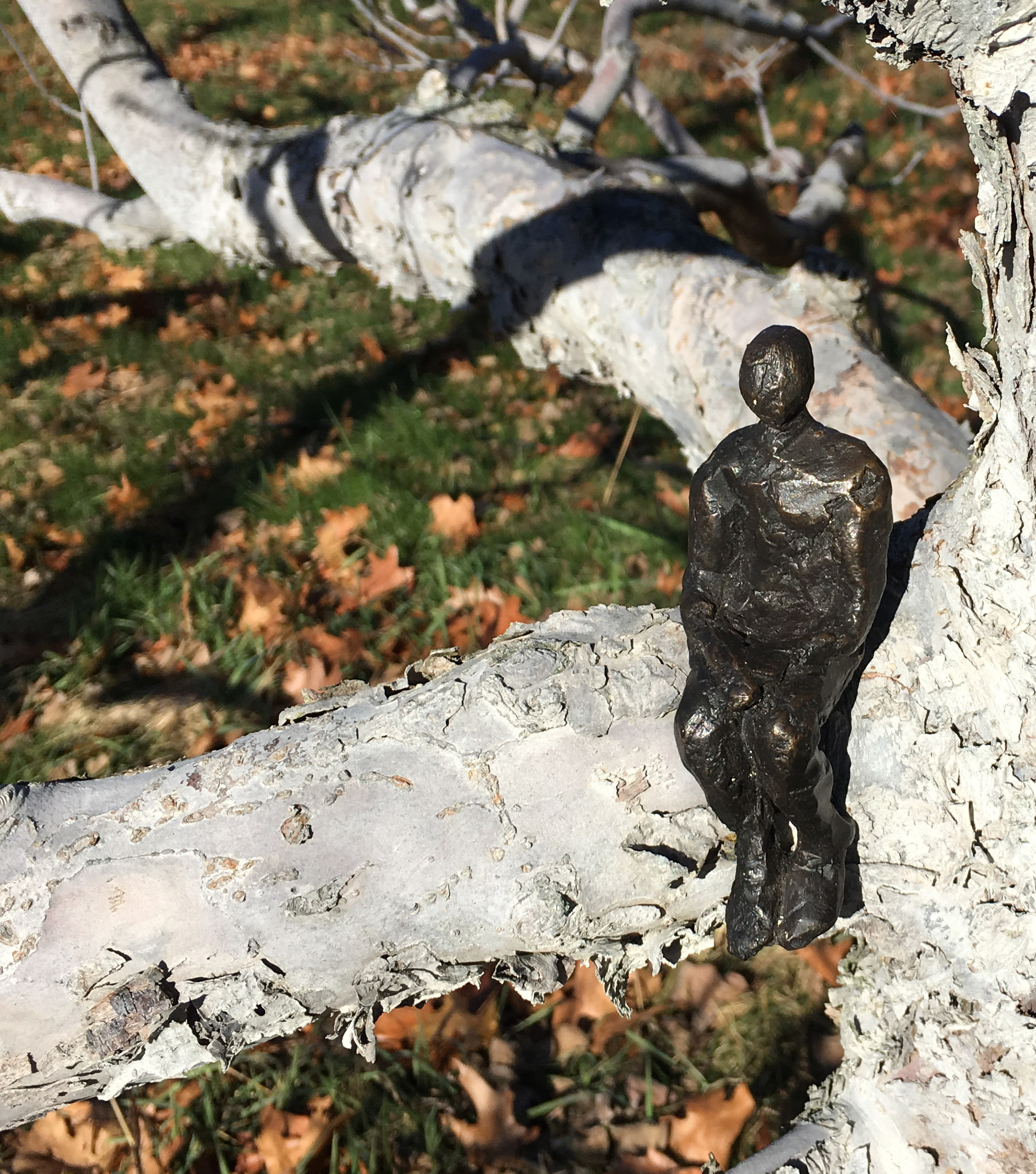
Unlike us, an apple likely has no consciousness of its name; it simply grows, producing blossoms, leaves, and fruit regardless of what we call it. But the name can change our perception of an apple and create its market appeal. In a similar way, our own names can make a difference. Some names roll off the tongue easily, others are poetic, or connect us to a much-loved family member. Many people at midlife go back to their full birth name, and discard their childhood nickname, capturing a new identity in doing so. In 2010, I formally took Buddhist vows, and my teacher gave me the Buddhist name, Shinji. Shin means truth and ji means soil or earth. Truth in the soil. One’s Buddhist name is meant to be a teaching, something to aspire towards. I like when I am called Shinji by my Buddhist sangha and friends, and I am perfectly happy being called, Linda, or Mama, or Babe, the name my husband, Blase, uses, or Ama, the name my granddaughter uses.
We have a few seedling apples in the field near the Medicine Wheel with no names. These started growing from pips in the pumice we dumped from our apple pressing two years ago. If they continue to grow, they will each produce a unique variety of apple. Most likely the apples will be small and bitter, but you never know, one of them could be sweet and crisp, or be a great cooking apple like the Bramley seedling. And what would I name it? The Shinji apple has a nice ring, but I think the first seedling apple we grow will be named for my first granddaughter, the Vita Apple, the apple of my eye!
Southern Apples, an Elephant, Monkey, Rabbit, and Bird, Two Mango Trees and a Birthday
I celebrated my 60th birthday this week. My partner, Blase, gave me a first edition of the book Old Southern Apples, written by Lee Calhoun. Southern apples might sound like an oxymoron, since not many people think of the South as an Eden of apples. But over 1300 varieties originated south of the Mason-Dixon Line, and these apples are an important part of the area’s agrarian history. Old Southerners not only talk about Bloody Butcher corn and Red Ripper peas, but the now extinct apples like Fall Ambrosia (sounds so delicious), and the still available Limbertwigs.
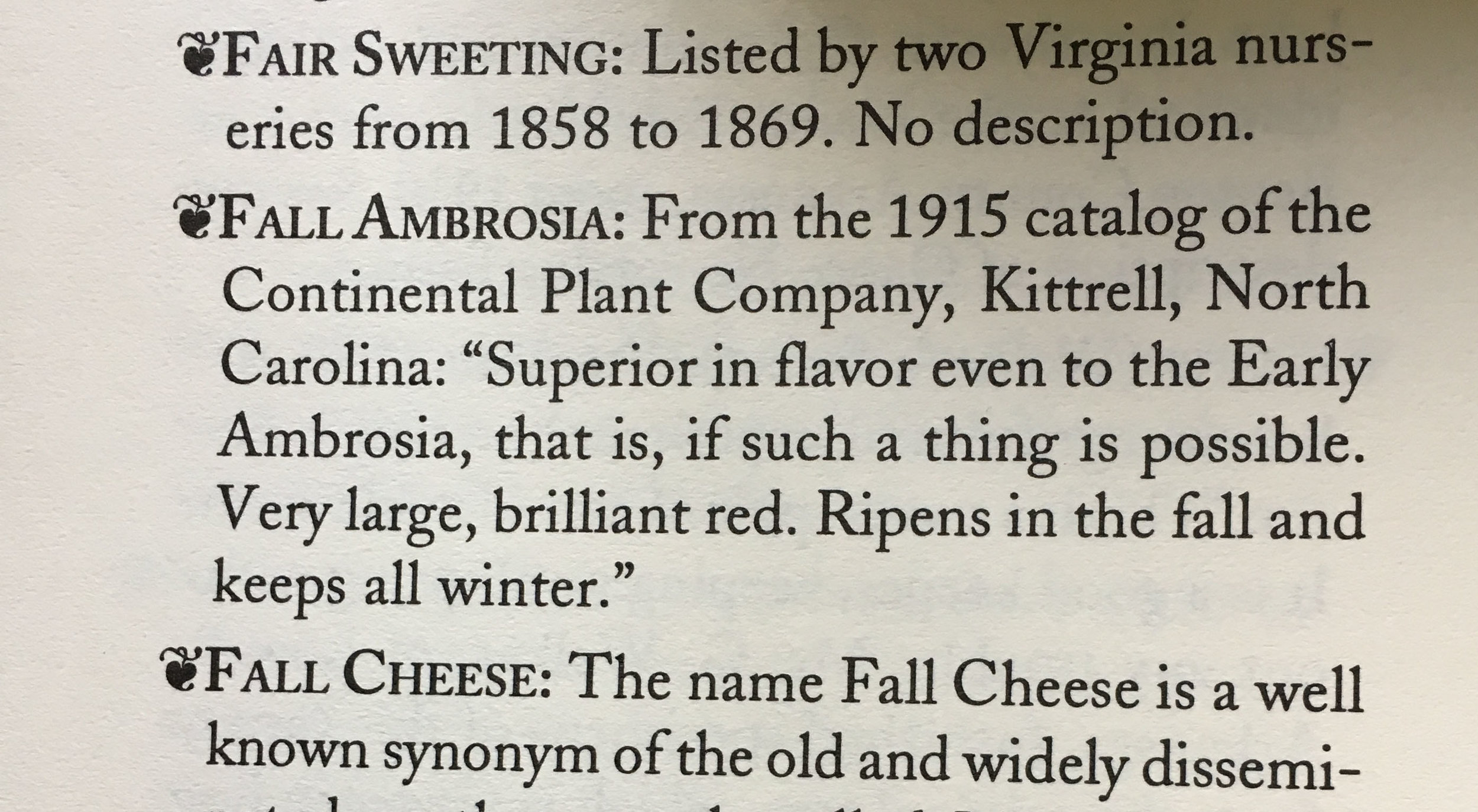
Old Southern Apples describes the unique features of over 1600 apple varieties (though 300 of them originated elsewhere but were grown in the South). The book divides these apples between 300 still growing or available at nurseries and 1300 now extinct Southern apples, the names and descriptions mostly taken from old nursery catalogues (a coincidence that both numbers are 300). The book also contains forty-eight plates of hand-painted apple pictures selected from the seven thousand in the collection of the National Agricultural Library. That was from the days when the United States Department of Agriculture hired artists!
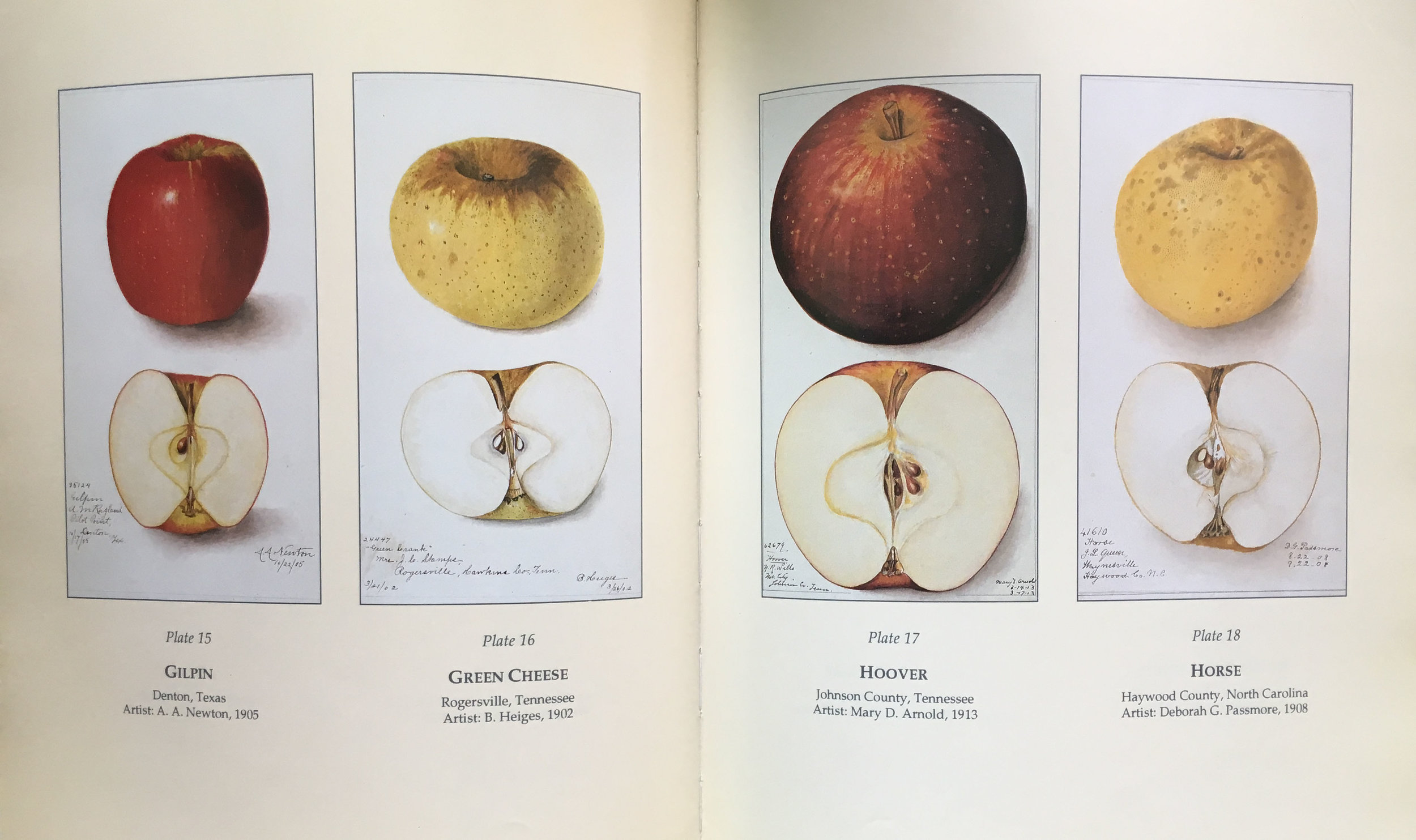
Old Southern Apples, Plates 15 - 18; Photos: Jerry Markatos
As you may know, apples grown from seed are the unique progeny of two parents, because the blossoms are cross pollinated. Most of these seeded trees crop with hard, sour, or small fruit, better for the hogs than for eating off the tree. Some apples are good for making hard cider and apple cider vinegar, but a few trees out of a thousand planted might produce unexpected, remarkable apples that would be given names and propagated. Of the 1600 apple varieties mentioned in this book, all of them grew from seed to be extraordinary apples. In the South, whether the settlers were large landowners or tenant farmers, they all planted out their orchards with seeds, they didn’t set out grafted rootstocks. It was the way it was done.
Today, it would be the rare individual who would scatter seeds to plant an orchard. After all, who would want a collection of wild apples? Large orchardists order sapling trees from wholesale nurseries in the thousands or even ten thousand. Blocks of the same variety, interspersed with another variety for pollinating, are planted. It is the researchers who cross apples and come up with new varieties for orchards to trial. A few apples become the darlings of the marketplace. This approach to apple growing is very different from the grand creativity that nature realizes with such ease. As Lao Tzu said, Nature does not hurry, yet everything is accomplished.
Inside my card, Blase tucked a print-out of a Buddhist tale. When King Mahajanaka, an earlier incarnation of the Buddha, was traveling through a park, he saw a monkey sitting on a branch of a mango tree. The King longed to stop and pick a few mangoes, but traveling with his large retinue, he had to continue without stopping. He decided he would sneak back alone that night to pick a few mangoes. That night, when he got to the grove, he lifted his torchlight and saw that someone had gotten there before him. The mango tree was stripped bare of fruit; its limbs were broken and its leaves lay scattered everywhere. He was saddened to think that this beautiful tree would likely not survive this ravagement. Then he saw another mango tree, one that had not been harmed. He realized that this tree avoided the carousing thieves because it had no fruit. The King returned and pondered his experience with the two mango trees. He decided he would renounce his title and give away everything he owned. He would become a tree without fruit. I love the story of the King Mahajanaka and the mango tree, but it could be taken as a teaching in renunciation. As many of you know, the orchard at Old Frog Pond Farm had no apples this year, and it was not because I renounced my title of orchardist.
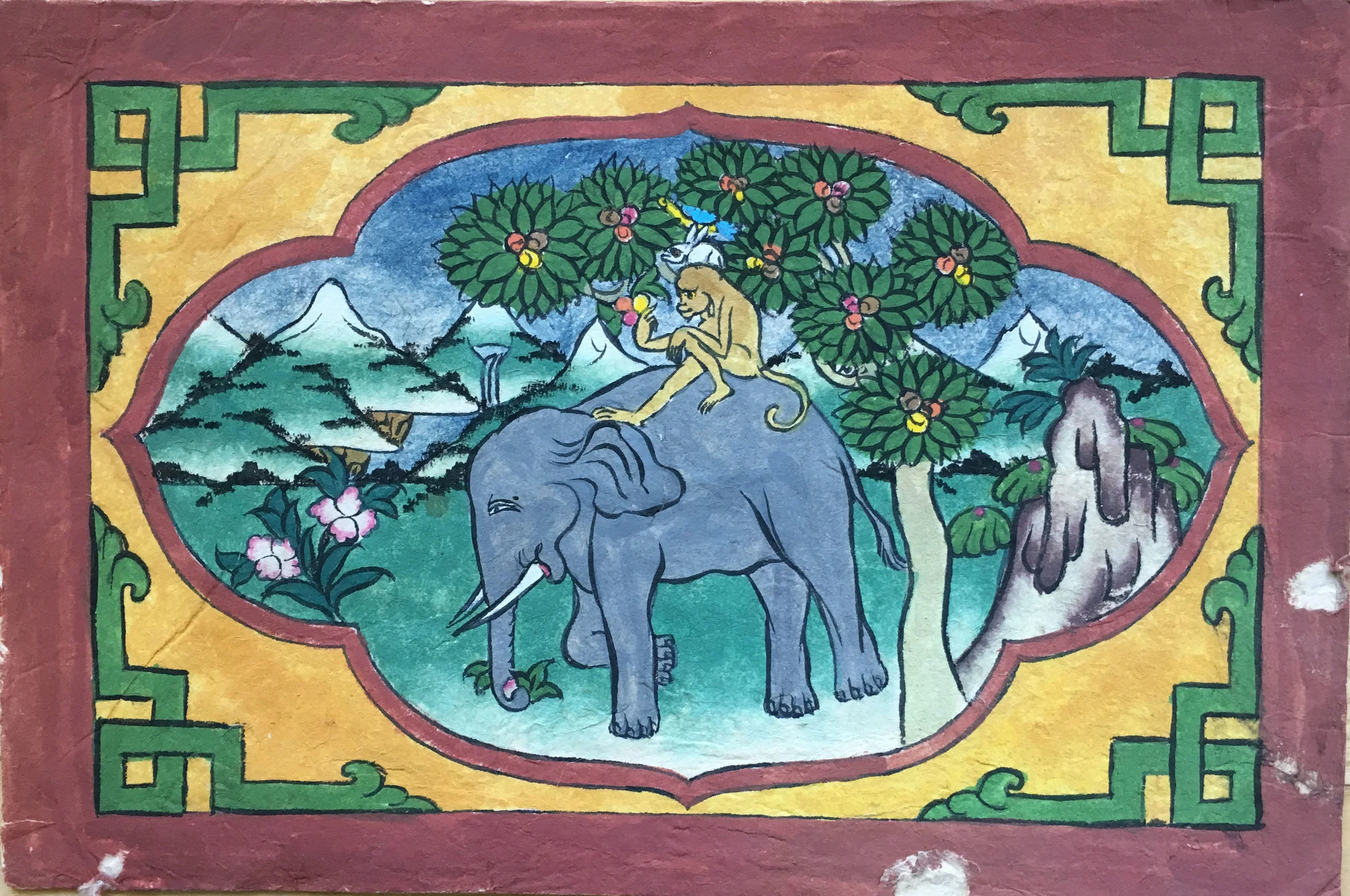
The Birthday card Blase gave me was hand painted in Bhutan; he had saved it from our trip seven years ago. It is of a bird on a rabbit on a monkey’s shoulder, on an elephant (the bird and rabbit are hard to see). They are walking under a mango tree laden with fruit. It is an illustration of the “Four Harmonious Friends,” a much loved Bhutanese tale. These animals worked together; the bird planted the seed, the rabbit watered the sapling, the monkey fertilized it, and the elephant protected it until it grew into a beautiful tree with fruit for all of them.
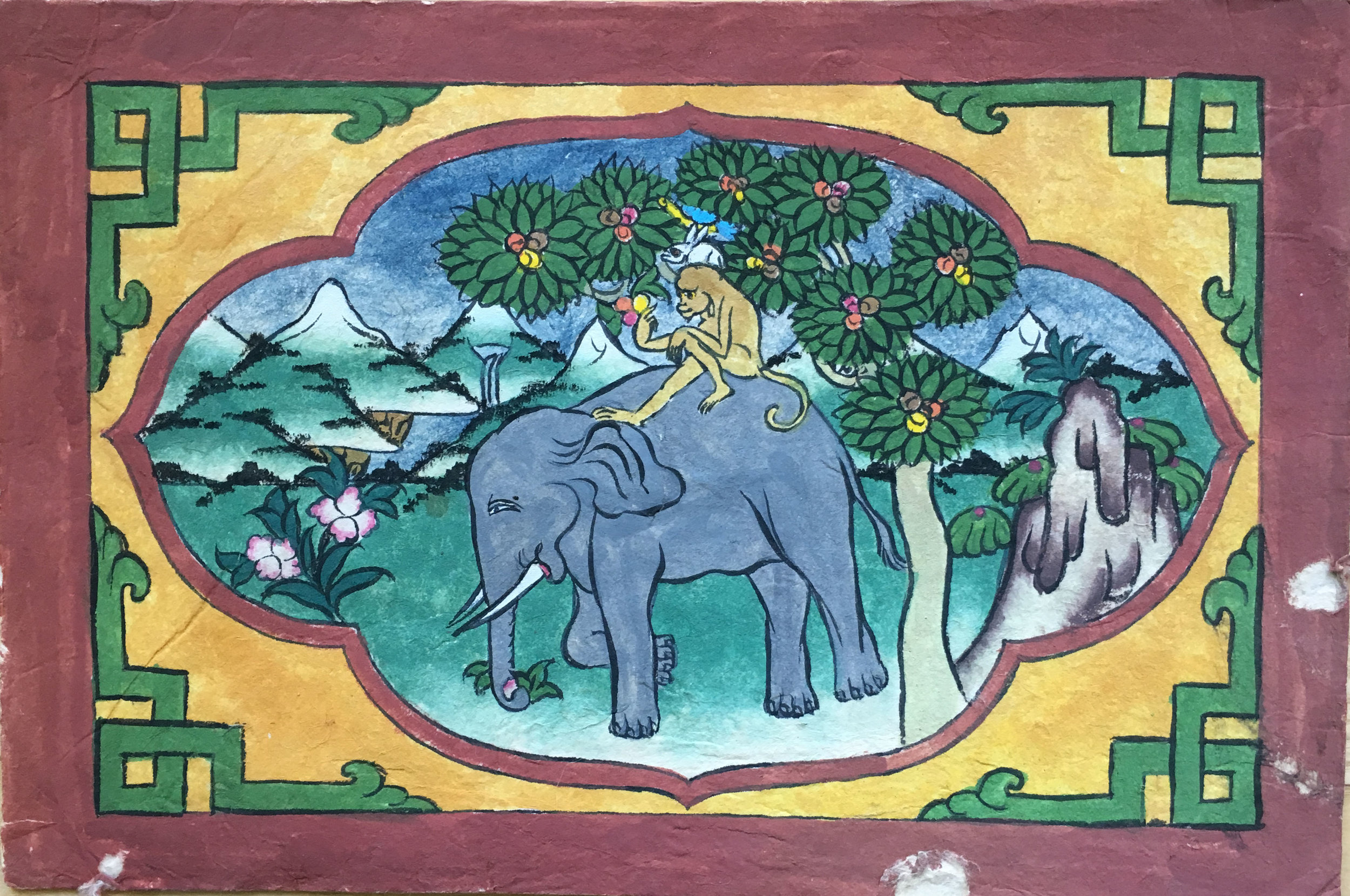
"Four Harmonious Friends" handpainted in Bhutan
I loved my gift of so many fruit related stories. Our orchard is so much more than its acres of grafted trees. It’s a language we speak and share; a wild grove of poetry, paintings, sunsets, clouds, blossoms, and, hopefully next year, delicious fruit.
Search Blog
-
2025
- May 9, 2025 A View from the Tractor Seat
- Apr 11, 2025 Dig
-
2024
- Jan 7, 2024 Winter Wassail
-
2022
- Dec 11, 2022 Keeping Time
- Jun 17, 2022 This Apple-Shaped Earth
- Jan 23, 2022 What is a Jizo?
- Jan 16, 2022 An Invite and Housekeeping Update
- Jan 1, 2022 The Year of the Frog: What Orchardists Do While Apple Trees are Chilling
-
2021
- Oct 24, 2021 Figs
- Oct 3, 2021 The Artist and the Orchard: A Memoir
- Aug 8, 2021 Red-Fleshed Apples
- Jul 25, 2021 When We Were Trees
- Jun 27, 2021 Castor Beans—Who Knew?
- Jun 13, 2021 Spring Training at a Zen Monastery
- May 4, 2021 Our Trees are in Bloom
- Apr 18, 2021 Hooray!
- Jan 24, 2021 Wassailing, virtually!
- Jan 1, 2021 Sitting
-
2020
- Dec 21, 2020 Darkness to Light
- Nov 28, 2020 One Heart
- Sep 18, 2020 Juggling Flowers, Fruit, and Vegetables
- Aug 23, 2020 Refuge
- Aug 9, 2020 Bags of Fertilizer
- Aug 2, 2020 The Sermon of the Blue Heron
- Jul 26, 2020 What's the Buzz?
- Jul 19, 2020 Farm Moments
- Jul 12, 2020 Lost Wax
- Jul 5, 2020 Catalpa: The Hugging Tree
- Jun 28, 2020 Pedaling Peace
- Jun 21, 2020 See Change
- Jun 14, 2020 Lalla Unveiled
- Jun 7, 2020 Pond Alchemy
- May 31, 2020 The Birth of Fruit
- May 24, 2020 An Artist in the Orchard
- May 17, 2020 Walking the Land: Returning Home
- May 10, 2020 Stinging Nettles: Gifts from the Great Mother
- May 3, 2020 The Mystery of Swallow
- Apr 26, 2020 Aerial Bruststrokes
- Apr 19, 2020 Simple Pleasures
- Apr 12, 2020 Weeds and Other Gifts
- Apr 5, 2020 Remembering the Seeds
- Mar 29, 2020 Blow on the Embers
- Mar 22, 2020 Ripples
-
2019
- Nov 16, 2019 Tibet Impressions
- Nov 9, 2019 Forest Tales
- Oct 13, 2019 The Gift
- Aug 4, 2019 The Season is Apples, Berries, and Grandfather Fire
- Jun 8, 2019 Pointers for a Writing Life
- May 12, 2019 Mothers of the Earth
- Apr 6, 2019 The Apple-Shaped Earth
- Mar 23, 2019 You Don’t Know What You Have Till It’s Gone
- Feb 23, 2019 Generations
- Feb 9, 2019 What Are We Doing to the Earth, John Chapman?
-
2018
- Dec 31, 2018 Long Shadows
- Oct 6, 2018 A Pilgrimage to India
- Aug 18, 2018 Scrap Wrenn
- Aug 11, 2018 Off-the-Wall Comments from an Ignorant Farmer
- Jul 28, 2018 Creative Connect
- Jul 14, 2018 How is the Orchard?
- Jun 30, 2018 Which Way?
- Jun 16, 2018 Geese, Herons, Beavers, and the Baby Steps of a Lapsed Blogger
- Feb 24, 2018 Mama's Coupons — Good Forever
- Jan 27, 2018 January Ice
- Jan 13, 2018 The Muse
-
2017
- Dec 30, 2017 A Dream for the New Year
- Dec 23, 2017 A New Year for Apples
- Dec 16, 2017 Intuition
- Nov 22, 2017 Thanksgiving OM
- Nov 4, 2017 East Fork Pottery
- Oct 28, 2017 Putting Down New Roots
- Oct 21, 2017 A is for Art
- Oct 14, 2017 Eve domesticus
- Oct 7, 2017 A String Workshop
- Sep 30, 2017 After Applepicking
- Sep 23, 2017 Two Bad Women and One Good Apple
- Sep 16, 2017 Plein Air Poetry
- Sep 9, 2017 Cutting Off a Leg
- Sep 2, 2017 The Changing Landscape
- Aug 26, 2017 All About Art
- Aug 19, 2017 My First Visit to the Farm
- Aug 12, 2017 The First Food
- Aug 5, 2017 A Teapot, a Woman, and maybe a Boat
- Jul 29, 2017 A Raspberry Dilemma
- Jul 22, 2017 Consider the Miracle
- Jul 15, 2017 Meeting Ekphrasis
- Jul 8, 2017 Ripening Fruit
- Jul 1, 2017 The Voice of The Caterpillar
- Jun 24, 2017 Goumi — An Unusual Fructus
- Jun 17, 2017 Concord, an American Bloomsbury
- Jun 10, 2017 The World Is Bonkers — Shall I Laugh or Cry?
- Jun 3, 2017 Bonkers, a Revolutionary Apple
- May 27, 2017 Guardians of the Swamp
- May 20, 2017 There are Mushrooms and There are Morels
- May 13, 2017 "What's in a Name?"
- May 6, 2017 Bloom Follows Pink: Orchard Pollination
- Apr 29, 2017 The Orchard Is at Pink
- Apr 22, 2017 Natural Farming — Part 2 (continuation from last Sunday's blog)
- Apr 15, 2017 Natural Farming — Part 1
- Apr 8, 2017 Boats, Figures, and Catching Fish
- Apr 1, 2017 A Man with a Mission: The Nuts and Bolts of Bronze Casting
- Mar 25, 2017 A Chalice of Spirit, Art, and Nature
- Mar 18, 2017 Hanami — Blossom Viewing
- Mar 11, 2017 Soil Redemption Song
- Mar 4, 2017 Food is Primary Care
- Feb 25, 2017 Pomme de Terre
- Feb 18, 2017 Organic Certification
- Feb 11, 2017 Tantalizing Fruit
- Feb 4, 2017 The Myths of History
- Jan 28, 2017 The Orchard in Winter
- Jan 21, 2017 The Hi-Line
- Jan 14, 2017 Artistic, Botanical, and Social Diversity
- Jan 7, 2017 Where is Eden?
-
2016
- Dec 31, 2016 The Creative Heart
- Dec 24, 2016 A Christmas Tale
- Dec 17, 2016 Who are the Crones?
- Dec 10, 2016 The Olympic Bell (Part Two)
- Dec 3, 2016 Overheard in the Apple Orchard in Early December
- Nov 26, 2016 The Lessons of a Tortoise
- Nov 19, 2016 In the Studio
- Nov 12, 2016 Even in Darkness
- Nov 5, 2016 Southern Apples, an Elephant, Monkey, Rabbit, and Bird, Two Mango Trees and a Birthday
- Oct 29, 2016 The Tools of Art
- Oct 22, 2016 Labyrinths
- Oct 15, 2016 Repairing the Broken
- Oct 8, 2016 When You Are No More
- Oct 1, 2016 Creation Rain
- Sep 24, 2016 Breaking the Glass
- Sep 17, 2016 String Art
- Sep 10, 2016 Poetry and Photosynthesis: It's all in the Leaves
- Sep 3, 2016 In the Plenty of Time
- Aug 27, 2016 Witch Doctors
- Aug 20, 2016 Listen Coyote
- Aug 13, 2016 Milkweed in the Orchard
- Aug 6, 2016 Some People See a Turtle
- Jul 30, 2016 Arborshaping
- Jul 23, 2016 Joseph Wheelwright: Sculptor of Stones and Trees
- Jul 16, 2016 Asian Pears
- Jul 9, 2016 Gold Leaf, Grief, and the Creative Process
- Jul 2, 2016 The Olympic Bell (Part One)
- Jun 25, 2016 Around the Mulberry Bush
- Jun 18, 2016 Avoiding Apples
- Jun 11, 2016 Fructus
- Jun 4, 2016 Astonishing Apples
- May 28, 2016 Scare the Caterpillars
- May 21, 2016 Join the Club!
- May 14, 2016 The Graft
- May 7, 2016 Rooster, Rhubarb, Rue
- Apr 30, 2016 What do Dolphins and Nettles Have in Common?
- Apr 23, 2016 Art Prunings
- Apr 16, 2016 A Few of the First Arrivals
- Apr 9, 2016 Taste the Spirit of Sustainable Agriculture
- Apr 2, 2016 First Orchard Spray - March 22-24, 2016
- Mar 26, 2016 Hawkeye Apple
- Mar 19, 2016 Desiring the Almata Apple
- Mar 12, 2016 Ugly Fruit
- Mar 5, 2016 Winter Tracks
- Feb 27, 2016 Splash
- Feb 20, 2016 Pruning
- Feb 13, 2016 Orchard Ruminants
- Feb 6, 2016 A Gathering of Seeds
- Jan 30, 2016 Orchard Dragons
- Jan 23, 2016 Tree Rings
- Jan 17, 2016 The Fallen Tree
- Jan 7, 2016 Wassailing the Apple Trees
- Jan 1, 2016 The New Year