LINDA HOFFMAN
Asian Pears
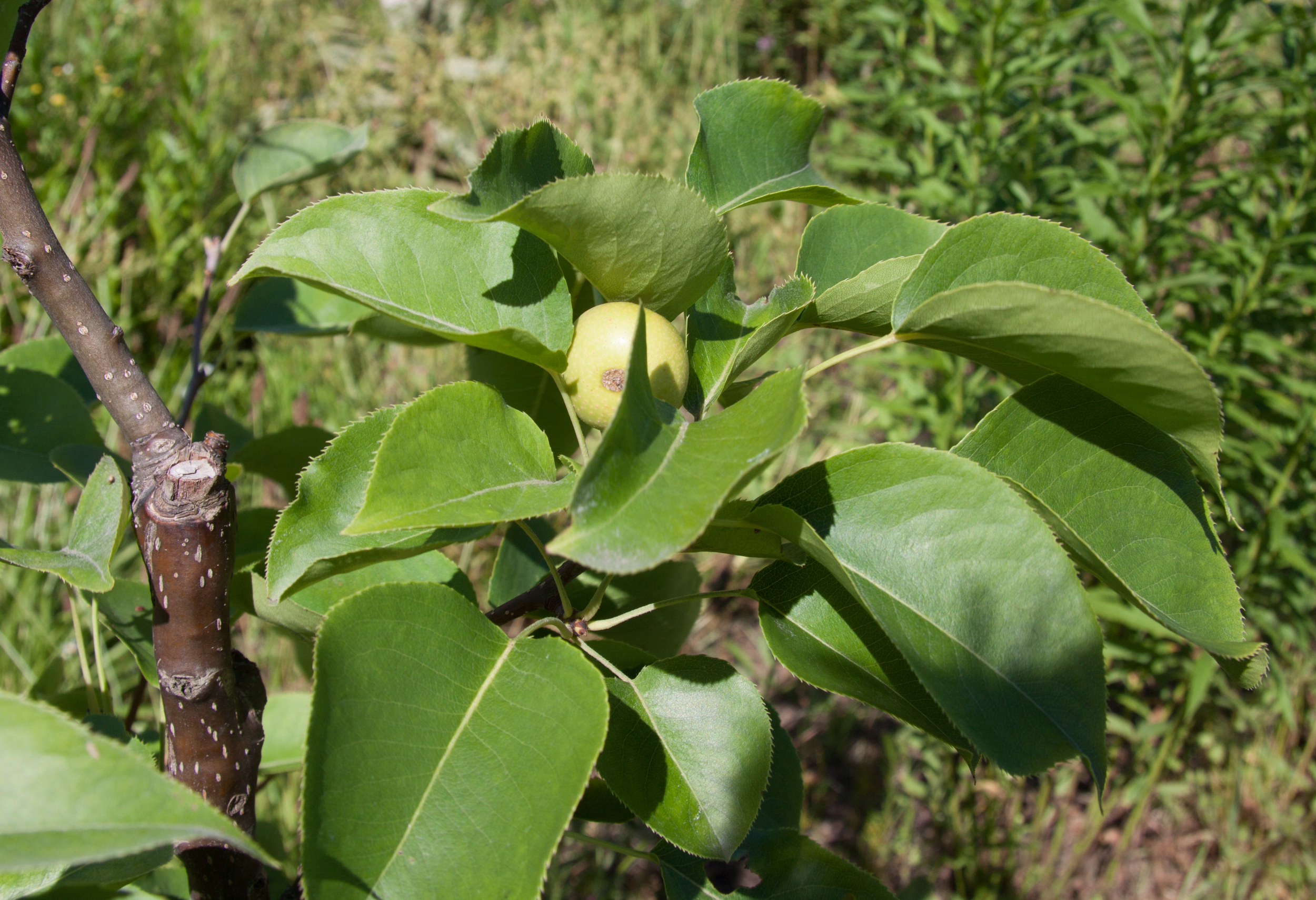
July 16, 2016 - Young Asian Pear
Last week I mixed up a yogurt container full of powdered clay, ground carbonatite (volcanic soil that is rich in minerals), and aloe vera juice. I wanted to make a poultice for a three-year-old Asian pear tree with a nasty crack along its trunk.
Nashi is the Japanese word for Asian pears. I first ate Nashi when I lived in Japan in the early 80’s and was studying the Noh Theater. Round and with a sharp crunch like an apple, they have the light color and texture of a pear. What is most remarkable about this fruit is the amount of sweet juice that you get with every bite. Most Asian pears you buy in the grocery store are overripe and the taste has already started to sour. But taste them fresh, and they sparkle.
I knew once I started to grow apples that I wanted to also grow Asian pears. We planted the first twelve trees in the orchard among the apple trees. Their fourth year, I watched them flower and then waited anxiously for the fruit. Lovely golf ball-size Asian pears dangled from the branches.
Then early one July morning, when I was walking out to the meditation hut behind the orchard, I saw only the swaying stems. I felt like my mind was deceiving me. What happened to the pears? There was not one fruit left on any of the trees. The deer had been thorough!
The following spring, I moved these trees to an area near the house with the hopes that they would be protected by proximity to the household’s activity. The trees grew and produced fruit, and the deer left them alone. We had five years of bountiful harvests and decided to grow more of these delicious fruits. I knew deer protection would be mandatory.
We put a fence around the old potato field across from the orchard and planted 32 trees — 8 different varieties on a diagonal grid in order of ripening date. Here, we don’t mow, and I plant every kind of native wildflower I find growing on the farm or that friends offer.
In high summer when I check on the trees I wend my way through 5 foot tall (and I’m only 5’ 2”) purple asters, red and purple bee balm, feverfew, mugwort, mint, comfrey—a dense abundance of texture and color. It’s here that I also planted the goumi, aronia, and goji berries. And there’s a blueberry bush with fruit hidden from the birds, which I am tending for a friend who moved and didn’t want to lose his plant. I love seeing the diversity and discovering what grows well together and what doesn’t.
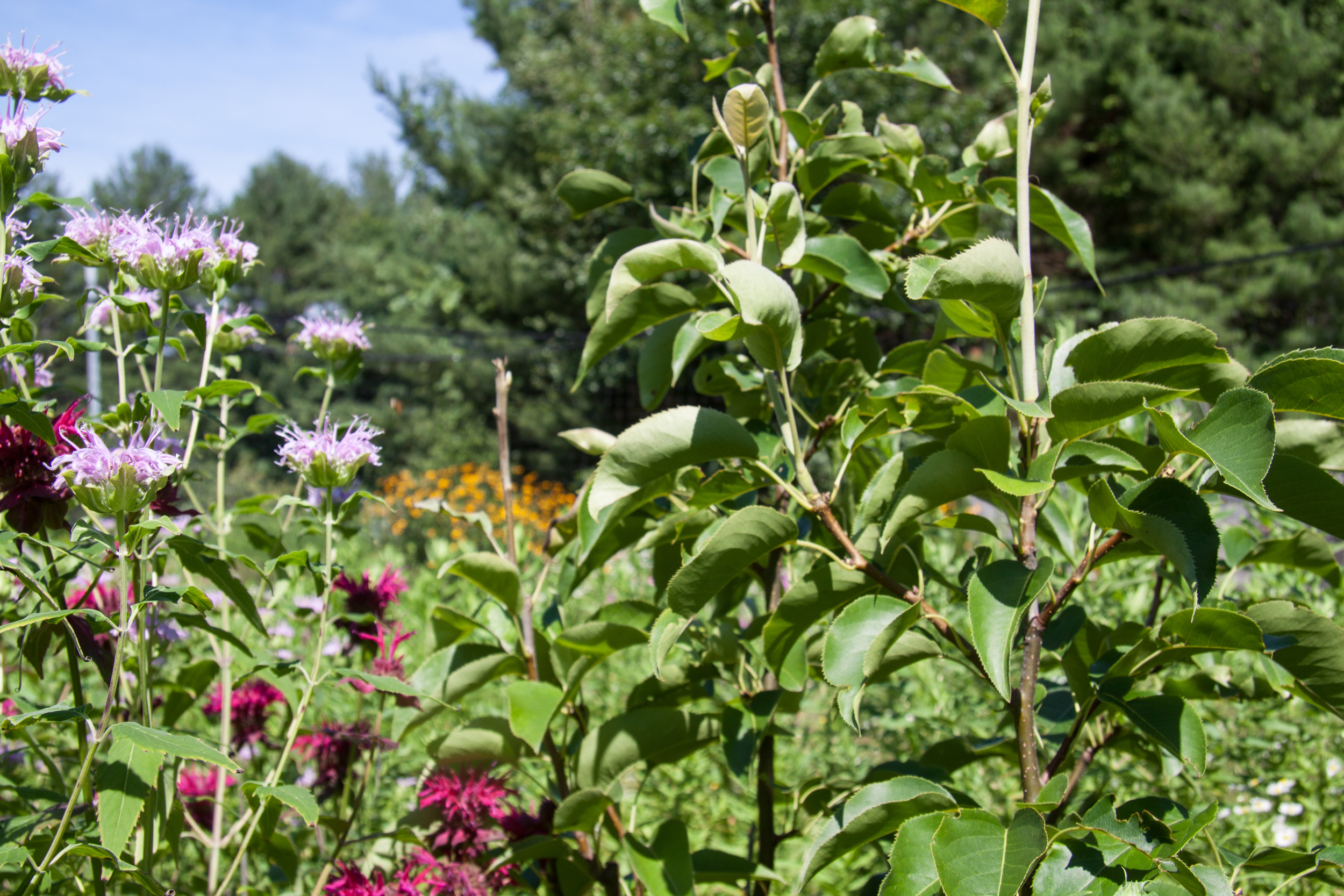
July 16, 2016 - Red and Purple Monarda Bee Balm with Asian Pear Tree (right).
I’m most interested in seeing if growing the pears in a natural environment will help them be healthier and have fewer pest issues. Some people say that the trees will be stunted because of the competition from other plants, but that doesn’t seem to be the case. Maybe the competition actually means that the trees have to grow strong roots to compete with the other plants for nutrients and water—or maybe they all live together – supporting each other like trees and plants in a forest.
I love being inside this fertile environment. It’s not completely wild; it still needs care and attention. I pull the wild plants that I don’t want, the ones that could take over. Last spring, we had a sudden flush of velvetleaf, a weed that can be toxic to some plants by inhibiting their water uptake. I simply pulled all of it, and it hasn’t come back, though its seeds can incubate in the ground for decades. Vetch also wends its way through among the pears. Vetch is a nitrogen fixer, but it is invasive and cloying and will take over—so vetch also gets pulled and removed. It’s selective chaos, but the beauty is that there is no right or wrong, no hard and fast rules.
But even a Garden of Eden has problems. The tree that I poulticed a week ago has not improved; in fact, it has worsened. Its leaves are drying up. And the few other pear trees that I noticed had smaller, but similar cracks also have some drying leaves. I am concerned that it is fire blight, a bacterial disease that can rapidly travel from tree to tree. But usually fire blight shows up first in a few branches. I’ve had some in the orchard and can usually prune out those branches. But this is in the middle of the main trunk. I have spent hours reading and researching and still don’t know for sure.
Each day I walk by, and it is getting worse. I can’t bear the thought of losing this tree. I’ve lost so many trees over the years, and I feel like I've been too lax. I’ve accepted their deaths knowing I would transplant another. But I no longer feel that way. I’ve become more aware of the preciousness of each one, and my older, more casual attitude is shifting. It’s not that I want to be melodramatic – but I want to do all that I can to save this tree.
Research is getting me nowhere, so I am going to stop further reading and go out there and use every iota of intuition I have to see if there is anything else I can do to help this tree. To begin with I scratched away the weeds that were very close to its trunk, dug away some of the soil and replaced it with more carbonatite. I carried it a 5-gallon bucket of water to the tree and gave it a juicy drink. I know this hot weather isn’t helping any of our perennial plants flourish.
I remembered a spiritual teacher’s suggestion. “Intention equals outcome,” he said. “Keep these words plastered over your eyes.” I fully recognize the challenge of really staying with my intention — not drifting off, becoming distracted, or somehow rationalizing that this one pear tree’s life isn’t that important.
I also see how I create boundaries of what I think I can and cannot do. What if we each really committed to helping the person or creature we happened to meet next? I think we would change our world. Perhaps we are actually afraid of our true power. In response to last week's blog on creativity, a friend wrote, “We shrink from our own magnificence . . . .” When I read, magnificence, I felt a tremor through my body. “No, not me.” But maybe that’s the catch — we have to own our power and be humble. Despite my efforts the pear tree might not survive. But given the recent tragedies in the world, we have to gather every particle of our magnificence to counter with good.
Gold Leaf, Grief, and the Creative Process
There is a tree section in my studio that has been leaning against a post for several years. I removed the bark and sanded the wood, but have not been able to transform it into a sculpture. At the bottom of the trunk is a large inset oval. It is the sign of an old wound indicating that the tree suffered an accident. Or it could have been the site of the removal of a large limb. I will never know, since I can’t go back in time to when this tree was alive growing by the side of the road or on the edge of the woods.
Perhaps this tree’s wound is similar to my own. There are times when grief covers me like a sealskin and I don’t know how to remove it. I may think I know the cause, but more often, I have only assigned a reason. There are so many experiences that layer themselves in memory, and then a new experience, like a magnet, attracts indiscriminately so many others. Who can know where one begins and another ends? These are the times I find it hard to motivate myself to go into my studio.
In the studio there are no distractions, no comfortable chair or sofa, no bookshelves, just work tables with all sorts of projects in various stages, materials, and tools. But if I get myself down there and tentatively start working, not knowing where I am going or what I am doing, the grief and the inertia disappear. Where did it go? Did something take its place? We can be so affected by our emotions, and yet they are so changeable — not solid objects.
For some time I have wanted to gold leaf that wounded area on the tree trunk. “Why?” I would ask myself and didn’t have a good answer. Then last week, I decided I would just do it. I bought some wood filler to fill the small insect holes, sanded it down, and painted the surface a light yellow so any imperfections in the gold leafing would not be dark, but yellow. Then I sealed the surface with varnish, and after it had set, applied the gold.
Gold leaf is mysterious. The foil is only .12 microns thick. (One sheet of printer paper equals 1000 microns.) After applying the sizing, the glue, and letting it dry enough to become a tacky surface, I carefully float the leaf over it. The size and leaf unite and become a strong, solid surface. Afterwards, a light burnishing with a cotton ball, and the gold leaf is there for the foreseeable future. It’s the same technique a steeplejack uses to gold leaf a dome on a church or palace.

The joy I feel when working on a sculpture transcends all other emotions. Concentration floods my mind, and there is no room for anything else except for the step-by-step activity of the process of creating. I am baffled that I resist doing this work that I love--this work that transforms old wounds into art.
The Olympic Bell (Part One)
This year for our tenth annual outdoor Sculpture Walk, we are excited to welcome the installation of a new sculpture, the Olympic Bell by Paul Matisse. First installed in Athens, Greece, in 2004 at the Summer Olympic Games, the bell then came home to Groton, Massachusetts, and has since been quietly awaiting its next home.
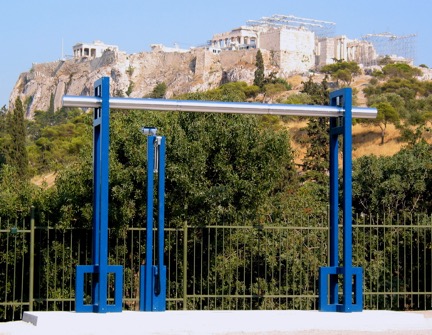
A few pulls on the heavy rope provides the momentum to lift the hammer and strike the bell, producing a deep, harmonious tone that can be heard for several minutes. My beloved partner, Blase, is doing the work of digging and preparing the ground for pouring the concrete foundation. We are all clearing the forested area of branches and fallen trees to let the stalwart white pines come forward with their presence creating, not the Parthenon, but nature’s own temple.
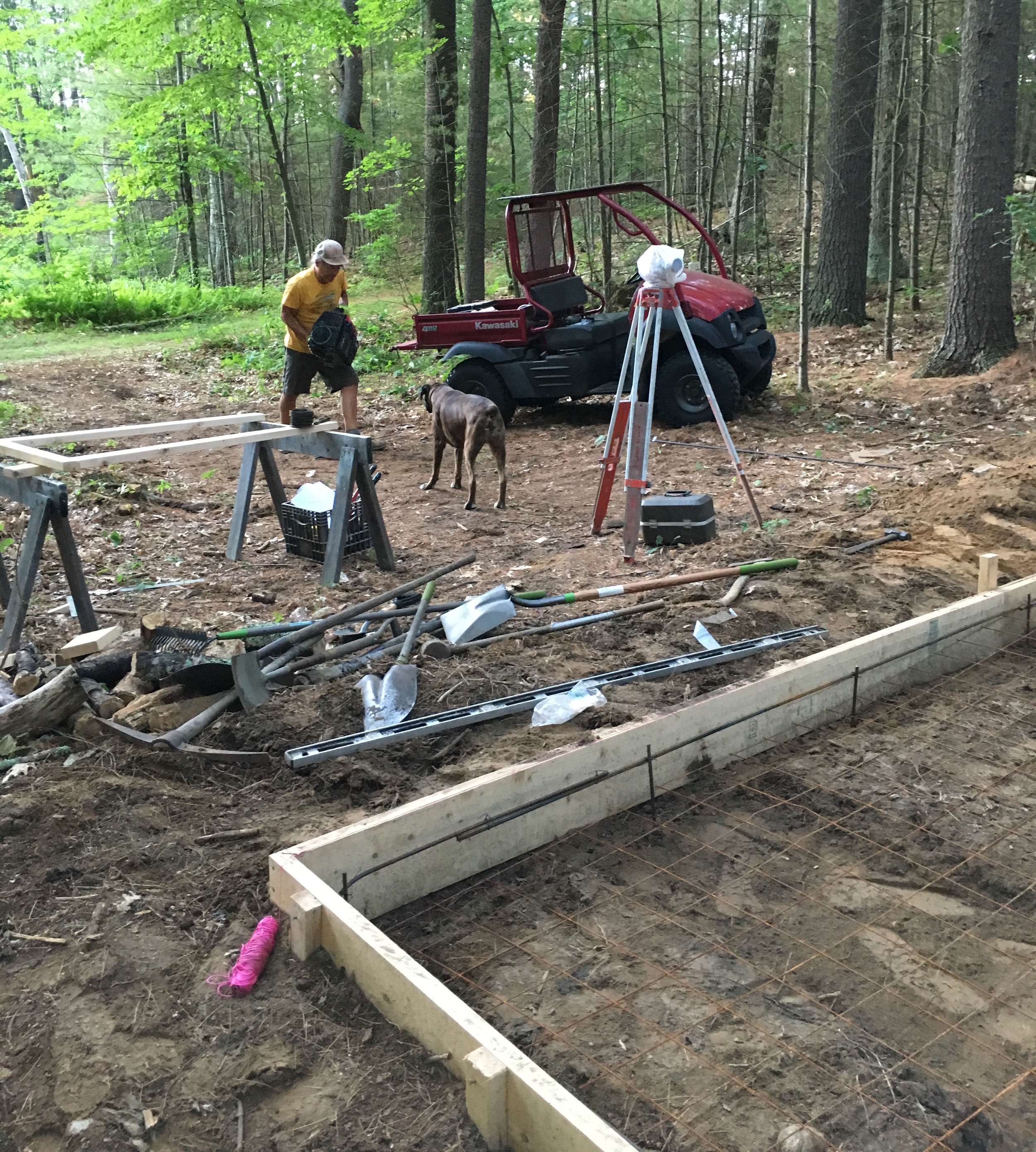
Paul Matisse is my former husband and the father of our three children. When we separated, I moved to the farm and created a new life here. We rarely saw each other, only speaking briefly on the phone when it involved the children. But over the years I think we both felt that our relationship continued, albeit in another form. The arrival of the bell feels like a reunion of the creativity and beauty that we both believe in and shared during our married time together. I look forward to its first rings echoing out over the pond.
I am reminded of Mary Oliver’s poem, The Journey.
One day you finally knew
what you had to do, and began,
though the voices around you
kept shouting
their bad advice--
though the whole house
began to tremble
and you felt the old tug
at your ankles.
"Mend my life!"
each voice cried.
But you didn't stop.
You knew what you had to do,
though the wind pried
with its stiff fingers
at the very foundations,
though their melancholy
was terrible.
It was already late
enough, and a wild night,
and the road full of fallen
branches and stones.
But little by little,
as you left their voices behind,
the stars began to burn
through the sheets of clouds,
and there was a new voice
which you slowly
recognized as your own,
that kept you company
as you strode deeper and deeper
into the world,
determined to do
the only thing you could do--
determined to save
the only life you could save.
This bell for me echoes the powerful directive in this journey. How challenging it can be to make a decision to change one’s life. How painful for those connected to you. But when we feel we need to act and we do, we create karma from this action. But the karma is also influenced by how we do it and what intention we hold afterwards. Equally, I believe, what came before also influences the future.
Paul and I shared an apple when we first met in Japan. We were on a long bus ride through the Wakayama Prefecture south of Kyoto when I brought out an apple to eat. Paul asked for it, took out his pocketknife, and cut it into two sections. But the two pieces were not halves like you would imagine; they formed an interlocking puzzle with the halves fitting mysteriously back together, seeds intact, stem still attached, a mysterious marvel. I took the section with the stem and perhaps emboldened by his creativity, I ate my entire half of the apple, seeds and all, then held up the stem. Paul took it from me.
Paul still has that stem in a tiny jar. He also has many sculptures in cloth I made for him over the twenty years we were together. And we share the continuing lives of our three children. Now, the Olympic Bell will share its deep sonorous prayers with visitors to the farm and stand as a symbol that love takes many forms.
Around the Mulberry Bush
We may not have many apples this year, but we do have mulberries. Our white mulberry tree (morus alba) is our official bird watching tree for the month of June. If we sit on the back porch for twenty minutes, we count twenty species of birds feasting. Yesterday’s early morning bird count included cedar waxwing, red poll, cardinal, yellow finch, catbird, starling, bluebird, kingbird, English house sparrow, Baltimore oriole, and mourning dove. A few days ago I saw a flame in the tree — it was a scarlet tanager! And the tree grows in the flyway of the prehistoric blue herons, diving kingfishers, and the occasional osprey traveling between Old Frog Pond and Delaney Conservation area wetlands for fish.
The tree doesn’t require spraying, care, or attention – and every year its branches are filled with fruit.
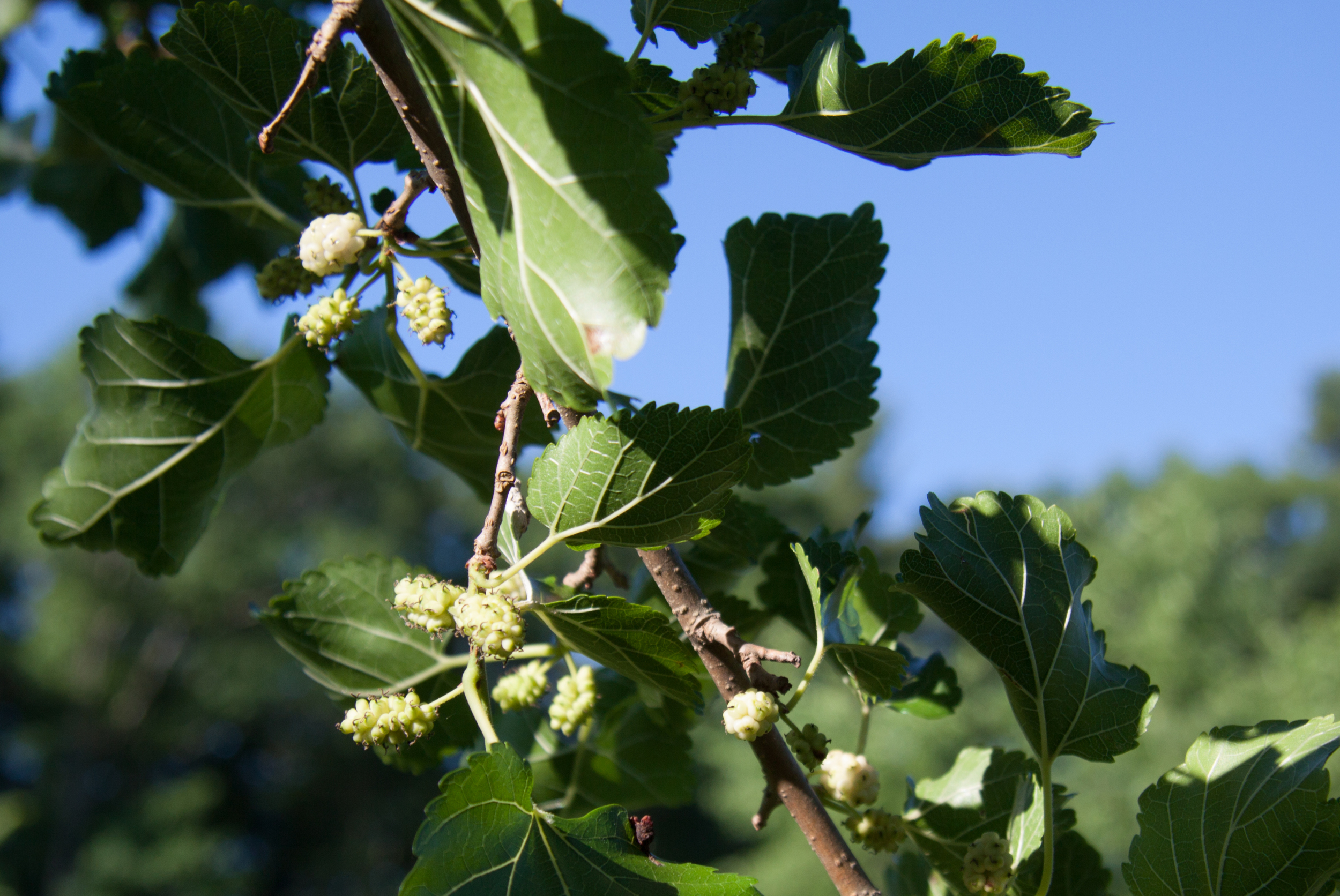
White Mulberries
The seeds are scattered freely by the birds and once they take root, they grow. We have small mulberry trees popping up along the pond and even under the great canopy of the catalpa outside my studio. This one doesn’t fruit, however; too much shade.
In the herbal apothecary, white mulberry is an important herb. The leaves, dried and made into a powder, are used to treat diabetes, as well as high cholesterol, high blood pressure, even the achiness from the common cold. The Chinese use the leaves, root bark, branches, and fruit as medicine and it is an official drug of the British Herbal Pharmacopoeia.
In America, the white mulberry is considered to be an invasive plant. The early colonists imported the tree when they tried to establish a silkworm industry. Only the tree took root and spread its branches across the country. However, the red mulberry (morus rubra) is a native tree, but now quite rare in Massachusetts. American Indians used the red mulberry for food and medicine. Choctaw women made cloaks by spinning the threads from the fibrous bark of young mulberry shoots. I am always amazed at the abundant offerings of plants. Not only food and shelter, but clothing, nets, fencing, and art!
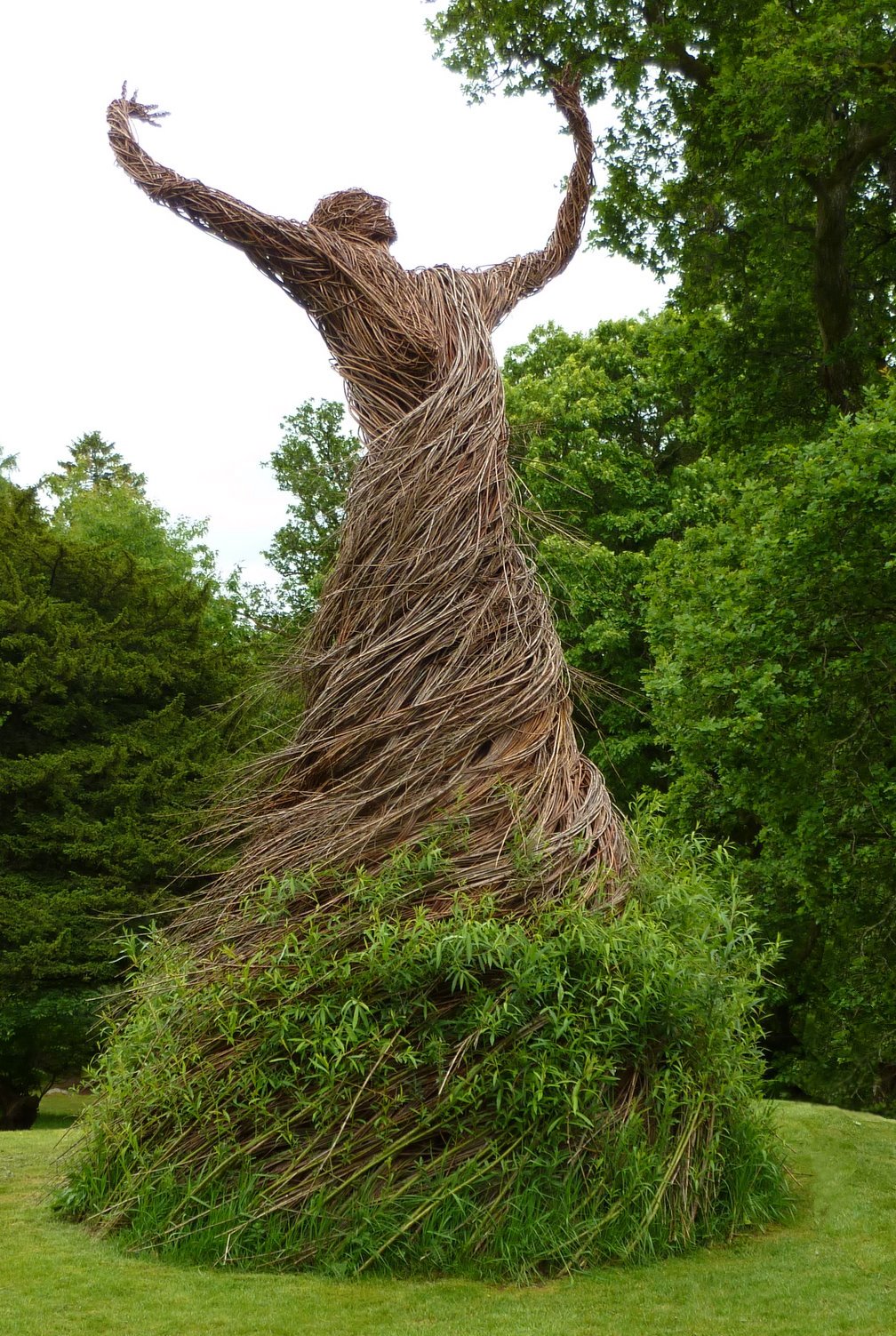
Willow Sculpture Rises from the Earth by Trevor Leat
We have two red mulberry trees growing on the farm. They were Arbor Day giveaway seedlings for the Town of Groton’s Arbor Day celebration a few years ago. We planted the small saplings in the open where they could grow to full size, but they have struggled with competition from field grasses. One was mowed down when someone didn’t recognize the small shoot among the weeds. Fortunately the trees are tenacious. This year, the unmowed one has fruit for the first time. The fruit is smaller than the white mulberry and ripens to deep red. It’s sweeter than white mulberries and would make a tastier and more colorful wine.
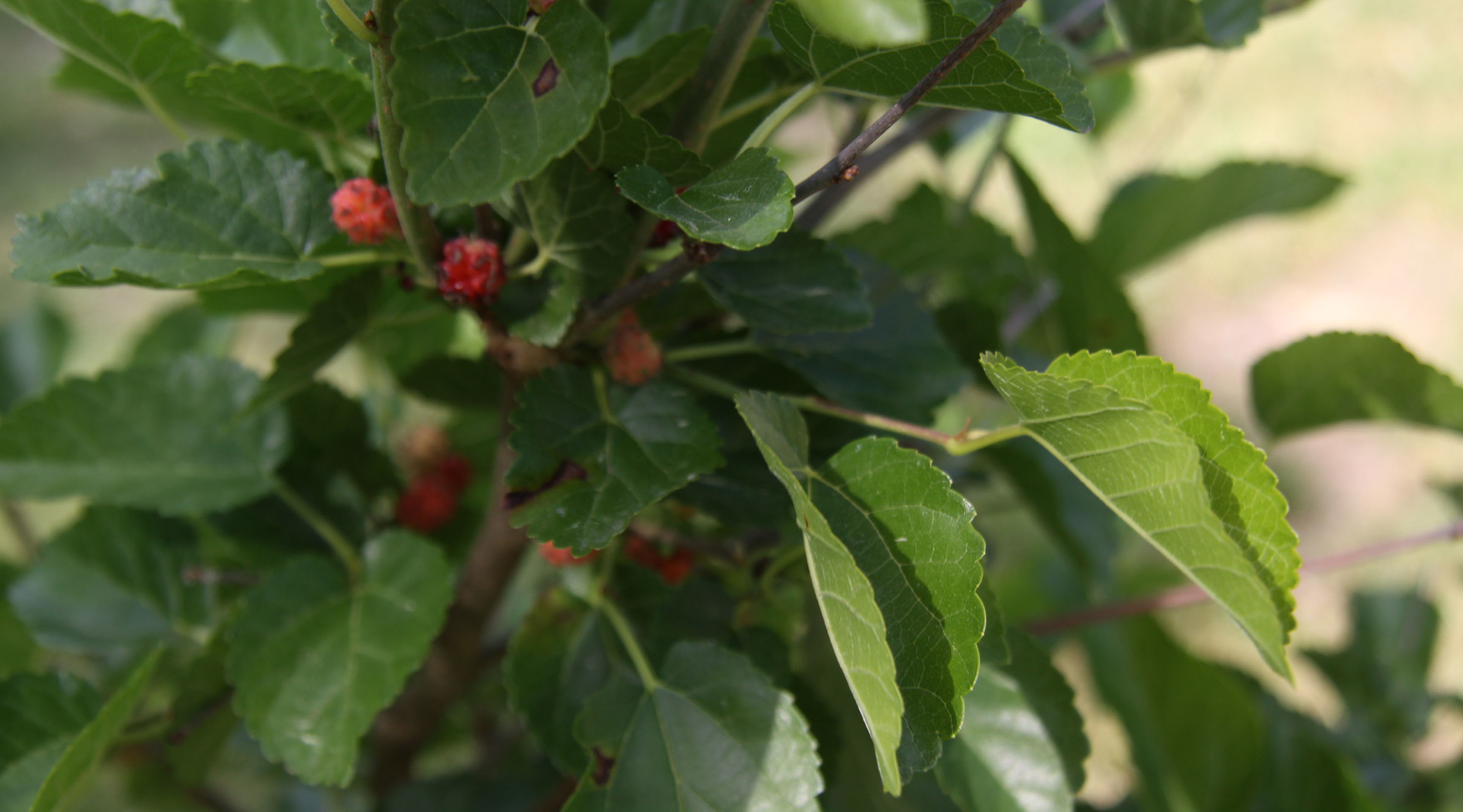
Red Mulberry
Small mammals also feed on mulberries, I often see a chipmunk munching along with the birds, but I’m told that fox, opossums, raccoons, skunks, and squirrels like them too. And of course, why not the weasel?
All around the mulberry bush, the monkey chased the weasel,
The weasel thought 'twas all in fun, pop goes the weasel.
And just what does this popular ditty mean? It was a dance hall tune in mid 19th century England. I read that in cockney Pop refers to pawn and a weasel to a coat. It is about pawning your dress coat on Monday to get it back on Friday so you could be well dressed on Sunday. Sounds far-fetched to me. I also learned that in cloth making, the weasel was the machine that would wind yarn, and there was a pop sound every 1000 yards. This sounds more to the point especially given a later verse.
My mother taught me how to sew,
And how to thread the needle,
Every time my finger slips,
Pop! goes the weasel.
There’s something about that ‘pop’ that is appealing like the surprise of a Jack-in-the-Box toy. It’s a little scary because we never know when the pop will come, but we love the anticipation.
Perhaps the song originally came from all the activity around a mulberry tree with ripe fruit; a children’s game of feasting birds and hungry animals leaping around the tree, chasing each other to get to the fruit. And there does seem to be that ‘pop’ when the fruit is plucked off the tree. Sometimes I see a bird tug, the leaves and wings all a-flutter, and then ‘pop’ — off flies the bird with the fruit in its beak.
Mulberries are easy to grow and you can make pies, sorbets, ice cream, even smoothies with these small fruits that are loaded with antioxidants; even dry them for granola. The trees are most generous; they give and give. I appreciate discovering some of the lesser-known fruits that can grow in Massachusetts. This spring I planted aronia and goji berries, goumi, and two kiwi vines. It will take several years, but I look forward to tasting these fruits, and of course sharing it with the birds!
Search Blog
-
2025
- May 9, 2025 A View from the Tractor Seat
- Apr 11, 2025 Dig
-
2024
- Jan 7, 2024 Winter Wassail
-
2022
- Dec 11, 2022 Keeping Time
- Jun 17, 2022 This Apple-Shaped Earth
- Jan 23, 2022 What is a Jizo?
- Jan 16, 2022 An Invite and Housekeeping Update
- Jan 1, 2022 The Year of the Frog: What Orchardists Do While Apple Trees are Chilling
-
2021
- Oct 24, 2021 Figs
- Oct 3, 2021 The Artist and the Orchard: A Memoir
- Aug 8, 2021 Red-Fleshed Apples
- Jul 25, 2021 When We Were Trees
- Jun 27, 2021 Castor Beans—Who Knew?
- Jun 13, 2021 Spring Training at a Zen Monastery
- May 4, 2021 Our Trees are in Bloom
- Apr 18, 2021 Hooray!
- Jan 24, 2021 Wassailing, virtually!
- Jan 1, 2021 Sitting
-
2020
- Dec 21, 2020 Darkness to Light
- Nov 28, 2020 One Heart
- Sep 18, 2020 Juggling Flowers, Fruit, and Vegetables
- Aug 23, 2020 Refuge
- Aug 9, 2020 Bags of Fertilizer
- Aug 2, 2020 The Sermon of the Blue Heron
- Jul 26, 2020 What's the Buzz?
- Jul 19, 2020 Farm Moments
- Jul 12, 2020 Lost Wax
- Jul 5, 2020 Catalpa: The Hugging Tree
- Jun 28, 2020 Pedaling Peace
- Jun 21, 2020 See Change
- Jun 14, 2020 Lalla Unveiled
- Jun 7, 2020 Pond Alchemy
- May 31, 2020 The Birth of Fruit
- May 24, 2020 An Artist in the Orchard
- May 17, 2020 Walking the Land: Returning Home
- May 10, 2020 Stinging Nettles: Gifts from the Great Mother
- May 3, 2020 The Mystery of Swallow
- Apr 26, 2020 Aerial Bruststrokes
- Apr 19, 2020 Simple Pleasures
- Apr 12, 2020 Weeds and Other Gifts
- Apr 5, 2020 Remembering the Seeds
- Mar 29, 2020 Blow on the Embers
- Mar 22, 2020 Ripples
-
2019
- Nov 16, 2019 Tibet Impressions
- Nov 9, 2019 Forest Tales
- Oct 13, 2019 The Gift
- Aug 4, 2019 The Season is Apples, Berries, and Grandfather Fire
- Jun 8, 2019 Pointers for a Writing Life
- May 12, 2019 Mothers of the Earth
- Apr 6, 2019 The Apple-Shaped Earth
- Mar 23, 2019 You Don’t Know What You Have Till It’s Gone
- Feb 23, 2019 Generations
- Feb 9, 2019 What Are We Doing to the Earth, John Chapman?
-
2018
- Dec 31, 2018 Long Shadows
- Oct 6, 2018 A Pilgrimage to India
- Aug 18, 2018 Scrap Wrenn
- Aug 11, 2018 Off-the-Wall Comments from an Ignorant Farmer
- Jul 28, 2018 Creative Connect
- Jul 14, 2018 How is the Orchard?
- Jun 30, 2018 Which Way?
- Jun 16, 2018 Geese, Herons, Beavers, and the Baby Steps of a Lapsed Blogger
- Feb 24, 2018 Mama's Coupons — Good Forever
- Jan 27, 2018 January Ice
- Jan 13, 2018 The Muse
-
2017
- Dec 30, 2017 A Dream for the New Year
- Dec 23, 2017 A New Year for Apples
- Dec 16, 2017 Intuition
- Nov 22, 2017 Thanksgiving OM
- Nov 4, 2017 East Fork Pottery
- Oct 28, 2017 Putting Down New Roots
- Oct 21, 2017 A is for Art
- Oct 14, 2017 Eve domesticus
- Oct 7, 2017 A String Workshop
- Sep 30, 2017 After Applepicking
- Sep 23, 2017 Two Bad Women and One Good Apple
- Sep 16, 2017 Plein Air Poetry
- Sep 9, 2017 Cutting Off a Leg
- Sep 2, 2017 The Changing Landscape
- Aug 26, 2017 All About Art
- Aug 19, 2017 My First Visit to the Farm
- Aug 12, 2017 The First Food
- Aug 5, 2017 A Teapot, a Woman, and maybe a Boat
- Jul 29, 2017 A Raspberry Dilemma
- Jul 22, 2017 Consider the Miracle
- Jul 15, 2017 Meeting Ekphrasis
- Jul 8, 2017 Ripening Fruit
- Jul 1, 2017 The Voice of The Caterpillar
- Jun 24, 2017 Goumi — An Unusual Fructus
- Jun 17, 2017 Concord, an American Bloomsbury
- Jun 10, 2017 The World Is Bonkers — Shall I Laugh or Cry?
- Jun 3, 2017 Bonkers, a Revolutionary Apple
- May 27, 2017 Guardians of the Swamp
- May 20, 2017 There are Mushrooms and There are Morels
- May 13, 2017 "What's in a Name?"
- May 6, 2017 Bloom Follows Pink: Orchard Pollination
- Apr 29, 2017 The Orchard Is at Pink
- Apr 22, 2017 Natural Farming — Part 2 (continuation from last Sunday's blog)
- Apr 15, 2017 Natural Farming — Part 1
- Apr 8, 2017 Boats, Figures, and Catching Fish
- Apr 1, 2017 A Man with a Mission: The Nuts and Bolts of Bronze Casting
- Mar 25, 2017 A Chalice of Spirit, Art, and Nature
- Mar 18, 2017 Hanami — Blossom Viewing
- Mar 11, 2017 Soil Redemption Song
- Mar 4, 2017 Food is Primary Care
- Feb 25, 2017 Pomme de Terre
- Feb 18, 2017 Organic Certification
- Feb 11, 2017 Tantalizing Fruit
- Feb 4, 2017 The Myths of History
- Jan 28, 2017 The Orchard in Winter
- Jan 21, 2017 The Hi-Line
- Jan 14, 2017 Artistic, Botanical, and Social Diversity
- Jan 7, 2017 Where is Eden?
-
2016
- Dec 31, 2016 The Creative Heart
- Dec 24, 2016 A Christmas Tale
- Dec 17, 2016 Who are the Crones?
- Dec 10, 2016 The Olympic Bell (Part Two)
- Dec 3, 2016 Overheard in the Apple Orchard in Early December
- Nov 26, 2016 The Lessons of a Tortoise
- Nov 19, 2016 In the Studio
- Nov 12, 2016 Even in Darkness
- Nov 5, 2016 Southern Apples, an Elephant, Monkey, Rabbit, and Bird, Two Mango Trees and a Birthday
- Oct 29, 2016 The Tools of Art
- Oct 22, 2016 Labyrinths
- Oct 15, 2016 Repairing the Broken
- Oct 8, 2016 When You Are No More
- Oct 1, 2016 Creation Rain
- Sep 24, 2016 Breaking the Glass
- Sep 17, 2016 String Art
- Sep 10, 2016 Poetry and Photosynthesis: It's all in the Leaves
- Sep 3, 2016 In the Plenty of Time
- Aug 27, 2016 Witch Doctors
- Aug 20, 2016 Listen Coyote
- Aug 13, 2016 Milkweed in the Orchard
- Aug 6, 2016 Some People See a Turtle
- Jul 30, 2016 Arborshaping
- Jul 23, 2016 Joseph Wheelwright: Sculptor of Stones and Trees
- Jul 16, 2016 Asian Pears
- Jul 9, 2016 Gold Leaf, Grief, and the Creative Process
- Jul 2, 2016 The Olympic Bell (Part One)
- Jun 25, 2016 Around the Mulberry Bush
- Jun 18, 2016 Avoiding Apples
- Jun 11, 2016 Fructus
- Jun 4, 2016 Astonishing Apples
- May 28, 2016 Scare the Caterpillars
- May 21, 2016 Join the Club!
- May 14, 2016 The Graft
- May 7, 2016 Rooster, Rhubarb, Rue
- Apr 30, 2016 What do Dolphins and Nettles Have in Common?
- Apr 23, 2016 Art Prunings
- Apr 16, 2016 A Few of the First Arrivals
- Apr 9, 2016 Taste the Spirit of Sustainable Agriculture
- Apr 2, 2016 First Orchard Spray - March 22-24, 2016
- Mar 26, 2016 Hawkeye Apple
- Mar 19, 2016 Desiring the Almata Apple
- Mar 12, 2016 Ugly Fruit
- Mar 5, 2016 Winter Tracks
- Feb 27, 2016 Splash
- Feb 20, 2016 Pruning
- Feb 13, 2016 Orchard Ruminants
- Feb 6, 2016 A Gathering of Seeds
- Jan 30, 2016 Orchard Dragons
- Jan 23, 2016 Tree Rings
- Jan 17, 2016 The Fallen Tree
- Jan 7, 2016 Wassailing the Apple Trees
- Jan 1, 2016 The New Year