LINDA HOFFMAN
Off-the-Wall Comments from an Ignorant Farmer
Hugh Williams is an orchardist I admire. When I read his email reply to my recent blog about our difficulties with the apple crop, I knew I wanted to share some of his insights. I wrote to ask if I could quote him. “Of course you can use my name. More off-the-wall comments from an ignorant farmer!” was his reply.
Hugh and his wife, Hannah Ball, and their two children grow fruits and vegetables and raise a small herd of cows at Threshold Farm in Duchess County, New York. Everything they do is touched by the biodynamic practices first introduced to the world in the early 1900s by the philosopher-farmer, Rudolph Steiner. Hugh started farming on his family’s farm in Australia in the early 1960s. He has learned through careful observation what his plants and animals need to flourish.
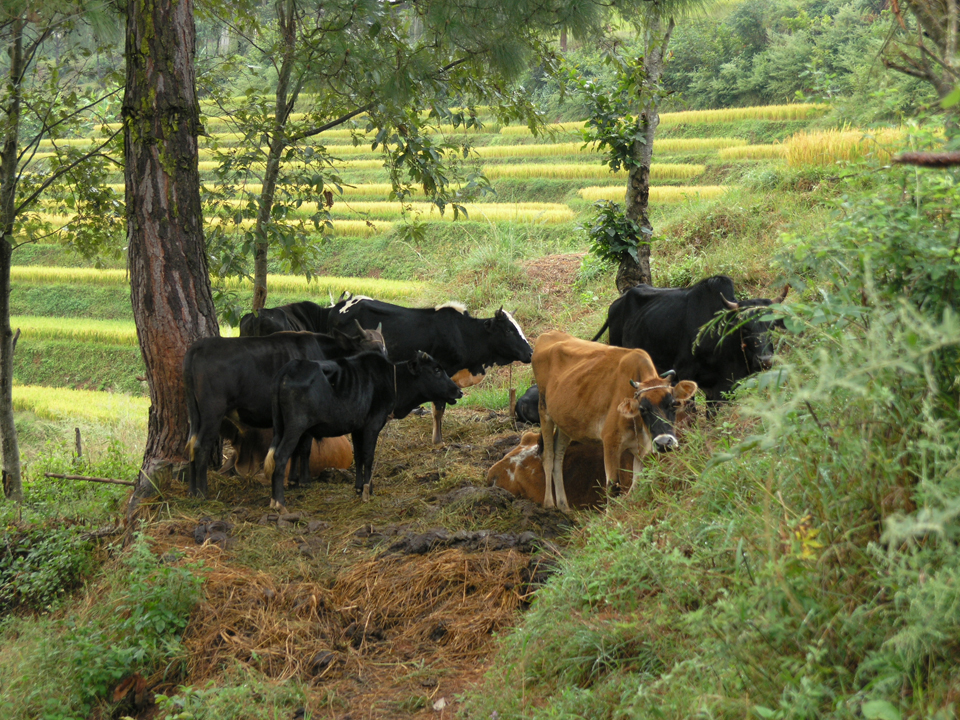
Cows in Bhutan ( Possibly the world's first organic country within the decade) Photo:LH
I first met Hugh at the annual Holistic Apple Growers meeting in western Massachusetts. At the beginning of each meeting, Michael Phillips, the organizer and champion of holistic apple growing, greets everyone and suggests we go around the room and introduce our orchards. The first year I attended, Bill McKintley from Potsdam, New York, then the owner but now retired, of St. Lawrence Nurseries, began. John Bunker, who runs Fedco trees in Maine spoke next. John lives in Palermo, Maine, and is passionate about Maine’s heirloom varieties. Brian Caldwell, a grower in New York, is an organic vegetable researcher at Cornell University. He has two small orchards near his home. I was intimidated when my turn approached.
“I recently moved to a farm with an abandoned apple orchard,” I said, “and I am trying to bring it back, using only organic materials. But I’m a sculptor, and I don’t know anything about apples. “
Everyone was polite; no one hinted I might be getting in over my head.
“How many trees do you have?” asked a handsome man with an Australian accent. That was Hugh Williams. When it was Hugh’s turn to speak, I remember he said he had been growing apples for forty years, and added coyly, “I’m waiting for the day I can be rid of my sprayer.” I wrote that down.
Over the last decade, Hugh has attended every apple growers meeting. Hugh always brings something original to our gatherings, a new enthusiasm, some relationship he hadn’t noticed before, an insight as to how a plant or animal grows. His cows are grass fed, and the calves run with the herd. An interviewer wrote, “We even saw Hugh milking from one side of a cow while a calf was nursing from the other side.”
Hugh knows about challenges. He and his family live solely off the profit from their farm. In a bad year, they have to be creative. Hugh wrote, “We have a very poor apple crop too, except on a few varieties. Enough for our fruit share members, and we have great plums, peaches and pears so we'll eke our way through another year.”
I had written that our crop failure was in part due to biennial production because we don’t thin the fruit from the mature trees. Hugh answered, “For us it was mostly poor pollination. There were no insects, even on the dandelions!” Hugh and Hannah think it's a “global phenomenon” and referred to a “thinning” of the insects. Hugh reminded me that when you stop at a gas station today, there is no longer the need to clean your windshield. It used to be de rigeur, so many squashed insects stuck to the glass. Where did these bugs go? I never clean my windshield anymore.
I think of the avalanche of toxic chemicals we have been releasing onto our planet every day since the end of World War II. The companies that made nerve gas and other toxic materials needed to change their product line in order to continue operating. Someone had the brilliant idea to manufacture chemical pesticides, herbicides, and fertilizers for the farmer. The corporate world is concerned with the bottom line. Inside brick and steel buildings, workers lose all connection to the natural world, to the subtlety of light, to beauty, to the richness of the insect, plant, and animal worlds, to the future of our children.

Two Girls in the Market, Bhutan Photo:LH
There is an article in the July 25, 2014 issue of Science, Defaunation in the Anthropocene. Defaunation is a new word used to describe not only the disappearance of a species but the decline in numbers. Farmers like Hugh and Hannah Williams don’t need scientific studies.
Hugh ended his note saying,
It raises the question of what actually is the function or purpose of agriculture, which certainly is not inherently tied to money, nor perhaps even to cropping! Our spiritual purpose becomes ever closer and more concrete. While yes, our farm is a temple precinct, we cannot avoid the conclusion it is also the very sensitive canary in the coal mine.
Hugh’s spirituality infuses his farm and all who know him, providing deep sustenance to all creatures. He shares his ideas easily, even when they are counter to how much of the world thinks. I admire Hugh because he cultivates the physical demands of being a farmer—the hard work, the selling, the making a living—all with dexterity and wit, and he attends equally to the spiritual, with passion and reverence. Perhaps he would say, these two realms are connected, or are in fact, one and the same. Maybe, that is why his farm is named Threshold, a place of connection between inner and outer, earth and sky, the physical and the spiritual, the material and the ethereal.

Turning a large Prayer Wheel, Bhutan Photo:LH
A Dream for the New Year
I went to sleep not having written a blog and this dream woke me . . .
I was in a room and it was time. My mind was clear and present. I agreed to have the injection that would end my life. But when a tall man with a black suit and white shirt arrived with a syringe ready to plunge the needle through my skin, I freaked. “No! No, no!” I shouted as I pulled away. He was determined and latched on, but I was thrashing wildly and ripped free of his grip. I would not give in easily, I wanted to live.
With every particle of my being, I fought back. Then I said, “Please, if I am to die now, I must tell my Zen teacher and community.” He agreed to let me go make a phone call if afterwards I would return for the needle.
I ran out of the room, ran as far and as fast I could. I was on the lam. Up and over bridges, staircases, down alleys, and across lonely boulevards. In an area with small shops I saw some boxes of biscuits and thought of snatching one, but resisted.
Then I saw my daughter. I called, “Ariel!” and again, “Ariel, come with me, please!”
She came over, I grabbed her hand, and we sprinted until we arrived on a grassy plateau. I was about to tell her what was happening when the tall man with the black suit and white shirt arrived waving the syringe. He grabbed my arm and said, “You will not escape me, now!” He jerked my right hand towards his body to plunge the needle into my wrist. He injected the fluid with great glee and strode away. But I had seen the needle catch on my sweater’s knitted cuff, the poison had not entered my body.
I had outsmarted death. I didn’t know how many more times I would be able to avoid him, but I secretly hoped for nine lives like a cat — and that when the ninth time came — I would be ready. I want no regrets, I want to go with grace.
You might wonder why such a strong dream at this turning of the year. A few days ago, I had breakfast with a friend who lost her partner to a re-occurrence of breast cancer. I have a friend struggling with depression, another paralyzed by the political turmoil in the world, and another beside herself with grief because of the destruction of the natural world. Many of us carry serious fear, and even terror.
Confucius told his followers, 'Bring peace to the old, have trust in your friends, and cherish the young.' And he lived during turbulent times. The message I received in my dream is to live life to the fullest. I am grateful for my Zen Mountain Monastery community who helped me survive in my dream as they have through difficult times. I am grateful for my daughter who brought her angelic presence to the dream as she so often does in daily life.

Ariel and I on a Hike, Selfie, 2016
Dreams have a lot to offer us. I tried to go deeper into sensing this ‘being alive’. I felt each thing awake — the singular blade of grass, the snowflake, the pink salmon. We shape the world with what we do, what we see, and what we think. Mind is what I cherish because it connects us all — each person born and unborn — each tree and star. And just maybe, the poison to my body had no effect because it will never have power over mind.
I wish you happiness and well-being in the coming year!
May you receive and offer gifts of kindness, generosity, and creativity.

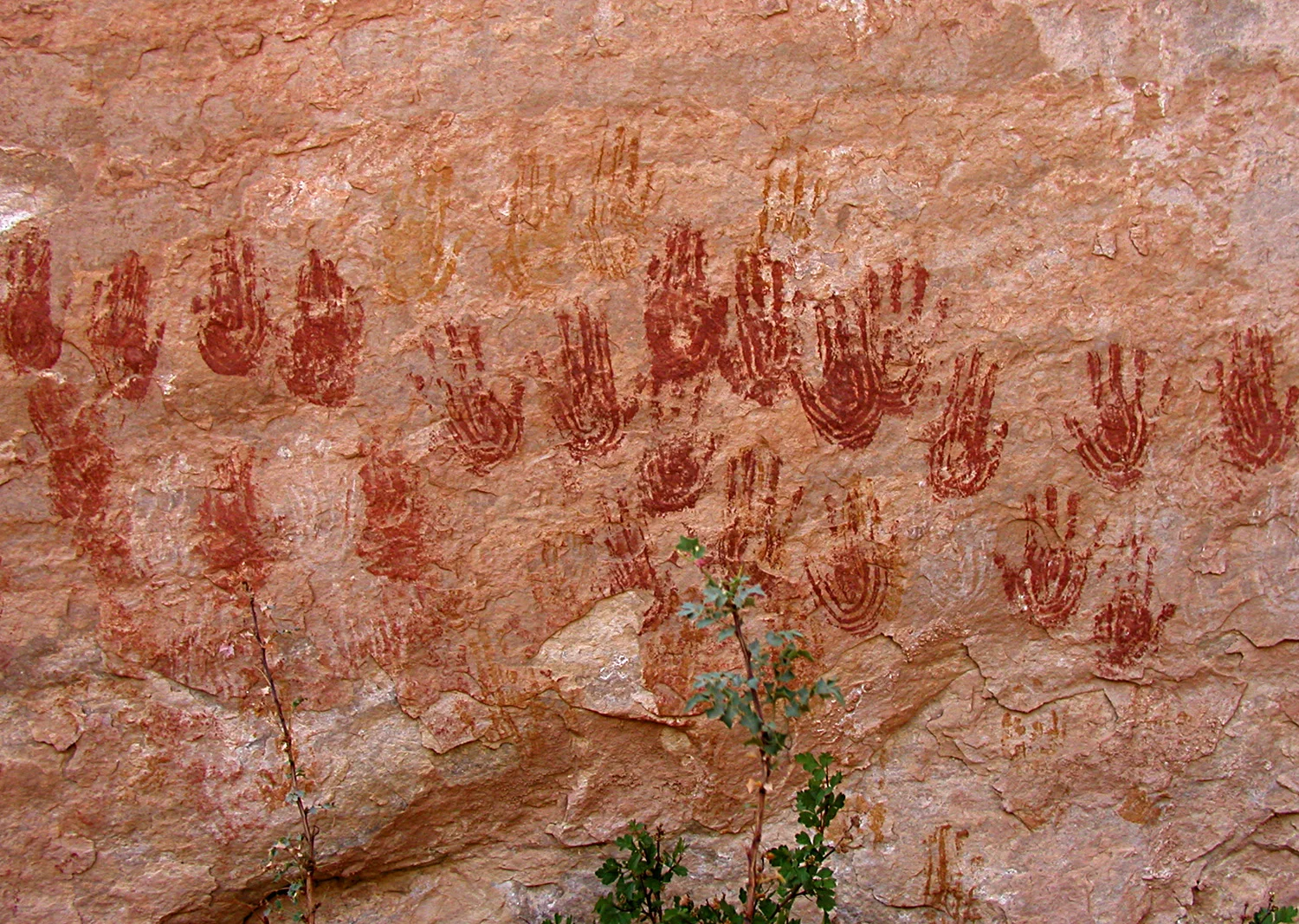
Many Hands Blessing Earth
Happy New Year 2018
Food is Primary Care
Sometimes I will buy a big peach, a bright red tomato, or even an apple only to be disappointed when I bite into a mealy peach, a watery tomato, and a tasteless apple. I don’t like to throw out food, so I often eat it anyway. But sometimes, it’s just so bad that I guiltily toss the entire beautiful glob into the compost pile, burying it under some faded tulips or tough cabbage leaves.
Nutritionists say that we’re not getting the nutrients our bodies need from our food. Considering the obesity epidemic and the debilitating diseases in America, it’s hard not to agree. Soil health, crop health, and human health are interrelated. Since the 1950s, however, crop yield has gone up, but nutritional value has gone down. The great monocultures of agricultural production have focused on yield, pest resistance, appearance, and shelf life; not taste or nutrition.
Many of our food systems provide food that is low on both flavor and nutrition — for example, food served in hospitals to those who are ill, people who need healthy food. Turkey with corn might sound appealing when ticked off the menu, but when it arrives the next day, it’s a different story. Pre-frozen turkey rounds and corn niblets grown with chemical pesticides and herbicides, not to mention jiggles of artificially dyed red and orange Jello for dessert, is neither appealing nor nutritious.
The good news is that Marydale Debor, founder of the organization Fresh Advantage (their wonderful tagline is Food is Primary Care), works to put fresh and nutritious food back into hospitals, schools, and other institutions. It’s not easy – the old guard must be removed and new chefs who want to buy and cook with local ingredients need to be hired. Debor knows that buying food from a small local farm is the best way to get tasty and nutritious food.
A healthy diet contains a diversity of foods, but how to encourage diverse and nourishing meals when much of our food no longer has taste — especially when junk food has so much flavor? I heard a presentation by Mark Schatzker, author of The Dorito Effect: The Surprising New Truth about Food and Flavor. He explained that not only have our foods lost their flavor, but food is now separate from taste. He gave the example of the Frito-Lay Company that makes Dorito chips. In that product, for the first time, taste was manufactured; and flavor was added separately such that taste had no relation to the product’s food ingredients. Frito-Lay, Inc. (a subsidiary of PepsiCo) perfected the taste of their chip to be appealing to a wide group of people. This original manufactured taste opened the door to all kinds of manufactured food, in particular, the enormous category of junk food.
Humans can have associations with food taste from childhood like the sweetness of mother’s milk. If a manufactured food is high is corn fructose, it will satisfy this associative sugar craving, but, and here’s the catch, it will not satisfy the belly’s nutritive need because it’s only flavor. We don’t stop eating, because the craving doesn’t go away. We are caught like Tantalus reaching for the apples that are forever out of reach.
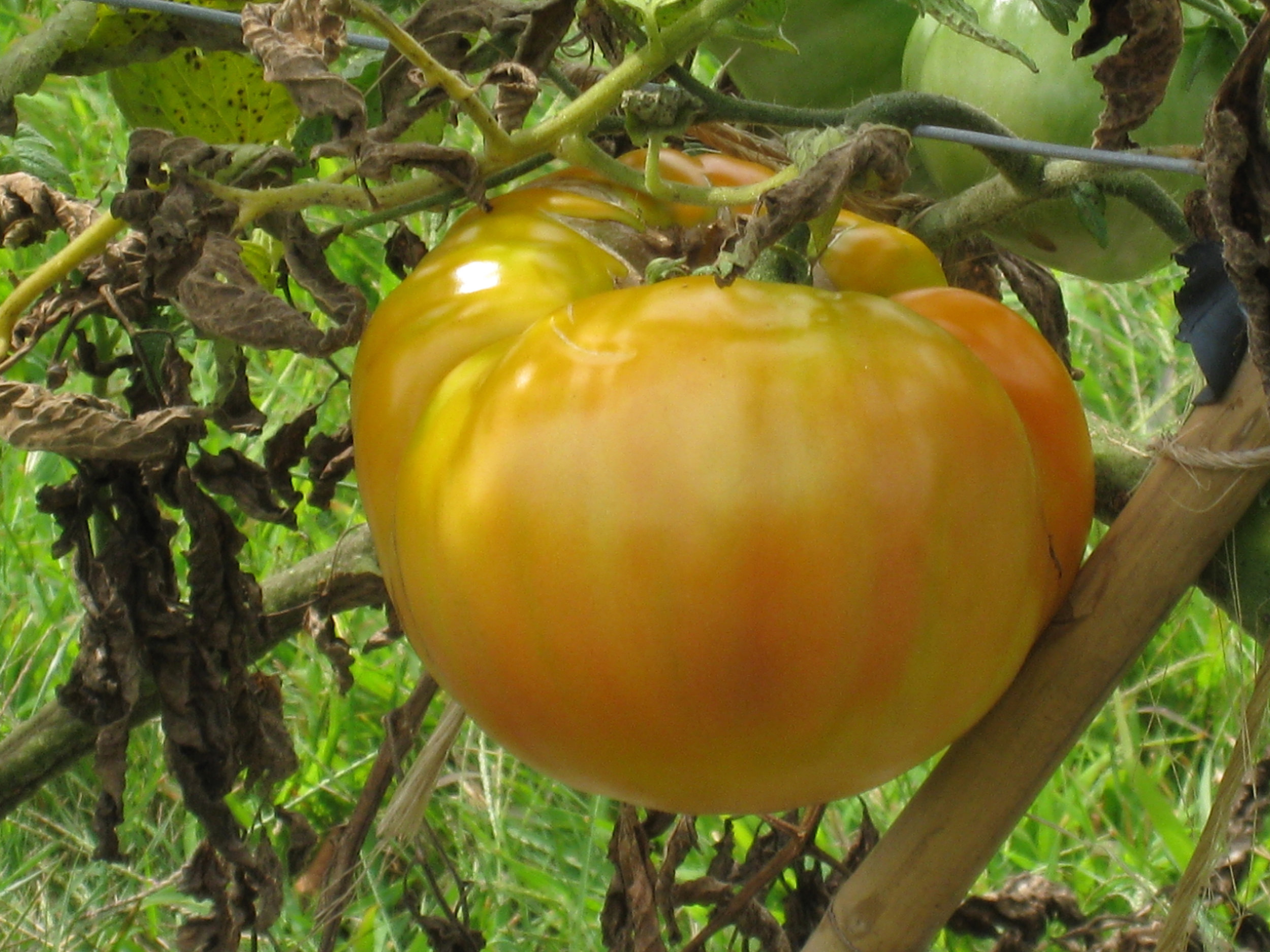
I love potato chips and eat more than I like to admit. But if that peach I had grabbed was warm, sweet, and juicy, or there was a basket of cherry tomatoes on the kitchen counter, I would eat a bellyful, be sated, and nutritionally fed. Healthy food needs to be the norm for people everywhere. Everyone should have access to nourishing and delicious food at a price that is affordable.
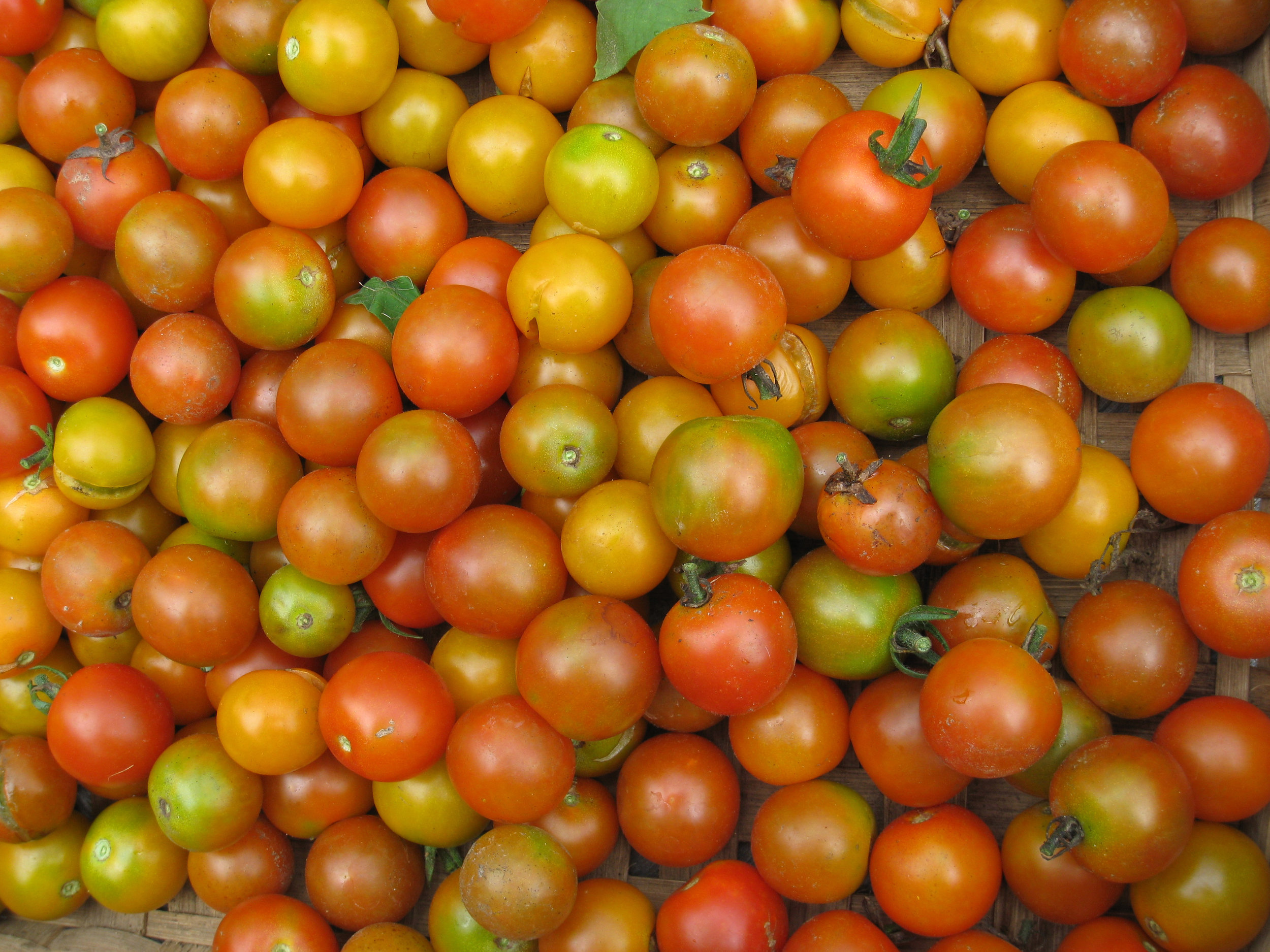
A Late Harvest of Cherry Tomatoes from Old Frog Pond Farm
Some people believe that our bodies can sense food grown with love and compassion; it feeds the spirit as well as the body, and sadly the opposite is also true. Food made by an angry cook can make a food unappealing or even repellent. ‘Food is primary care’ — and real food inspires wonderful poetry!
Ode to The Tomato
by Pablo Neruda
The street
filled with tomatoes,
midday,
summer,
light is
halved
like
a
tomato,
its juice
runs
through the streets.
In December,
unabated,
the tomato
invades
the kitchen,
it enters at lunchtime,
takes
its ease
on countertops,
among glasses,
butter dishes,
blue saltcellars.
It sheds
its own light,
benign majesty.
Unfortunately,
we must murder it:
the knife
sinks
into living flesh,
red
viscera
a cool
sun,
profound,
inexhaustible,
populates the salads
of Chile,
happily, it is wed
to the clear onion,
and to celebrate the union
we
pour
oil,
essential
child of the olive,
onto its halved hemispheres,
pepper
adds
its fragrance,
salt, its magnetism;
it is the wedding
of the day,
parsley
hoists
its flag,
potatoes
bubble vigorously,
the aroma
of the roast
knocks
at the door,
it's time!
come on!
and, on
the table, at the midpoint
of summer,
the tomato,
star of earth, recurrent
and fertile
star,
displays
its convolutions,
its canals,
its remarkable amplitude
and abundance,
no pit,
no husk,
no leaves or thorns,
the tomato offers
its gift
of fiery color
and cool completeness.
Witch Doctors
To return to my dying Asian pear tree that I wrote about a month ago: I finally did call the nursery. The horticulturalist assured me that the tree was certainly a Hosui variety – because Hosui get fire blight very easily – and he was certain it was fire blight.
“Pull it right out!” he commanded. “Fire blight will spread to the other trees.” He added that you have to be super vigilant with Hosui, which essentially means spraying Streptomycin in the spring when fire blight is a possibility. He said many people plant Kosui instead of the Hosui, but even that variety isn’t all that resistant. Not like Olympic, for example. “Orchardists are always pulling the Hosui and replanting with more resistant varieties.
I didn’t ask, “Why then, are you selling them?”
It turns out that my tree isn’t a Hosui or a Kosui – it’s a Niitaka. And even though every leaf blackened and fell, I decided to try and save the tree using a poultice of carbonatite, clay, and aloe, and some rubbing and mumblings. After a week, I was excited to see that a few of the buds were plumping and showing some green tissue. Now a witch doctor is an interesting phenomenon.
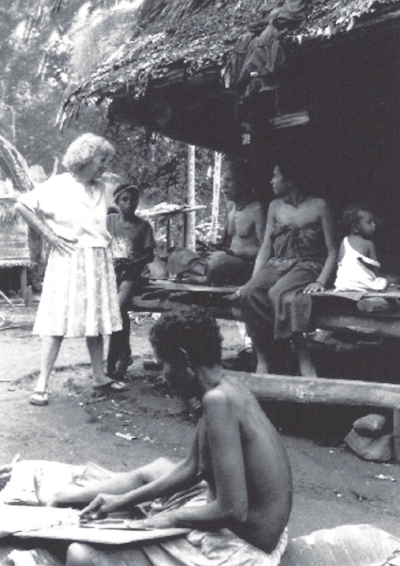
Dr. Annette Weiner, Kwaibwaga Village, Trobriand Islands, 1989
I had an experience firsthand when I lived with my anthropologist mother on a small coral atoll in New Guinea. Ours was an inland village, but one day some of my mother’s informants (the anthropological jargon for those who provide answers to the anthropologist’s questions) said, let’s go visit a coastal village. We walked a few miles over sharp coral to the far side of the island. As we neared the coastal village, I was struck by the trees we walked by. Their roots were above ground, tall intertwining webs formed tent-like structures that I could imagine hiding inside of.
When we entered the village, we felt oddly unwelcomed. The men were out fishing and the women were wary. That’s when I got something in one of my eyes. A piece of dirt or an insect. My eye stung, but no one could see anything in it. After hanging out for only a short while, we turned around to make the trip home. The suspicious looks from the villagers didn’t feel good, and we didn’t want to cause trouble.
We traveled back through the forest of amazing trees, back along the rough coral trails, and finally entered our village towards nightfall. By the time we were back, I was feverish and dizzy. Word buzzed around the village. Questions were asked. Had anyone said magic to protect me against flying witches. Flying witches inhabit the buttressed roots of those mysterious trees. Of course, the witches are jealous of young girls. They were certain that I had been attacked by a flying witch.
My mother was nervous. Even though she had aspirin and antibiotics to give me, and we were both taking quinine for malaria, she wondered what it could be. She was also fascinated to know what the villagers would do. They told her they had called a witch doctor from another village who specializes in flying witches. A skinny old man came in carrying his satchel of herbs. He checked me over, bending my limbs, looking into my eyes. He rubbed herbs into my skin and mumbled prayers. He was paid. And when my mother looked at him expectantly, he said, “The witch is only playing with your daughter; it won’t kill her.”

LH in Kwaibwaga Village in 1971 (fully recovered)
Norman Cousins, one of the early proponents of the mind-body connection, relates how when he visited the Schweitzer Hospital in Gabon, Africa, he commented to Dr. Schweitzer, “The local people are lucky to have access to the Schweitzer clinic and not have to depend on witch-doctor supernaturalism.” One look at Dr. Schweitzer and Cousins recognized his ignorance. The next day, Dr. Schweitzer took him to observe native African medicine. The witch doctor gave herbs in a brown paper bag to some patients and incantations in a brown paper bag to others, while still others he directed towards the Western doctor.
Dr. Schweitzer explained the three groups. The first had what he called functional issues; these would go away easily and the herbs would help. The next group had what he called psychogenic problems, and they were treated with African psychotherapy. The third had physical problems, like a tumor or broken bone, and these he sent to the Western doctor. When Cousins pushed for an explanation, Schweitzer said,
The witch doctor succeeds for the same reason all the rest of us succeed. Each patient carries his own doctor inside him. They come to us knowing the truth. We are at our best when we give the doctor who resides inside within each patient a chance to go to work.
—From The Mysterious Placebo, Norman Cousins
I believe plants aren’t so different from us. There is a doctor inside the trees that I hope I can motivate. I don't know if it has fire blight or a fungal disease. But rather than pull it, I will wait and see if its own wisdom along with my herbs will help.
Search Blog
-
2025
- May 9, 2025 A View from the Tractor Seat
- Apr 11, 2025 Dig
-
2024
- Jan 7, 2024 Winter Wassail
-
2022
- Dec 11, 2022 Keeping Time
- Jun 17, 2022 This Apple-Shaped Earth
- Jan 23, 2022 What is a Jizo?
- Jan 16, 2022 An Invite and Housekeeping Update
- Jan 1, 2022 The Year of the Frog: What Orchardists Do While Apple Trees are Chilling
-
2021
- Oct 24, 2021 Figs
- Oct 3, 2021 The Artist and the Orchard: A Memoir
- Aug 8, 2021 Red-Fleshed Apples
- Jul 25, 2021 When We Were Trees
- Jun 27, 2021 Castor Beans—Who Knew?
- Jun 13, 2021 Spring Training at a Zen Monastery
- May 4, 2021 Our Trees are in Bloom
- Apr 18, 2021 Hooray!
- Jan 24, 2021 Wassailing, virtually!
- Jan 1, 2021 Sitting
-
2020
- Dec 21, 2020 Darkness to Light
- Nov 28, 2020 One Heart
- Sep 18, 2020 Juggling Flowers, Fruit, and Vegetables
- Aug 23, 2020 Refuge
- Aug 9, 2020 Bags of Fertilizer
- Aug 2, 2020 The Sermon of the Blue Heron
- Jul 26, 2020 What's the Buzz?
- Jul 19, 2020 Farm Moments
- Jul 12, 2020 Lost Wax
- Jul 5, 2020 Catalpa: The Hugging Tree
- Jun 28, 2020 Pedaling Peace
- Jun 21, 2020 See Change
- Jun 14, 2020 Lalla Unveiled
- Jun 7, 2020 Pond Alchemy
- May 31, 2020 The Birth of Fruit
- May 24, 2020 An Artist in the Orchard
- May 17, 2020 Walking the Land: Returning Home
- May 10, 2020 Stinging Nettles: Gifts from the Great Mother
- May 3, 2020 The Mystery of Swallow
- Apr 26, 2020 Aerial Bruststrokes
- Apr 19, 2020 Simple Pleasures
- Apr 12, 2020 Weeds and Other Gifts
- Apr 5, 2020 Remembering the Seeds
- Mar 29, 2020 Blow on the Embers
- Mar 22, 2020 Ripples
-
2019
- Nov 16, 2019 Tibet Impressions
- Nov 9, 2019 Forest Tales
- Oct 13, 2019 The Gift
- Aug 4, 2019 The Season is Apples, Berries, and Grandfather Fire
- Jun 8, 2019 Pointers for a Writing Life
- May 12, 2019 Mothers of the Earth
- Apr 6, 2019 The Apple-Shaped Earth
- Mar 23, 2019 You Don’t Know What You Have Till It’s Gone
- Feb 23, 2019 Generations
- Feb 9, 2019 What Are We Doing to the Earth, John Chapman?
-
2018
- Dec 31, 2018 Long Shadows
- Oct 6, 2018 A Pilgrimage to India
- Aug 18, 2018 Scrap Wrenn
- Aug 11, 2018 Off-the-Wall Comments from an Ignorant Farmer
- Jul 28, 2018 Creative Connect
- Jul 14, 2018 How is the Orchard?
- Jun 30, 2018 Which Way?
- Jun 16, 2018 Geese, Herons, Beavers, and the Baby Steps of a Lapsed Blogger
- Feb 24, 2018 Mama's Coupons — Good Forever
- Jan 27, 2018 January Ice
- Jan 13, 2018 The Muse
-
2017
- Dec 30, 2017 A Dream for the New Year
- Dec 23, 2017 A New Year for Apples
- Dec 16, 2017 Intuition
- Nov 22, 2017 Thanksgiving OM
- Nov 4, 2017 East Fork Pottery
- Oct 28, 2017 Putting Down New Roots
- Oct 21, 2017 A is for Art
- Oct 14, 2017 Eve domesticus
- Oct 7, 2017 A String Workshop
- Sep 30, 2017 After Applepicking
- Sep 23, 2017 Two Bad Women and One Good Apple
- Sep 16, 2017 Plein Air Poetry
- Sep 9, 2017 Cutting Off a Leg
- Sep 2, 2017 The Changing Landscape
- Aug 26, 2017 All About Art
- Aug 19, 2017 My First Visit to the Farm
- Aug 12, 2017 The First Food
- Aug 5, 2017 A Teapot, a Woman, and maybe a Boat
- Jul 29, 2017 A Raspberry Dilemma
- Jul 22, 2017 Consider the Miracle
- Jul 15, 2017 Meeting Ekphrasis
- Jul 8, 2017 Ripening Fruit
- Jul 1, 2017 The Voice of The Caterpillar
- Jun 24, 2017 Goumi — An Unusual Fructus
- Jun 17, 2017 Concord, an American Bloomsbury
- Jun 10, 2017 The World Is Bonkers — Shall I Laugh or Cry?
- Jun 3, 2017 Bonkers, a Revolutionary Apple
- May 27, 2017 Guardians of the Swamp
- May 20, 2017 There are Mushrooms and There are Morels
- May 13, 2017 "What's in a Name?"
- May 6, 2017 Bloom Follows Pink: Orchard Pollination
- Apr 29, 2017 The Orchard Is at Pink
- Apr 22, 2017 Natural Farming — Part 2 (continuation from last Sunday's blog)
- Apr 15, 2017 Natural Farming — Part 1
- Apr 8, 2017 Boats, Figures, and Catching Fish
- Apr 1, 2017 A Man with a Mission: The Nuts and Bolts of Bronze Casting
- Mar 25, 2017 A Chalice of Spirit, Art, and Nature
- Mar 18, 2017 Hanami — Blossom Viewing
- Mar 11, 2017 Soil Redemption Song
- Mar 4, 2017 Food is Primary Care
- Feb 25, 2017 Pomme de Terre
- Feb 18, 2017 Organic Certification
- Feb 11, 2017 Tantalizing Fruit
- Feb 4, 2017 The Myths of History
- Jan 28, 2017 The Orchard in Winter
- Jan 21, 2017 The Hi-Line
- Jan 14, 2017 Artistic, Botanical, and Social Diversity
- Jan 7, 2017 Where is Eden?
-
2016
- Dec 31, 2016 The Creative Heart
- Dec 24, 2016 A Christmas Tale
- Dec 17, 2016 Who are the Crones?
- Dec 10, 2016 The Olympic Bell (Part Two)
- Dec 3, 2016 Overheard in the Apple Orchard in Early December
- Nov 26, 2016 The Lessons of a Tortoise
- Nov 19, 2016 In the Studio
- Nov 12, 2016 Even in Darkness
- Nov 5, 2016 Southern Apples, an Elephant, Monkey, Rabbit, and Bird, Two Mango Trees and a Birthday
- Oct 29, 2016 The Tools of Art
- Oct 22, 2016 Labyrinths
- Oct 15, 2016 Repairing the Broken
- Oct 8, 2016 When You Are No More
- Oct 1, 2016 Creation Rain
- Sep 24, 2016 Breaking the Glass
- Sep 17, 2016 String Art
- Sep 10, 2016 Poetry and Photosynthesis: It's all in the Leaves
- Sep 3, 2016 In the Plenty of Time
- Aug 27, 2016 Witch Doctors
- Aug 20, 2016 Listen Coyote
- Aug 13, 2016 Milkweed in the Orchard
- Aug 6, 2016 Some People See a Turtle
- Jul 30, 2016 Arborshaping
- Jul 23, 2016 Joseph Wheelwright: Sculptor of Stones and Trees
- Jul 16, 2016 Asian Pears
- Jul 9, 2016 Gold Leaf, Grief, and the Creative Process
- Jul 2, 2016 The Olympic Bell (Part One)
- Jun 25, 2016 Around the Mulberry Bush
- Jun 18, 2016 Avoiding Apples
- Jun 11, 2016 Fructus
- Jun 4, 2016 Astonishing Apples
- May 28, 2016 Scare the Caterpillars
- May 21, 2016 Join the Club!
- May 14, 2016 The Graft
- May 7, 2016 Rooster, Rhubarb, Rue
- Apr 30, 2016 What do Dolphins and Nettles Have in Common?
- Apr 23, 2016 Art Prunings
- Apr 16, 2016 A Few of the First Arrivals
- Apr 9, 2016 Taste the Spirit of Sustainable Agriculture
- Apr 2, 2016 First Orchard Spray - March 22-24, 2016
- Mar 26, 2016 Hawkeye Apple
- Mar 19, 2016 Desiring the Almata Apple
- Mar 12, 2016 Ugly Fruit
- Mar 5, 2016 Winter Tracks
- Feb 27, 2016 Splash
- Feb 20, 2016 Pruning
- Feb 13, 2016 Orchard Ruminants
- Feb 6, 2016 A Gathering of Seeds
- Jan 30, 2016 Orchard Dragons
- Jan 23, 2016 Tree Rings
- Jan 17, 2016 The Fallen Tree
- Jan 7, 2016 Wassailing the Apple Trees
- Jan 1, 2016 The New Year