LINDA HOFFMAN
Who are the Crones?
We are the crones, the old and wrinkled, wise ones. We have many names— Hecate, Spider Grandmother, Demeter; Siren, Gaea, and Oracle. We wait at the crossroads. We praise and encourage the living, we honor and care for the dying. In times of darkness, we know spring will return.
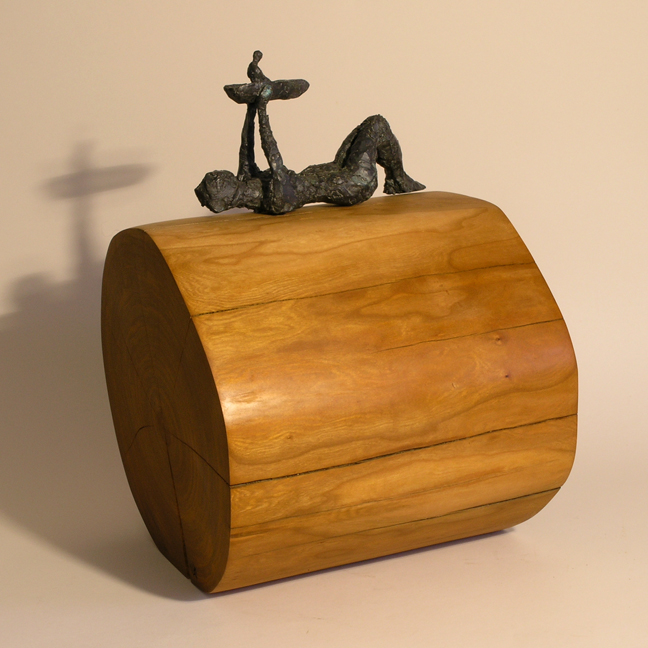
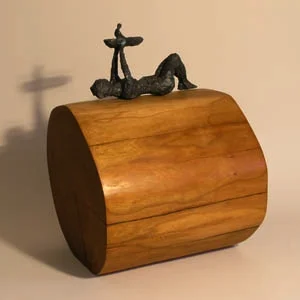
Woman Launching Boat, bronze sculpture, cherry wood, LH
At the time of the winter solstice ancient people believed that we must help the Light to be reborn. In many cultures, the crones facilitated this return. Women carried the mystery of life and death; women labored to guide back the sun.
Then things changed and men took control of women, especially in matters of religion.
Buddhism has traditionally followed the established social norms of the patriarchy into which the Buddha was born. When the Buddha established the rules for his followers, he differentiated between nuns and monks. Any nun, no matter how old or enlightened, had to bow down to a monk, even a novice. In Zen monasteries, the lineage of the transmission from one male teacher to the next has always been chanted as part of the service. Recently, things are changing. At Zen Mountain Monastery we now chant the names of the enlightened women of the way in addition to the male lineage. There were many great and compassionate teachers who taught students both male and female. Today, we have an altar in the front of the meditation hall for Mahapajapati, the first Buddhist nun and teacher.
I began to think about other groups of women left unsung. In the American frontier world, Johnny Appleseed is a celebrated hero. He stands out as a bold revolutionary, spreading seeds and saplings, helping the settlers establish ownership to land by planting an orchard, and sharing his beliefs based on the Swedenborg religion. But who are the frontier women who helped create this country? I found a few famous names—Belle Star, Poker Alice, Pearl deVere, Annie Oakley, Etta Place, and Calamity Jane. Belle was known for riding in a black velvet dress, six guns on her hips, and holding up stagecoaches. Poker Alice—you guessed it—was a devilishly good poker player, and bordello owner. Pearl deVere operated The Old Homestead, a lavishly upscale brothel in Cripple Creek, Colorado. You get the picture. Nice women don’t make history, but the names we choose to remember determine the history we remember.
The myths of ancient people are filled with stories of goddesses whose powers equaled that of their male counterparts. The history of women in the West is much more than brothels, bars, and Wild West shows. It is the story of hardworking American women, Native American women, Spanish-Mexican women, and the Chinese immigrant women who were sold and shipped to California by their impoverished families to work in laundries, bars, and mining camps. We need to remember all of these women and what a dark place the world has been for so many of them.
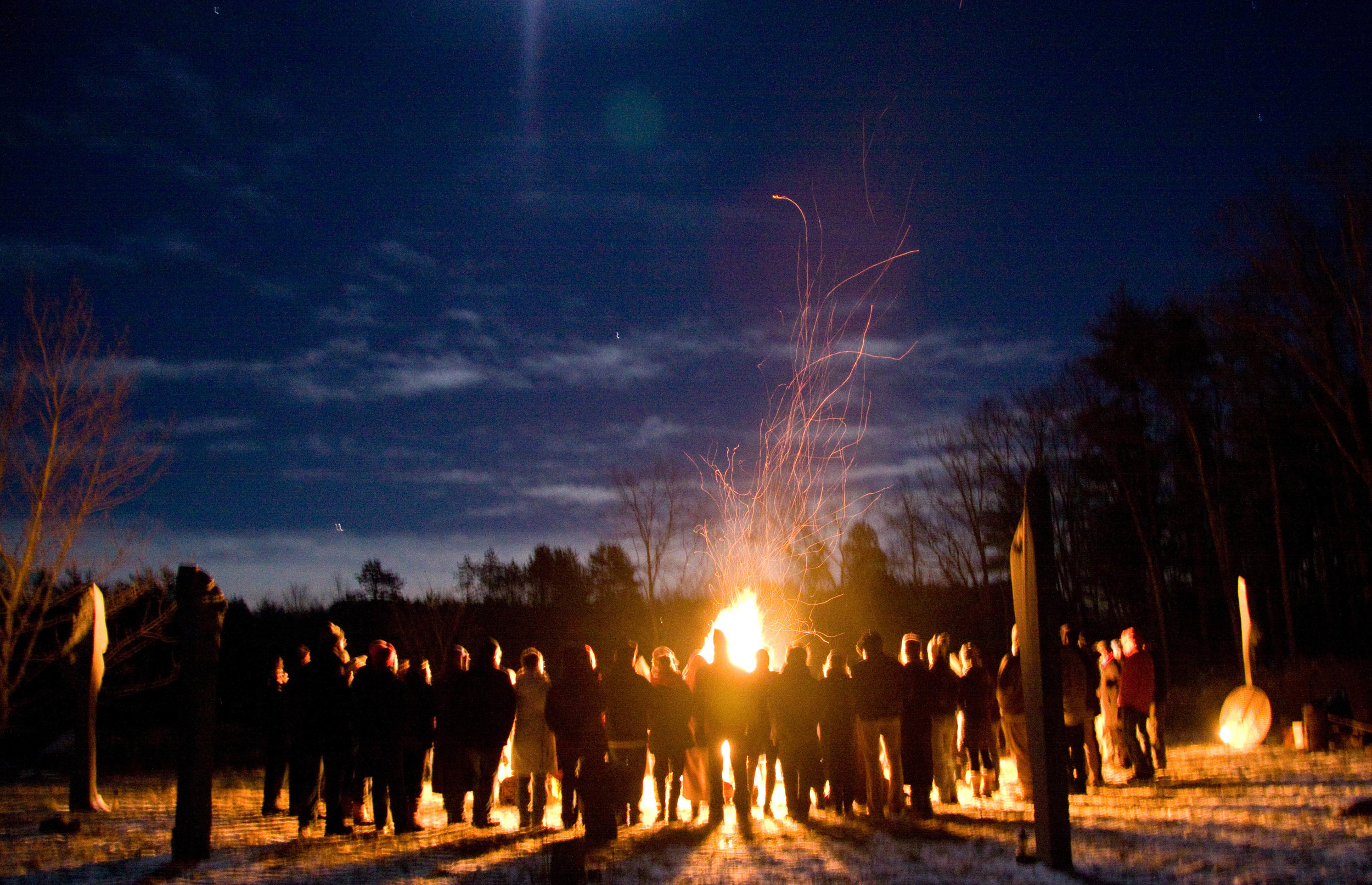
Solstice Fire, Old Frog Pond Farm, photo: Alexis Pappis
December 21st is the winter solstice, the darkest day of the year. At the farm we have a solstice fire where we reenact the return of the sun. In our ritual, it is the crones who go on a journey to find the sun and rebirth the Light. The crones remind us that there are many kinds of darkness. The darkness of racism and sexism, of hatred and war, of injustice, of sorrow and loss. The crones also remind us that there is darkness inside each of us, as well as a light. It is from this light, this often forgotten or darkened light, that the Goddesses labor, and birth the sun. Like Demeter knowing that she will be rejoined with her daughter, Persephone, we need to trust that the light will return, grief will be healed, and plants will bear fruit again.
Carl Jung said, "One does not become enlightened by imagining figures of light, but by making the darkness conscious." In remembering the names of those women who are forgotten, we shine light into the darkness of their cultural obscurity. As we light the solstice fire, we bring light to this world stamped with anger, aggression, and force. In gathering and opening our hearts to one another we grow the light. Happy Solstice!
Avoiding Apples
Last week I got an email from our local Harvard weekly newspaper asking about the crop this year.
Hi Linda,
I’m doing a piece this week on this year’s apple crop damage. Frank Carlson is estimating a crop that will be about 50 to 75 percent of an average year’s crop. Are you seeing that kind of damage to your crop? He said his Cortlands were hit the hardest, but Macs are also off.
Are your raspberries ok?
Let me know, sad year for the orchards, especially those who grow peaches.
Thanks,
Joan
Frank Carlson is the patriarch of the orchard world in Harvard. When I first decided to bring back our trees, I called him. I felt shy about disturbing the man who was running the largest orchard in town, but I needed to make a connection with someone who knew about apples. Frank told me to come by, but when I arrived, I wasn’t really sure why I was there. It was harvest time, and there were towers of wooden crates filled with freshly picked apples. Frank was a mini-cyclone, answering his pager, cell phone, and loudspeaker calls, but he still took the time to chat with me in between answering questions that came at him from all sides.
Nodding, he said, “I’m familiar with A & M Orchards.” I told him that its new name was Old Frog Pond Farm and that I wanted to grow organic apples. “A small operation that is organic might work,” he continued. I sensed a sympathetic familiarity among anyone growing apples. I appreciated Frank’s openness and drove away with a glimmer of hope. This year is a different story.
I wrote back to the Harvard Press reporter,
Dear Joan,
Yes - a sad year!
Our apples are certainly down 50 percent. It is variety dependent. The late flowering ones are all right, but varieties that flowered early were killed off by the frost.
Raspberries are doing well and it seems like a bumper crop of blueberries.
We have a few peaches…enough for us to eat; but indeed a very sad year for peach growers.
I think climate change is wreaking havoc with our perennial fruit crops. They suffer from these wild temperature fluctuations early in the season when the buds and blossoms are so vulnerable.
Linda

Climate change is the biggest factor affecting all of us. Plants don’t evolve as quickly as climate change is happening. Some good news is that one approach to lowering the amount of carbon dioxide in the atmosphere is to store more carbon in the soil. The soil benefits, the plants benefit, and the earth becomes healthier.
Much of the carbon originally came from the soil and was released into the atmosphere since the industrial revolution. We have agreed that we need to reduce the carbon in the atmosphere but where can it go? Water covers 70 percent of our planet and when carbon combines with water it forms carbonic acid raising the acidity of the water and killing off plant life. Soil can take back and store carbon if we change our approach to industrial agriculture and land use.
One of the most important practices is to cover every square foot of soil with plants. Erosion is a number one cause of the loss of carbon. The second practice is to avoid tilling the soiling or minimally till. Tilling exposes soil to the air and releases carbon. Plants do the opposite through photosynthesis. Even if our fruit trees aren’t producing peaches and apples, they are removing carbon from the atmosphere.
The French government recently put forward an initiative, 4p1000.org with the goal of mitigating climate change effects through agriculture. Already 28 countries have signed on including France, Mexico, Japan — no, not the United States. The benefit of carbon rich soils is that the plants become more resilient. When we eat the food produced by these healthier plants, human health also improves.
While this year we may not have a good apple crop, hopefully by continuing to support our trees and encouraging their growth, they will become stronger and be able to adjust better to the fluctuations in temperatures that are certainly going to be part of our lives for the next decades. Climate Change Boston has just released their projections for Boston that include 90 days of summer over 90 degrees, which is essentially all of summer.
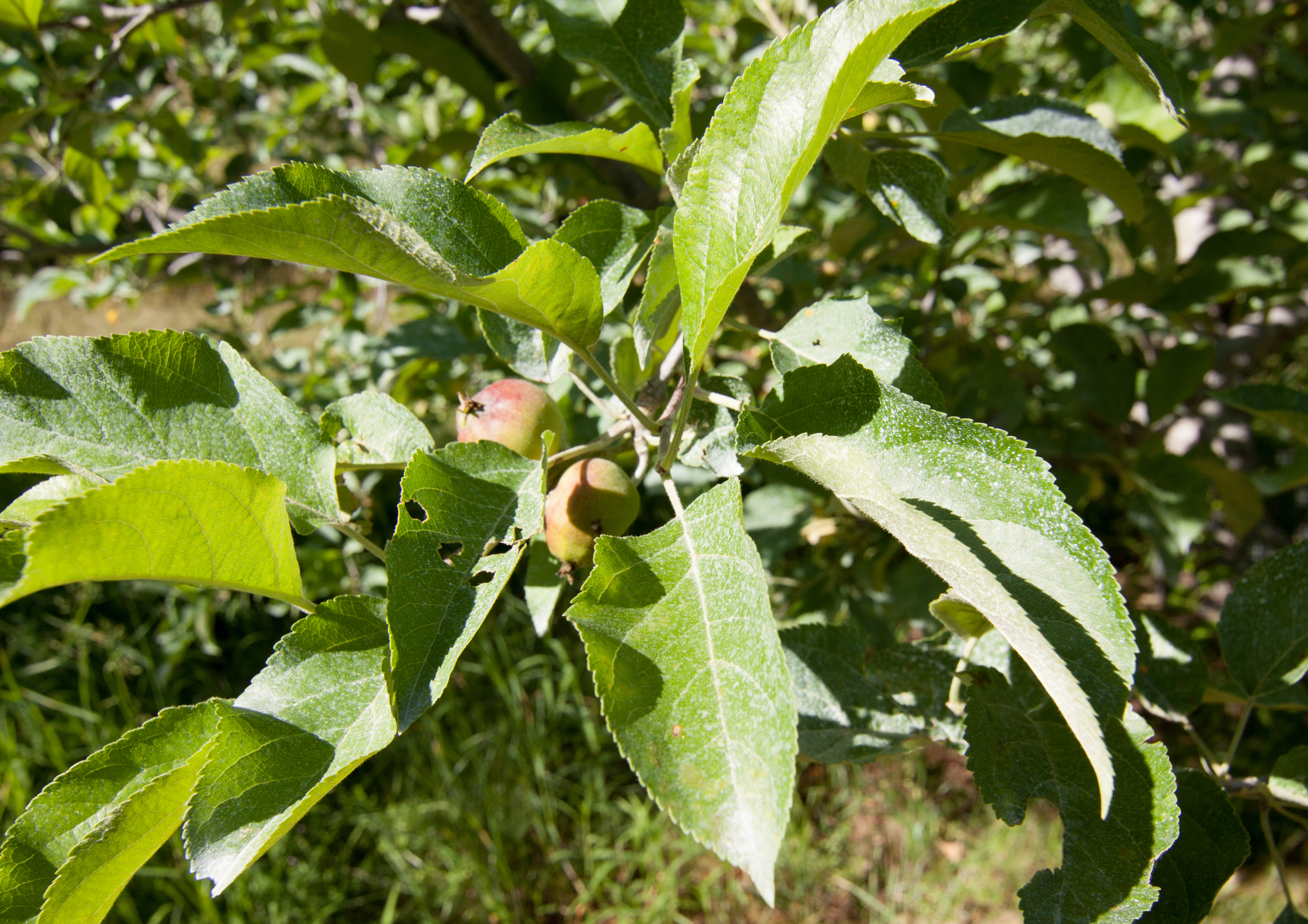
Still, it’s a sad year for fruit growers and the reason I have been avoiding writing about apples. The trees may be luscious with leaves, but there is really very little fruit. Truthfully, my estimate is far less than 50 percent, but I hate to say it. It’s so disappointing, and then I think that maybe I did something wrong, or that I could have done something differently.
Frank Carlson said that people are already calling for peaches. Their annual peach festival attracts a large following every year. It won’t happen this year, but they will be celebrating their 80th anniversary this summer. When the fruit is not as plentiful, your orchards need your support even more. Even if our apples aren’t plentiful, we hope you will come for raspberry picking, vegetables, workshops, our Plein Air Poetry Walk, and Outdoor Sculpture exhibits. This year we celebrate our 15th anniversary!
The New Year
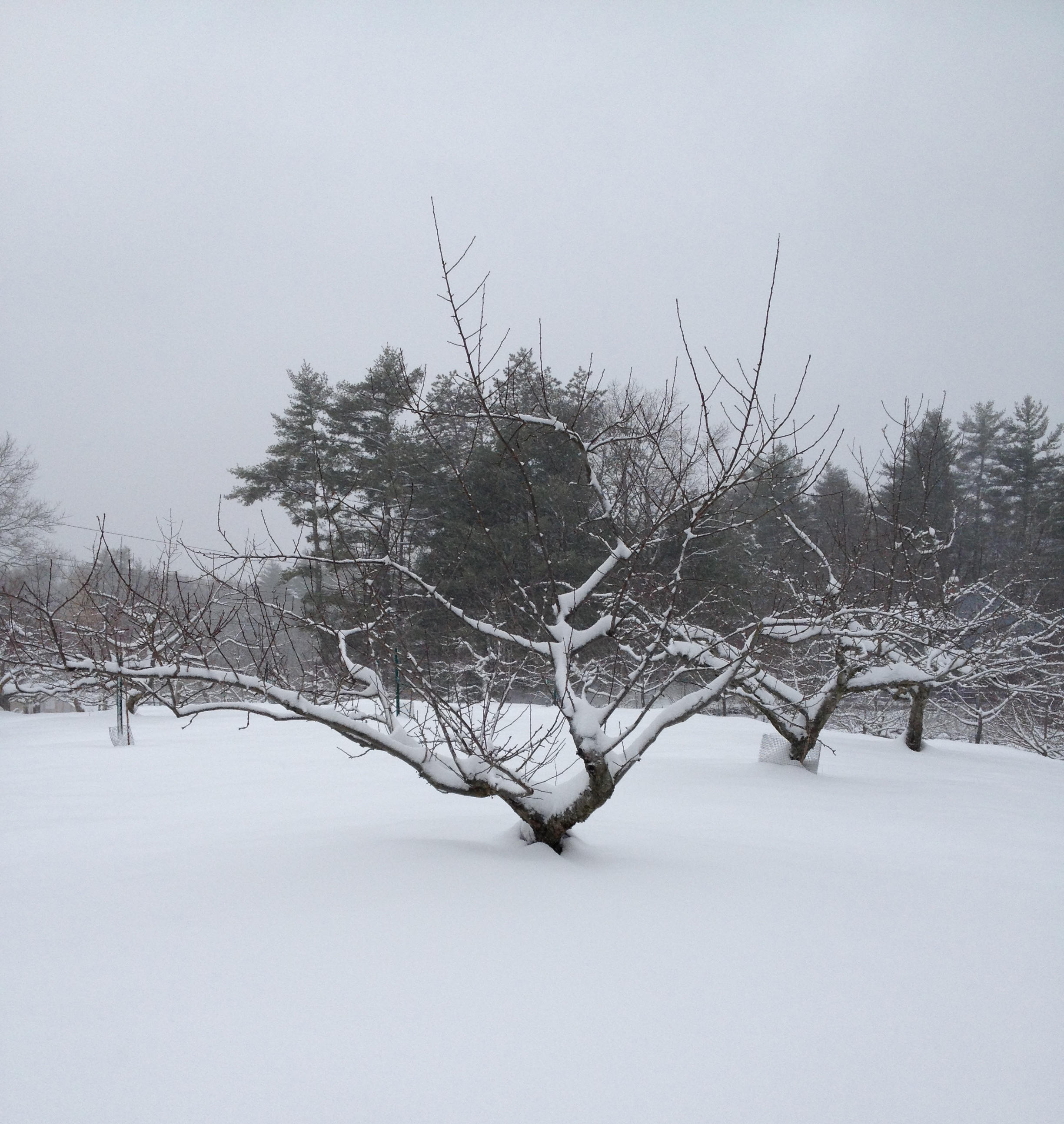
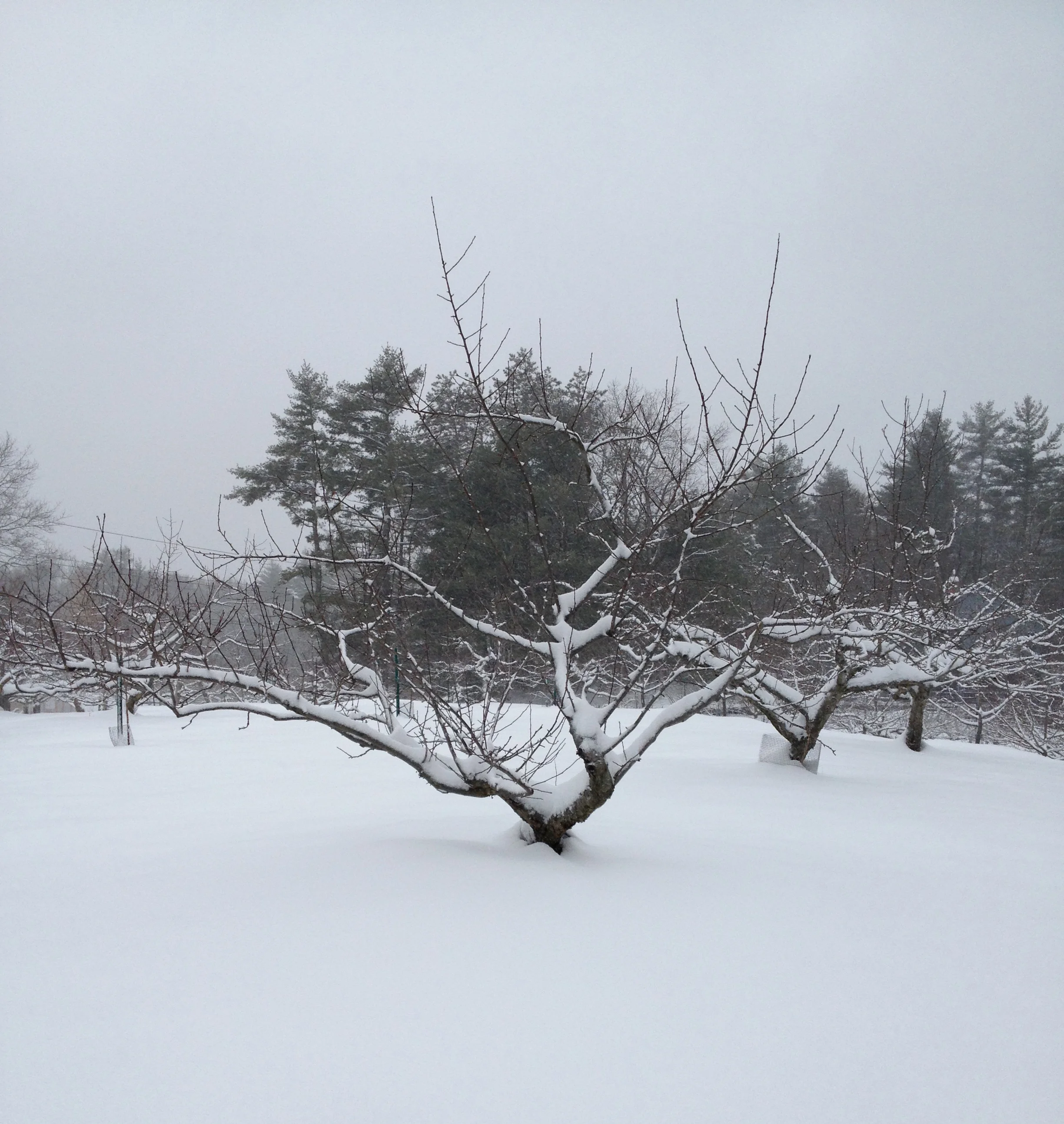
The apple trees, leafless and now snow boughed, hardly look like they did a few months ago when every branch seemed invisibly tethered to the earth by the weight of the fruit. Fall, 2015, will be remembered as a bumper year for apples in New England. Trees that hadn’t blossomed in over a decade produced a bountiful crop. Some of them still hold their fruit like splendid seasonal decorations. These old trees are two stories high; their fruit too high for deer, but perfect for crows and jays.
In the fall, when the days are shorter and the light decreases, apple trees drop their leaves and stop growing. They spend a dormant period with their stored energy like bears in hibernation. The trees start to grow again after they receive a certain number of chill hours followed by heat. Each variety has its own ‘chill’ requirement.
The chilling happens while the trees are dormant, seemingly lifeless. There is no reaching towards warmth and light; they are motionless. Their lives are not measured in growth, in doing; but in resting.
So much in the life of an orchard can be compared to a human life. Thinking about chill hours makes me ask. What might our chill requirement be? From what kind of chill hours would we most benefit?
In the days around the New Year, can we find time to rest, regroup, and refocus? The New Year offers us a chance to take up the questions of a transition time. What do I want to do differently this year than I did last year? How do I want to live my life? What changes would I like to make? To honestly reflect on these questions one needs a moment of dormancy.
I measure my own ‘chill’ hours in quiet time alone, in silent meditation, in working with our fruit trees. I can remember a day last fall when I was so filled with the constant demands of the outside world that I went back to the Asian pear orchard and began pulling weeds. The contact with the earth restored my inner balance. Other people find their chill hours hiking in the wilderness, singing in a chorus, or even cooking.
A chilling period that goes beyond the needs of a tree will often translate into a larger bloom, as if this longer period of dormancy energizes the tree beyond its normal capacity. How wonderful is that! Perhaps this is might be part of the explanation for the 2015 bumper year for apples. While most of us grew weary and frustrated with the frequency of heavy snowfalls and the endless cold, the trees appreciated the long chill temperatures. For apples, more chill time equals a better crop.
May you find chill time this winter in preparation for your own fruiting.
Search Blog
-
2025
- May 9, 2025 A View from the Tractor Seat
- Apr 11, 2025 Dig
-
2024
- Jan 7, 2024 Winter Wassail
-
2022
- Dec 11, 2022 Keeping Time
- Jun 17, 2022 This Apple-Shaped Earth
- Jan 23, 2022 What is a Jizo?
- Jan 16, 2022 An Invite and Housekeeping Update
- Jan 1, 2022 The Year of the Frog: What Orchardists Do While Apple Trees are Chilling
-
2021
- Oct 24, 2021 Figs
- Oct 3, 2021 The Artist and the Orchard: A Memoir
- Aug 8, 2021 Red-Fleshed Apples
- Jul 25, 2021 When We Were Trees
- Jun 27, 2021 Castor Beans—Who Knew?
- Jun 13, 2021 Spring Training at a Zen Monastery
- May 4, 2021 Our Trees are in Bloom
- Apr 18, 2021 Hooray!
- Jan 24, 2021 Wassailing, virtually!
- Jan 1, 2021 Sitting
-
2020
- Dec 21, 2020 Darkness to Light
- Nov 28, 2020 One Heart
- Sep 18, 2020 Juggling Flowers, Fruit, and Vegetables
- Aug 23, 2020 Refuge
- Aug 9, 2020 Bags of Fertilizer
- Aug 2, 2020 The Sermon of the Blue Heron
- Jul 26, 2020 What's the Buzz?
- Jul 19, 2020 Farm Moments
- Jul 12, 2020 Lost Wax
- Jul 5, 2020 Catalpa: The Hugging Tree
- Jun 28, 2020 Pedaling Peace
- Jun 21, 2020 See Change
- Jun 14, 2020 Lalla Unveiled
- Jun 7, 2020 Pond Alchemy
- May 31, 2020 The Birth of Fruit
- May 24, 2020 An Artist in the Orchard
- May 17, 2020 Walking the Land: Returning Home
- May 10, 2020 Stinging Nettles: Gifts from the Great Mother
- May 3, 2020 The Mystery of Swallow
- Apr 26, 2020 Aerial Bruststrokes
- Apr 19, 2020 Simple Pleasures
- Apr 12, 2020 Weeds and Other Gifts
- Apr 5, 2020 Remembering the Seeds
- Mar 29, 2020 Blow on the Embers
- Mar 22, 2020 Ripples
-
2019
- Nov 16, 2019 Tibet Impressions
- Nov 9, 2019 Forest Tales
- Oct 13, 2019 The Gift
- Aug 4, 2019 The Season is Apples, Berries, and Grandfather Fire
- Jun 8, 2019 Pointers for a Writing Life
- May 12, 2019 Mothers of the Earth
- Apr 6, 2019 The Apple-Shaped Earth
- Mar 23, 2019 You Don’t Know What You Have Till It’s Gone
- Feb 23, 2019 Generations
- Feb 9, 2019 What Are We Doing to the Earth, John Chapman?
-
2018
- Dec 31, 2018 Long Shadows
- Oct 6, 2018 A Pilgrimage to India
- Aug 18, 2018 Scrap Wrenn
- Aug 11, 2018 Off-the-Wall Comments from an Ignorant Farmer
- Jul 28, 2018 Creative Connect
- Jul 14, 2018 How is the Orchard?
- Jun 30, 2018 Which Way?
- Jun 16, 2018 Geese, Herons, Beavers, and the Baby Steps of a Lapsed Blogger
- Feb 24, 2018 Mama's Coupons — Good Forever
- Jan 27, 2018 January Ice
- Jan 13, 2018 The Muse
-
2017
- Dec 30, 2017 A Dream for the New Year
- Dec 23, 2017 A New Year for Apples
- Dec 16, 2017 Intuition
- Nov 22, 2017 Thanksgiving OM
- Nov 4, 2017 East Fork Pottery
- Oct 28, 2017 Putting Down New Roots
- Oct 21, 2017 A is for Art
- Oct 14, 2017 Eve domesticus
- Oct 7, 2017 A String Workshop
- Sep 30, 2017 After Applepicking
- Sep 23, 2017 Two Bad Women and One Good Apple
- Sep 16, 2017 Plein Air Poetry
- Sep 9, 2017 Cutting Off a Leg
- Sep 2, 2017 The Changing Landscape
- Aug 26, 2017 All About Art
- Aug 19, 2017 My First Visit to the Farm
- Aug 12, 2017 The First Food
- Aug 5, 2017 A Teapot, a Woman, and maybe a Boat
- Jul 29, 2017 A Raspberry Dilemma
- Jul 22, 2017 Consider the Miracle
- Jul 15, 2017 Meeting Ekphrasis
- Jul 8, 2017 Ripening Fruit
- Jul 1, 2017 The Voice of The Caterpillar
- Jun 24, 2017 Goumi — An Unusual Fructus
- Jun 17, 2017 Concord, an American Bloomsbury
- Jun 10, 2017 The World Is Bonkers — Shall I Laugh or Cry?
- Jun 3, 2017 Bonkers, a Revolutionary Apple
- May 27, 2017 Guardians of the Swamp
- May 20, 2017 There are Mushrooms and There are Morels
- May 13, 2017 "What's in a Name?"
- May 6, 2017 Bloom Follows Pink: Orchard Pollination
- Apr 29, 2017 The Orchard Is at Pink
- Apr 22, 2017 Natural Farming — Part 2 (continuation from last Sunday's blog)
- Apr 15, 2017 Natural Farming — Part 1
- Apr 8, 2017 Boats, Figures, and Catching Fish
- Apr 1, 2017 A Man with a Mission: The Nuts and Bolts of Bronze Casting
- Mar 25, 2017 A Chalice of Spirit, Art, and Nature
- Mar 18, 2017 Hanami — Blossom Viewing
- Mar 11, 2017 Soil Redemption Song
- Mar 4, 2017 Food is Primary Care
- Feb 25, 2017 Pomme de Terre
- Feb 18, 2017 Organic Certification
- Feb 11, 2017 Tantalizing Fruit
- Feb 4, 2017 The Myths of History
- Jan 28, 2017 The Orchard in Winter
- Jan 21, 2017 The Hi-Line
- Jan 14, 2017 Artistic, Botanical, and Social Diversity
- Jan 7, 2017 Where is Eden?
-
2016
- Dec 31, 2016 The Creative Heart
- Dec 24, 2016 A Christmas Tale
- Dec 17, 2016 Who are the Crones?
- Dec 10, 2016 The Olympic Bell (Part Two)
- Dec 3, 2016 Overheard in the Apple Orchard in Early December
- Nov 26, 2016 The Lessons of a Tortoise
- Nov 19, 2016 In the Studio
- Nov 12, 2016 Even in Darkness
- Nov 5, 2016 Southern Apples, an Elephant, Monkey, Rabbit, and Bird, Two Mango Trees and a Birthday
- Oct 29, 2016 The Tools of Art
- Oct 22, 2016 Labyrinths
- Oct 15, 2016 Repairing the Broken
- Oct 8, 2016 When You Are No More
- Oct 1, 2016 Creation Rain
- Sep 24, 2016 Breaking the Glass
- Sep 17, 2016 String Art
- Sep 10, 2016 Poetry and Photosynthesis: It's all in the Leaves
- Sep 3, 2016 In the Plenty of Time
- Aug 27, 2016 Witch Doctors
- Aug 20, 2016 Listen Coyote
- Aug 13, 2016 Milkweed in the Orchard
- Aug 6, 2016 Some People See a Turtle
- Jul 30, 2016 Arborshaping
- Jul 23, 2016 Joseph Wheelwright: Sculptor of Stones and Trees
- Jul 16, 2016 Asian Pears
- Jul 9, 2016 Gold Leaf, Grief, and the Creative Process
- Jul 2, 2016 The Olympic Bell (Part One)
- Jun 25, 2016 Around the Mulberry Bush
- Jun 18, 2016 Avoiding Apples
- Jun 11, 2016 Fructus
- Jun 4, 2016 Astonishing Apples
- May 28, 2016 Scare the Caterpillars
- May 21, 2016 Join the Club!
- May 14, 2016 The Graft
- May 7, 2016 Rooster, Rhubarb, Rue
- Apr 30, 2016 What do Dolphins and Nettles Have in Common?
- Apr 23, 2016 Art Prunings
- Apr 16, 2016 A Few of the First Arrivals
- Apr 9, 2016 Taste the Spirit of Sustainable Agriculture
- Apr 2, 2016 First Orchard Spray - March 22-24, 2016
- Mar 26, 2016 Hawkeye Apple
- Mar 19, 2016 Desiring the Almata Apple
- Mar 12, 2016 Ugly Fruit
- Mar 5, 2016 Winter Tracks
- Feb 27, 2016 Splash
- Feb 20, 2016 Pruning
- Feb 13, 2016 Orchard Ruminants
- Feb 6, 2016 A Gathering of Seeds
- Jan 30, 2016 Orchard Dragons
- Jan 23, 2016 Tree Rings
- Jan 17, 2016 The Fallen Tree
- Jan 7, 2016 Wassailing the Apple Trees
- Jan 1, 2016 The New Year