LINDA HOFFMAN
Juggling Flowers, Fruit, and Vegetables

The Garden: photo Robert Hesse
Raspberries, butternut squash, and tomatoes have taken over my Saturday mornings when I would normally write the blog for Sunday. I know how to juggle three balls from my days as a professional mime, but throw in a little art, add some poetry, and the juggling gets even more thrilling.
Our Outdoor Sculpture Exhibit, Around the Pond and through the Woods on the theme of REFUGE continues Thursdays through Sundays, 11 - 4 pm.

Refuge Within, Liz Fletcher: Photo Robert Hesse
Walt Whitman visits the farm on Saturday, September 19th at 2 pm.
We will be hosting a visit from the towering Walt Whitman. If you’ve never seen Stephen Collins’ portrayal of the young, questioning Whitman, as well as the aging brilliant raconteur of love and longing, this is a rare opportunity to enjoy it en plein air. Stephen will be performing in front of the pond near my studio. Flinging Whitman’s words to the open sky makes Whitman’s poetry soar. I imagine even the kingfishers will pause to listen. Seating is limited so RSVP to reserve your seat. Tickets: $15.
Live Plein Air Poetry on Sunday afternoon, September 20th at 3 pm.
Join 26 poets sharing the poems they have written for Refuge, our online chapbook of site-specific poetry, inspired by the fields, pond, garden, trees, and creatures who live at the farm. The Zoom event will feature photographs by Brent Mathison who traced the paths of the poets and captured the glow of their words. Lynn Horsky designed the elegant chapbook. Poetry Editor Susan Edwards Richmond will be our host. You can join the livestream of this event beginning at 3 pm Sunday, at facebook.com/OldFrogPondFarm and download the chapbook at at: penandanvil.com/hw/chapbooks. There will be an opportunity to order a digital print copy as well.

On Saturday, September 26th we celebrate Bolton Harvard Open Studios from 10—4 pm.

When the farm season ends, I look forward to returning to more intimate blog post writing. Meanwhile, I hope you are keeping all your balls in the air!

Linda Hoffman, A Mudhead Mime, 1975
Refuge
Last night a friend said, “When I visit the farm it feels like a prayer.” Early this morning I walked through the raspberry patch and picked a pint of nature’s jewels. Each one a gift in the midst of so much uncertainty and suffering.
The farm season is changing. We are preparing to open for visitors. After laboring in the long hot days of summer, the fruits and vegetables, as well as the farmers, are breathing with more ease. The ripening is here, the bounty of nature. Vines are growing upwards heavy with heirloom tomatoes, others are sprawling across the open field landing here and there with juicy melons, while still others, the underground tubers of banana fingerling potatoes, wiggle in the soil.
The earth is alive and producing.
We will open for pick-you-own raspberries in week or so. All details will be posted on our website along with instructions for visiting to insure the safety of visitors and our farmers. Please check before you come. We will use our website opening page to let you know of daily changes.

The Ripening Begins!
Artists also offer sustenance. Old Frog Pond Farm artists have created new sculptures on the theme of Refuge and our annual outdoor exhibit, Around the Pond and Through the Woods, will be open Thursdays through Sundays, 11-4 pm, beginning on September 3.

Monk, Madeleine Lord, welded steel
We’ve also created a few shady groves along the trails where you can take refuge.

Twenty-six poets have written eloquent poems inspired by the farm on the theme of Refuge. We will not host a ‘live’ plein air poetry event this year: the event draws too many people. Instead, we are publishing an online journal and will host a zoom reading with the poets on Sunday, September 20 at 3 pm. Photographer, Brent Mathison is taking photos of the sites that inspired the poets and these will be pinned at the zoom event. More details will follow, but save the date!

Photo for Cattail Blues, Brent Mathison
Cattail Blues
—Didi Chadran
A cool, astringent wind interrupts
A late Spring heatwave, wafting the cattails,
Which sway, shimmer, sway again, resilient.
Graceful, they bend like blue notes picked, plaintive
On a hollow-bodied guitar. They tremolo and
Sustain in an ostinato whisper.
The call-and-response of Schlieren heat and
Tonic gusts croons of heartbreak and new love,
Release and reinvention, poetry
And commerce. The plants’ lot is to shelter,
Protect, and nourish the reeds’ seedlings and
Model resolve against wind, drought, and flood.
Wafting like fingers apoise on the strings
To bend to the future. It brings what it brings.
Our self-serve farm stand will continue to be open seven days a week through October. Kohlrabi, kale, broccoli, and other fall plants are going in the ground. Long-awaited, albeit brief rains, are finally falling and the earth is a little less parched. The weather beings hear our prayers!
Be well and come visit us!

Can you find the one small worm among all these organically grown tomatoes?
Bags of Fertilizer
I wonder how many bags of fertilizer are spread on a single field to grow corn. In the United States alone we grow corn on 90 million acres. How many 50-pound bags of synthetic fertilizers are emptied out and fed to the soil?
I’m obsessed with this thinking, it’s formed a loop in my mind, like a morning dream that repeats over and over. And while one detail changes, nothing significant enough shifts to allow an escape. The parking ticket can’t be found, the man is still in the bar drinking, how to get out of the parking lot and to safety.
After World War II ended, the companies who made nerve gas and poisons reprogrammed their products, calling them fertilizers. Then, they persuasively changed the way of farming all over the world, poisoning the earth instead of the enemy, while in the long term, harming both humans, insects, and soil. How did we arrive at this idea that we need to manufacture synthetic materials to help the earth grow plants? The microorganisms in the soil are all part of a complex soil web: the bacteria, the fungal populations, the earthworms, the nematodes, the mycelia are the real farmers.

Sketchbook page, Julia Tricca
In Beirut this week, thousands of tons of fertilizer exploded and took the lives of 150 people, injured thousands, destroying the homes of hundreds of thousands of others. A country that was already suffering from oppression, injustice, war and corruption is in chaos. Bags of fertilizer, or shall I say explosives, from Batumi, Georgia destined for Mozambique, one of the ten poorest countries on the planet, has shaken this country to its core.
Fertilizer bags are usually cheap paper just thick enough to hold the weight. But if they lay around and attract moisture, the paper decays, the bags leak, and moving them becomes a huge mess. Hazardous waste. Human trash needing to be gotten rid of. We’re good at manufacturing materials that harm the planet, that have a long shelf life, that don’t disappear even after hundreds of years.
We are caught in a loop of our own creation. How are we going to get out of our destructive cycle? Surely the farmers in Mozambique know how to grow food naturally. Buying expensive synthetic fertilizers is not going to solve their country’s many problems. It’s not solving the problems in our country. For example, in Kansas, where 90 percent of the state is agricultural land, one in five people go hungry. Kansas isn’t growing food, it grows feed for cattle, ethanol for fuel, and high fructose corn syrup, while a large percent of its population starves.
We have to envision a new model. We have to collectively re-envision the world we want to pass on to the unborn. We live on the planet, we need to eat food grown in its soil, and drink water from its underground rivers. Here is where we need to begin.
We need to believe that nature works and there is a natural way to live in accord with nature. The system is designed to work. We need to trust. And we need to make changes. Almost 70% of agricultural land on the earth is used to grow feed for animals we eat. And this meat provides a much smaller percent of calories to the world’s population than plant-based crops. If we are to provide food for the growing number of people on the planet, farming needs to be a journey in which we relate to the land and all its creatures.

Sketchbook page, Julia Tricca
The good news is that a United Nations report in 2014 stated that 80% of the world’s food is still produced by family farms. The future is not in industrial agriculture, but in intelligent small-scale farming. I heard a surprising statistic while listening to a podcast between John Kempf and Zach Bush, two modern agronomists—70% of our food comes from farms that are five acres or less. This statistic gives me hope. But for the people suffering in Lebanon, an outpouring of aid is what is needed. A few of the organizations you can donate to are:
The United Nation’s World Food Program
Unicef
Impact Lebanon
Project Hope
And remember to support your local farms!

Sketchbook page, Julia Tricca
Note: Artist Julia Tricca was a farmer at Old Frog Pond Farm during her high school and two college summers. She graduated this spring and shared her final art project with me. Julia will be installing a new sculpture at the farm this fall. We’re all proud of you, Julia!
The Sermon of the Blue Heron
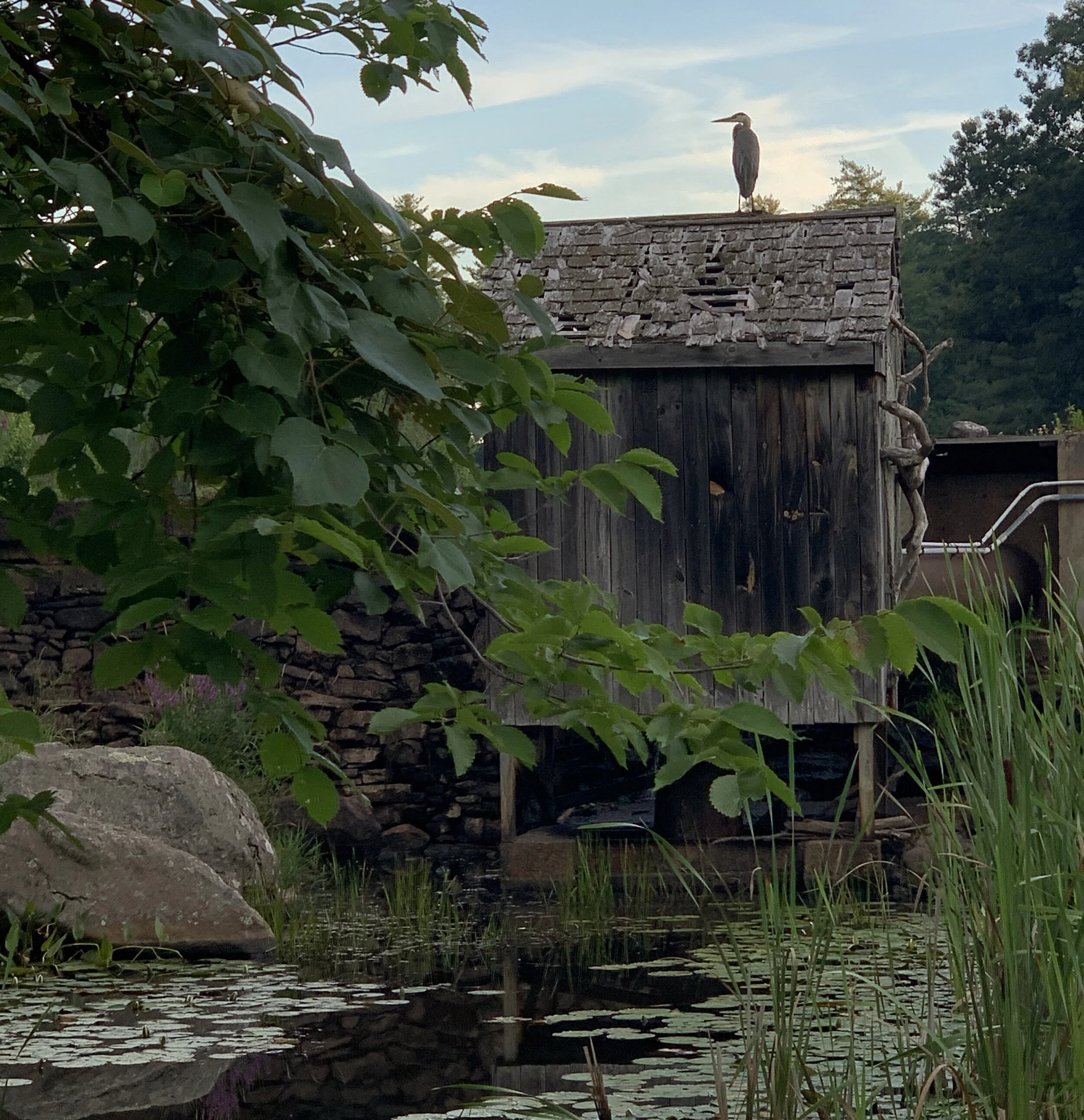
I walked out of the house early yesterday morning and saw a blue heron preaching from the roof peak of the little hut at the waterfall next to the dam. I feigned disinterest and sauntered quietly down the hill towards a new garden bed, hoping the heron wouldn’t fly away. It turned its head 180 degrees, but didn’t fly off.
This garden was planted last week, watered well, but not since—and we’ve had no rain. We’ve had no rain all summer, not a full day of soaking down wetness, not since too much rain in early May when we lost half our apple crop from poor pollination. We water the crop plants and the fruit trees and a few gardens pumping water from the pond, but much else is dry, parched, and crunches underfoot.
We’re lost without water, like we’re lost without a road map. Plants genetically receive all kinds of direction. Grow towards the sun, make your leaves larger because you are in the shade and need more photosynthesis, switch to ‘dry’ mode and pull in so that you can survive this drought. I think about where my inner direction comes from, how can I be sure I am hearing it. Sometimes my deepest yearnings feel like quicksand, holding me in inactivity without a guiding star. I was relieved to see the garden was alive, the transplants had survived the hot week.
I walked back up the hill and over to my studio. A few minutes later, I was upstairs at my desk with my morning tea when the heron flew by and landed near the pond. I thought it might be preaching to turtles, water snakes, maybe even the water lilies opening from their tightly closed night to better hear the heron’s wisdom. Herons know water; for they are fishermen and spend long hours watching water.
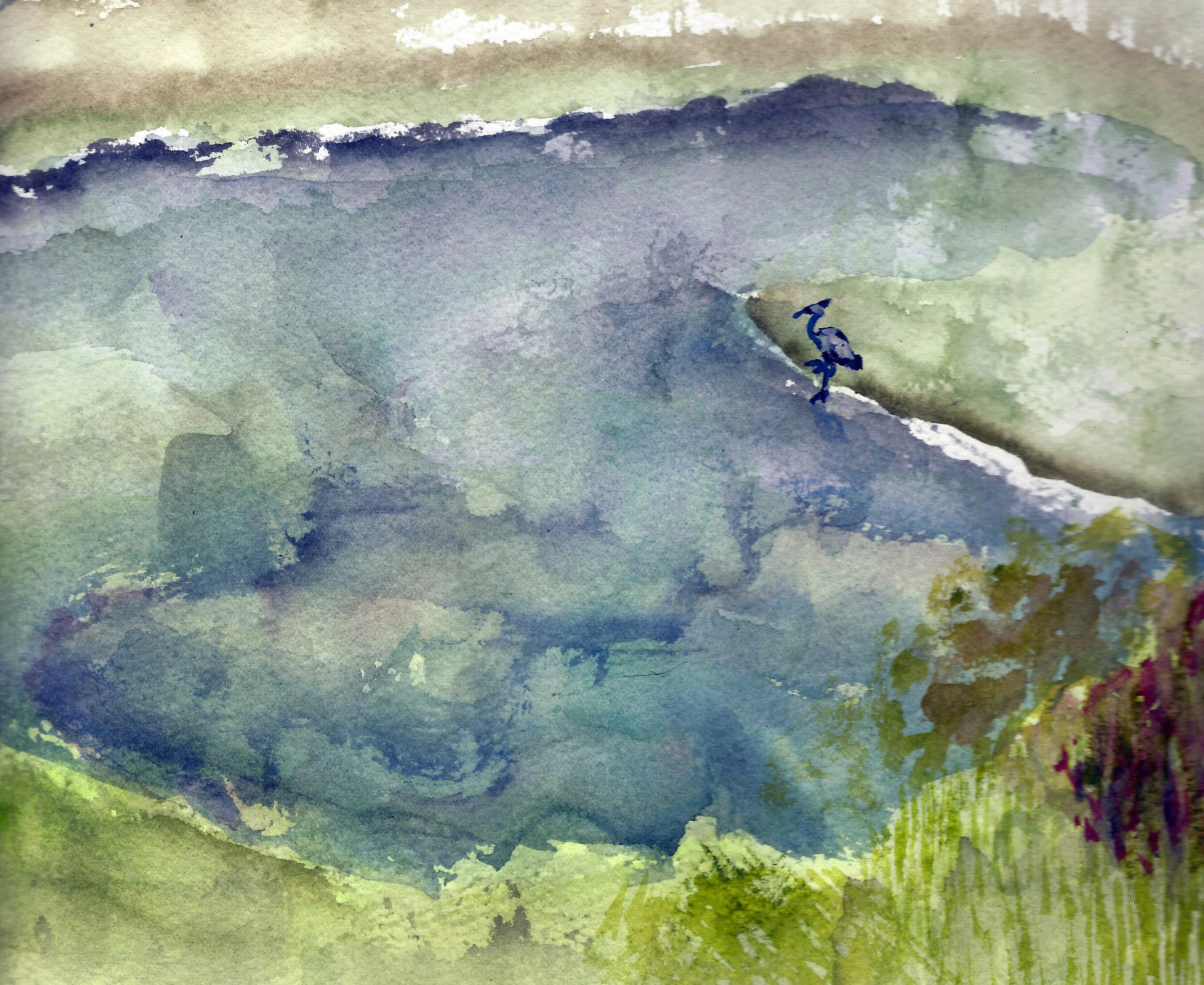
The heron, however, surely didn’t know it was standing halfway between the summer solstice and the fall equinox, on the pagan holiday, Lughnasad. This holiday is celebrated on the first of August and marks the beginning of the wheat harvest and the sun’s slow descent towards winter. For us at the farm, early August is when we harvest the first tree fruits, peaches, plums, and early season apples. It’s also the last time to get seeds into the ground for late fall crops. In the midst of a global pandemic, while areas of the world suffer extreme drought and other places experience massive and destructive floods, the heron stands at the boundary of earth and water with equipoise, catching its food, a guardian of the old ways.
As we shift to this new season, maybe it’s a time for us to reassess our ways. Make some choices of what we are carrying into the next phase. Spring flowers are a distant memory, while yarrow is in bloom, Queen Anne’s lace is at its peak, and goldenrod is opening to yellow. The night insects have begun their incantations. What to take with us and what to let go?
What do you want to put energy into? Energy flows where intention goes. What’s driving you? What brings you joy? We can’t do it all, not in one season. But we can be part of it all.
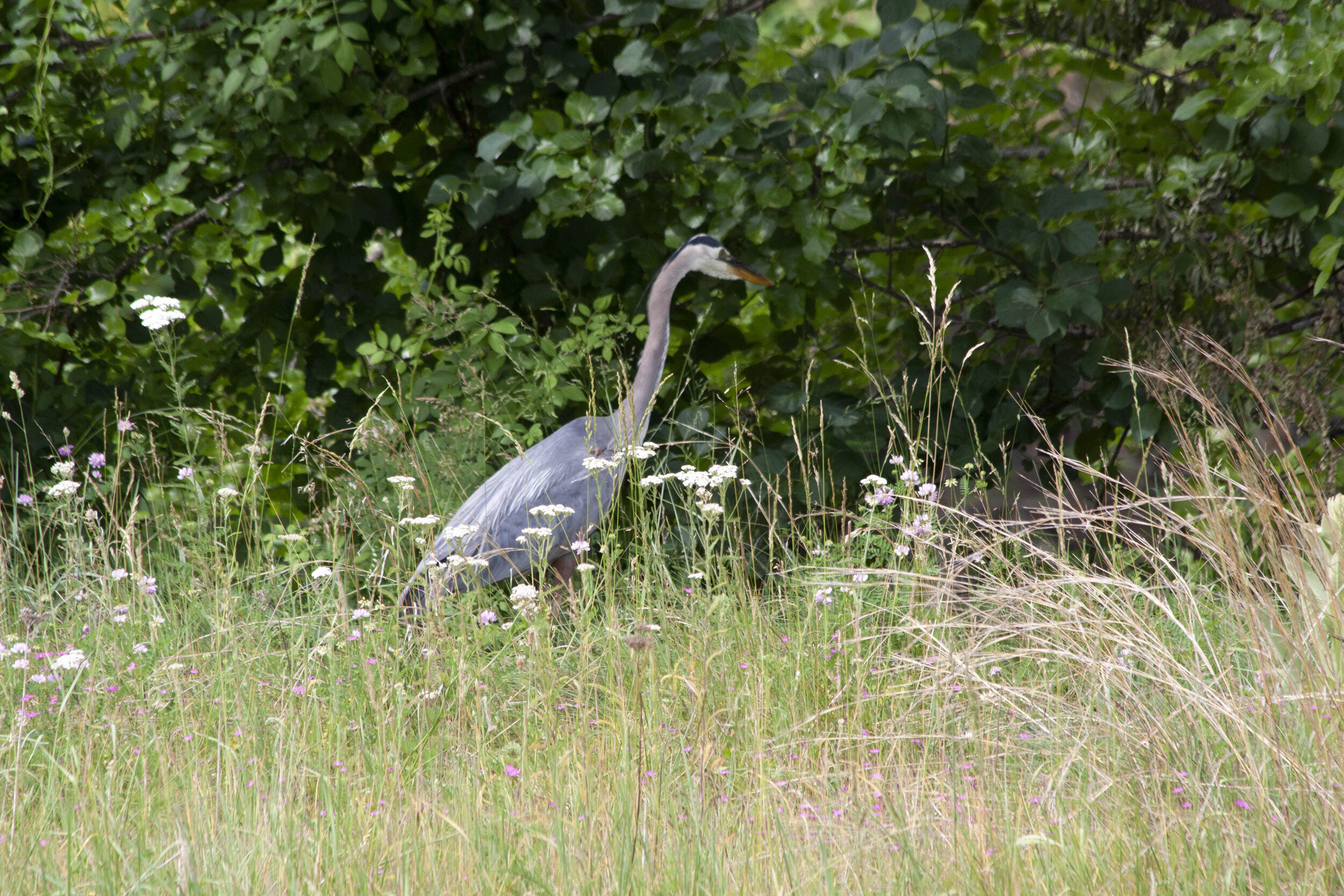
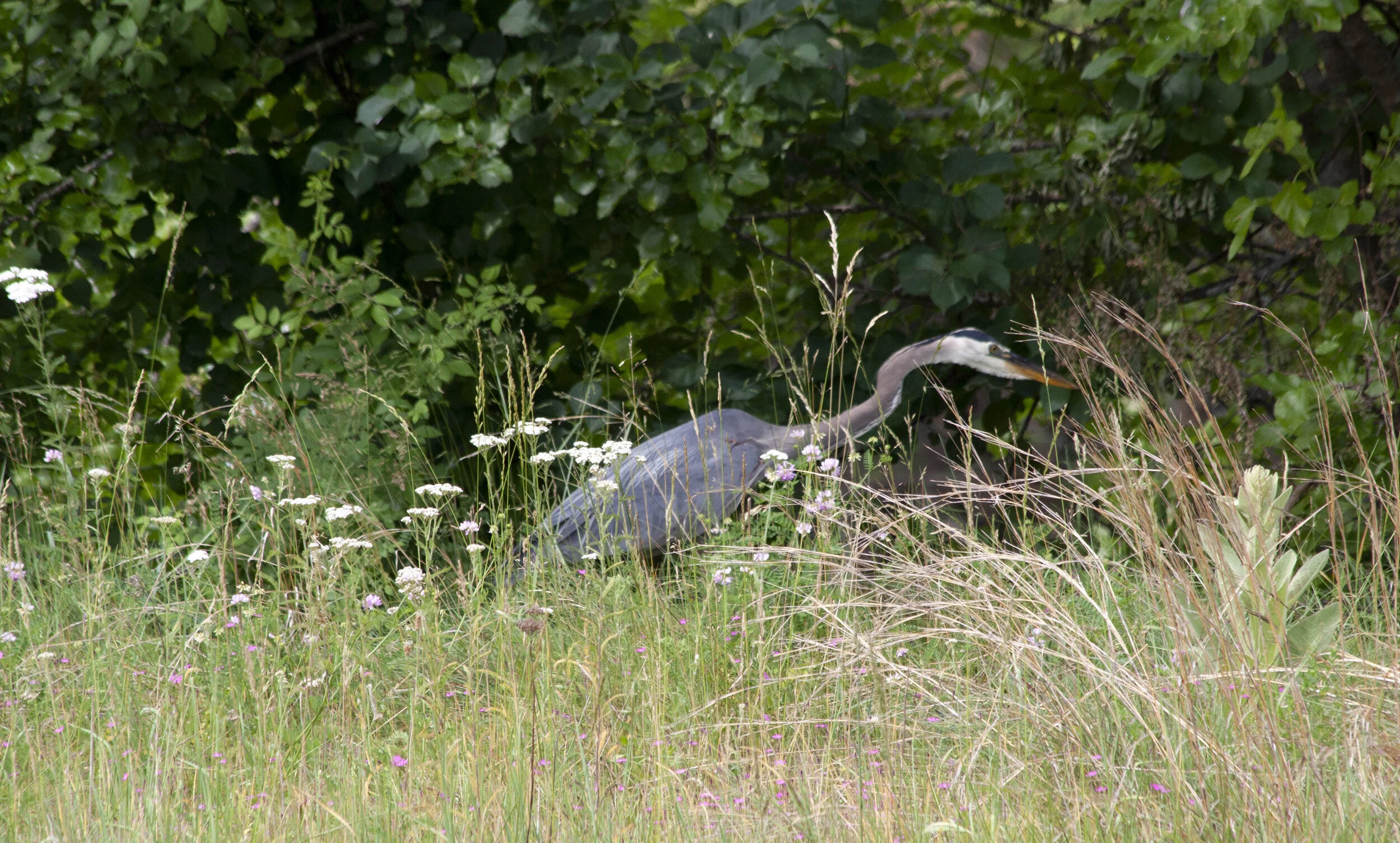
At the farm we now have fewer bluebirds, the orioles have migrated, and only one pair of barn swallows are still sitting on eggs. But the heron remains—majestic, otherworldly, its squawks coming from deep in the earth, a wisdom that calls out, “Take heed. What are you doing with this one precious life?”
Search Blog
-
2025
- May 9, 2025 A View from the Tractor Seat
- Apr 11, 2025 Dig
-
2024
- Jan 7, 2024 Winter Wassail
-
2022
- Dec 11, 2022 Keeping Time
- Jun 17, 2022 This Apple-Shaped Earth
- Jan 23, 2022 What is a Jizo?
- Jan 16, 2022 An Invite and Housekeeping Update
- Jan 1, 2022 The Year of the Frog: What Orchardists Do While Apple Trees are Chilling
-
2021
- Oct 24, 2021 Figs
- Oct 3, 2021 The Artist and the Orchard: A Memoir
- Aug 8, 2021 Red-Fleshed Apples
- Jul 25, 2021 When We Were Trees
- Jun 27, 2021 Castor Beans—Who Knew?
- Jun 13, 2021 Spring Training at a Zen Monastery
- May 4, 2021 Our Trees are in Bloom
- Apr 18, 2021 Hooray!
- Jan 24, 2021 Wassailing, virtually!
- Jan 1, 2021 Sitting
-
2020
- Dec 21, 2020 Darkness to Light
- Nov 28, 2020 One Heart
- Sep 18, 2020 Juggling Flowers, Fruit, and Vegetables
- Aug 23, 2020 Refuge
- Aug 9, 2020 Bags of Fertilizer
- Aug 2, 2020 The Sermon of the Blue Heron
- Jul 26, 2020 What's the Buzz?
- Jul 19, 2020 Farm Moments
- Jul 12, 2020 Lost Wax
- Jul 5, 2020 Catalpa: The Hugging Tree
- Jun 28, 2020 Pedaling Peace
- Jun 21, 2020 See Change
- Jun 14, 2020 Lalla Unveiled
- Jun 7, 2020 Pond Alchemy
- May 31, 2020 The Birth of Fruit
- May 24, 2020 An Artist in the Orchard
- May 17, 2020 Walking the Land: Returning Home
- May 10, 2020 Stinging Nettles: Gifts from the Great Mother
- May 3, 2020 The Mystery of Swallow
- Apr 26, 2020 Aerial Bruststrokes
- Apr 19, 2020 Simple Pleasures
- Apr 12, 2020 Weeds and Other Gifts
- Apr 5, 2020 Remembering the Seeds
- Mar 29, 2020 Blow on the Embers
- Mar 22, 2020 Ripples
-
2019
- Nov 16, 2019 Tibet Impressions
- Nov 9, 2019 Forest Tales
- Oct 13, 2019 The Gift
- Aug 4, 2019 The Season is Apples, Berries, and Grandfather Fire
- Jun 8, 2019 Pointers for a Writing Life
- May 12, 2019 Mothers of the Earth
- Apr 6, 2019 The Apple-Shaped Earth
- Mar 23, 2019 You Don’t Know What You Have Till It’s Gone
- Feb 23, 2019 Generations
- Feb 9, 2019 What Are We Doing to the Earth, John Chapman?
-
2018
- Dec 31, 2018 Long Shadows
- Oct 6, 2018 A Pilgrimage to India
- Aug 18, 2018 Scrap Wrenn
- Aug 11, 2018 Off-the-Wall Comments from an Ignorant Farmer
- Jul 28, 2018 Creative Connect
- Jul 14, 2018 How is the Orchard?
- Jun 30, 2018 Which Way?
- Jun 16, 2018 Geese, Herons, Beavers, and the Baby Steps of a Lapsed Blogger
- Feb 24, 2018 Mama's Coupons — Good Forever
- Jan 27, 2018 January Ice
- Jan 13, 2018 The Muse
-
2017
- Dec 30, 2017 A Dream for the New Year
- Dec 23, 2017 A New Year for Apples
- Dec 16, 2017 Intuition
- Nov 22, 2017 Thanksgiving OM
- Nov 4, 2017 East Fork Pottery
- Oct 28, 2017 Putting Down New Roots
- Oct 21, 2017 A is for Art
- Oct 14, 2017 Eve domesticus
- Oct 7, 2017 A String Workshop
- Sep 30, 2017 After Applepicking
- Sep 23, 2017 Two Bad Women and One Good Apple
- Sep 16, 2017 Plein Air Poetry
- Sep 9, 2017 Cutting Off a Leg
- Sep 2, 2017 The Changing Landscape
- Aug 26, 2017 All About Art
- Aug 19, 2017 My First Visit to the Farm
- Aug 12, 2017 The First Food
- Aug 5, 2017 A Teapot, a Woman, and maybe a Boat
- Jul 29, 2017 A Raspberry Dilemma
- Jul 22, 2017 Consider the Miracle
- Jul 15, 2017 Meeting Ekphrasis
- Jul 8, 2017 Ripening Fruit
- Jul 1, 2017 The Voice of The Caterpillar
- Jun 24, 2017 Goumi — An Unusual Fructus
- Jun 17, 2017 Concord, an American Bloomsbury
- Jun 10, 2017 The World Is Bonkers — Shall I Laugh or Cry?
- Jun 3, 2017 Bonkers, a Revolutionary Apple
- May 27, 2017 Guardians of the Swamp
- May 20, 2017 There are Mushrooms and There are Morels
- May 13, 2017 "What's in a Name?"
- May 6, 2017 Bloom Follows Pink: Orchard Pollination
- Apr 29, 2017 The Orchard Is at Pink
- Apr 22, 2017 Natural Farming — Part 2 (continuation from last Sunday's blog)
- Apr 15, 2017 Natural Farming — Part 1
- Apr 8, 2017 Boats, Figures, and Catching Fish
- Apr 1, 2017 A Man with a Mission: The Nuts and Bolts of Bronze Casting
- Mar 25, 2017 A Chalice of Spirit, Art, and Nature
- Mar 18, 2017 Hanami — Blossom Viewing
- Mar 11, 2017 Soil Redemption Song
- Mar 4, 2017 Food is Primary Care
- Feb 25, 2017 Pomme de Terre
- Feb 18, 2017 Organic Certification
- Feb 11, 2017 Tantalizing Fruit
- Feb 4, 2017 The Myths of History
- Jan 28, 2017 The Orchard in Winter
- Jan 21, 2017 The Hi-Line
- Jan 14, 2017 Artistic, Botanical, and Social Diversity
- Jan 7, 2017 Where is Eden?
-
2016
- Dec 31, 2016 The Creative Heart
- Dec 24, 2016 A Christmas Tale
- Dec 17, 2016 Who are the Crones?
- Dec 10, 2016 The Olympic Bell (Part Two)
- Dec 3, 2016 Overheard in the Apple Orchard in Early December
- Nov 26, 2016 The Lessons of a Tortoise
- Nov 19, 2016 In the Studio
- Nov 12, 2016 Even in Darkness
- Nov 5, 2016 Southern Apples, an Elephant, Monkey, Rabbit, and Bird, Two Mango Trees and a Birthday
- Oct 29, 2016 The Tools of Art
- Oct 22, 2016 Labyrinths
- Oct 15, 2016 Repairing the Broken
- Oct 8, 2016 When You Are No More
- Oct 1, 2016 Creation Rain
- Sep 24, 2016 Breaking the Glass
- Sep 17, 2016 String Art
- Sep 10, 2016 Poetry and Photosynthesis: It's all in the Leaves
- Sep 3, 2016 In the Plenty of Time
- Aug 27, 2016 Witch Doctors
- Aug 20, 2016 Listen Coyote
- Aug 13, 2016 Milkweed in the Orchard
- Aug 6, 2016 Some People See a Turtle
- Jul 30, 2016 Arborshaping
- Jul 23, 2016 Joseph Wheelwright: Sculptor of Stones and Trees
- Jul 16, 2016 Asian Pears
- Jul 9, 2016 Gold Leaf, Grief, and the Creative Process
- Jul 2, 2016 The Olympic Bell (Part One)
- Jun 25, 2016 Around the Mulberry Bush
- Jun 18, 2016 Avoiding Apples
- Jun 11, 2016 Fructus
- Jun 4, 2016 Astonishing Apples
- May 28, 2016 Scare the Caterpillars
- May 21, 2016 Join the Club!
- May 14, 2016 The Graft
- May 7, 2016 Rooster, Rhubarb, Rue
- Apr 30, 2016 What do Dolphins and Nettles Have in Common?
- Apr 23, 2016 Art Prunings
- Apr 16, 2016 A Few of the First Arrivals
- Apr 9, 2016 Taste the Spirit of Sustainable Agriculture
- Apr 2, 2016 First Orchard Spray - March 22-24, 2016
- Mar 26, 2016 Hawkeye Apple
- Mar 19, 2016 Desiring the Almata Apple
- Mar 12, 2016 Ugly Fruit
- Mar 5, 2016 Winter Tracks
- Feb 27, 2016 Splash
- Feb 20, 2016 Pruning
- Feb 13, 2016 Orchard Ruminants
- Feb 6, 2016 A Gathering of Seeds
- Jan 30, 2016 Orchard Dragons
- Jan 23, 2016 Tree Rings
- Jan 17, 2016 The Fallen Tree
- Jan 7, 2016 Wassailing the Apple Trees
- Jan 1, 2016 The New Year